“to fly toward a secret sky” (Rumi)

Yesterday I swam in the local pool for the first time since early May. I’d been in the lake the day before and knew that it would be my last day. It’s not so much that the water is cold, though it’s certainly chilly. It’s more that the air is cool and I can’t get warm afterwards. Even wrapped in a big towel as soon as I get out of the water and even after a hot bath. Someone suggested a wetsuit but somehow that’s not how I want to swim, though I know it works for others. I want the water to polish my skin. And the pool is a good compromise, even if it’s loud (or was yesterday as the children from several families shrieked and whooped, a good sound for the most part) and crowded enough that John and I had to share the one lane roped off from the rest of the pool. You can’t enter that meditative state if you’re trying not to bash your partner with your arms as you back-stroke down the pool. The lane was not quite wide enough for two.

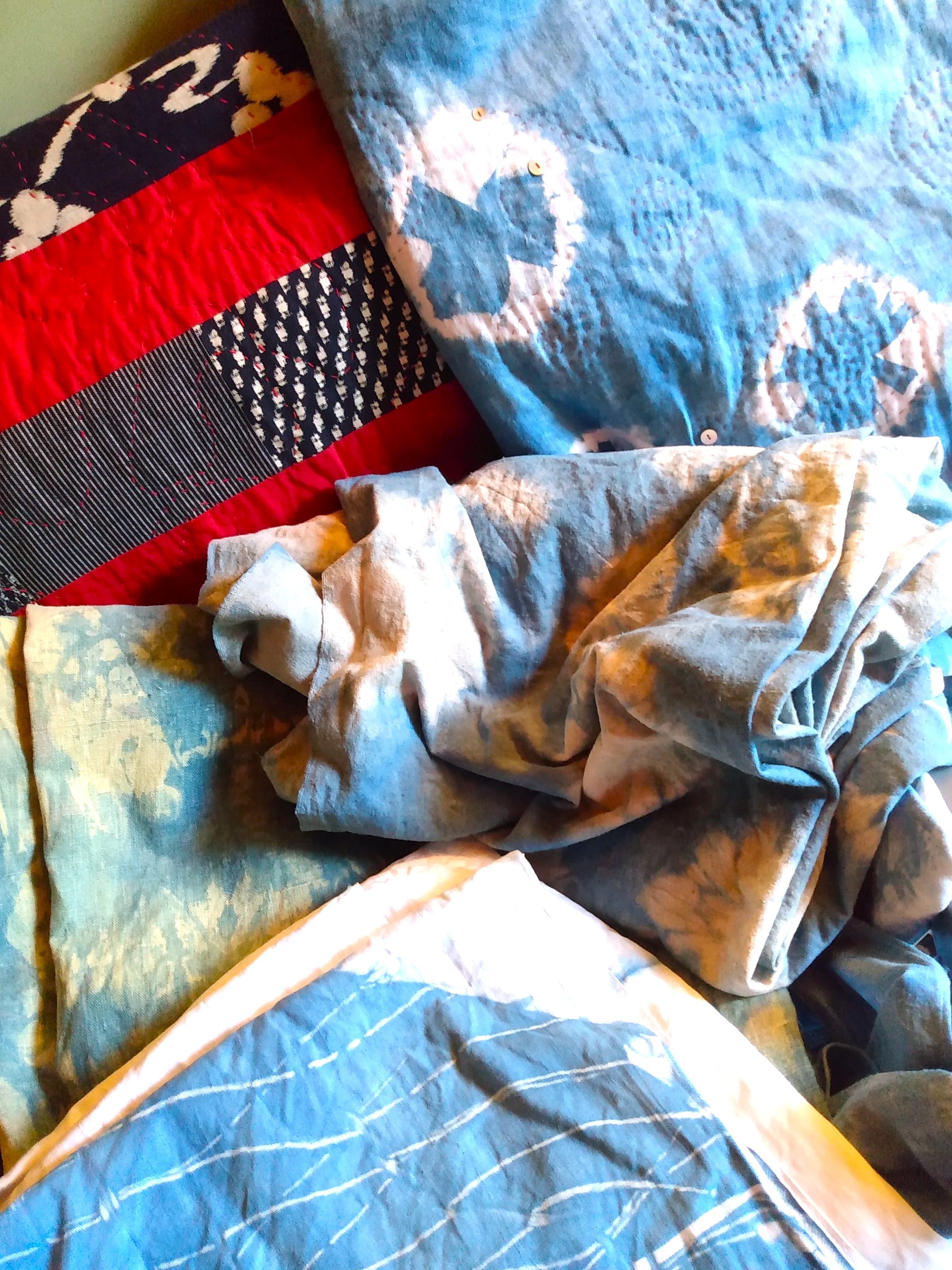
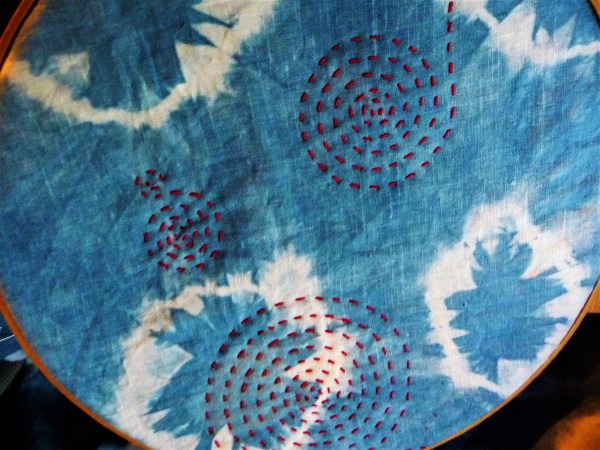
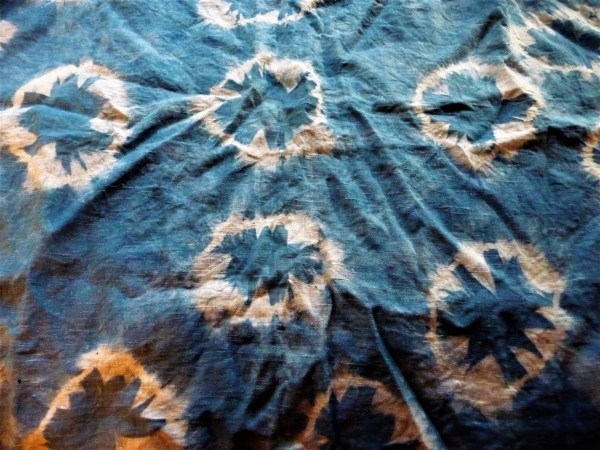
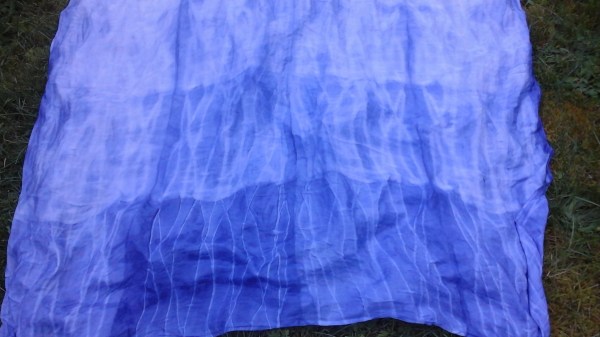
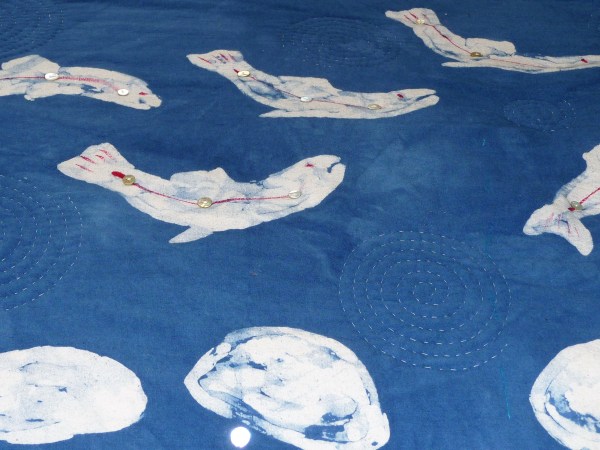
But luckily I’ve begun a new single-cloth quilt, some of the ecru linen I twisted and tied with hemp string and then dyed with indigo and rose madder. (You can see both of the lengths at the top of this page.) I threaded 3 sharp Japanese needles with blue sashiko thread and fitted the fabric into a frame. Then what. I looked at the watery pattern of the dye and began to sew a spiral. It will morph into something else and I’ll probably do what I’ve begun to think of as form of punctuation: ending a long line with a small akoya shell button.

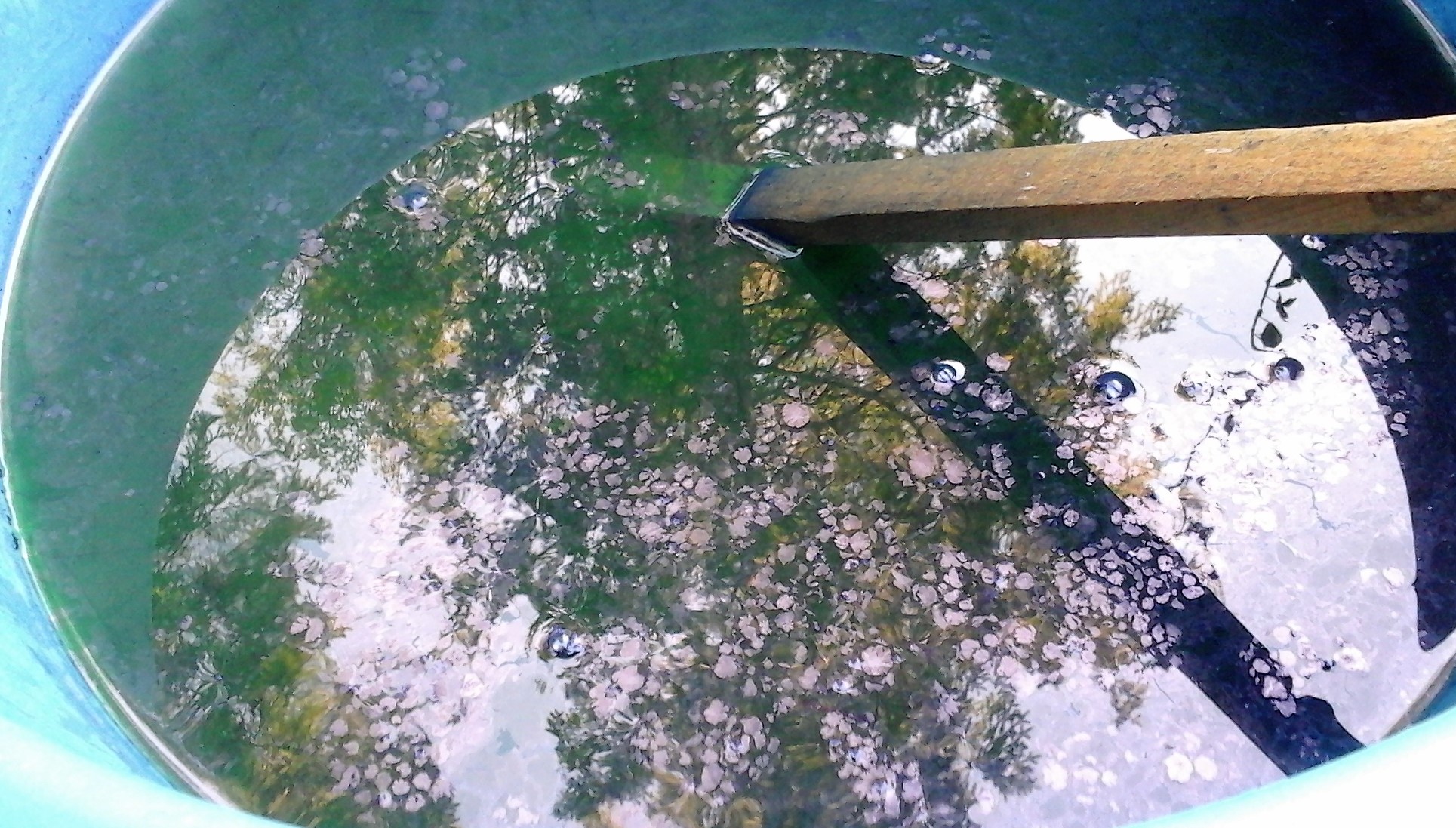
Behind the frame is another single-cloth quilt made of white linen dyed with indigo. The colour is quite different. The process is always interesting because I think I’m being honest when I say that I don’t really care about results; it’s what happens as I twist and tie scoured fabric, as I prepare the dye vat set up on a long cedar bench out by my vegetable garden, as I dip the lengths into the vat and then remove them to oxidize, watching the swampy colour turn the most beautiful blue.

With the rose madder, it’s not quite the same. The fabric has to simmer in a mordant, then soak in a big pot of prepared dye on the little hotplate I have set up in my outdoor dye workshop.
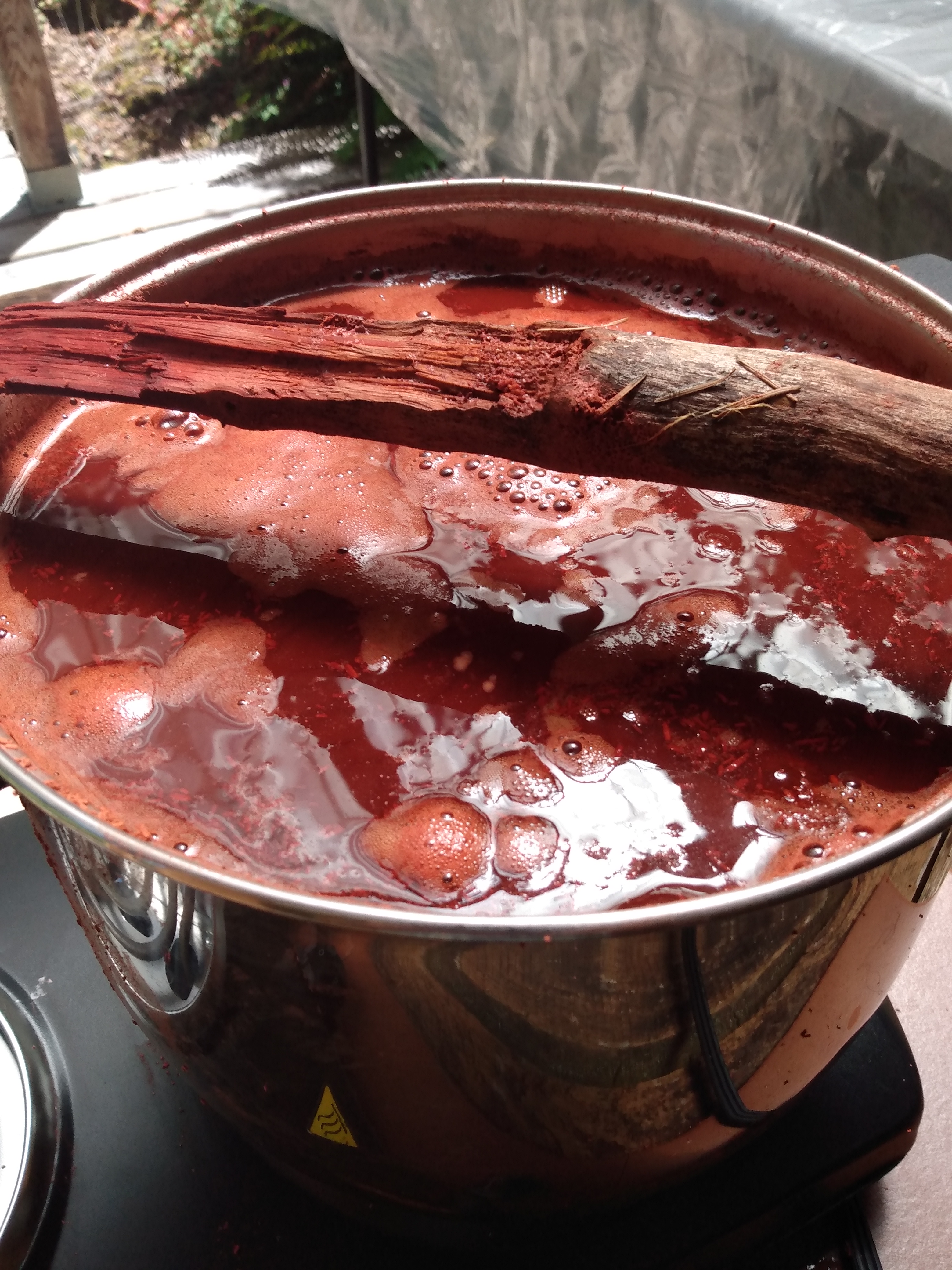
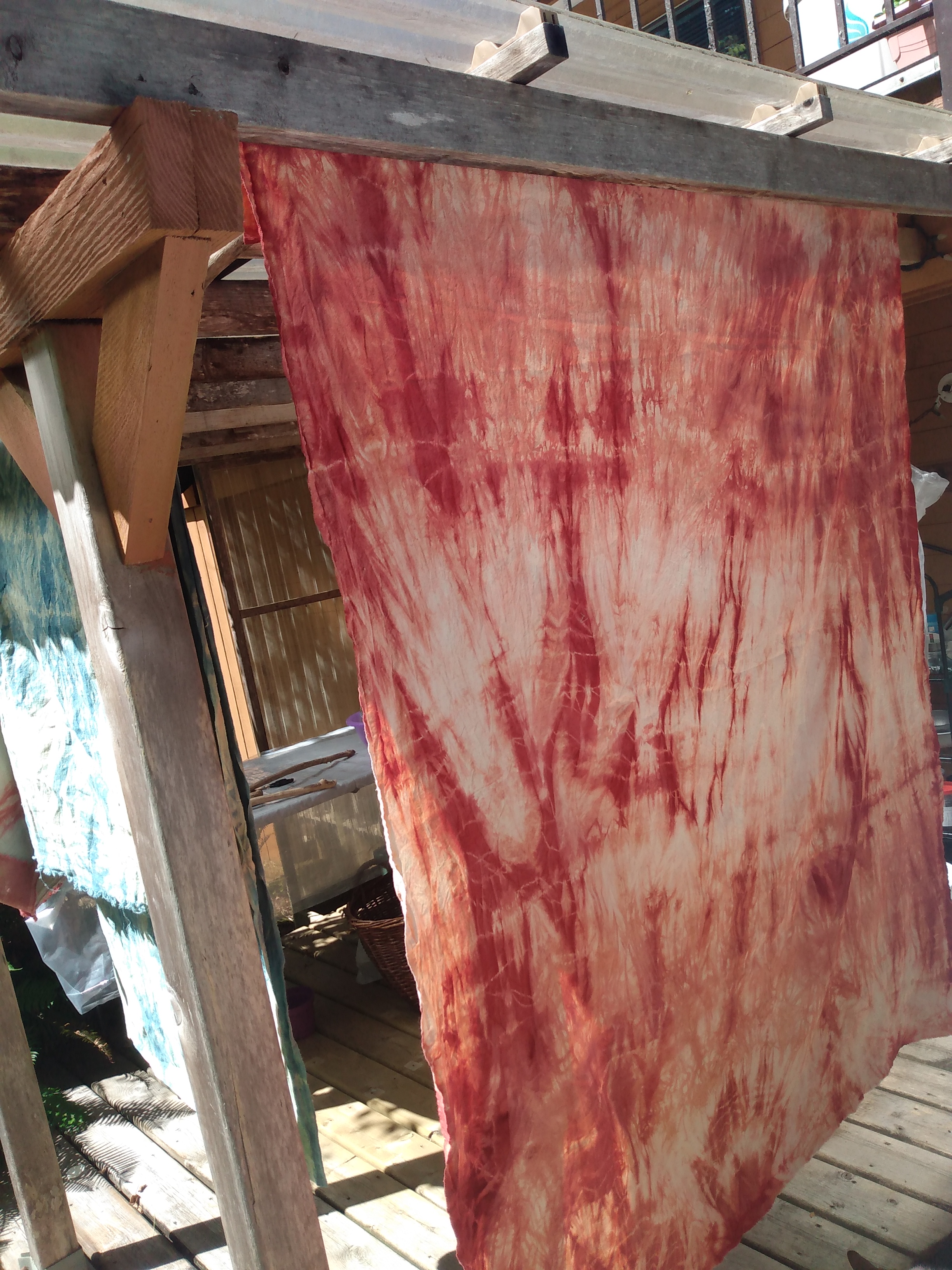
But when the dye has done its work and I unwrap the fabric, it’s like a gift. A birth. And as I sew, I’m thinking about a show I’ve learned about in London, which we will go to when we’re there in late October. Yto Barrada’s work sounds so congenial. (And what’s so interesting is learning that she has a property with arts residencies in Tangier, the Mothership, with a dye garden and workshops, and oh, of course I’ve been dreaming as I sew.)

There is a relationship between what happens when I swim and when I stitch. The two of them locate me in my body as well as elsewhere, a spirit realm, a cloudscape. When I swam all summer under blue skies, scraps of clouds drifting overhead, I was part of what was happening. And when I run my sharp needles through the dyed linen, I am making a veil, I am drawing together a seam of water, of sky, of self.

This is love: to fly toward a secret sky,
to cause a hundred veils to fall each moment.
–Rumi
redux: “I have walked behind the sky.” (Derek Jarman)

Note: 5 years ago this week, I finished a collection of essays that I called Blue Portugal. It was published by the University of Alberta Press in the spring of 2022. I loved writing the essays and was interested to find this post while looking for something else. So much of my life is cycles! Indigo dye (the first photo certainly has echoes of last week’s post), quilts, even the essays themselves. (I have another collection, Kingfisher, making the publishing rounds.) I didn’t end up using the Robert Penn Warren lines as an epigraph, I used a passage from the Odyssey instead, but I still love the lines. Make it a story of great distances, and starlight.

________________________________

clothesline

So. Yesterday I finished writing the final essay for Blue Portugal. Or at least I finished a full draft, with some parts a little rougher than others. There are ten essays in this collection, ranging from meditations on colour, investigations into ampelography, entoptic phenomenon, Bach’s Violin Partita No. 2 in D minor as a soundtrack for navigating grief, the relationship between the venous system and rivers, and using Dante’s Inferno as a means to recover from fractures. I know. It doesn’t sound like a manuscript that will be easy to place with a publisher, does it? In truth, I don’t think the essays themselves are difficult or chilly. But they’re not issue-based. They’re not life-style pieces. I read those and enjoy many of them but they’re not what I write. Or at least they’re not what I need to write right now.

There’s a lot of blue in this collection. The title piece for example begins with wine, Modry Portugal, a beautiful light red wine we drank in the Czech Republic. Modry means blue in Czech (and other Slavic languages) and I wondered about the Portugal. Where did the grape come from, and how, and why. I also wanted to look more deeply at family origin stories. There’s another essay, “The Blue Etymologies”, that I wrote to puzzle through what I experienced when I fell last November and damaged my retinas.  I have walked behind the sky, wrote Derek Jarman in Chroma, and yes, that was exactly where I went. “blueprints” revisits housebuilding and various kinds of fabric resist printing and the cyanotypes of Anna Atkins. Several of the essays use maps and land surveys in an attempt to locate the past and a couple of them might be too personal to interest anyone but members of my family. Who can say.

What I want to say is how much I’ve loved writing these essays. They are messy, imperfect, badly constructed in parts, and the craft is often careless; if you’ve read previous posts and seen images of the quilts I make, then you will recognize the parallel. But in an odd way they’ve kept me alive. Or they’ve kept my mind alive as I’ve navigated some health issues, have lain awake in the night thinking of my children and their children and how we’ve ended up living so far apart, have learned to do particular techniques with textiles, and have tried to keep what’s beautiful close to hand in the face of climate change, dangerous political systems, and an aging body.

hooped

The epigraph for this collection is a passage from a poem by the American poet Robert Penn Warren.

Tell me a story.

In this century, and moment, of mania,
Tell me a story.

Make it a story of great distances, and starlight.

The name of the story will be Time,
But you must not pronounce its name.

Tell me a story of deep delight.

–Robert Penn Warren

Deep delight, in a moment of mania. That was me, in the night, writing by starlight, telling the story over and over again.

“There are so many things I want to say.”

echoes

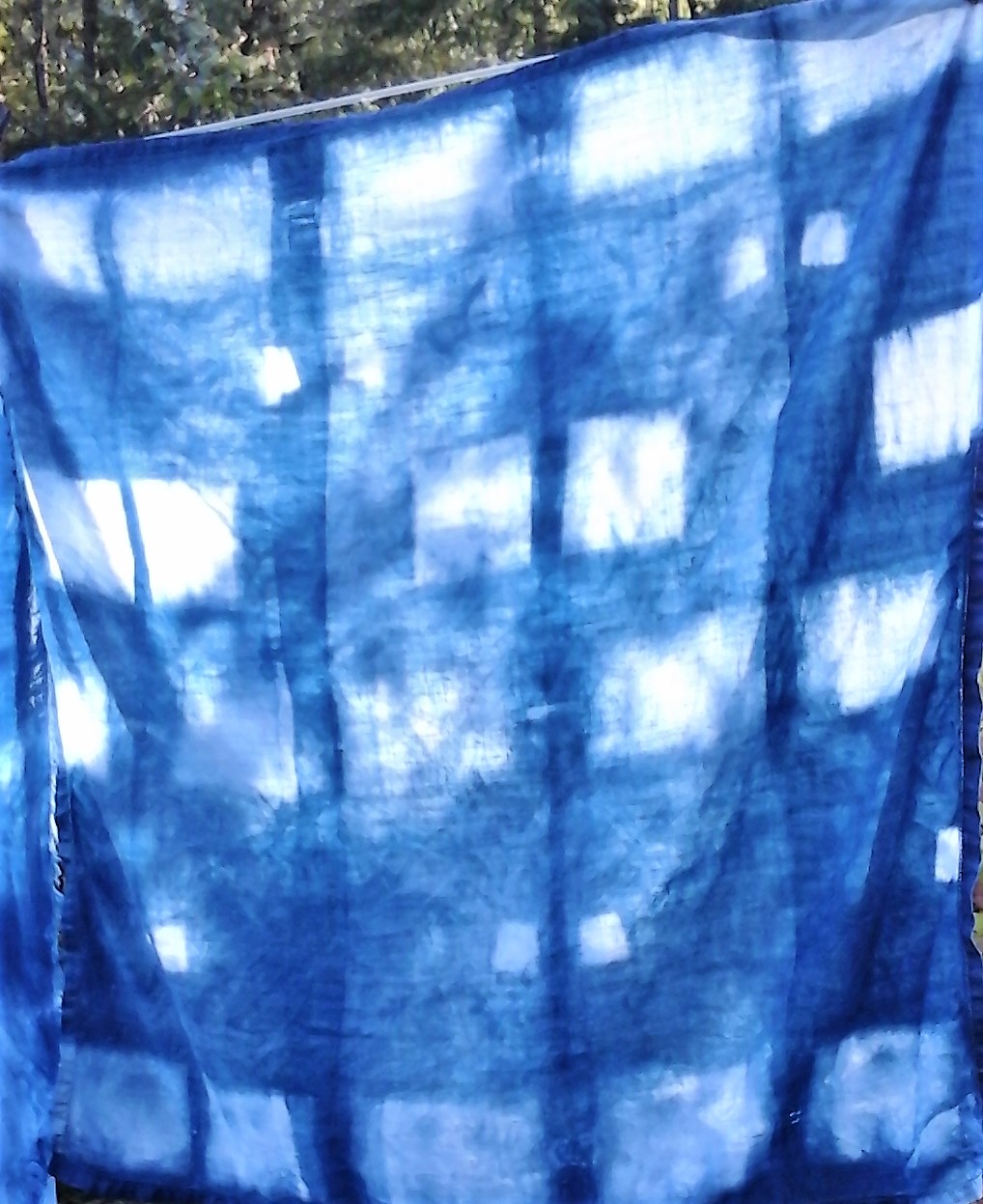
Yesterday we were headed down to the lake for my swim, maybe one of the last lake swims of the year because the air temperature was 8 degrees celsius and the water wasn’t much warmer, and we were talking about the big dye lot I’d done the day before. Actually, as we were on our way to the lake, one last length of fabric was waiting to be dyed–coarse linen I’d batiked salmon onto and then immersed in indigo a few years ago. It was the last of the dye and it didn’t really take. So I thought I’d overdye the linen and see if I could enhance the colour a bit. So we were talking about how the whole experience surprises me over and over again. I know one can approach indigo (and other natural dyes) in a systematic and scientific way, taking ph readings and so on, but my method (if you can call it that) is to give myself up to the process. I tie, sometimes I clamp with little squares of plywood and dollar store clamps (or clothes pegs), sometimes I use wax to make images for surface design. I wrap fabric around pvc pipe or wooden poles. I gather fabric around beach stones and tie them into place, sometimes randomly, sometimes in a grid, and then I prepare a vat of dye. The vat is a big plastic tub that’s otherwise used for garden work and I set it up on a long cedar bench by the vegetable garden. That way I can immerse the fabric into the vat and wait for 20 minutes or so, removing it to rest and oxidize on the bench before repeating the whole thing 6 or 7 times. While the fabric is immersed or while it’s resting, I can check out the cabbages (huge savoys I started from seed bought in the Mercado do Bolhão in Porto in March) or just look at the roses growing over the garden gate.

apricot roses

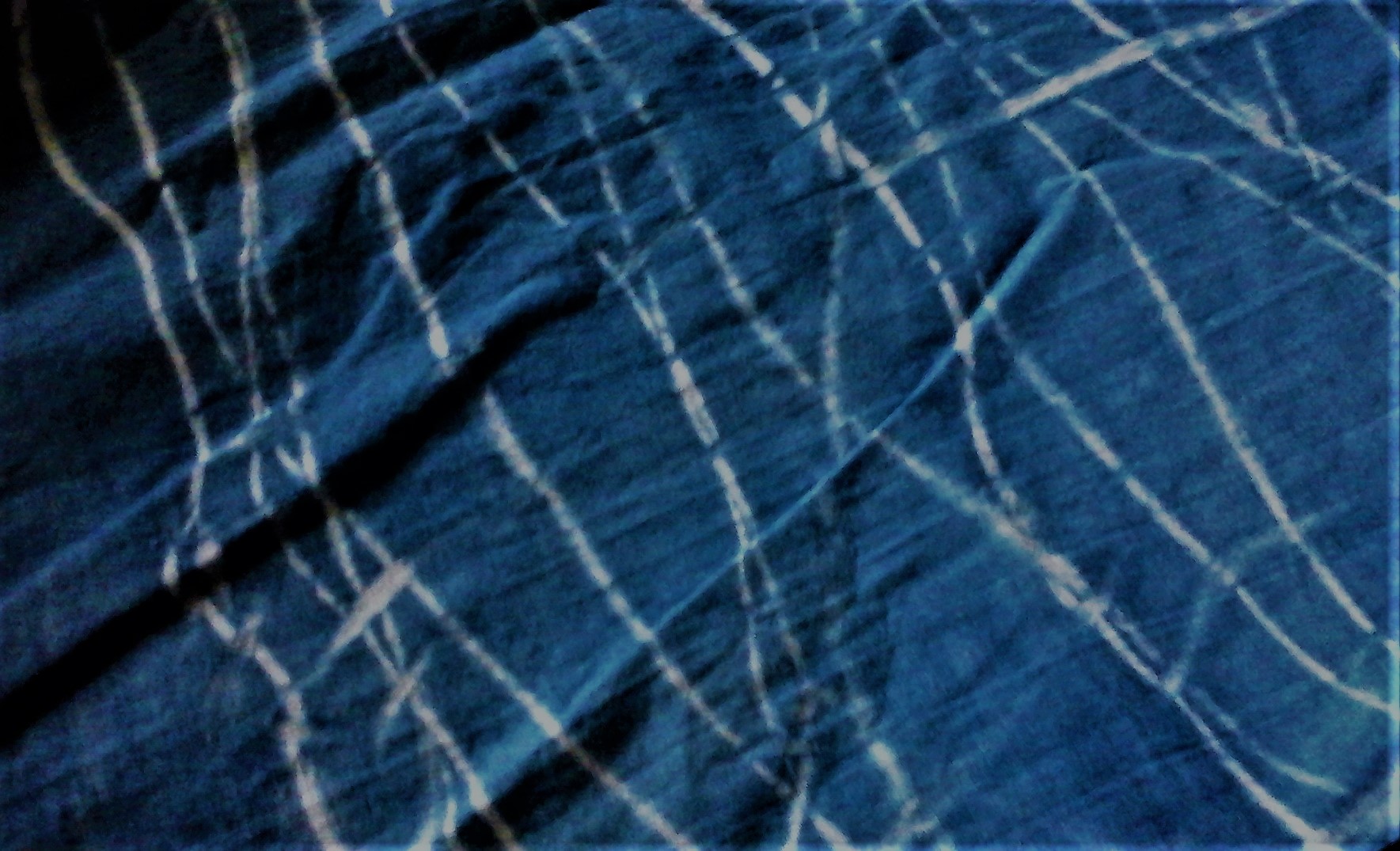
I never know what to expect. Or perhaps I mean that I don’t expect anything. I don’t know enough about this pursuit to have expectations. I don’t have confidence in my own grasp of technique. And I am always thrilled with what happens–the surprises of pattern, the intensity or not of blue, how string can mimic ripple or eelgrass, how the wrapped stones become snow angels or owl wings or jellyfish. If I knew enough to manipulate more decisively, would I be happier? I don’t think so.

As we went down to the lake, I wondered how the things I’d been preoccupied with all spring and summer found their way into the fabric. Those jellyfish drawn to the light of our boat anchored in Hemming Bay on East Thurlow Island, the ripples generated as a trout surfaced for insects while I swam on a September morning in Ruby Lake, the turbulence of my heart and mind echoing the waterways of the planet, and the memory of a walk on the Brem River estuary in April, watching for grizzly tracks. It’s like writing, said John. We think we are writing about one thing and we discover something else entirely. But the difference, I said, is that when I’m writing, I don’t have expectations necessarily but I do have some confidence in my ability, my knowledge of technique. I know the hoard of imagery and experience I’m trying to access. This is so different somehow. I’m reminded of Ann Hamilton’s wonderful essay, “Making Not Knowing”:

One doesn’t arrive — in words or in art — by necessarily knowing where one is going. In every work of art something appears that does not previously exist, and so, by default, you work from what you know to what you don’t know. You may set out for New York but you may find yourself as I did in Ohio. You may set out to make a sculpture and find that time is your material. You may pick up a paint brush and find that your making is not on canvas or wood but in relations between people. You may set out to walk across the room but getting to what is on the other side might take ten years. You have to be open to all possibilities and to all routes — circuitous or otherwise.

I was dyeing linen and cotton with indigo dye. I was thinking about the life I am living with its beauty, its damage (to myself and others), the lost opportunities, the blessings, the disappointments. In the woods behind the garden shed, a pileated woodpecker was pecking so loudly I thought John must be hammering boards together. In my heart, both joy and bitterness. The disposable gloves kept slipping so that I have rings of blue around my wrists. There are so many things I want to say. This morning, a basket of blue fabric, washed with mild detergent, ready for the winter. I have gathered my sharp needles, my strong thread, the tiny golden scissors shaped like a crane.

basket of blue

“I can hold aloft to the damaged planet.” (Sara Baume, from handiwork)

vat

This is the indigo dye vat of a few years ago. I’m getting ready for another dye session, perhaps when my daughter visits in July. It’s a pull, a yearning. To prepare the materials, to mix the powders, to plunge tied bundles into the vat once, twice, four times. To unwrap and drape on the clothes line. A deeply satisfying thing, the creation of pattern on a plain surface, and then to stitch the finished cloth into something else, quilts mostly.

rivers

This weekend I read Sara Baume’s handiwork, a book about writing and making. Her particular handwork is the making of birds from plaster moulds. Photographs throughout the book show these elegant creations, painted and smooth. Accompanying the descriptions of working on them are meditations on bird migration, the importance of tools, the legacies of our parents and grandparents in our bodies and our daily work.

If my granddad was wood and my dad was iron, then what am I?

My father was a radar technician and a gunsmith. He had tools in his basement and he spent hours at his workbench, polishing the beautiful woods he used when he restored stocks or made new ones himself. I remember being about 10 years old and feeling drawn to his workbench, wanting desperately to make something myself. There were the chisels, the drillpress, the fragrant oils. My hands wanted to know how to hold them, how to smooth the wood and oil it and bring out its grain. My dad had the patience to take a radio apart and put it together again, to make a rowboat, to teach himself celestial navigation in his later years, but he didn’t have the patience to teach me how to use his tools. Did I ask? I don’t remember. But I remember watching him, wanting to know how things fit; I remember sitting on the basement stairs as he sharpened his chisels and knives, the sound of the whetstone, and the scent of the oil he used for honing. He wouldn’t have understood why I like indigo dye and the whole process of not knowing the results. That would have puzzled him. Sara’s dad was puzzled by her art school sculptures but he converted an old greenhouse into a studio for her. My dad was reluctant to share his typewriter, bought at Goodwill, and used to keep careful records of my older brother’s hockey team statistics.

Last night, reading handiwork, I heard loons down on Sakinaw Lake. It was a lonely sound but also self-contained and comforting. As I am self-contained, though lonely, when I dip my tied bundles into indigo dye on calm mornings. I felt that old compulsion: how could I make something to hold everything I knew, everything I loved, that would allow me to use my hands and follow their instinct, on paper, with cloth and thread. To include somehow the return of the tanagers, the first morning of birdsong, the high cry of snow geese flying south in autumn. The fish in Haskins Creek. The grace of swallows around me as I swim each morning. The kingfishers.

William Morris–artist, designer, writer, activist, socialist–agreed that hands know what they must do without instruction, that the objects shaped by their ancestor’s phalanxes and phalanges and metacarpals for thousands of years remain in the memory compartment of their tiny brains, in the same way as birds know which way to fly without being guided or following a plotted course, without a book that provides detailed drawings and plans with parts and kits to accompany it.

I put handiwork on the bed beside me last night and thought about how Sara Baume has written a book that isn’t one thing or another. It’s not a book of writing rules or etiquettes. You won’t learn how to shape a bird yourself using plaster and knives and paint. The photographs of birds held up, their beaks poignant, their paint glossy — what are they anyway? She doesn’t say.* This is a book about mysteries and an admirable attention to them. How a bird flies from islands off the Northumbrian coast to Antarctica, and back, adjusting its navigational compass to account for winds, and how somehow the act of making can echo that, pay homage to that.

The wonder and awe, the catharsis and reassurance–the guilty bliss– of a fresh small object placed into the world; some entirely unique, inimitable thing that didn’t exist just a couple of hours ago, and which I have brought into existence myself–alone and utterly. A trail of progress I can see; I can feel; I can place; I can move around in a shaft of light; I can hold aloft to the damaged planet.

Some days I think, Why bother? Why bother with writing books that get lost in the ebb and flow of the literary conversation, their voices a little quiet and timorous for these times? Or quilts, because honestly does anyone need another one in a world filled with stuff? But my hands need the work, my mind needs what happens when my hands find their way to loop and tie and dip and stitch. The way I find myself weeping when I see the cloth hanging on the clothesline, the books arriving in a courier’s van. See, you did this. It’s not quite what you meant to do (is it ever?) but you did this. On the cover of handiwork, a whole little flock of painted birds, ready to fly.

windows2

*Actually she does say. I didn’t see the note at the end of the book in which she lists the species. Not the pages so you sort of have to count and hope that you’ve actually found the hooded crow, the pied wagtail…

freehand

freehand

from a work-in-progress:

When I began to make quilts, in 1987, I wanted to explore blue. A soft patchwork of pale blue prints worked into Ohio stars paired with unbleached cotton; a composition of log-cabin blocks, blue strips and yellow, a tiny square of red in the middle for the fire; red tulips in a haze of forget-me-nots. I began to think of ways to print the surfaces myself, with wax and clamps and strands of tough string. I batiked leaping salmon and then drew thread through the cloth in the mokume shibori technique, pulling it tight and knotting it. The waxed and tied bundles were immersed in a deep blue Procion dye. Before taking them out and rinsing them, I cracked the wax a little to allow dye to penetrate the relief fish. Once I’d removed all the wax, using my mother’s old iron and many pages of newspaper, I liked the results, though the lines of mokume weren’t as wavery as I’d hoped they would be. I had some fabric paint and used a fine brush to detail the salmon with lines of red along the tail and fins. I loved what Yoshiko Iwamoto Wada wrote in Memory on Cloth: Shibori Now:

When the cloth is returned to its two-dimensional form, the design that emerges is the result of the three-dimensional shape, the type of resist, and the amount of pressure exerted by the thread or clamp that secured the piece during the cloth’s exposure to the dye. The cloth sensitively records both the shape and the pressure; it is the “memory” of the shape that remains imprinted in the cloth. This is the essence of shibori.

You do this for the process, what you learn along the way. That waxed dental floss sewn along lines with a basting stitch can be pulled tight for water, that waxing a fish into plain cotton and dipping the cotton in blue gives you a memory of watching coho spawn in the creek near your house, a cycle that has been going on since the last ice age at least. That others have dipped cloth into blue dye and worn the pigment on their hands for weeks afterwards.

“…who notices the cloth-gowned scholar?”

last year's quilt

The winter wren has begun to visit most mornings, perching on a chair outside my study window, peering in, then skitting up to a rattan birdhouse to check it for spiders. Every year I forget and every year I am reminded, when this happens, that they are secret birds, with careful habits, and when I see this one, I know where I am in the year.

waiting

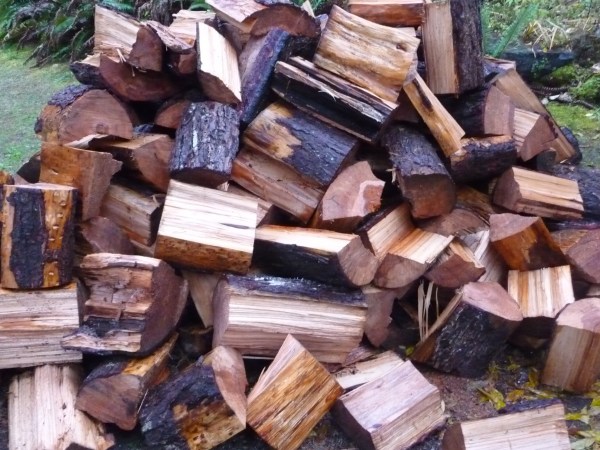
At this point in my life, it’s all about patterns. Reading my entry from November 1st last year—https://theresakishkan.com/2017/11/01/finding-my-way-into-winter/—I see that I was stacking wood (due to a health malady on the part of my husband, whose job this usually is). Last night, around supper time, a guy delivered a load of fir, right on time. (John’s been cutting and splitting wood here, too, but there wasn’t enough to last the cold months; we burn 3 or 4 cords.)

Last year I was stitching the quilt at the beginning of this entry, from linen I’d tied and dipped in indigo dye. I backed it with warm red flannel and it’s on a couch, for cold evenings. This year? I have another length of the linen, not quite so deep a blue, but I’m about to turn it into something, not sure what yet, but maybe, oh, a quilt?

this year's quilt

I have some Moravian blueprint, too, bought from a shop near my grandmother’s village in the Czech Republic, and hoarded until the right thing came along. I think it might look beautiful with this linen. We’ll see. The cold months are long and fires are warm. It’s been raining for days and I think of Du Fu, preparing for winter:

In Chang’an, who notices the cloth-gowned scholar?
Locked behind his gate and guarding his walls.
The old man doesn’t go out, the weeds grow tall,
Children blithely rush through wind and rain.
The rustling rain hastens the early cold,
And geese with wet wings find high flying hard.
This autumn we’ve had no glimpse of the white sun,
When will the mud and dirt become dry earth?


“The people of coming days will know”

All morning the news was of the marches in cities across the world. A form of protest, a series of statements about justice and democracy, the moving sight of rivers of people holding signs, crossing bridges. A group of people on a research boat in Antarctica, holding up their signs. The hundreds of thousands in Grant Park, Chicago, a number considered too many for a march. Closer to me, just across Georgia Strait, in Nanaimo, a thousand. One for the history books, for certain

It’s interesting how we record history, the stories that are included, abandoned, neglected, overlooked, revised. I was talking to my older son this morning — well, talking to his family! His wife Manon and their son Arthur, who remembered his grandparents from his Christmas visit and who blew kisses cheerfully — about the stories remembered and handed down by Indigenous people in British Columbia. Forrest is teaching a survey course in B.C. history and I wondered if he knew a story recorded by Imbert Orchard in 1966, collected in Robert Budd’s Voices of British Columbia, in which Lizette Hall, a member of the Dakelh First Nation, remembers an incident from 1828 involving James Douglas, working then as a Hudson’s Bay Company clerk at Fort St. James, and Lizette’s great-grandfather, Chief Kwah. It’s a story her family kept intact because of her great-grandfather’s involvement. She acknowledges that the story she tells has been “retold so many times, and a thing added here and a thing added there. Well, this is the true story of what, just what did happen.”

We sometimes think that because things weren’t written down, well, then they can’t be reliable. Good stories, maybe. But history? Lizette tells her story so emphatically and clearly that I have every faith that her version is “the true story”. And remember the “discovery” of Franklin’s ships in Nunavut, in a place where Inuit people had said they were located? An oral tradition held the story of the ships carefully and accurately but not many “experts” believed the validity of something not written down. I’ve read that the Inuit called the area on Queen Maud Gulf where the Erebus was found “the Ship Place”. (What would have happened if archaeologists paid attention to such names a hundred years ago? Had paid attention to generations who told essentially the same story?) Louie Kamookak is an Inuit historian and it’s fascinating to read about his expedition to visit areas remembered by his great-grandmother Humahuk:

Humahuk’s father took one item that he later made into an ice chisel (in later years she learned it had been a dinner or butter knife). As they were looking for more objects they noticed a man-made mound the length of a full-grown person. At the end of it was a stone with strange markings on it. Seeing this, her father became afraid and they made their way down to the shore.

Once at the shore they found more strange objects: wood and a metal chain going into the sea.

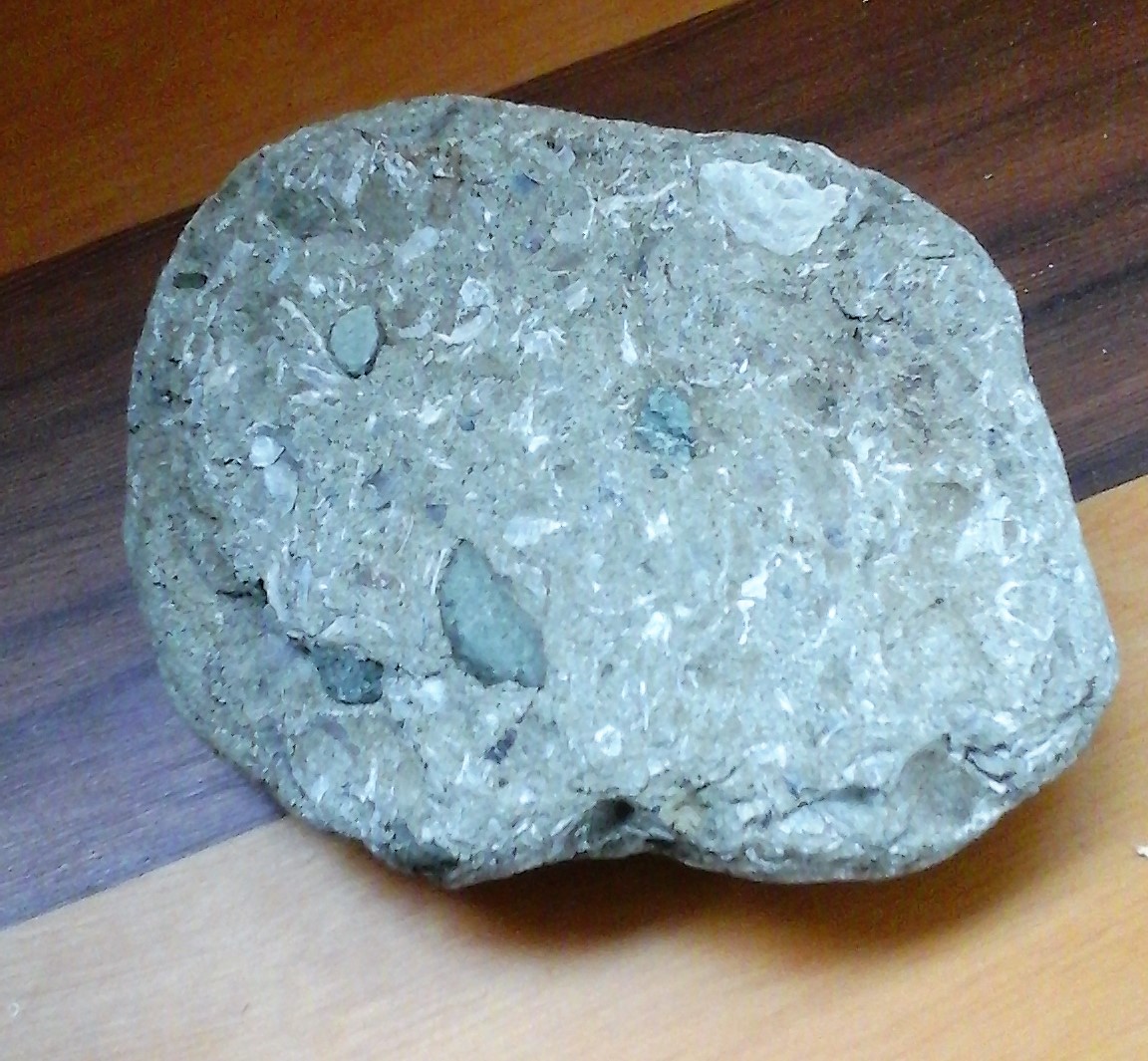
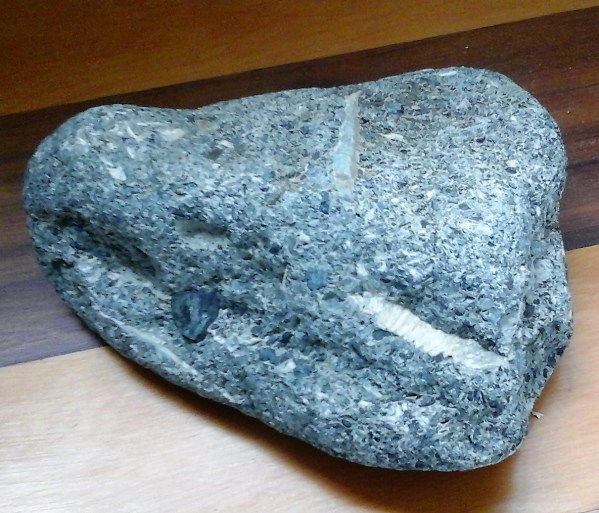
The world is an intricate collection of stories, if we learn how to hear them, read them, hold them in our hands and decode their own particular language. I keep two rocks on my desk, pieces of conglomerate dense with fossils from the Sooke Formation, a geologic formation on the west coast of Vancouver Island, dating from the Oligocene, about 20-25 million years ago. The stones are heavy enough to hold paper down, literal enough to contain their own pages of marine history. I can read a little of it, recognize the marine fossils of gastropods, pelecypods, and oysters in the stones:

oligoscene fossil.jpg

That tiny remnant of oyster on the top of the stone — it’s as beautiful as any pearl. And the other stone, with its ridge of bivalve — a clam? I run my thumb along its edge. 20 million years of calcite seamed into rock.

fossil

Instead of marching in Vancouver, we hiked the Cedar Bridge Trail. (We have to be in Vancouver twice next week, and it’s several hours each way, including a ferry…) Watery sunlight, pink buds on the alders, the sound of water running down the mountain (snow-melt!), the unsettling sight of a dead coyote in a creek by the highway, and as we came down off the trail, I had a sudden idea for a quilt. I’ve been working on one that somehow didn’t end up being as beautiful as I’d hoped. Strips of deep red, various dark blue plains and prints, and white damask from old tablecloths too worn for the table (but still with usable areas). Sashing of Japanese-inspired red and white prints. The backing is a big piece of Japanese cotton, indigo-dyed. It should be beautiful but instead it’s like a whole lot of French flags. I’ll finish it of course — I’m too thrifty not to. But I’ve been wondering about starting something that I’ll love as a process and as a finished quilt. I have two vintage linen sheets, found in a thrift store some years ago, and I thought today that instead of cutting them, I’ll batik salmon on one of them, making a whole life-cycle with varying sizes of fish, and even shell buttons for the eggs. Then I’ll dye the sheet using one of the shibori techniques I tried on smaller pieces of fabric last summer. This arashi, maybe, done with an old damask cloth.

arashi

Arashi means “storm” and if I can figure out how to do it with a large (single-bed sheet-sized) length of fabric, then I think it might be lovely. When I did this batch of indigo, I loved the process but wondered afterwards about the actual colour. I think this time I’ll use more indigo and do more immersions than I did last summer. I want a deeper blue. The fish will look something like this:

button-fish

Now the snow has melted and I can be outside (if it’s not raining) with my dye vat and stick for stirring the tied lengths of fabric. I imagine them hanging on the clothesline to dry. It will be a story, told in dye and image, detailed in thread. Fish swirling and swimming, water rippling, shell buttons catching the light. A story open to interpretation.

Although you hide in the ebb and flow
Of the pale tide when the moon has set,
The people of coming days will know
About the casting out of my net,
And how you have leaped times out of mind
Over the little silver cords…
                                –from “The Fish”, by William Butler Yeats

more of the same, but different

I’ve just picked vegetables for a special dinner tonight (friend Liz is coming!) and am delighted with the broccoli crowns (just cut one…), the Mendel peas from seed saved from last year’s crop, and a few curly garlic scapes because they were too pretty not to include. And roses — again, roses, because how could you not cut them over and over and put them in pots for their beauty? And the tablecloth from Arles.

P1080364

And this morning I did a bit of detailing on the salmon panels, using red fabric paint. The indigo is lighter this time around because I tried boiling the wax out of the batiked areas and it seems the dye was not quite as fast as I’d hoped. But it’s still a good blue, I think, and I have a whole pile of cottons stacked to see what seems to work best with these two long panels — they’re 70 inches wide, one with the fish heading into the natal stream, and one with them leaving it. In the next few days I’ll spend some time spreading out lengths of fabric on the floor and seeing how the panels look with dark red or a Japanese print with raindrops or even the Moravian blueprints. After I’d dyed the fish panels, I dyed about 3 metres of the unbleached cotton with the left-over dye and the result is nice — like a faded chambray shirt. I know I’m not a real quilter because I don’t plan. All the books tell you to chart your design and use colour wheels and so forth. (I know writing manuals tell you much the same thing: make an outline, keep file cards of your characters, plan out your chapters. Sigh.) But my eye is more random, looking for surprising relationships and unexpected connections. Who knows what this quilt will look like when it’s finished? All I know is that I love every step.

P1080365

Fish coming into being: a creation story

This time last year I was making a quilt for my son and his wife-to-be. I batiked fish onto cotton squares, made lines of shibori-style resist, and then dyed the squares with indigo. It took a long time but I think I loved every step. Towards the end I realized how lovely it would be to sew shell buttons along the spines of the fish, in part to echo the beautiful Tlingit button blankets, and in part to suggest eggs within the bodies of the fish.  I think the original cultures of the Northwest coast were right to revere salmon. If I believe in anything, I believe in fish.

For the past few weeks I’ve wanted to make something. This has nothing to do with my writing. It has to do with my hands. I remember being a child and rushing into our basement, filled with the desire to build something, make an object to translate what I felt into a solid statement. What that statement would have been, I have no idea. Or wait, maybe I do. Even then it might have had something to do with fish. But I’d see my father’s workbench, his tools, a few scraps of wood, and I’d be lost. What could I ever make anyway? I didn’t know how to use tools. My father might have taught me if I’d been able to explain what I wanted to do. But I couldn’t and he didn’t. And now it’s too late.

But that feeling has never gone away. Sometimes it’s a kind of despair. I look at art — paintings, fine ceramics, sculpture — and that child filled with the urgency to create surfaces. But I don’t have the skills. I can’t draw. I can’t think in dimensions, have no spatial sense at all. (When we were building our house, John drew the plans. I honestly couldn’t see how a window might look in a real room based on what he would show me. I’d wonder about sills where a pot of geraniums might flourish in spring light. Or where we’d hang our paintings.) Other times I am determined enough to simply use the skills I do have — I can sew in a pretty rudimentary way, I can work out patterns, I can (it turns out) mix indigo dye.

This spring I thought about making another of the salmon quilts but I didn’t want to do the same one twice. Then a week or so ago, I decided to batik the fish onto long panels of cotton, hovering above stones. Two panels, fish swimming in opposite directions — heading out to sea from their natal creek, and then returning. I haven’t bothered with the shibori resist because it didn’t do quite what I wanted it to, though there were moments when it almost did. But I have some other ideas involving a roll end of Japanese cotton I found — an indigo print resembling rain-drops — and more of those akoya shell buttons which I can buy in bulk at the wonderful Button, Button on Homer Street in Vancouver.

Here’s a little gallery of images and I will add updates from time to time. Today is the first day in ages that it hasn’t rained so my dye vat is out on the patio, the long panels of cotton soaking as I write.

fish, unwaxed

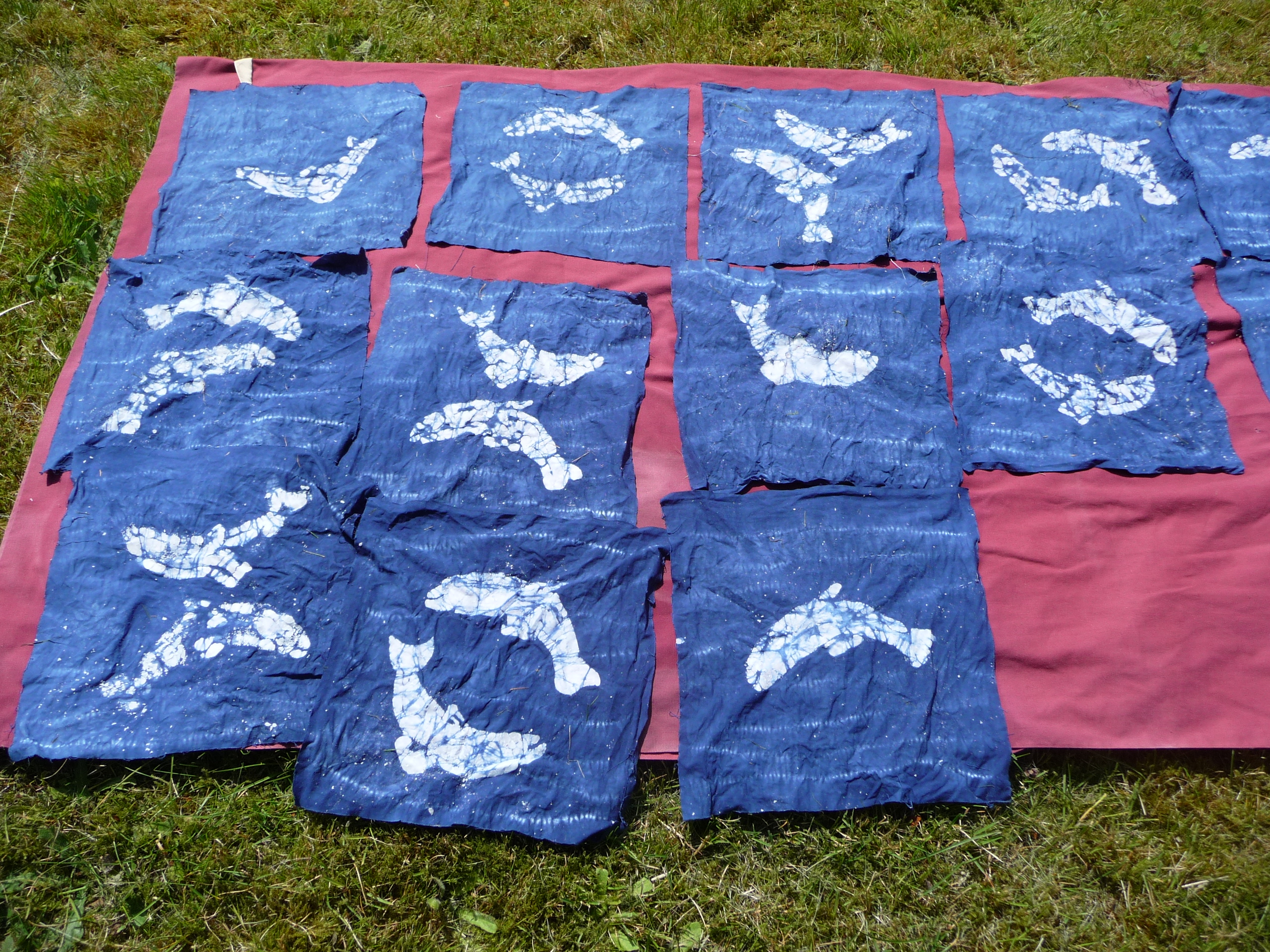
Today was warm and still, a good day for preparing a bucket of indigo dye and plunging in those squares of waxed fish. Well, since I last wrote about them, I stitched the squares in a kind of clumsy version of mokume, then pulled the stitching tight so that lines of the cotton squares would be protected from the dye. This is called thread-resist. Here’s what the squares looked like before they entered the bucket of dye.

The dye process is a bit lengthy — the squares sat in the bucket for half an hour while I stirred them frequently; then they were removed, some soda ash was added to the dye as a fixative; then the squared returned to their indigo bath and sat for another hour, with me stirring them every ten minutes or so.

Then they got rinsed, and rinsed, and rinsed. I sat on the grass and removed the threads, hoping for lots of contrast: white wavy lines across the deep blue squares, the mostly white fish marbled with blue. And I have to say I was a little disappointed that the watery lines didn’t work as well as I’d hoped. I know why this is. My batik fish took up quite a lot of the surface space so I couldn’t pull the threads as tightly as I think they needed to be. But a project like this is so much about the process, the immersing of one’s self into the various steps required. So here are the squares drying on an old red sheet on the grass:

I love the blue — and that’s a good thing because my hands are stained for…well, the time being anyway. I did wear rubber gloves for the dye process but for the last part of the rinsing and squeezing out of the water, it was easier to use my bare hands. It didn’t take long for the squares to dry so I set up the ironing board on the deck by the front door (where the robin’s empty nest still waits among the roses) and gathered up as much paper — newsprint, without the print, the kind of paper books are often packed in; we save it all for High Ground Press shipping — as I could find and then began to iron the wax out of the cotton. I know that one can also boil or steam out the wax but I’m not entirely certain of how securely the dye is fixed so I thought it best to use the old iron my mother dropped on the basement floor and then passed along to me for batik projects — the steam function no longer works and the base is a bit wobbly but it heats! I’m not entirely satisfied with the finished squares because there’s a halo of wax which no amount of ironing will remove, even with absorbent paper towel. But then I remember that I do this because I can’t draw, I can’t paint, so the whole process has been really interesting and I can’t wait to piece together a quilt with these fish in their indigo water.