Three Friends of Winter: a novella sale

450px-three_friends_of_winter_by_zhao_mengjian

The Three Friends of Winter refer to the pine, plum, and bamboo. The origin of this term is found as early as “The Record of the Five-Cloud Plum Cottage” from The Clear Mountain Collection of literary writings by Lin Ching-hsi (1241-1310, a Sung dynasty loyalist): “For his residence, earth was piled to form a hill and a hundred plum trees, which along with lofty pines and tall bamboo comprise the friends of winter, were planted.”

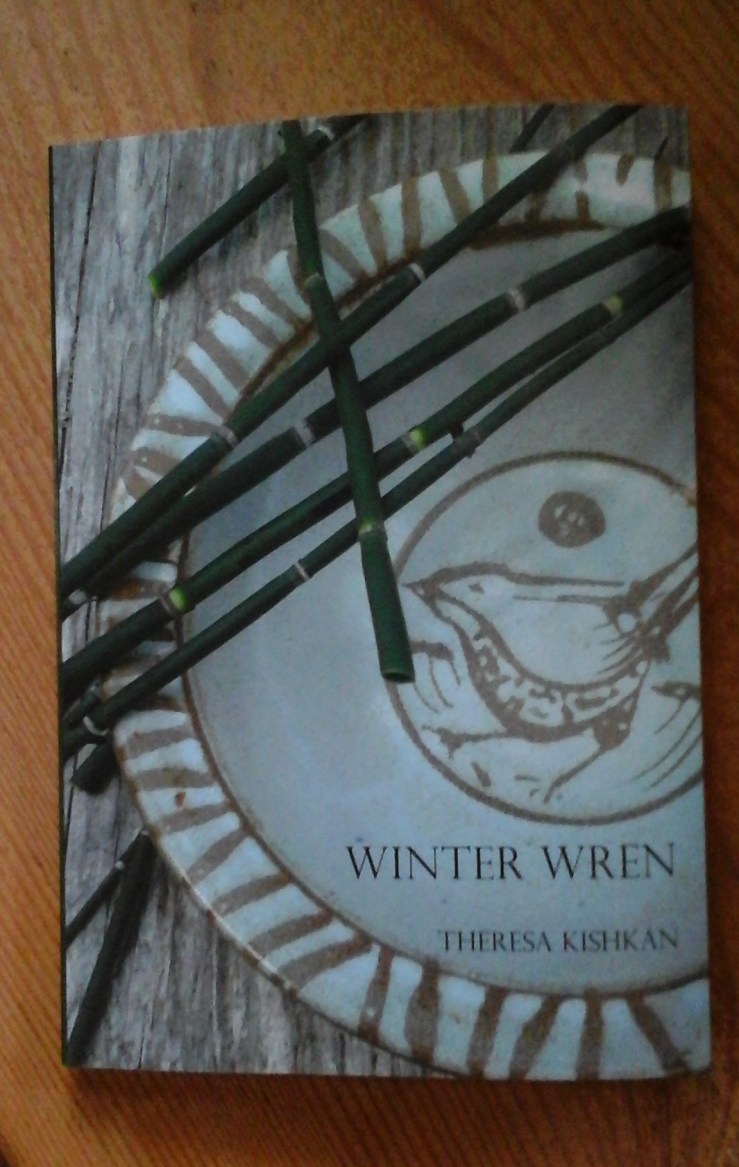
Years ago, I saw a planting of the Three Friends of Winter in the Dr. Sun Yat-Sen Classical Chinese Garden in Vancouver. And I thought, what a lovely idea — a companion planting of things that thrive in winter! They symbolize steadfastness, perseverance, and resilience. A little like the novella? In honour of the Three Friends of Winter, I’d like to offer my three novellas — Inishbream, Patrin, and Winter Wren — for the winter-friendly price of $45. For the three of them. (See my Contact page for my email address.) And I will ship them for free. Think of them as hardy green trees (and doesn’t the scouring rush on Winter Wren look like bamboo?), flourishing in snow and wind, eager to find their way to you.

three-friends-of-winter

“Was that a wren?”

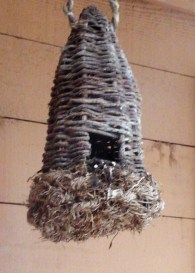
Most mornings, a winter wren comes to my study window. It creeps along the cedar trim around the window, searching for insects. It darts in and out of this little birdhouse.

refuge.jpg

No bird has ever nested in this house but in winter, the wrens (and if you’re a twitcher wondering why I’m calling them winter wrens instead of Pacific wrens, I know they’ve been reclassified but old habits die hard. And the wrens don’t care what we call them. They know who they are…), anyway (to pull this sentence back into some form of grammatical coherence), the wrens take refuge from the cold inside its small confines. Once I was at my desk at twilight and saw 6 of them enter, all of them coming from different directions. When we see them or hear them on our walks, or hunting our woodpile for insects, we usually see just one. If there are two, they aren’t companions but rivals. That’s what the song is about. Or at least that’s my best guess.

The wren moves through my novella named for it (Winter Wren) the way these birds move through our woods. You see them, you don’t; you hear them, then there is silence.

The sun was beginning to set. Tom slumped in his chair, his eyes filled with the sky. He had watched the sun for more than fifty years, watched weather of every temper over seasons too many to count. Was that a wren? Yes, and another there, just by the path. Like mice, they darted and scurried in the bush. One hopped onto the vertebra and there it was, the long song, loud and true. It looked right at him, eyes bright as glass. He wanted to say something to it but nothing came, his voice wasn’t there. Passage of song, the bright eyes. He felt drool on his chin and tried to wipe it with his wrist but his hands were too cold. Grace called out was he alright and with supreme effort, he waved his arm, Yes, yes.

This morning the wren is hunting. The sky is grey, there’s snow on the ground, and winter is truly approaching. 10 days until the Solstice, the time of year the wren comes into its own. Wren ceremonies are rich and various. In the United Kingdom and Ireland, the hunting of the wren takes place on the feast of St. Stephen or Boxing Day. There are also rituals associated with the wren on the day before the Solstice — December 21 — when a wren is hunted and killed to represent the death of the old King or Sun and the birth (or return) of the New. The wren appears in various west coast Indigenous belief systems as a transformer (the old sun, the new?) and an emblem of great strength.

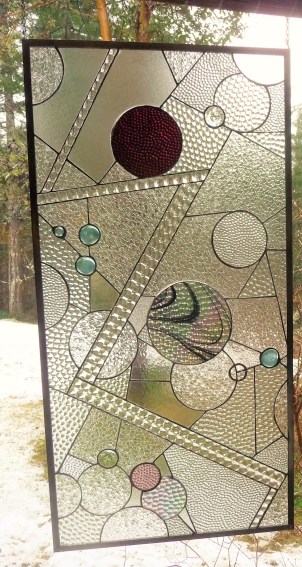
Today I’ll make the white chocolate fruitcakes we love, rich with dried Montmorency cherries, dried mango, Calimyrna figs, and hazelnuts, and I’ll watch for wrens. We have a beautiful piece of glass, made by our friend June Malaka, hanging in our big south-facing window, and the world through it swirls and tilts. Anything could happen. Anything might.

orbits.jpg


the firewood gate

I went out to try to photograph the morning sky, pink suffusing the eastern and southern treelines, and everything so rich and autumnal. But the colour wouldn’t show up. But while I was outside, I could smell newly-split fir. (John spent the last few days splitting and stacking two cords of wood.)

firewood gate.JPG

Our woodshed was built with bits and pieces of cedar posts and beams more than 30 years ago. When you live where we live, you burn a lot of firewood and the woodshed was an essential structure. There’s a magnificent wisteria climbing up the right post, the one you don’t see, its trunk as thick as a good-sized tree.

The last week has been strangely stressful. A medical adventure for me, world events filling the airwaves — or at the radio airwaves; the ones outside are loud with wind and birds — and (maybe as a result of the medical issue) Time’s Winged Chariot whirring dangerously near. But the firewood is somehow comforting — its sweet smell, the quick winter wren that is busy investigating its new geometries for insects. So settle in, I tell myself, and remember where you are, who you are. Long conversations with my children have been a solace. News of Halloween: granddaughter dressed up as a garbage-truck driver (her current heroes, the guys who wave to her from the alley as they pick up the weekly garbage and recycling), clutching her plastic garbage truck as proof of her dedication; one grandson a pirate; the other (the youngest) a monster.

I think of Du Fu, that poet-sage of the Tang dynasty, who wrote of political corruption and the passing of time, and whose home had a firewood gate; he was nothing if not grounded in the particulars of home and hearth, all the while lamenting the injustices of the larger world. Time to do as he did, meditate on Autumn and its touchstones: the smoke and cold water, the song of a tiny bird among the logs, and the sound of the mountain.

I’ve heard them say that Chang’an seems like in a game of chess,
A hundred years of world events have caused unbearable pain.
The palaces of the noblemen all have their new masters,
Civil and military dress and caps are not like those before.
Straight north over mountain passes, gongs and drums ring out,
Conquering the west, carts and horses, feather-hurried dispatches.
The fish and dragons are still and silent, the autumn river cold,
A peaceful life in my homeland always in my thoughts.

(Autumn Meditation 4)

September song

But the days grow short when you reach September
And the autumn weather turns the leaves to flame
And I haven’t got time for the waiting game

And the days dwindle down to a precious few
September, November
And these few precious days I’ll spend with you

                         (Kurt Weill, Maxwell Anderson)
A sweet time at our house with a visiting grandson (and his parents), a visiting daughter (minus her cats this time around), and a scattering of bright days among the rainy ones. The other morning I noticed that the bigleaf maples are turning and the air has that cool tang of autumn. Apples, stardust, the knowledge that chanterelles are out there if we just hunt carefully enough.
A perfect time to offer a sale! So I am. Three novellas — Inishbream, Patrin, and Winter Wren — for $45, shipping included. Here’s what reviewers have said about the books:
Inishbream is a story imbued with the rhythms of speech and of the natural world, of dying and living, of flight and change. It holds the same fundamental truths as a sung air, as the hanging notes of a tin whistle, of the resonance of pipes.” — Quill and Quire
“In Patrin, Kishkan skilfully weaves together several complementary threads, each one illustrating a different aspect of longing. One thread expresses the nostalgia for a personal past (Patrin’s first loves, and her early days of independence as a young woman just coming into her own); another illustrates Patrin’s desire to connect to an ancestral past, to feel part of something larger than herself.” — Vancouver Sun
“Kishkan’s new novella, Winter Wren, is a phenomenal read, and the latest evidence that there’s no accounting for which artists are the ones who get famous.” — Book Addiction
Each of them is the ideal length for an afternoon’s read by the fire (or the memory of one), each one of them will take you to unexpected places — an island off the west coast of Ireland, Czechoslovakia before the Velvet Revolution, a wild beach on Vancouver Island. And they make beautiful gifts. (Is it too early to think about Christmas? No.)
Here’s my grandson Arthur enjoying novellas on a rocking chair by the fire.
novellas!.jpg
And the days dwindle down to a precious few
September, November
And these few precious days I’ll spend with you

“I say, ‘Regicide.’ I say, Help!'”

From An Exaltation of Larks, by James Lipton:

An Herde of Wrennys, The Book of St. Albans. Hodgkin says, “The wren was probably allowed the term of ‘herd’…because it was the king of birds.” I say, “Regicide.” I say, “Help!”

It’s been slightly more than a month since the boxes of my novella Winter Wren arrived at my door. Readers of this blog might remember that my friend Anik See and I have begun a small literary imprint, Fish Gotta Swim Editions, to publish novellas for now and perhaps other innovative prose forms in the future. It’s been an interesting process so far. I wrote Winter Wren, Anik designed the cover and text, and the wonderful team at Printorium in Victoria printed the beautiful hand-sized books. People are sending the nicest notes or calling me to tell me their impressions. So far, so good!

winter wren.jpg

It’s a word-of-mouth endeavor at this point. We don’t have an advertising budget so we’re relying on email newsletters and the kindness of friends and strangers. Anik doesn’t even have copies yet but will receive hers when she’s in Canada next month. After then, she’ll fill orders for European customers and those from other parts of the world. (I’m filling orders for North, Central, and South America. And have mailed books to the UK and a few other places far afield.) But we both believe that readers will be interested in novellas and will somehow find us and our titles. (More are in the planning stages.)

Several reviews are forthcoming and I will post information and links on my News and Events page once I have them. I look forward to reading from Winter Wren when I participate in the Sunshine Coast Festival of the Written Arts on Friday, August 12th at 2:30 p.m. (I plan to talk about novellas in general and to also  read from my Patrin, which isn’t even a year old yet!) There will also be a proper launch for Winter Wren, probably in September. (If this sounds a bit vague,it’s because, well, life is busy right now! The Pender Harbour Chamber Music Festival, which I’m involved with, is coming up on the weekend of August 18-21 in Madeira Park; some of my children are coming for a couple of weeks later in summer; and there’s a third grandchild due in late August. But watch my News and Events page for a book launch date and if you’re in our area, come to help celebrate its regicide — without giving too much away, that word has a kind of eerie truth for this tale of wrens and the solstice and the passing of the old year.

pages.jpg

And if you want to support independent publishing not just in Canada but internationally (because Fish Gotta Swim Editions is located here on the west coast as well as in Amsterdam), please consider ordering a copy of Winter Wren. You can order from me. Or Anik. Several bookstores here on the Sechelt Peninsula carry the book and others can order it for you. If you are interested in a review copy, please let me know.

bookends

In 1977-78, I spent most of a year living in Ireland. I rented a cottage on a small island off the Connemara coast. It was a sweet time, though often lonely too. I walked. I gathered mussels and nettles to supplement the meager amount of food I could buy weekly in the nearby town when a boat was going that way and I could tag along with fishermen selling their catch or their wives doing errands. I say “meager” because I had so little money and also because everything I bought for the week had to be carried in my rucksack. Sometimes the boat would cross the narrow passage between the island and a strand several miles from the town and on those days I walked back and forth with my rucksack of provisions or else I borrowed a bike from a farmer who lived above the strand. A week’s worth of food could get heavy (and expensive) awfully quickly.

And I wrote. I wanted to discover if I was actually a writer and for some reason I thought I had to go far away to do that. I’d always loved Irish music and literature and somehow I imagined the west of Ireland would be a place I could lose my young damaged self in and find a better self. (I was 22. This is the way I thought then.)

I have no regrets about that time. I loved the island, I loved the hedges of fuchsia and the sound of corncrakes in the field behind my cottage. I read voraciously and I wrote the beginning of a novella which I completed later, once I’d returned to Canada. That novella, Inishbream, was published first as a private press book by the Barbarian Press. It took them years to actually produce the book and all the reasons for the delays were entirely legitimate. The wait was worth it. And so was the process, the step-by-step process of making a book the old beautiful way. An American artist, John DePol, did a series of wood-engravings for the book.

currach

Some copies were quarter-bound with soft green Japanese silk; others with leather; and the very rare Design editions were quarter-bound with turbot leather. The printing is exquisite. And when I read the novella now, as I do from time to time, my heart goes out to that girl on a western island, her wild ecstatic heart. (I know now that some of the way she saw the world — a heightened rapturous vision — was in part due to hunger…)

There are pale beaches of coral sand, strung darkly with the dead weeds. I walk them endlessly, alert for news of the world: a bottle, an explosive, a book of the saint’s voyage enacted on the edge of the Atlantic, a waterlogged crate washed from the deck of a ship.

In those windy cottages, the stories age. Outside, a well runs dry. Pots rise empty on their bleach-bottle floats, the hay rots under the rain’s assault. And they stand, all of them, on the rim of the chopping sea, straining to the tide, pulling in the nets of the morning. World without end, amen.

My husband John remarked awhile back that my new novella, Winter Wren, is in some ways a bookend to Inishbream. The main character lives on a remote beach, on an island’s western edge, and although much older than the protagonist of Inishbream, she shares many of the same habits and aspirations. She wants to know where she is, wants to know the plants, the weather, the patterns on the rocks. (In Inishbream, the speaker of the book discovers what she thinks is a pattern of carvings on rock and wonders if they’re petroglyphs. In Winter Wren, Grace finds fossils from the Oligocene period in the sandstone below her house. Both of them are alert for whales. Both have unexpected lovers.) And although Winter Wren isn’t printed letterpress on fine papers with linen stitching, it is a very pretty production (thanks to Anik See and the great team at Printorium). In purely physical terms, it’s a bookend to the trade edition of Inishbream, published by Goose Lane Editions.

bookends.jpg

The older I get, the more I realize what a capacious form the novella can be. A small but surprisingly roomy vessel, for meanderings, meditations, for recording flora and fish species, for weather notes and snatches of poetry, for expanding the known world of a speaker who “came, wanting only the isolation of tides” but who found so much more at the doorstep of those tides. Birdsong, old stories, the vertebra of a whale, the far-off lights of Neah Bay.


“All these years later, Winter Wren is what happened.”

P1020930.JPG

She listened to the creek falling to the beach. She pulled off her sweater, threw it to the rocks. Her corduroy trousers. She left on her canvas sneakers. And darted under the shelf where the fossils slept in the wall of stone. With a little shriek, she stepped forward into the shower of cold water.

She turned so every part of her body met the water, thrusting her chest forward, her breasts stinging at the contact, her legs shuddering. The pool the water tumbled into came half-way up her calves, icy as glaciers. Freshets ran down her back and she could not feel her knees, her elbows.

And now it was dark, moonlight just beginning to glitter on the ocean. Gasping and coughing, she groped with icy hands for her clothing, wrapping her sweater around her shoulders and not bothering to put on her pants. Sneakers squelching, she climbed the bank and found her way back up to the cabin where her candle guttered in the night air. She could not stop shaking. Rubbing her body briskly with a towel and wrapping another around her dripping hair, she realized she had not felt so alive in months.

Any moment now, Winter Wren will be arriving from the printer. It’s the first offering from Fish Gotta Swim Editions and to say I’m excited and nervous about the whole enterprise is an understatement of enormous proportions. It’s a novella about a place — the cabin and the beach in the photograph above the extract from the book. And it’s about a character, Grace Oakden, who appears in an earlier book, The Age of Water Lilies. I visited a book club to talk about that novel and someone asked, What happened to Grace? I had no answer but it got me thinking. And wondering. Winter Wren is the result. In it is buried a meditation on the 19th c. photographers and artifact collectors (Charles Newcombe, et. al.) who plundered and celebrated and recorded the west coast. The issue is complicated and this novella understands that.

On my study wall is a framed series of nine photographs, illustrating the book’s mantra: Bring me the view at dusk. Nine panels for nine window frames. It was given me by my daughter for my 60th birthday.Every morning I study it while I’m waiting for my computer to boot up and every morning I hear the surf, the noisy creek falling over its shelf of sandstone, smell the kelp. When I wrote the book, I had a hard time leaving its world each day to return to the dailiness of my present life, a dailiness I love and that anchors me in a sturdy durable way. But some days I wonder what would have happened if I’d actually left a note on the door of the cabin you can see above the creek, asking if I could rent the place. That was 1974. All these years later, Winter Wren is what happened.

“one who creeps into holes”

house.jpg

This little bird house swings from an eave out my study window. A winter wren (I know they’ve been reclassified as Pacific wrens but old habits die hard) visits most mornings. After Brendan gave me this house for Christmas five years ago, I hoped a wren might nest in it but I suspect the opening is too wide and the house is too obvious.  The genus name Troglodytes is from the Greek (and I can’t do the orthographic decorations here) and means “one who creeps into holes”, a perfect designation for these tiny birds that dart about in the underbrush, in and out of roots. They are territorial and quite fierce about protecting their (small) ground but they will gather communally in cold weather to keep each warm during the long winter nights. I was sitting at my desk in late afternoon in December and saw 6 wrens arrive at this house, one after another, and each one paused at the opening, looking around to make sure of, well, I’m not sure what (they didn’t know I was watching and probably thought no one could see them), before entering. Was it memory of that safety that brought a wren just now to enter the house and peer out? Or, more likely, the prospect of little spiders and pupae to make a breakfast.

In my forthcoming novella, Winter Wren (Fish Gotta Swim Editions), there’s an elderly reclusive man, the son of a famous artefact collector (based loosely on Charles Newcombe), who earned a living by preparing bird skins for museums. I tried to imagine preparing a study skin of these tiny birds and realized the skill it takes to do such work. Skill and love. The man, whose name is Tom Winston, also learns something about the music of wrens. I’ll leave that to prospective readers to discover for themselves. But here’s a passage in which wrens occur — and if you read this novella, you’ll learn that they’ve been there all along and that they don’t forget.

Dreaming of water, further north, near Tanu, the darkness that surrounded them as they edged towards an island where burials had taken place. I only want to look at the mortuary poles, Tom, his father told him as the boat bumped against rock, pipe-smoke damp and sweet in the rain. Only want to look. But then his father was winching a pole to the shore with someone else and Tom was helping them tip it into the boat which swayed and lurched on its tether. The smell of rotting cedar and moss. He was dreaming of what was concealed in the niche in the back of the pole, the bones huddled in scraps of clothing. The remnants of a woven cape, skins around the torso, winter wren song trilling out of the underbrush, witnessing their theft.

the wren, the wren

As the year comes to a close and the old stories are told around fires as ancient as time, I am doing the final copy-edits of a novella, Winter Wren, which will be the first offering of FishGottaSwim Editions, a project initiated by me and my friend Anik See to showcase novellas. Watch this space for further details in the new year!

This morning I went out to fill the bird feeder and watched the chickadees dart to and fro for seed. And almost underfoot, a tiny wren also darting among the sword ferns for whatever little insects lurk there. Last night we were eating a festive dinner to celebrate John’s birthday and we had the deck lights on. Angelica noticed it first — the wren flitting from railing to herb pots to windowsill. This is their time. Do the songs and stories bring them or do they call up the songs and poems? Carol Ann Duffy, Britain’s Poet Laureate, has written a Christmas poem which begins this way:

The old year, a tear in the eye of time;
frost on the blackthorn, the ditches glamorous
with rime; on the inbreath of air,
the long, thoughtful pause before snow.

A star on the brow of a mule in a field
and the mule nuzzling the drystone wall
where a wren, size of a child’s lost purse,
hides in a hole. St. Stephen’s Day.

(you can read the rest of it here: http://www.theguardian.com/books/2015/dec/19/wren-boys-carol-ann-duffy-christmas-poem )

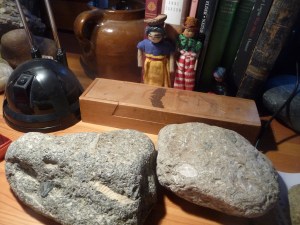
This morning I watched the wren as it went about its search for breakfast and when I came in to my desk, the first thing I saw were two chunks of sandstone from the beach west of Sooke where my novella takes place. They’re filled with fossils and I keep them handy as paperweights and reminders of time, how it can be compressed into stone, 25 million years’ worth, to hold in your hand as you think about birds and their stories, light and darkness, and stars.

P1120562


(from Winter Wren)

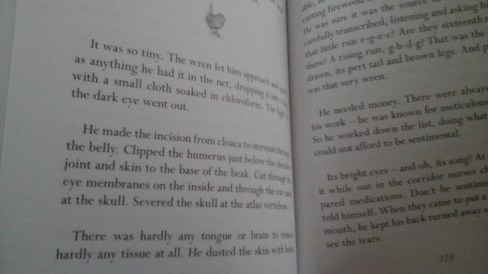
It was so tiny. The wren let him approach and quick as anything he had it in the net, dropping it into a bag with a small cloth soaked in chloroform. The light in the dark eye went out.

He made the incision from cloaca to sternum through the belly. Clipped the humerus just below the shoulder joint and skin to the base of the beak. Cut through the eye membranes on the inside and through the ear canal at the skull. Severed the skull at the atlas vertebrae.

There was hardly any tongue or brain to remove, hardly any tissue at all. He dusted the skin with borax. He hoped this wasn’t the bird that hunted in the salal every day, disappearing like a mouse among the stems, plucking insects from the moss. He knew there were several in the immediate area but that one was reliable; he saw it most days and heard it when he was out cutting firewood or bringing up water from the creek. He was sure it was the source of the notes he had so carefully transcribed, listening and asking himself, was that little run e-g-e-c? Are they sixteenth notes? Now, there? A rising run, g-b-d-g? That was the bird he had drawn, its pert tail and brown legs. And probably this was that very wren.

He needed money. There were always requests for his work—he was known for meticulous preparations. So he worked down the list, doing what he could. He could not afford to be sentimental.

Its bright eyes—and oh, its song! At night he heard it while out in the corridor nurses chatted and prepared medications. Don’t be sentimental, Tom, he told himself. When they came to put a small pill in his mouth, he kept his back turned away so they wouldn’t see the tears.

from Winter Wren (an unpublished novella)

winter wren

Some days he simply dreamed. Didn’t eat or rise from his bed except to use the toilet. If someone entered the room, he turned to face the other way. He kept his eyes closed and dreamed. It was a long path to dream down, to the past, where he was lithe and loose-limbed, a boy at home in the world. Tom, his father called, Don’t forget the tiller, and he paid attention, on those treacherous waves, murres and puffins with their curious beaks low in the surf, terns and kittiwakes wheeling above the boat.

            That trip to Klukwan, how long ago was that, when his father photographed the Whale House, photographed the blankets hung on a line, fine Chilkat blankets of spruce bark and goats’ wool. He saw so clearly the man in the Raven of the Roof hat, the dancers in their Snail House regalia, his father coaxing an acquaintance to act on his behalf to purchase them. He saw the Rain Wall with its hole for the chief to enter his quarters, the Raven Pole (he’d peered into the faces carved in the Raven’s feet), the Black Skin Pole. But the man knew their worth and wouldn’t help. He had other plans. His wife, who spoke no English, glared at Tom’s father and shook her finger fiercely. Still, his father photographed those events – the dances, the potlatches; and somewhere there were prints. The Museum, probably. But he didn’t need to look at them; there were times – this was one of them – when those days were as vivid as light. He walked the grey streets of Klukwan, smoke in each chimney, fish smell rank in the air, watching the sun come up, while his father still slept in the tiny cabin of their boat. The river steamed, full of salmon, and boys as young as himself crouched above them with spears and nets. And sailing back to Juneau, he watched the glacial creeks, dark and silty, swirl into the green water of the fjord. Fountains of water which his father said were humpback whales, so close the spray wet his face like rain.

Some days he dreamed of the War, how he tried to help the horses who screamed in the mud, their guts hanging out, flies already at work, he dreamed his way back to the terrible smell of gangrene and mustard gas. Some days, dreaming, he was already dead, a medic leaning over him and touching his wrist for the pulse; suddenly he sat up, asked for a smoke. For a moment he had entered heaven, then returned to earth, which he’d always regretted.

Some days he still sat on the porch above the ocean, a younger man with hands unspotted and strong, looking towards the salal where the little wrens hunted for spiders, rewarding him with their song, as plangent and lovely as anything he heard at the Royal Theatre in the days when he studied violin and thought he might pursue music as an occupation. He tried to capture the notes, the staff hastily drawn onto a blank page and his few years of theory helping him to figure out a time signature, pitch, the run of notes (16ths), a rest, another bar. He heard harmony, almost, the bird its own counterpoint, but realized it was another wren, further away. He was there on that porch at the end of the day, listening and transcribing, when a nurse appeared at his bedside to say that if he didn’t eat, then she would seek a doctor’s order for an IV.”