
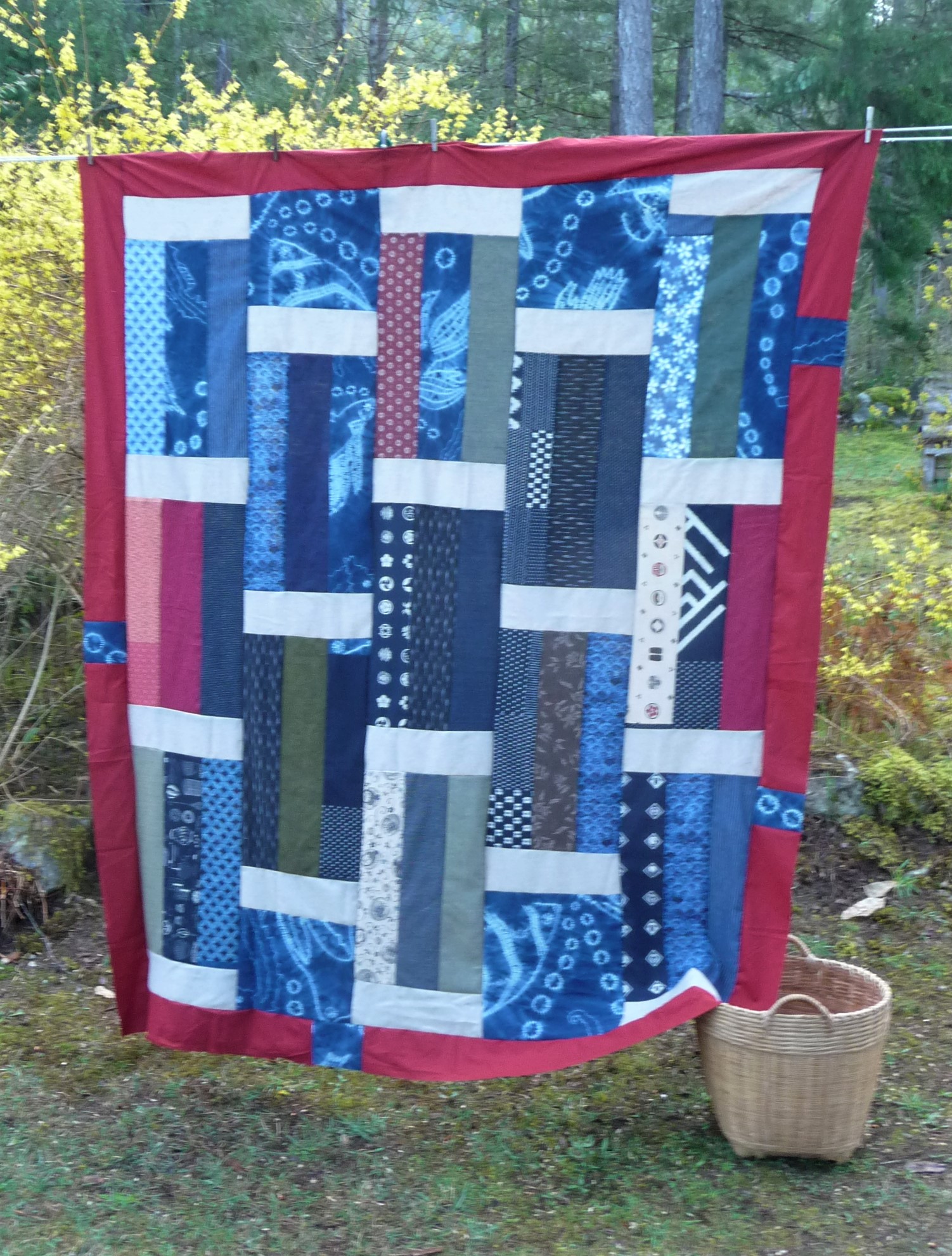
While I was swimming this morning, I was thinking about women and art. Two things happened over the weekend. I finished a quilt top I’ve been working on for a couple of weeks and I read “Monumental”, a profile of Simone Leigh in the New Yorker. (It’s called this in the print issue of the magazine but the online version has another title.) I wasn’t familiar with her work but of course now I’m seeking it out. As a young woman she was drawn to clay constructions. Not via a potter’s wheel. She was more interested in hand-building, coiling. Her work for years was the making of large terra-cotta water pots.
For ten years, I was obsessed with these water pots. It was a kind of perfect form, and it was something women had been making all over the world for centuries, this anonymous labour of women.
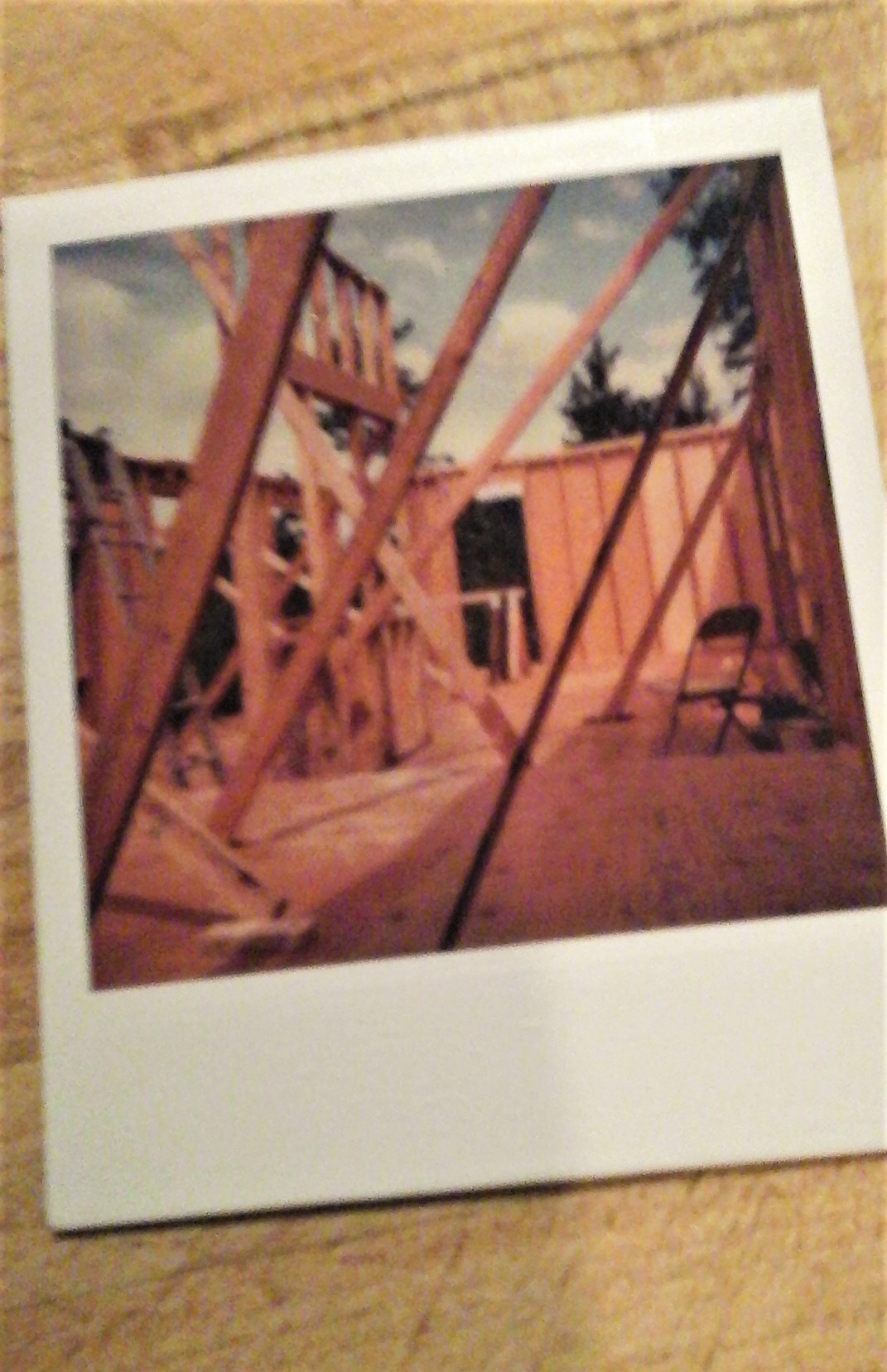
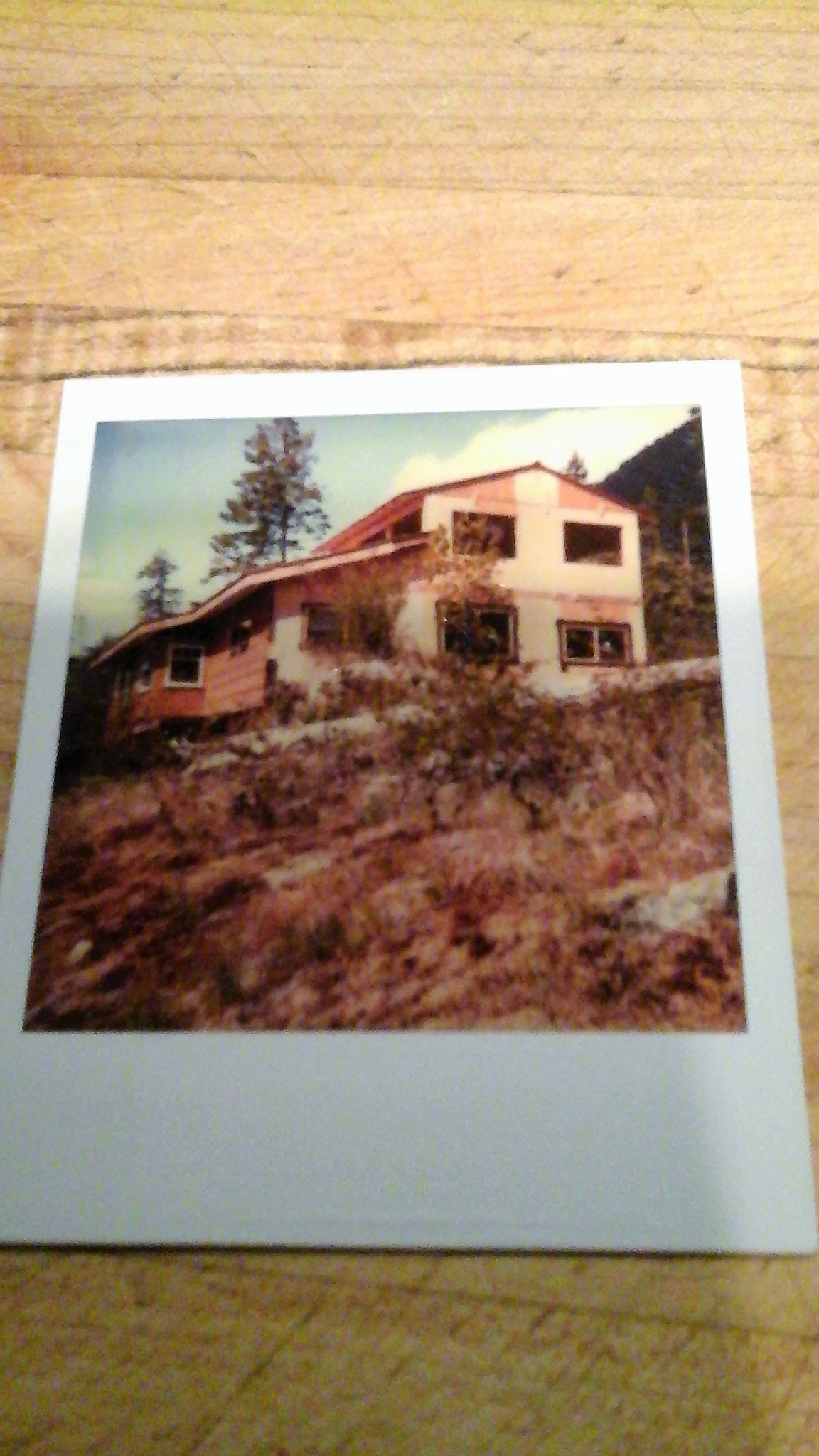
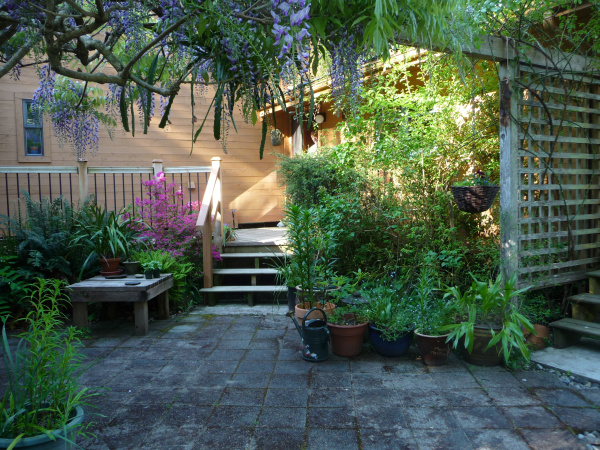
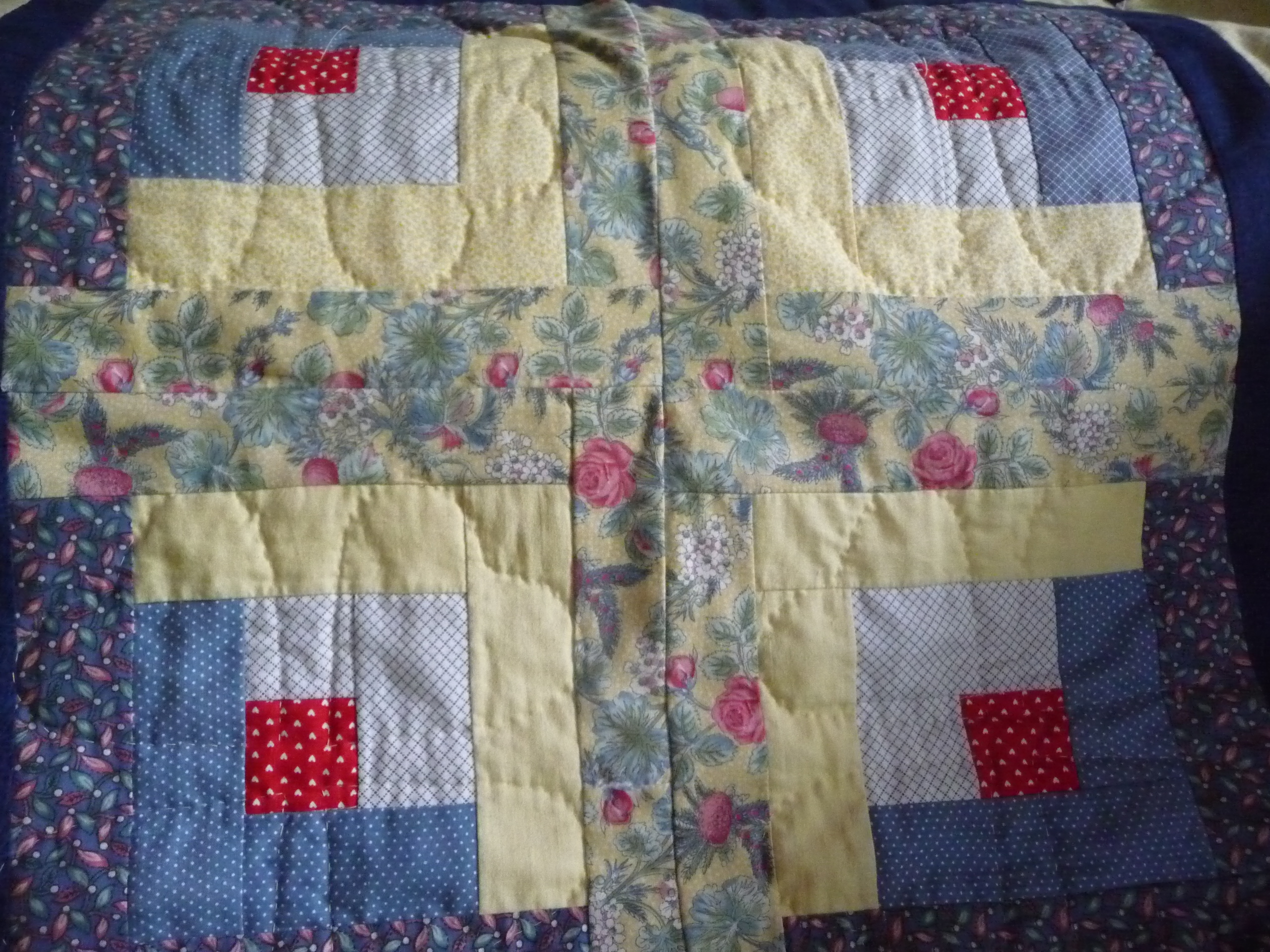
I was drawn in the article to what Leigh says about the hands-on work of sculpture. And it resonated for me as I finished the construction of the quilt top I made as a way to remember the building of our kitchen area, the first construction we did together when we began to build our house, the one we still live in 41 years later. (John built an outhouse on his own, a necessary step for the work we would undertake over the next years; we spent months living for part of each week in a tent with a small baby.) I wanted to commemorate the framing of the walls with their window-spaces and openings for doors. Wanted the lintels, the places for the sills, the thresholds. I built the quilt top by sewing long strips together to serve as the studs framing the walls, I separated them with horizontal bands of beige linen to stand in for top-plates, and I used a lot of blue cotton because our plates are blue, our table linens are mostly blue, our ceiling is white, sponged with clear blue clouds, and out of every window, there is sky, some of it open and some of latticed with the Douglas firs that have grown to huge heights during our residence here. (You will see some strips of brown and green.) To find a profile of Simone Leigh as I finished the sewing was a gift. I felt I had company in my isolated work here on the edge of the known world.
While I swam, I was thinking about women and art. I’ve written about Ursula Le Guin’s carrier bag theory of fiction before and maybe I’ve even quoted my favourite part of it:
If it is a human thing to do to put something you want, because it’s useful, edible, or beautiful, into a bag, or a basket, or a bit of rolled bark or leaf, or a net woven of your own hair, or what have you, and then take it home with you, home being another, larger kind of pouch or bag, a container for people, and then later on you take it out and eat it or share it or store it up for winter in a solider container or put it in the medicine bundle or the shrine or the museum, the holy place, the area that contains what is sacred, and then next day you probably do much the same again — if to do that is human, if that’s what it takes, then I am a human being after all. Fully, freely, gladly, for the first time.
When I make quilts, I am thinking of them as embodiments of usefulness first. I have fabric and batting and I know that a quilt will be used. But I am also driven to make something out of a fierce need to use my hands, my body, my strength. To lay out cloth, to measure (usually badly), to cut, to seam. To unpick the seams that have been ill-considered. To add embellishment in the form of the actual quilting, with strong thread, a potential 3rd dimension. Or buttons, for their tactile beauty, their mysterious visionary potential. I am making something practical but I am also trying to put into colour and texture things I have no other way of exploring in that moment. Essays serve as places of attempt and exploration too but there are times when I have to use my hands, follow what they are finding out as they handle the materials, hold the bundles of strips, measure thread. When I read Alexander Nemerov’s book about Helen Frankenthaler this winter (Fierce Poise), I was particularly interested in Frankenthaler’s work in anticipation, and then as a response to, her visits to the caves at Altamira and Lascaux in 1958. “Before the Caves” uses a staining process, swirls of colour echoing not only the images drawn by artists nearly 15,000 years ago, but also something of the emotional experience of entering the cave to encounter the animals in their ancient beauty. The gorgeous backbone of an animal inhabits her “Hotel Cro-Magnon” from the same period, the pigment so alive and organic. I can only imagine her pleasure in doing this work.
What happens now? With the memory of building the kitchen codified in Japanese cottons, scraps of linen, remnants of wool from a waistcoat I made for John for Christmas in 2008, a tie-dyed skirt given to me by a friend who volunteers at a thrift store and who thought I might be able to use the fabric for something? It’s been in my trunk for years, waiting for the moment when I needed a particular blue, the shimmering circles of its stars. What happens is anyone’s guess. Some batting, whatever I can find to use for the backing, a few skeins of slate blue sashiko thread, the sharp needles in their glass case. And hours and hours to pull it all together, remembering Ursula Le Guin’s wise words:
I came lugging this great heavy sack of stuff, my carrier bag full of wimps and klutzes, and tiny grains of things smaller than a mustard seed, and intricately woven nets which when laboriously unknotted are seen to contain one blue pebble, an imperturbably functioning chronometer telling the time on another world, and a mouse’s skull; full of beginnings without ends, of initiations, of losses, of transformations and translations, and far more tricks than conflicts, far fewer triumphs than snares and delusions; full of space ships that get stuck, missions that fail, and people who don’t understand. I said it was hard to make a gripping tale of how we wrested the wild oats from their husks, I didn’t say it was impossible.


 on the lists of many publishers. No one apologized for the brevity of, oh, Death in Venice or The Ballad of the Sad Cafe. Few lamented that a novella wasn’t as lengthy and complicated as War and Peace, that the printed volume didn’t include a family tree spanning centuries. The contemporary European literary tradition includes the novella as a matter of common sense: I think of the Peirene Press and Sylph Editions with their devotion to the marriage between text and design. There’s been a fair amount of spirited debate about the parameters of the novella. It’s generally agreed that the optimum length is somewhere between 20,000 and 40,000 words, but there are exceptions. I’d argue that James Joyce’s The Dead is a novella, though at roughly 15,000 words, it’s short. Still, it has the dramatic tension, the scope, the unity of place and subject, and its language is beautifully condensed and elliptical—all qualities I associate with the form. In 2012, Ian McEwan wrote (in The New Yorker), “I believe the novella is the perfect form of prose fiction. It is the beautiful daughter of a rambling, bloated ill-shaven giant (but a giant who’s a genius on his best days).” Thirteen years ago I published a novella with a small Canadian publisher willing to include it on a list with several other novellas, printed as small books and priced accordingly. Recently I was told that, alas, a novella is no longer a viable form to market in today’s economic climate. So I was delighted to receive a copy of Gillian Wigmore’s Grayling, with its gorgeous cover (by Annerose Georgeson) and French flaps enclosing a book perfectly sized to suit its contents. The publisher makes no apologies (and honestly, why should she? Do presses make excuses for slim collections of poetry?), but instead celebrates the form.

 ...Theresa Kishkan