a publishing history, with asides

the 1970s, 1980s, 1990s

Now that I am approaching 70, I am going to take some time to set down details, histories, if for no other reason than to leave a record. One of these histories, one that I find myself increasingly interested in, is my own publishing history. Such as it is. It’s a tale that spans two centuries. Two, no, three technologies. And it recognizes some shifts in both the writing life and the publishing industry. Some of them are ones I can adapt to and embrace. Some of them feel alienating. I joke that I’m aging out of the system but maybe it’s actually the truth.

I began to write in a serious and committed way when I was 20, although I can’t really remember a time when I didn’t try to puzzle my way through things in my life with words. When I was around 10, I remember feeling such an intense drive to record how I felt on the long summer days in the neighbourhood my family lived in near the Gorge in Victoria. I’d walk or ride my bike to the public dock at Gorge Narrows near the foot of Tillicum Road, I’d explore Colquitz Creek, and on Saturdays I’d take 2 buses to the Victoria Riding Academy on Cedar Hill X Road to spend the day. An hour of that day was a riding lesson but I also cleaned stalls, swept the barn, helped to feed the horses whose faces I loved, whose flanks I brushed, whose feet I cleaned with a hoof pick. I wanted to write about this and made paragraph after paragraph on lined paper left over from the school term and then stopped, because I realized I didn’t have an idea of how to shape my feelings into something coherent. I don’t believe I ever really stopped trying, though, and by the time I was 19 or 20, I’d figured out, by reading, something about form. When I was in grade 11, a supportive teacher loaned me books to read. You’ll like this, he promised, handing me Seamus Heaney’s Death of a Naturalist or Virginia Woolf’s Mrs. Dalloway. I don’t think I noticed that one book was poetry and the other prose. Under my teacher’s guidance, I wrote constantly and without my knowing, he submitted one of my poems to a national student anthology. It was accepted and eventually (though much delayed; keep this in mind because it’s a common note in my publishing history) the anthology came out. I remember my teacher coming to my home and telling me and my baffled parents that my poem had been cited by the judges as one of their favourites. The judges? I don’t remember all of them but Leonard Cohen was one.

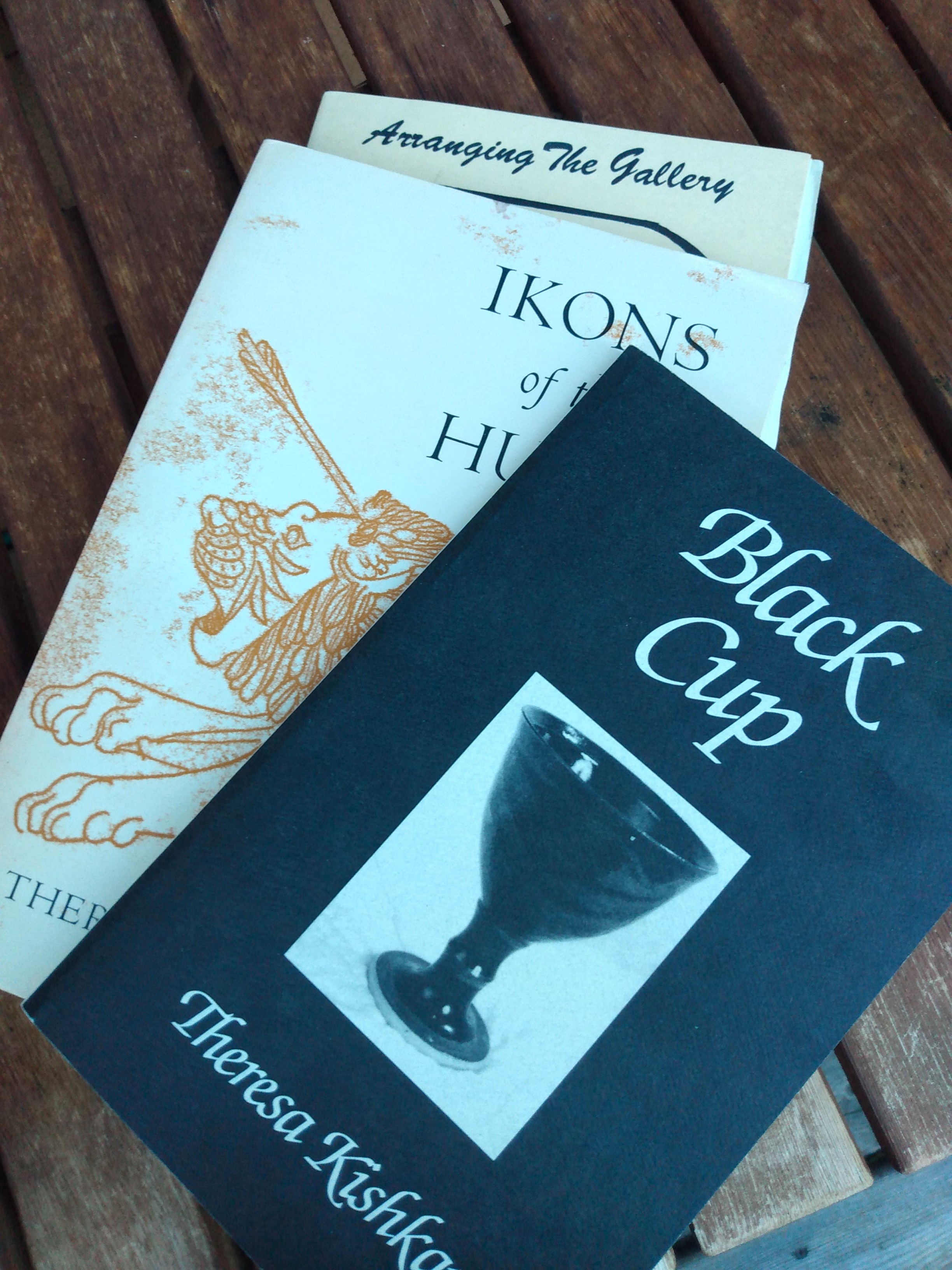
I took some writing courses during my university years. I can’t say that the classes themselves were particularly useful–then, as now, I resisted the idea that sharing my drafts with others was necessary; I felt my writing process was a private one and I’d figure things out for myself–but I did have some good instructors who became mentors and friends. One of them, Charles Lillard, suggested to me that I probably had enough poems for a chapbook and why didn’t I send a manuscript to Fred Cogswell at Fiddlehead Poetry Books. I did, in the spring of 1976, when I was 21 years old, and he wrote back within a couple of weeks to say he liked the poems and would publish the book that same year. There wasn’t a contract. There was no editing. And when Arranging the Gallery came out as Fiddlehead Poetry Book 197, I was mortified by the cover design and I also realized that somehow a whole poem had been muddled in the typesetting (I hadn’t received proofs either!). Fred was apologetic and arranged for a page to be reprinted with a gummed edge and he undertook to send the new pages to those who’d ordered copies. There were a few reviews, mostly positive. On the one hand, it didn’t seem all that difficult to publish a small book. On the other, I didn’t know enough to own the parts of the process I could have been involved with. One of these artless states of being would come to haunt me when I published my second book.

A year later, Robin Skelton, who was the poetry editor at Sono Nis Press after Dick Morriss took it over from J. Michael Yates, asked for a manuscript. I gathered together what I had, including some of the poems from Arranging the Gallery (which had sort of sunk like a stone), and Robin and I organized the sections over glasses of Jameson whiskey in his wonderful study with its tiled fireplace and big chairs. Ikons of the Hunt was the title we agreed on and Sylvia Skelton helped with the copy-editing. I was going away for a year, to Ireland, but I was assured the page proofs could be mailed to me there. Robin had an idea for a cover (after I resisted his suggestion of a nude drawing me of myself), a solarized detail from an Assyrian wall panel. He would write the cover copy.

I remember reading the proofs by daylight and candlelight at the table in the cottage I lived in on a small island off the Connemara coast, returning them, and some months later, in early fall of 1978, receiving a few copies by mail. I sent one to Seamus Heaney, who’d generously given me permission to use some lines of his as an epigram, and I gave one to the fisherman I’d fallen in love with. What he made of it is still a mystery to me.
poetry books

I returned to Canada from Ireland, intending to stay for only a short period. I’d written prose sketches of my life on the island and a friend invited me to her writing group to read some of them. There were so many questions about the island and what the prose sketches left out that I simply began to fill in the gaps and that became a novella, Inishbream. More on that in a moment. My poetry book was reviewed well, apart from one really terrible one in Books in Canada, written by A.F. Moritz. I remember that I picked up a copy of the magazine at a shop on lower Fort Street and began to read it on my bus ride home. One paragraph in, I was horrified. I wanted to hide. My face was on fire. I imagined every person on the bus could tell my book was pathetic and they were all were looking away, simply to be kind.

Kishkan’s lkons of the Hunt should be
judged by the shameless puffery of the
publisher’s blurb on the cover. She pre-
sents, we are told, “a universe dominated
by age-old dreams and passions.” In the
book we find the stock-in-trade of today’s
most boring and ubiquitous magazine verse:
a flat voice, facile myth-making. a lot of
moons and stones and bones and sea weed
and dream-fish, an easy emphasis on death,
cold, moisture, womb, mot [sic], and silence.
Kishkan supposedly reveals “an ex-
traordinary range of themes and styles.”
The book is depressingly unvaried, with
scarcely ever a change in tone, vocabulary
or any other aspect of style. There may be
several themes, but all are reduced to
monotonous vague keening. a sad-eyed
gaze, and a soft romanticism. What of the
“impressive variety of forms, from short-
lined lyrics to prose poems”? She has
several ways of arranging poems on the
page, but the differences are wholly superficial.
These poems are fundamentally identical in phrasing,
cadence, diction, and mood.

The review got worse (Books in Canada, January, 1979) but thankfully Ikons of the Hunt led my husband John Pass to me. In Victoria for a poetry reading at Open Space, he saw my photograph on the book and suggested to a mutual friend that I be invited to dinner before the reading. The rest is history, our history. Instead of returning to Ireland for good, I went for a short time to tell my fisherman that I wouldn’t be sharing the stone house he was thinking of restoring and John joined me for some travels in Ireland, Wales, England, and Paris. Over our first winter together, I took the sketches I’d written and gave them a structure. I sent the result, Inishbream, to Sono Nis but the feeling there was that I was a poet and this wasn’t poetry so they wouldn’t publish it. I tried many other publishers but no one liked it enough to take it on. In the meantime I was writing poems, slowly, because my ego had taken a bit of a beating, and eventually there were enough for a book. Sono Nis declined that manuscript too but another publisher accepted it immediately with an excited phone call to say he’d had it added to his forthcoming list after clearing the funding with the Canada Council. I never heard from him again. I’d had a baby and when John and I went out to print a birth announcement at the Barbarian Press, making an overnight of it, Crispin Elsted read Inishbream and said he would love to publish it as a private press book, illustrated with wood engravings. It wouldn’t happen just yet because the artist he had in mind for the engravings was busy but if I could be patient, he promised a beautiful treatment for my story.

I was patient for 18 years. Reader, I cannot say I always believed that Inishbream would finally see the light of day. In fact John says that the novella lurked in our house like a dark sister and I know he’s right. I had another baby and then another and somehow I lost most of my confidence in my work as a writer. That third collection of poems shape-shifted as I slowly added to it, poems about motherhood, about regret, about love. It became Black Cup and eventually Robin Skelton, now editing for Beach Holme Press, accepted it. I asked that we request cover matter from other writers, and I chose the image for the cover, though the photographer who took the shot somehow lost his focus. Remembering A.F. Moritz’s observation that, “A few years ago the world’s Kishkans were regaling us with ‘nacreous’, ‘alabaster’, and ‘diaphane’ “, I rigorously avoided such terms! In those years, I was still typing my manuscripts from handwritten drafts and I kept thinking of Inishbream, typed on yellow paper, and some nights it felt hopeless. Maybe those were the nights I had no sleep because of sick children but I recall my yearning for not only the world that inspired the novella but also a writing world that somehow included me. To be sure, there were good things that came out of the blue: a composer writing to ask for permission to set some of my poems to music, a composition that received its premiere at the Scotia Festival in 1987, sung beautifully by Rosemarie Landry. Letters from readers. A few wonderful invitations.

But I no longer had access to the lively spirit that allowed me to write poetry. There is no way to explain this but I knew it was gone. Then one summer, on a family camping trip to the Nicola Valley, I was filled with such urgency to write down every detail, to describe every moment, and to record the names and dates of those buried in the little corral of graves beside the Murray Church. This became a lyric essay, “Morning Glory”, and the experience of writing it was new and rich. I wanted to continue exploring the possibilities of the form and found myself writing constantly. The essays became Red Laredo Boots and after many rejections elsewhere, New Star Books took the manuscript, or more specifically, Terry Glavin found a place for it in his Transmontanus series.

rlb

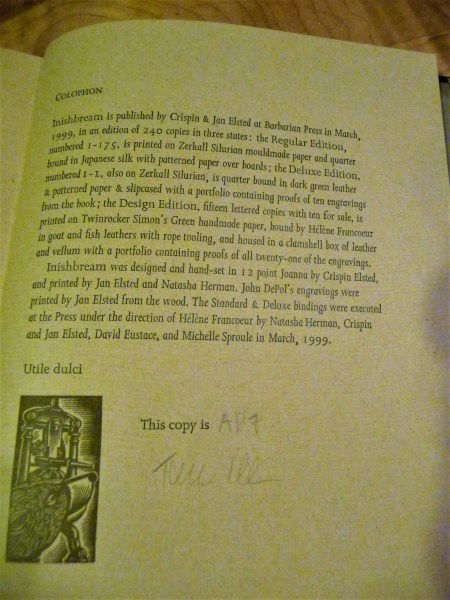
At the very end of the 1990s, proof pages began to arrive by fax from the Barbarian Press, with the fervent hope that I could attend to them immediately as the press was inked* and ready. I’d seen some of the drawings for the engravings because the artist, John DePol, wrote to ask me about certain details. His was a clear and beautiful style, moody skies, a scene in a bar that reminded me of Jack B. Yeats. Over the 18 years that passed between Crispin reading the original Inishbream manuscript and its publication, I’d made a few changes, most of them as I transferred the text from paper to word processor, taking Jack Hodgins’s advice to think of revision as “re-visioning”. He recommended opening a new file and starting afresh, using the old manuscript as a template. I’d typed and changed, only a little, and sometimes Crispin would phone to make a case for the yellow manuscript version. And he was always right. The original was somehow true to the young woman who wrote the sketches in a notebook on a rocky island off Ireland’s west coast. I went to the Barbarian Press for a weekend to watch the binding of the Deluxe edition—the book was published in 3 states, the first quarter-bound with green Japanese silk, with covers created by John DePol; the second quarter-bound in dark green leather, with a folio of 10 proofs of wood engravings, a slipcover holding both; and a Design edition, bound by Hélène Francoeur in goat and fish leathers, housed in clamshell box with driftwood and brass elements, and including a folio of all 21 engravings. It’s an astonishingly beautiful book in these treatments and I have to say every hour of those 18 years was worth the wait.

a little stack of inishbreams

By the end of the decade, I’d written a handful of new essays, I’d published several chapbooks, one of which, Morning Glory, won the bpNichol Chapbook Award, but what truly absorbed my time and imagination was a novel, begun – as was Inishbream— as a poem, a long poem about horses, occasioned by an autumn encounter with a small herd on the Pennask Lake Road. But I began to develop another strand of narrative, one wholly fictional, and it was as though I was living two lives, one set in 1906 and one in the current moment. If it had been difficult to find a publisher for my 3rd poetry collection and for Red Laredo Boots, I was about to learn about true rejection and a certain resilient patience.

*just to clarify that the book was handset and printed letterpress, one page spread at a time, so time was of the essence. You can read a bit more about this here: http://barbarianpress.com/archives/inishbream.html

To be continued…
…the last notes of “The Woman of the House.”

window

I was 22 when I travelled to Ireland the first time. I’d graduated from university and I felt drawn to the landscape(s) I’d loved in my Irish literature course. I had a thousand dollars and an idea of a place I could live, a cottage arranged for me by the friend of a friend. But it didn’t work out for a lot of reasons, mostly because Travellers had camped in the remote little house in the mountains in County Mayo and burned the floorboards for fuel. I went off with my rucksack and asked in post-offices, shops, and any other place I could think of: Did anyone know of a place I could live? Somehow (a long story) I ended up in a cottage on an island off the Connemara coast. It was a small island, with a population of 60. There wasn’t electricity or running water and my toilet was a pink plastic chamber pot, emptied over the stone wall into the grass, and rinsed in the tide just below the wall.

I had in mind a writing life. Every morning I’d wake up, make a cup of the cheapest instant coffee I could find in the grocery store in the town I’d go to once every week or ten days, depending on weather and if someone was going to the mainland strand and had room in the currach for me. From the strand I’d either walk the 7 miles to the town or else borrow a bike from the farmer whose fields rose above the sand at Eyrephort. I’d wake up, drink my coffee, and then write in my journal. I’d actually brought a typewriter with me (ah, dedication) and I’d scribble notes towards poems. The scribbles were often very prosaic. Somehow the long cries of the seabirds, the wind coming down my chimney, the quavery notes of the man who played his tin-whistle on the lane, or boreen everyone called it, the familiar moaning of the donkey who lived in my field, somehow these didn’t really lend themselves to tight syllabic lines. I wrote a lot. I was lonely. I had two love affairs with men who didn’t talk much, one on the island and one off it. I had so little money that I ate mostly rice from a five pound bag I bought in Galway, measuring it out by teacups full, and I picked nettles, silverweed, mussels on the rocks below my cottage. I was grateful for the potatoes left on my doorstep, the occasional cabbage.

When I came back to Canada, I was intending to just stay long enough to get my life into order and then I was going to return to the one man who lived off the island. But in the interim, I met the man who became my husband. Before we married, I did go back, for three months, not to the island but to a village not far away. In Canada I’d taken the little prosaic scribbles and tried to fit them together as a series of prose poems. When I showed them to a couple of friends, they said the same thing: Write more, tell the whole story. So during the period I lived in the village, I did that. Not exactly my story. Somehow I wanted to know a couple of things and in the way you can find these out by venturing a little further into the unknown, I tried to find them out. What would have happened if I’d married the fisherman on the island, what would have happened if the beautiful man in the Travellers’ camp who invited me for a drink had led me to a quiet place under the fuchsia? (We had the drink but I didn’t follow him.) And so I wrote, I walked in what the Irish call weather (“Weather, isn’t it?”) and that we might call rain, and at the end of the three months, John arrived and I tucked my pages into my rucksack. Those pages became a novella in due time, my first novella, Inishbream. Because my publishing life has never enjoyed a smooth trajectory, it wasn’t published for nearly 20 years.  Jan and Crispin Elsted at the Barbarian Press printed it in 3 beautiful states, with wood-engravings by the wonderful John DePol, I have the first two states and the third, bound in turbot skins, set in a clamshell box, with little driftwood handles, I have only seen in photographs.

Cliquez sur l'image pour fermer - Click to close

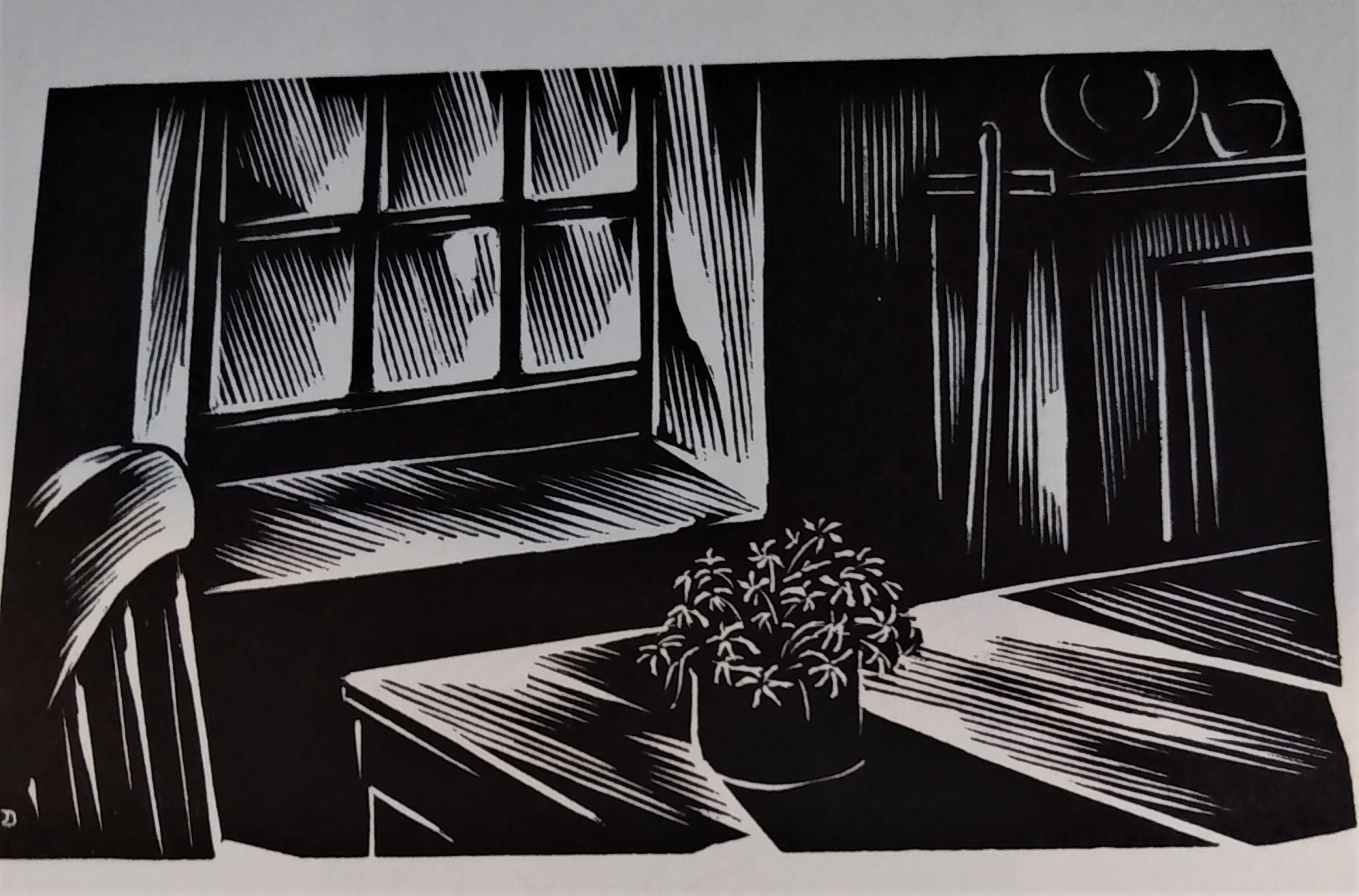
On days like today, rainy, with Irish music filling the airwaves, I am there again. I am at the table by the window, the one John DePol so beautifully caught—the deep casements, my broom leaning against the mantle, the primroses I’d lifted from under a hedge on my walk back from the town and put into a teacup—, and I am listening. There is wind, the donkey looking out to sea the way he did, moaning, half in love with loneliness, and oh, Miceal on the boreen is playing his tin-whistle.

     It seemed that even the stupid blind wind would subside when Miceal’s bent fingers jigged over the length of the whistle, and instead of its hollow, monotonous tones there’d be the sweet sad airs of the Celtic heart.
     Someone else wanted reels or “The Raggle Taggle Gypsies.” We listened till the cows came home. When it darkened, you could see the frail lights begin to bloom on Bream and Turk and the occasional headlamps of evening cars on the Sky Road. The summer people would drive to the mainland viewpoint and would park, casting their beams over Mannin Bay and out to the islands. They’d see the pale gaslight or candlelight smudging the dark of the archipelago and the long piercing flash of Slyne Head, the keepers over each season attentive to craft warnings and the forecasting of gales. And if they stepped out of their cars, they’d hear the mourning donkeys and the last notes of “The Woman of the House.”


tin whistle

Note: Inishbream was published as a trade edition in 2001 by Goose Lane Editions. I also have a few copies here if you’re interested. (The Barbarian Press editions have been out of print for years though copies do show up at fine press auctions from time to time.)

winter gifts at High Ground

I know Christmas is more than a month away but if you’re thinking about gifts, we can make it simpler for you by offering some of our own books, limited edition chapbooks, and broadsheets printed on our late 19th c. Chandler & Price platen press for sale during the season.

mud bottom

For example, John’s Mud Bottom (details here) is $35. If you buy a set of the Companions Series Broadsheets (also here), a folio of 12 letter press broadsheets including poems by Gillian Wigmore, Russell Thornton, and Maleea Acker written in reponse to other poems printed enface, priced at $150, then we will include a copy of Mud Bottom for free with your order.

winter books

For a selection of our books, including my Euclid’s Orchard, Winter Wren, The Age of Water Lilies, Inishbream, Patrin, A Man in a Distant Field, and Red Laredo Boots, and John’s crawlspace (winner of the 2012 Dorothy Livesay Poetry Prize), Forecast (Selected Early Poems: 1970-1990), and This Was the River. the deal is this: buy one at cover price and receive a second book of your choice for 50% off. We’ll happily inscribe the books. Postage will be charged at cost.

If there are other books you’re interested in or you see something on the High Ground page (including chapbooks, individual broadsheets, including Michael Ondaatje’s “Breeze”), please ask us. And if you think that background scarf on which the books recline is as ravishing as I think it is, visit Caroline Jonas’s website. (I recently ordered the scarf as an early Christmas gift from my husband because he won’t be able to shop this year!)

an Irish journal

irish journal

A dear friend in Toronto sent John some books and they arrived yesterday. One of them is Louise Gluck’s Faithful and Virtuous Night. I picked it up this morning and opened to “Cornwall”:

I was renting, at the time, a house in the country.
Fields and mountains had replaced tall buildings.
Fields, cows, sunsets over the damp meadow.
Night and day distinguished by rotating birdcalls,
the busy murmurs and rustlings merged into
something akin to silence.

I sat. I walked about. When night came,
I went indoors. I cooked modest dinners for myself
by the light of candles.
Evenings, when I could, I wrote in my journal.

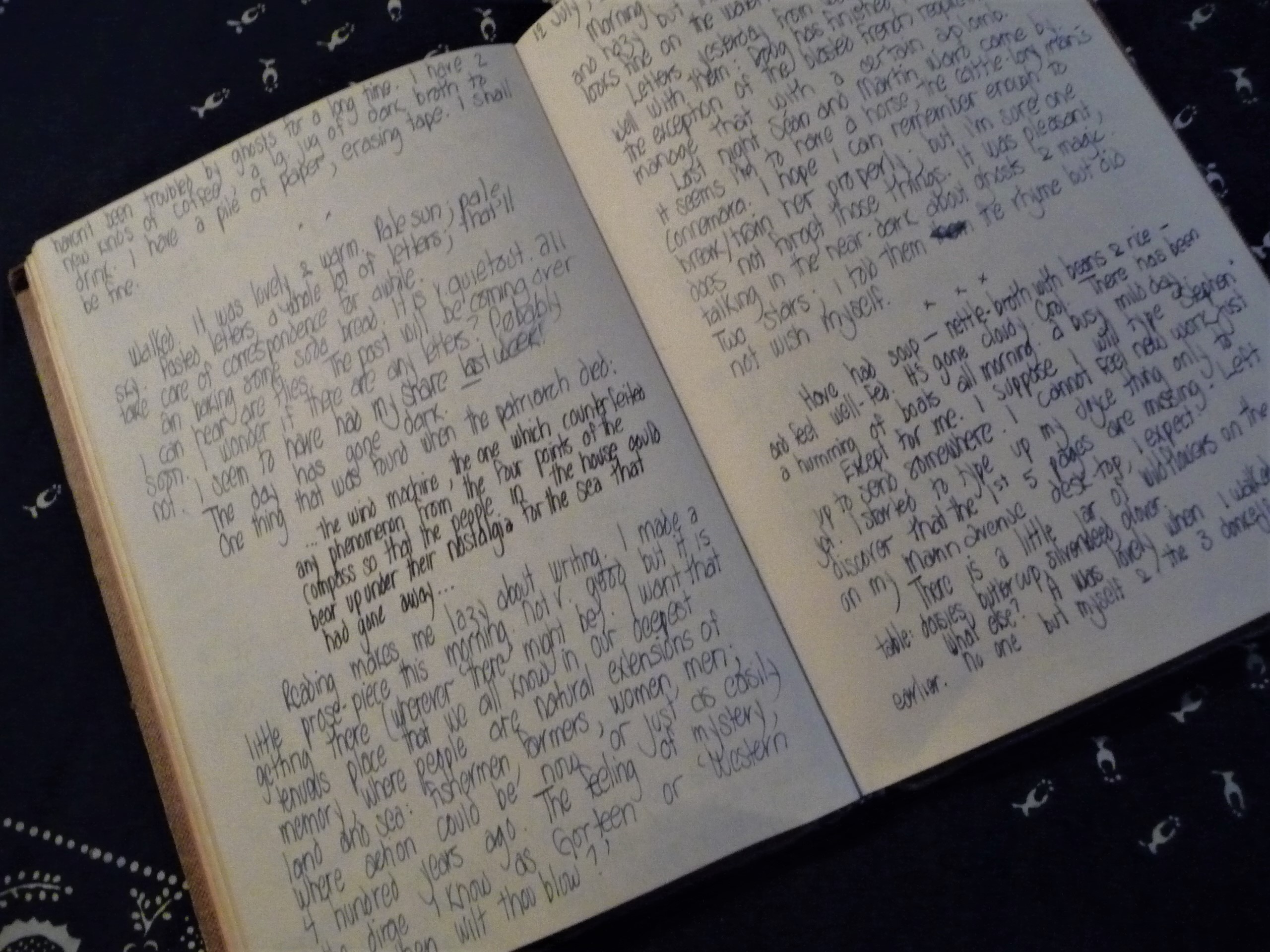
Maybe this was the poem that led to me opening a drawer where I keep some of my old journals from times in my life when I’ve kept them. The 8 months I spent in Europe, mostly on Crete, but with two months in London. The year in the west of Ireland on a tiny island off the Connemara coast. I’ve written of the time in Ireland in a novella, Inishbream, and reading my journal reminds me of what was left out. Nettles. Endless nettles (and mussels) because I was so poor I could hardly afford to buy food. But the rhythm of the days and nights was (to me) memorable. Yes, I cooked on dark evenings by candlelight because there was no electricity and the single gas lamp in my cottage was unreliable. There were cows, a damp meadow where a donkey also lived, and he would hang his head over the stone wall, watching for me to come out to pet him. The birdcalls took time to learn. There were corncrakes who rasped in the tall grass, wagtails, rooks, once a snow bunting, gannets, osprey, an owl call from time to time (and maybe it was a short-eared owl because others saw them; I only heard something in my eaves, rustling and creaking), and everything was modulated by the sound of the sea just below my bedroom window.

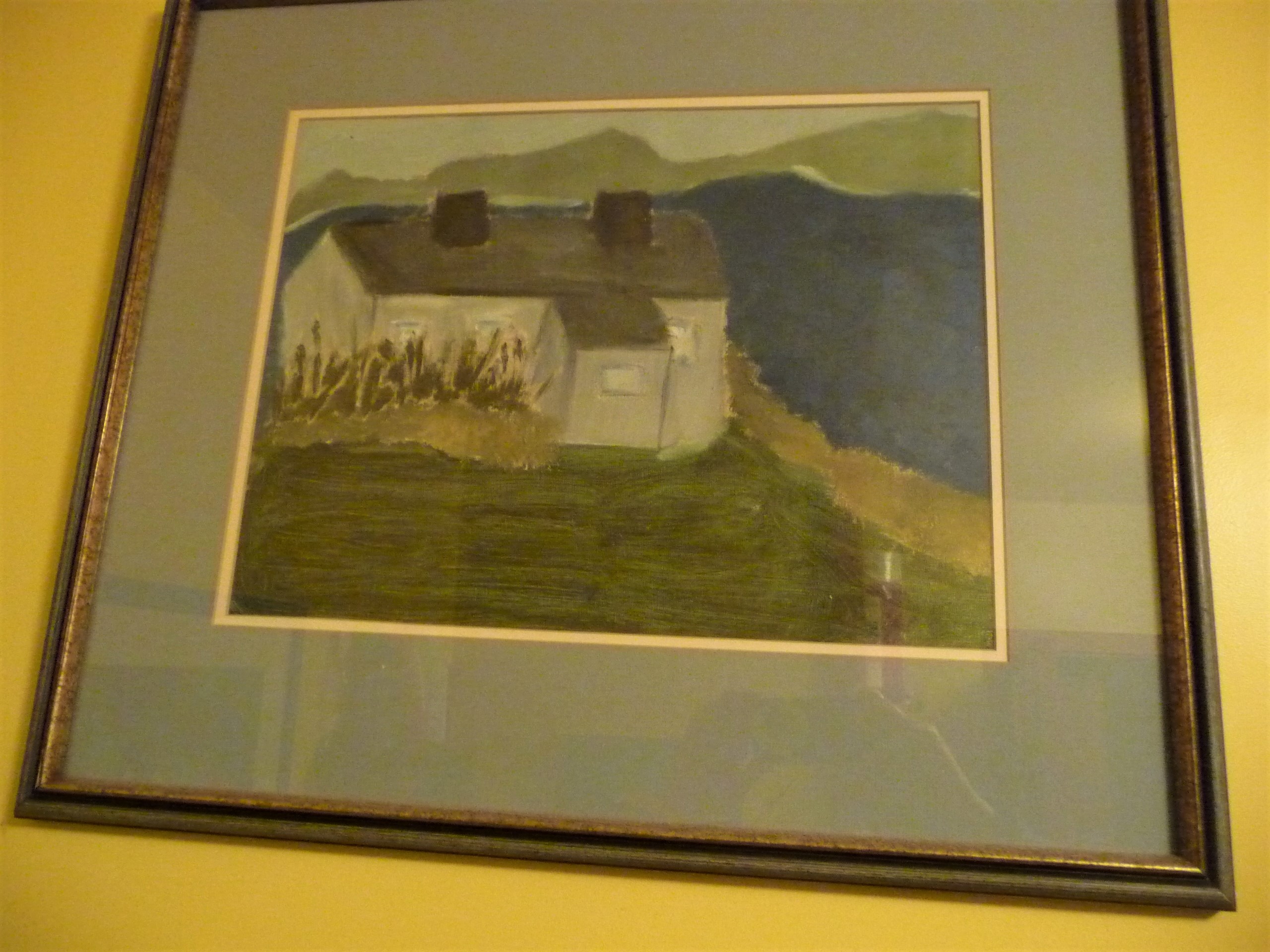
One day I think I might transcribe my journal. There’s something in it that reminds me of a life lived simply and quietly, with loneliness, and with joy. Occasionally I tried to make little sketches but my drawing skills were so limited (still are!) that I quickly realized it would be better to sketch with words, with phrases, descriptions, and a log of the books I was reading. Once I set up a board with canvas clipped to it and used the paints given me by a friend to see if I might capture my house. I was standing by the stone fence haunted by that donkey and my neighbour Peter came up to see what I was doing. He didn’t think much of the results. I gave the painting to my father for his birthday and he framed it. I have it now, hung in the bathroom, and so I see it often, the green rustling elephant ears planted in front, and the hills on the mainland visible. Peter was right and he was wrong. It isn’t the house as it was but it’s as I remember it, if that doesn’t sound paradoxical.

I shut my book.
It was all behind me, all in the past.

Ahead, as I have said, was silence.

There was never silence on the island. Always the ocean, the donkeys, the cows groaning on the lane as they were herded from one tiny field to another, a fiddle when the wind was right, a tin whistle quavering across the rocks, and the owls in the night.

my cottage

redux: where my limbs are in space

Last year I was dreaming of this lane. And looking at it this morning, I am remembering the Olson line, “…is it not a heart which has gone lazy?” Is it? Sometimes. But not this morning.

inishbream

I woke in the night from a dream of Ireland, where I lived in my early 20s. I lived on an island and I’ve written about it, first in a novella, Inishbream, and in an essay in Phantom Limb. In the dream I was walking down the boreen that crossed the island. I was wearing the old sandals I had then, even though it was raining. I was swinging my arms and my shoulders ached a little. I knew where I was, knew the air my arms were swinging through, misty, smelling a little of turf-smoke and dung. This was the path the cattle took when they were moved from one field to another and it was the trail leading up from the quay so that when the turf was brought from the mainland by currach and loaded into a donkey pannier, the donkey walked to its owner’s cottage along its rocky ground.

I wonder if I had the dream because I was reading yesterday about proprioception? It’s a term I remember from the American poet Charles Olson whose work on projective verse, field composition, the guiding breath of the poet dictating form, and so forth was an important influence for the poets I was reading as a young woman.

And the threshing floor for the dance? Is it anything but the LINE? And when the line has, is, a deadness, is it not a heart which has gone lazy, is it not, suddenly, slow things, similes, say, adjectives, or such, that we are bored by? — Charles Olson, “Projective Verse”

Proprioception is the knowledge of where your limbs are in space and in relation to each other. It’s sometimes called a sixth sense, a sense of self. It’s the thing that allows us to move in a room without bumping into people, to descending stairs in the darkness without falling (I do this often, reaching forward with my foot and trusting my own body) and without really thinking about it. I remember when our dog Friday, towards the end of her life, lost the use of her hind legs. When we took her to the vet, he said she’d lost her sense of proprioception and it was the first time I’d heard the word used outside of poetics.

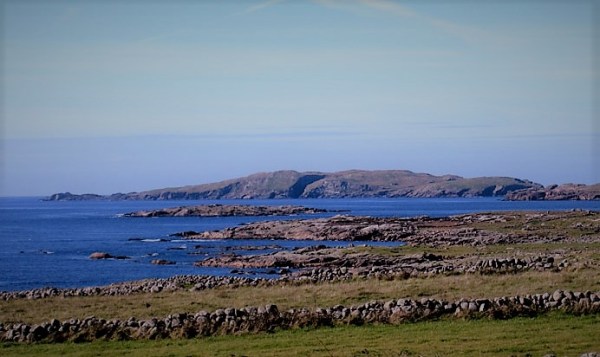
In my dream last night, I knew how it felt to walk that boreen. I knew the effort needed to avoid the stones, to make sure my swinging arms didn’t graze the stone walls on either side of the path, I knew how I would feel as I approached the side path leading to my cottage (which was just behind the rise you see to the left in the photograph). I knew to be quiet as I walked past the school (that building on the right) because I loved to hear the children’s voices through the open window. Sometimes they were having their Irish lesson and the words sounded like music: gualainn, lámh, béal…Sometimes there was even music, one of the men playing a tin whistle at a gate you can’t see just beyond where the path curves away. Sometimes I’d try a few dance steps as I approached my house with the music all quavery in the wind.

Soft is the grass, my bed is free.
Ah, to be back now in Carrickfergus
On that long road down to the sea.

But even in the dream, I knew I was dreaming. I knew my shoulder was sore because of my swim yesterday when I didn’t get my usual lane for the first half and so I had to keep turning my head when I was doing the back-stroke to make sure I didn’t crash into the end of the pool. (In the water, in my usual lane, I know exactly where I am by how it feels to stretch out under a particular section of ceiling, and how many arm strokes it takes to get me from the shallow end to the deep.)

This morning I am looking at some recent work, my body still wistful for that walk on an Irish lane. Maybe it’s the rhythm I’m hoping for in the writing, the careful foot, a swinging arm, my ear listening for new words on an old wind.

This is so long ago now but thinking of it brings back the music of Miceal’s tin-whistle as clear as anything and I ache to walk out to the boreen and learn to play along. — from “The One Currach Returning Alone” in Phantom Limb

“…housed in a clamshell box of leather and vellum…”

proof
proofs

Some mornings you wake to sky cleansed by the rain overnight, crackled clean by thunder and lightning, and just a little mist settled over the trees. The fire is warm. The cat’s been fed. To prolong the peace, you read a few of your favourite blogs, one of them Commatology.com. And wow, this is what you find, the musings of a perfect reader:

http://commatology.com/index.php/2018/10/stepping-into-a-river-of-dream/

The past hour has been spent in that dream. I was 23 when I lived on the island I wrote about in Inishbream. I was 44 when the novella was finally published. I held the narrator close to me those years in-between. She was—is—me, and she isn’t. I began this book as a series of prose poems and the people I showed them to asked for more detail, more connective tissue between the anecdotes and meditative passages. I remember asking myself, Well, what if you…and I won’t confess what I did, because I’m not entirely certain now which parts are purely autobiographical and which were invented. Or imagined.

colophon
this is a terrible photograph but if you click on the Barbarian link, you will see better visuals

When the book was being printed in its private press editions by the Barbarian Press, I’d receive phone calls daily. The Barbarians would want to check a detail, they’d send the proofs, one page at a time, by fax, and I’d know the presses were inked and time was of the essence. I loved everything about the book they created: the magnificent wood engravings by John DePol; the soft papers, the typeface (Eric Gill’s gorgeous Joanna); the bindings (there are 3 states and they’re all bound with different materials, even a special clamshell box of vellum and leather made by Hélène Francouer); and the way the handmade values of this work echoed my own. Echoed the place that inspired the book. Inspired me in so many ways in the life I went on to live. Sometimes I take down my special copy and read it slowly, wondering at the younger self who lived on an island at the very edge of the world, alone.

I was lucky enough to have Goose Lane Editions publish the book as a trade edition two years later. (I think they still have copies available for sale and if they don’t, ask me; I have some here.) I’ve been back to Ireland twice since then, the last time 17 years ago. Leslie at Commatology was just there and it was sweet (and sort of sad) to read what she found and didn’t find.  She writes,

It’s a fictional place, but I locate its real-life cousins off the Connemara coast: Inishturk, Inishbofin, Inishark. Inish, or Inis, or Ennis, for that matter, all mean island in Irish, and bream are a kind of fish.

She was close. Those are all islands I knew. Mine was near them, yes, and named for a fish, though not bream. Remember what Ishmael said, in Moby Dick? “It is not down on any map; true places never are.” Or they are, but they’re hidden. Mapmakers and writers—we have our reasons.

novellas for a rainy day

rainy day friends

It’s raining, a lovely soft sound on the roof. A perfect day to curl up with a novella, or three. In that spirit, I’m offering my three novellas—Inishbream, Patrin, and Winter Wren—for $45. (That’s a paltry $15 per title! But I’m only offering them as a trio.) I’ll ship for free in Canada. Other places? We can talk!

On my Books page, you can read about the individual titles. And here’s a little sample of rainy writing from each of them:

Listen. There were weeks when the sun refused us. At first I thought I could never live in such a place, but then I learned the sweetness of the Irish mist, how it enveloped you and numbed you to any real action or consequence. And you wandered in it, your hair jewelled, and you let yourself drift in great imaginings, where the ruined castle on the coast was made whole and you lived there, where the beached hooker* was yours and you mended it.

—from Inishbream (Goose Lane Editions, 2001)

My grandmother told me once that her father had worn a cloak, a loden cloak, given him by a man who’d bought some of the copper pots. It repelled both wind and rain. Sometimes he’d open it to allow two or three of his children to shelter within, she said. We sat under trees while the rain poured down, and it was our own tent, warmed by our father’s body.

—from Patrin (Mother Tongue Publishing, 2015)

Where am I, where am I? Again, she woke and tried to orient herself in the new room. Curtains, no—the fogginess was because it was raining outside and she couldn’t see farther than the window. Her room was a cube of wood and glass. In the bed she had been born in, she leaned forward and watched drops of water slowly find their way down the glass to the sill. The trees dripped. The cabin was cold and she put off the moment when she would push away the eiderdown and rush to the woodstove to start the morning’s fire.

Winter Wren (Fish Gotta Swim Editions, 2016)

*The Galway hooker (Irish: húicéir) is a traditional fishing boat used in Galway Bay off the west coast of Ireland.

postcard from Gannoghs

gannoughs

Yesterday we were driving home from another medical appointment and I heard a song on the radio that I kind of liked. What I liked was the chorus:

I wanna take you in a caravan
To the edge of the ocean
Where the trees make a canopy
And the moonlight is golden
We could make this a beautiful life
Come on let me show you
In a rented caravan

It reminded me of 39 years ago, in July, when I lived for a month in a small caravan on the edge of the ocean in Gannoghs, a townland in Connemara, not far from Cleggan. I spent two months in Ireland that summer, one of them in a cottage and then in the caravan. It was not fancy but I didn’t want fancy. I wanted a quiet place, in sight (almost) of the island where I’d lived the previous year and which was the muse (that’s not too exaggerated) for the novella I was finishing. After returning from that island, I’d met John and we’d decided to spend our lives together but first I wanted to finish my novella and that meant returning to Ireland.

The caravan had a bed that was stored in a wall and you unlatched it each evening. The view was a field and rocks and the water. There were cows in the field and they rubbed against the caravan. The first time they did it I thought I was the middle of the earthquake but then I heard them stomping around. There was also a neighbour, Bridget King, who lent me a bicycle and who visited most days. She was forgetful and sometimes she came more than once. She made a “cooey, cooey” sound as she rapped on the door with her stick. To get to the caravan you had to cross a stone fence and then push aside a tangle of fuchsia. Usually I heard Bridget but sometimes she caught me unaware.

John came in August and we spent a week in the caravan before going off on further adventures, including a week in Paris. I took him to meet Bridget, thinking that might forestall a visit from her. She lived in a cottage her husband had built with her help and she told me how they’d made the potato beds, draping seaweed over the rocky ground until there was enough depth for planting. (Gannoughs means “a place of stones”.) She had running cold water but no hot and she was elderly and her cottage needed a good cleaning. She had an old goose wing she used to sweep the table with, the crumbs and other bits and pieces landing on the floor. She found three mugs for the tea she offered us and wiped them out with a cloth that had seen better days. I was used to this but John had trouble drinking his tea. I should have warned him too not to take milk. There wasn’t a fridge.

This morning there was something in the air that reminded me of the caravan. The windows were loose in their frames and on a windy day the whole place smelled of ocean. The pages of the novella I was writing, by hand, scattered over the table and benches at the prow of the caravan where you could sit and feel that you were in the prow of a boat. The glass was even scoured by salt.

So that’s the postcard I send today, just before we head out for the follow-up to yesterday’s appointment. The moonlight was golden and we did build a beautiful life, one that goes on, despite the medical mysteries.

I wanna take you in a caravan
To the edge of the ocean

Remember?

where my limbs are in space

inishbream

I woke in the night from a dream of Ireland, where I lived in my early 20s. I lived on an island and I’ve written about it, first in a novella, Inishbream, and in an essay in Phantom Limb. In the dream I was walking down the boreen that crossed the island. I was wearing the old sandals I had then, even though it was raining. I was swinging my arms and my shoulders ached a little. I knew where I was, knew the air my arms were swinging through, misty, smelling a little of turf-smoke and dung. This was the path the cattle took when they were moved from one field to another and it was the trail leading up from the quay so that when the turf was brought from the mainland by currach and loaded into a donkey pannier, the donkey walked to its owner’s cottage along its rocky ground.

I wonder if I had the dream because I was reading yesterday about proprioception? It’s a term I remember from the American poet Charles Olson whose work on projective verse, field composition, the guiding breath of the poet dictating form, and so forth was an important influence for the poets I was reading as a young woman.

And the threshing floor for the dance? Is it anything but the LINE? And when the line has, is, a deadness, is it not a heart which has gone lazy, is it not, suddenly, slow things, similes, say, adjectives, or such, that we are bored by? — Charles Olson, “Projective Verse”

Proprioception is the knowledge of where your limbs are in space and in relation to each other. It’s sometimes called a sixth sense, a sense of self. It’s the thing that allows us to move in a room without bumping into people, to descending stairs in the darkness without falling (I do this often, reaching forward with my foot and trusting my own body) and without really thinking about it. I remember when our dog Friday, towards the end of her life, lost the use of her hind legs. When we took her to the vet, he said she’d lost her sense of proprioception and it was the first time I’d heard the word used outside of poetics.

In my dream last night, I knew how it felt to walk that boreen. I knew the effort needed to avoid the stones, to make sure my swinging arms didn’t graze the stone walls on either side of the path, I knew how I would feel as I approached the side path leading to my cottage (which was just behind the rise you see to the left in the photograph). I knew to be quiet as I walked past the school (that building on the right) because I loved to hear the children’s voices through the open window. Sometimes they were having their Irish lesson and the words sounded like music: gualainn, lámh, béalSometimes there was even music, one of the men playing a tin whistle at a gate you can’t see just beyond where the path curves away. Sometimes I’d try a few dance steps as I approached my house with the music all quavery in the wind.

Soft is the grass, my bed is free.
Ah, to be back now in Carrickfergus
On that long road down to the sea.

But even in the dream, I knew I was dreaming. I knew my shoulder was sore because of my swim yesterday when I didn’t get my usual lane for the first half and so I had to keep turning my head when I was doing the back-stroke to make sure I didn’t crash into the end of the pool. (In the water, in my usual lane, I know exactly where I am by how it feels to stretch out under a particular section of ceiling, and how many arm strokes it takes to get me from the shallow end to the deep.)

This morning I am looking at some recent work, my body still wistful for that walk on an Irish lane. Maybe it’s the rhythm I’m hoping for in the writing, the careful foot, a swinging arm, my ear listening for new words on an old wind.

This is so long ago now but thinking of it brings back the music of Miceal’s tin-whistle as clear as anything and I ache to walk out to the boreen and learn to play along. — from “The One Currach Returning Alone” in Phantom Limb


optimus

the optimus

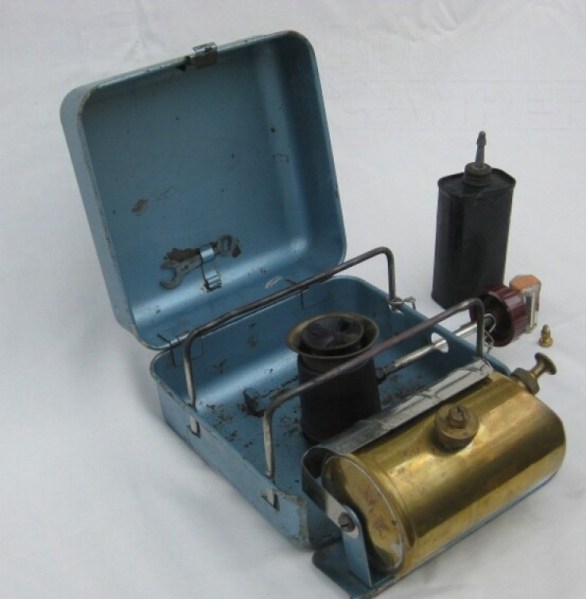
When I was 23, I went away to Ireland to live for as long as my money lasted. I had $1200, mostly because I sold my little Datsun and a Walter J. Phillips woodcut I’d bought with some excess scholarship money a few years before. I’ve written about that time in my novella, Inishbream, as well an essay, “The One Currach Returning Alone”, in Phantom Limb. It was a strange and beautiful time of my life. I’d gone because I felt I’d burned my bridges in Victoria—several failed romances, a difficult relationship with a much-older painter, the sense that I needed to be alone in a way I couldn’t be in a place where I was known; I was young, remember, and not unfamiliar with drama…. I didn’t know where I’d go after the cottage someone had offered me turned out to be unsuitable (it was remote and people had camped in it and burned the floorboards for warmth…this wasn’t discovered until I was taken there to settle in) but luckily I had subsistence supplies: my down sleeping bag and a small Optimus stove my father had given me. I was willing to live quite rough (though I did think floorboards were a necessity, not a luxury). I wanted to try to find out if I was truly a writer. I wanted to test myself in ways I couldn’t really have articulated but somehow I knew I needed to try to find out what I could live without and what I could do in complete isolation. (Remember, I said I was not unfamiliar with drama.) Through a series of lucky encounters, I was led to an island off the Galway coast and a little cottage facing north. I had a big fireplace for heat and a small pile of turf to burn, along with any sticks I could scavenge on the beach, and I had an oil lamp for light. And candles. My down sleeping bag came in handy but I never did need my Optimus stove because the cottage came with a small propane stove. I had to lug the bottle (the islanders called the tanks “bottles”) over to the mainland and get it somehow to the nearest town when I needed a refill so I didn’t cook much, apart from steaming mussels from the rocks below my cottage, cooking nettles into soup, and making rice from the five pound bag I found in a health food store in Galway.

Sometimes I dream of that time so vividly that I wake in tears. I feel such tenderness for that young woman and her loneliness. Last night we were talking in bed and I sipped some Laphroaig, inhaling its wonderful aroma of seaweed and smoky peat, and maybe that’s why I dreamed again of Ireland. Not because I could afford fine single-malt. I couldn’t. I could barely afford the rice. But the turf fire often crozzled and I’d lean into the fireplace, adding bits of stick to try to encourage it to catch and the smoke permeated my sweater. It’s a beautiful smell, I think, and it lasted for ages in the big rough wool sweater I lived in that year. I’d sleep with my window open to the iodine tang of the ocean and it made me dream of storms, of drowning. Sometimes I’d hear a tinwhistle in my dreams, but it was almost certainly the man who played on the little lane above my house. He’d lean over the stone wall and the music would waver in the wind. By the time it found my open window, it was unearthly.

So last night, Ireland, and the Optimus stove, unused, but given pride of place on the table in my cottage. Just in case.

This is all so long ago now but thinking of it brings back the music of Miceal’s tinwhistle as clear as anything and I ache to walk out to the boreen and learn to play along.

—from “The One Currach Returning Alone”, Phantom Limb (Thistledown Press, 2007)