“What happens in the heart simply happens.”

house in Portugal

All week I’ve been gathering my thoughts and ideas about the time we spent in Portugal and Spain earlier in the month. We spent a week in London too but somehow I don’t need to think deeply about those days. We saw some plays, a textiles exhibit, we took the train out to Verulamium to look an ancient mosaics and eat venision bourguignon at the 6 Bells pub in St. Albans, we walked the Regents Canal from Little Venice to Camden and saw a young swan preening by a pub door, and we had a drink at the Lamb Pub, draw in by a chalkboard on the sidewalk with a quote from Ted Hughes: What happens in the heart simply happens. Maybe that’s how I feel about London. I lived there for a few months when I was 21, working in Wimbledon, and it felt familiar then–the buildings and boroughs out of novels I’d loved forever–; it still feels familiar, even if the line-up to the British Museum was two blocks long this time so I abandoned my plan to visit the caryatid there and even had a booked time for my visit. But my favourite church, St. George’s Bloomsbury, was where it always is, tucked in between more modern buildings, and if the building supply shop on Marchmont Street has gone out of business, well, I guess that’s progress, though not the sort I’m comfortable with.

I’ve been gathering my thoughts. They’re a little unwieldy and I don’t know what will come of this. It was Portugal, in 2015, where I first encountered a phrase that entered my heart with such precision, in the Museu Nacional de Arquelogia in the Lisbon neighbourhood of Belem. We’d gone by train to see the exhibition, O Tempo Resgatado Ao Mar (Time Salvaged from the Sea), and it was truly magnificent. Standing before a case of artefacts from sunken ships, I read the display card:

As a society closed in on itself during the crossing, a ship represents an architectural structure that is destined to travel, equipped for the survival of her inhabitants who are isolated at sea for weeks or months on end.
     The internal distribution of this human microcosm, confined by wooden planks, iron, the clouds and saltwater, reflects, in its own particular way, the organization and hierarchy of a society on land that drove this community to its fate.
     During the crossing, for hundreds of men and, in this case, some woman and children, stern and bow, deck, poop deck, topsail or hold became opposite poles of a small world saturated with divisions between social classes and geographical loneliness.

In the quiet exhibition room, that last phrase — geographical loneliness — spoke so clearly to me. Find out about your grandmother and her voyage, it asked of me. Her voyage in 1913 from Antwerp to Saint John with 5 small children, travelling below deck, sleeping on mattresses filled with straw or seaweed, and then her journey from Saint John to Drumheller to join her first husband, not on the homestead she believed she was coming to but rather a shack in a squatters camp on the Red Deer River. It was this moment, reading the card, that led me to write about her, to research my family history in more depth than I’d done before, a quest that shows no sign of ending, and I can only say, What happens in the heart simply happens.

I’m gathering my thoughts and ideas. Our story is ongoing, changing, developing, and small pieces of information arrive still. A letter found in a tin box from my mother’s biological mother to her biological father, neither of whom my mother knew, the great-great-grandchild of my grandmother’s brother who followed her a month later from Antwerp to Drumheller and who died in the Spanish flu epidemic in 1918 (he was living a shelter dug out of the river bank) and whose family in Moravia had no idea of what happened to him. (Their loneliness, my own, this distance between us.) I’m gathering my thoughts. Last night I dreamed of our room in Granada, its view of the Alhambra through a window, shutters open to sunlight and moonlight, I dreamed of the little bird that came to the sill and plucked the hair I’d just removed from my brush to take away for its nest. In some cities, tossing a coin to a fountain ensures your return. My hair woven into a nest for this year’s hatchings? What does that mean? When the dancer was leaving the floor in the Sacromonte cave, she met my eyes. She held my gaze. Does that mean return? Will she be the one to teach the steps of the ancient dance, her hands over mine, our heels clicking, geographical loneliness temporarily assuaged?

Note: the quoted passage is from the guide to O Tempo Resgatado Ao Mar/Time Salvaged from the Sea, published by the Museu Nacional de Arqueologia, Lisboa, 2014.
The road not taken, the song not sung

Readers of my memoir, Mnemonic: A Book of Trees, know that I love music, though I know almost nothing about it. I began singing lessons when I turned fifty as a way to try to find my way into the heart of song, particular songs; and I did learn a lot. I hope to resume my lessons this fall and have scores of pieces I’d like to try. I feel like such a novice but I also know that almost nothing makes me feel the way I do when I am singing and am somehow staying on pitch and understanding how a phrase can contain such potential for texture and beauty.

A few years ago I read Alex Ross’s wonderful book, The Rest is Noise: Listening to the Twentieth Century. It provided such an interesting historical reading of that century by looking at its music. I reviewed it for our local monthly magazine, The Harbour Spiel, and this is what I said:

“On a recent trip to Europe, I bought a copy of Alex Ross’s The Rest is Noise: Listening to the Twentieth Century (Picador, 2007) to read on trains and in hotels. Alex Ross is the music critic for the New Yorker and I’ve enjoyed his writing over the years. His book had been on my radar for some time but finding it in a shop in Aix-en-Provence seemed serendipitous.

            Sometimes a book serves to shake up the way you see the world and for me, The Rest is Noise is one of those. Over the course of nearly 600 pages, Ross provides a coherent and vital reading of 20th century cultural and political history. Ostensibly about music – and he is such a fine and knowledgeable guide! – the book  takes the reader through a broad landscape shaped and reshaped by war and uneasy peace.

            Taking as his starting point the opening of Richard Strauss’s controversial opera Salome in the Austrian city of Graz in May, 1906, Ross looks at that moment – “an ultra-dissonant biblical spectacle” – as a hinge between the 19th and 20th centuries. Present in the audience were representatives of several traditions: Johann Strauss 11’s widow represented old Vienna; Puccini was there to hear his German rival’s “terribly cacophonous thing”; and the bold younger composers – Schoenberg, Mahler, and Alban Berg — were there to witness the shock of the new. Also in the audience, possibly, was a 17 year old Adolf Hitler.

The book concludes with a look at the making of John Adams’ opera Nixon in China, both a distillation of key modernist influences as well as something completely original.

Alex Ross is brilliant at pulling together the various strands of musical tradition that formed new patterns, new sounds over the course of a century. The role that politics played in both encouraging and suppressing composers is explored in fascinating detail. His clear understanding of the technical and creative accomplishments of everyone from Stravinsky to Shostakovich to John Cage to Steve Reich makes this a wonderful book for anyone with even a passing interest in music.”

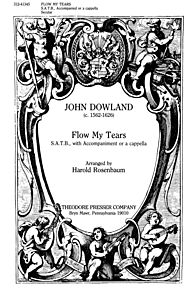
Last week I bought Ross’s latest book, Listen to This. It’s a joyous journey through music, stopping from time to time to examine, lavish praise, offer explications that are often extraordinary in their depth and originality. It is a congenial book. I love how his mind works, his listening ear (and heart), tracing the chacona through its incarnation as lament, as melancholic melody  — he pauses to consider “Flow My Tears”, one of the first songs I learned to sing (badly) – right into the realm of talking, walking blues.  His portrait of Esa-Pekka Salonen is so intimate and revelatory that I wish could go out now and watch him conduct Stravinsky.

The book makes me want to play my favourite cds again: Ian Bostridge singing Schubert’s Winterreise;  Glenn Gould’s transcendent recordings of the Goldberg Variations, both the 1955 version, impossibly deft and swift, and the more introspective 1981 recording – I can’t make up my mind which I prefer, which is perhaps the way it should be; Maria Callas singing Tosca; Lorraine Hunt Lieberson singing…anything on earth;  Messiaen’s heartbreaking Quartet for the End of Time which I heard in March at St. George’s Bloomsbury (designed by the enigmatic Nicholas Hawksmoor and possibly the most beautiful church I’ve ever been in) played by the young Akoka Quartet; Bob Dylan’s Time Out of Mind (and Ross even quotes the line I often think to myself: “It’s not dark yet, but it’s getting there”); and about a hundred others.

And the book makes me wonder about roads not taken. I do know some things. Native plants, literature, how to bake pretty good sourdough bread. But what would have happened if I’d studied music as a girl, as a young woman, if I’d taken voice lessons in my teens, if I’d become a singer rather than a writer? Is this what happens as one leans more towards sixty than fifty? That the past becomes a series of lost opportunities or at least has that gloss when the sun is setting, the moon not yet risen, the music in the background so sweet that it makes you wonder why you can’t make that high C or run a bow across the strings of a violin.