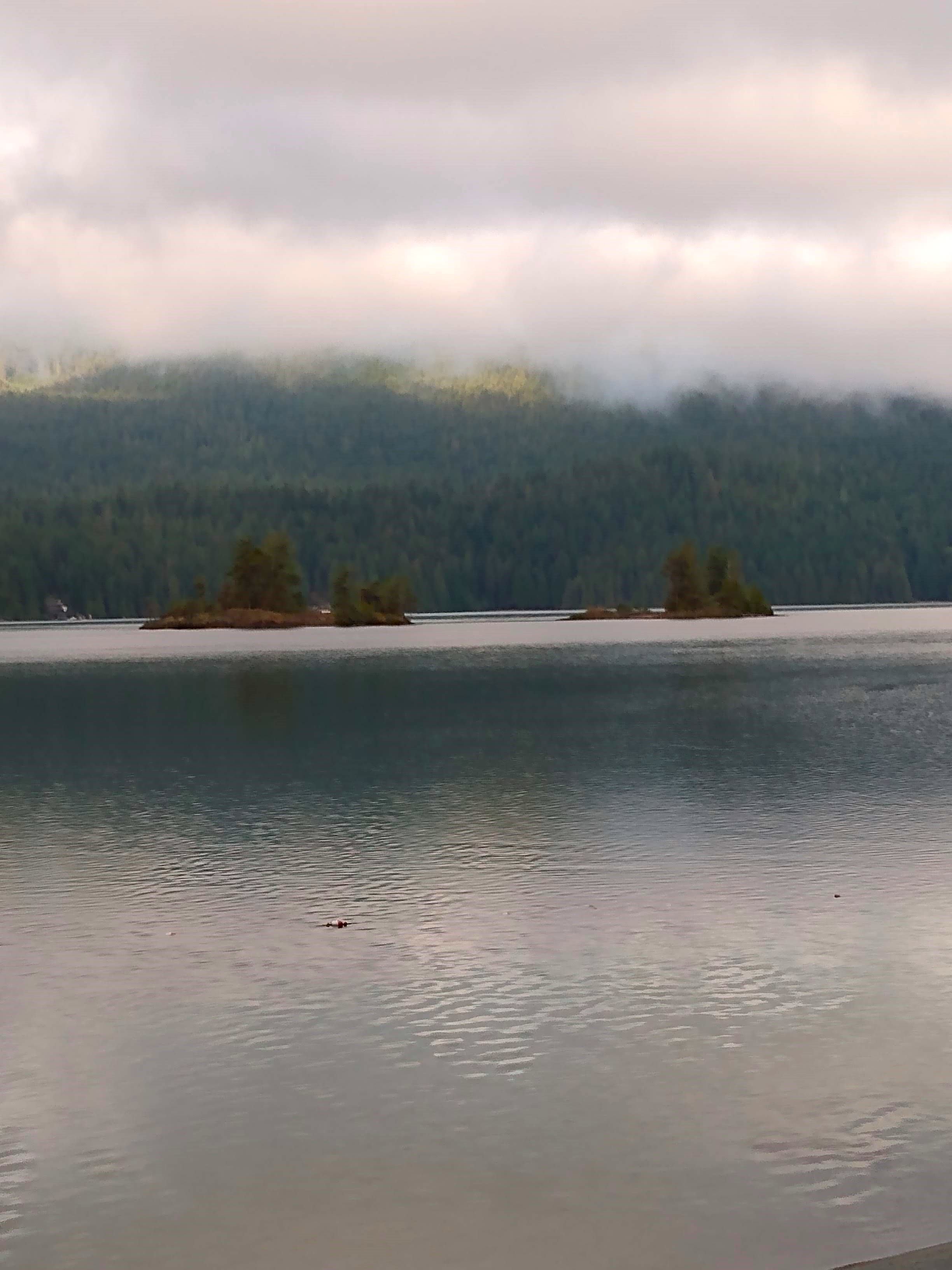
“The edge of the light” (Gary Snyder)

When I opened the curtains and then the balcony door early yesterday morning, I saw the lights and shadows of False Creek, smelled the sting of salt air. Gulls cried. A couple of sculls paused mid-way across, the rowers talking. I’d awoken a few minutes earlier. Where was I? Where was I? The bed was huge and John was still sleeping.

Dinner plans had gone sideways the night before so we winged it, eating at Via Tevere, wonderful pizza and a salad of fresh argula with salt-cured capers and lemony vinaigrette. And then the panto at the York Theatre. Which was fun but not as wildly original as some I’ve seen.

I went back to bed for a bit after opening the balcony door for the fresh air. And then joined John and Evelyn Lau at breakfast where Evelyn was signing the broadsheets John printed last week, her beautiful poem given elegant treatment in Goudy. (We have a few for sale. Contact me for details.) We sat and talked for hours at the window looking out at False Creek, a different angle than the one I’d awoken to, a heron on the prow of one of the big boats docked beyond the hotel. We talked about how writing came to us, still comes if we’re lucky, and the server kept filling my coffee cup. None of us wanted to leave, the talk important, the view changing as the light changed. I thought of Gary Snyder, one of my touchstones, his poem describing the encounter:

It comes blundering over the
Boulders at night, it stays
Frightened outside the
Range of my campfire
I go to meet it at the
Edge of the light

I have been thinking that writing has left me, the last decade filled with excitement as I wrote, then published Patrin, Winter Wren, Euclid’s Orchard, The Weight of the Heart, Blue Portugal, with The Art of Looking Back waiting for spring, and two other manuscripts quietly put away (because it seems no one is interested…). I don’t have that excitement any more. Excitement, or maybe curiosity: to leave the fire to meet it at the edge of the light. I am trying to work out the way forward but standing by the balcony door yesterday morning, I felt the conspiracy of light and scent of ocean, a little glimmer. Maybe a willingness to at least wonder what might be waiting.

Note: the lines are Gary Snyder’s, his poem “How Poetry Comes to Me”, from No Nature.

I look up

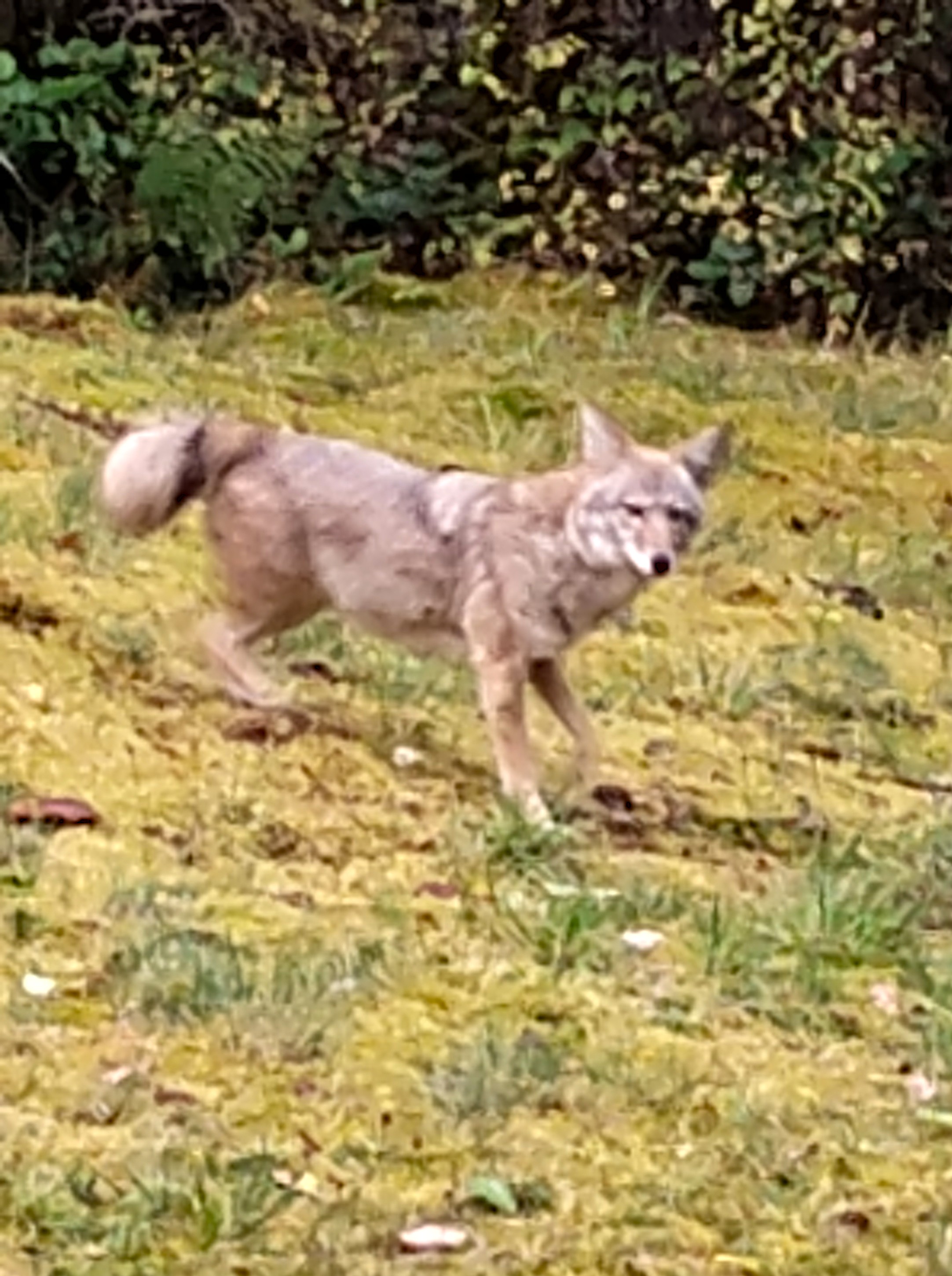
I look up and she’s looking back. I know this is a female because I just watched her pee, squatting, then kicking up moss when she was finished.

This is not the coyote who came the day before yesterday, the one with the really big ears and a grey-ish coat, a slight limp.

I don’t know if they’re this year’s pups, now grown, the ones sent away to fend for themselves. But they like the moss, sniffing around for mouse remains we sweep off the upper deck after a good night’s hunting for the cat. (He leaves us morsels: stomachs, kidneys, sometimes a perfect whole mouse.) And the cat is wary, stirring from his sleep to listen.

I look up. Last week it was a bear at the top of the steps, peering in the sliding doors.

I could see the white blaze on its chest and wondered if it was somehow related to a bear that visited years ago, maybe 15, or even if it might be that bear (they can live for 20-30 years). That one came for crabapples, as this one did (I saw it swaying in high branches the other evening), sitting like a dog by the little pool under the tree after feasting.

I think of Gary Snyder’s “this poem is for bear”:

honey-eater
forest apple
light-foot
Old man in the fur coat, Bear! come out!

I think of this bear in its heavy coat, the coyotes shaggy and wild, the deer we surprised on the drive the other day, the one ambling up as if she had all the time in the world, the grouse in the salal, the otter swimming towards me in the lake the other morning, the single merganser fishing along the shore, the chickadees waiting at the door for seeds, so eager they perch on my outstretched palm. I look up, I think of them, and I look at Gary’s poem again.

“As for me I am a child of the god of the mountains.”


autumn thinking: wolves and bears

autumn lake

Yesterday, swimming, I wondered how many days I could continue. John has begun to swim in the local pool and soon I’ll join him but I’m not ready to give the lake up just yet. Just yet. Though the water is very cool, I have to say, and there are moments when I can’t feel my toes. What I don’t want to give up: the kingfishers, the quiet, the muffled cloud over the other shore, the trout jumping for insects, how it feels to glide through the green water, eyes closed. I don’t think I’ve ever felt so alive as I do on these mornings. But one day, not this one, I will wake and think, No, it’s just too cold. As it is, John sits in a folding chair under the big fir in three layers, with gloves on. When I get out of the water, he holds my big towel so I can wrap up. I’ve been in the lake each day since May 19th, with a little break to go to the Island for Angelica and Karna’s wedding.

Last night I was awake for hours, thinking about the chaos of the world right now. How far we are from the civility I believe we are capable of. In the night the situation(s) felt perilous–and I don’t think that’s an exaggeration. I’d been reading a book before sleep, by flashlight because the power had gone out in our first autumn storm, and I didn’t want it to end. Gumboot Girls, a gathering of stories and recollections of women who’d arrived at Prince Rupert and Haida Gwaii in the 1970s to make new lives for themselves. They built houses, learned midwifery, grew food, towed logs to beaches to cut into firewood, canned salmon and clams, learned to dress venison, to smoke fish, make cheese from goats milk. One of them, Chloe Beam, wrote about going up the Skeena River in her skiff to pick up a box of tiny chicks in Terrace. She was also the woman who wrote so beautifully of wolves, a song I’ve heard in the early morning once or twice:

I stepped outside on the dock this particular night. I was astounded by the brightness. I looked up and behind undulating dripping curtains of aurora borealis filling the entire sky. I had just seated myself on the rocks of the point to enjoy the electromagnetic spectacle, when from the next point over, a pack of wolves started to howl. At first it was intermittent. Then the wolves got into full swing. They bayed and chorused, sometimes in unison, sometimes in solo arias, calling down the northern lights to dance and snap in rhythm.

So one world, the one that feels upended and troubling, and the other world, where women cut wood with a swede saw, tend babies next to tin stoves, make quilts together, held in a kind of uneasy balance. Part of the uneasy balance is closer to home. Yesterday I was shopping in Sechelt when a woman asked me if I’d heard about the grizzly seen on the beach that morning. The beach where I gather the stones to tie into linen for indigo dye work, where my grandchildren love to swim in the summers and explore the tidepools at low tide. The beach right in front of the condominiums, one hotel,the walkway usually lively with bikes, dogs, little kids on scooters, leading to the play park. This beach:

where the grizzly was seen

No, I said, I hadn’t heard. She said the RCMP and the conservation officers were at Chapman Creek where the bear had walked to along the beach (Chapman Creek is a salmon stream). And later I learned that the bear had been trapped and relocated. But grizzly bears are so rare in our area, almost always young ones who’ve somehow arrived by water –one swam Jervis Inlet to terrorize pigs in Egmont about 8 years ago– or across the ridge from Salmon Inlet to explore Gibsons. I’ve only seen one, and not here; in April, at the head of Bute Inlet, watching guys unload a tanker truck full of 70,000 Chinook salmon smolts to be released in the Southgate River, we were alerted to a grizzly bear at the Homathko River estuary, just on the other side of the inlet. It was leisurely grazing seaweed (it looked like), raising its huge head occasionally to look our way. We don’t often get to see something so completely wild and beautiful. Though three days ago I was at my desk when I saw the grape vines moving around a corner of the house just beyond my window and when I went upstairs to see what was going on, I saw two black bear cubs, this year’s, scrambling across the upper deck to the stairs leading down. No doubt their mum had alerted them to the possibility of grapes–bears have very sophisticated memory maps of food sources– though ours had been picked and they were out of luck.

When I swim later this morning, after John returns from the pool, I’ll be thinking about bears and our planet, and the shifts and dangers of being alive at this time in history. I want to believe we can do the right thing, as a species, as citizens, and that our precarious arrangements, social, political, ethical, and ecological, can somehow be brought into a healthier balance. I hope the bears can find a balance too that doesn’t require them to graze on seaweed on the beach of a small town on the Sechelt Peninsula because these stories seldom end well for them. When I swim, I’ll remember the bear prints I sometimes find in the sand at the edge of the lake and Gary Snyder’s lines for bears.

A bear down under the cliff.
She is eating huckleberries.
They are ripe now 
Soon it will snow, and she 
Or maybe he, will crawl into a hole
And sleep.


the firewood palpitations

“All to gather the dead and the down.” (Gary Snyder)

firewood palpitations 2

We heat our house primarily with wood. We have an airtight, a Regency (painted blue), in our big kitchen. From about now until, oh, early June, the first person down in the morning makes the fire. We have a mat in front of the woodstove and 3 chairs (2 wicker armchairs and one rocker) near the stove. The part of the house we mostly live in is open, though of differing levels: living room up one stair, our (big) bedroom the entire second storey, with open stairs leading to it. No door. So the heat circulates, with the help of a ceiling fan. There are electric baseboard heaters but they’re an expensive way to heat so we just use them as a last resort. A few years ago we also had a mini split installed.

So firewood is often on our minds. Parts of our land–8.39 acres–had been logged some years before we bought it in 1980 and there was a fair bit of wood around to clean up. And in windstorms, trees would come down. We also had a pickup truck in those early years so when trees came down near the highway, we could take a chainsaw and fill the truck. But now we’re older, maybe even old, and we no longer have a pickup. You’d think it would be easy to just call someone to deliver a couple of cords of good seasoned wood but you’d be wrong. Some years a guy will park at the shopping area in the village near us, an old truck loaded with carefully stacked dry fir, maybe some maple. You talk to him and he follows you back, throwing the wood off the truck so you can stack it in the woodshed. You tell him it’s good wood and you’d like more. Oh sure, he says, holding up a hand with missing fingers. You never see him again.

Or someone knows someone who knows someone. His list is long but he’ll try to get to you. Sometimes he does. Often, not. This year John spent part of the early and late summer cutting up the rounds of cedar remaining from the standing dead (victims of climate change) in our woods. But cedar isn’t ideal. It became, well, a daily topic of conversation.

Then John learned about the Community Forest woodlot. Yes, they can deliver but wow, the price was so much better if you could pick it up yourself. A friend happened to drop by for coffee, someone we love but don’t see often enough because he fishes long seasons, and when we told him about the woodlot deal, he became visibly excited. He and his family are like us. They heat with wood too. And it turns out that they are rich (right now, not forever) in pickup trucks, including one we could borrow. He’d be away but John said we could help them if they needed help with wood. On Friday we went to the woodlot and filled the pickup with stacked seasoned fir (mostly; there was a little alder and cedar mixed in). We also filled the back of our Honda Element, the rear seats removed. The people there helped with the stacking. On our way back home, we stopped for coffee and John took a photograph of the wood and sent it to our friend’s partner; excited texts went back and forth. While we were having coffee, we unexpectedly met with other friends. When they saw we’d filled two vehicles with firewood, they immediately offered us whatever we wanted from a whole lot they had at their place, the result of trees coming down–a big grand fir, hemlock, and alder. They no longer burn wood and wanted to give away other seasoned wood they’d been storing. So this morning, when we were taking the truck back to our friend, we stopped on the way and filled it with wood for her.

firewood palpitations

When we dropped off the truck, we stood in the sunlight and talked about firewood. Two sources! Enough for all of us! Good wood! I could hear the relief in John’s voice, and in Amy’s too. I joked that we were all having firewood palpitations! This time of year, there are things you want. You want the pantry shelves lined with preserves, the bounty of your garden, and you want your woodshed filled. The talk was of hydro bills, the merits of one wood species over another, even the pleasure of splitting big rounds. John and Amy made arrangements to go to our friends’ to fill the truck again, soon, and then we headed home.

As John emptied the Element of its load of dry fir, stacking it in the woodshed in tidy rows, I picked the last of the beans, and removed the stakes from the tomatoes I decided wouldn’t ripen where they were, in the shade of an ancient fir. A big bucket of them came in to be laid out in a box. Returning to the house, I could smell the beautiful scent of fir as the last wood was stacked. Later in the week, if the weather is good and we can work out the truck, we’ll go get a load of big rounds for next year, grand fir and alder and a bit of hemlock. We never forget they were living trees and we are always grateful.

The pantry shelves hold their own bounty and there’s still more pesto to make for the freezer. In the greenhouse, eggplants, cucumbers, tiny olives beginning to swell. But it’s firewood that gives me palpitations, anticipating warm fires in January, a quilting basket by the rocking chair.

beans

“I’m just about off the map.” (Charles Lillard)

engine

As we were lying in bed on New Year’s Day, John said, I fell asleep in one year and woke in another. And I felt the strangeness of this, felt suspended in time’s uncertainty. Maybe this has always been my true state. I began the new year by working on my novel-in-progress, Easthope, set about ten years ago in a small coastal village. For a number of reasons, the main character feels the same: suspended. I spent some time looking at photographs of old Easthope marine engines. A year or so ago, a friend showed me through his late uncle’s collection, housed in a shed on Francis Peninsula. His uncle must have felt the urgency that I feel, to care for and keep alive things that have been important to the way people have lived. These Easthope engines powered coastal fishing boats from about the turn of the 20th century into the 1950s. They changed the way people fished, particularly the more reliable 4-cycle model which pretty much replaced the original 2-cycle design. My friend showed me many Easthopes and the diesel Vivians. I loved their sturdy beauty. I loved the shed, a museum of the useful past, with its springboards, a box of piano rolls, tools, and cans of grease.

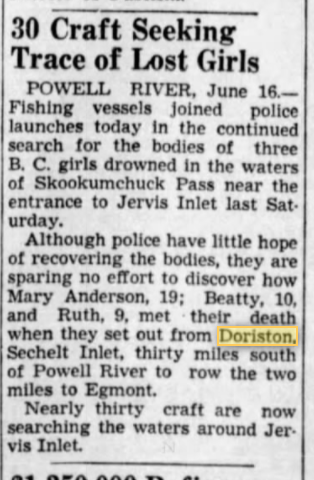
Some days I feel as though I fell asleep in one century and woke in another. I drift between them. My own desk is a museum, the books lined up at the back relics of another time: Fowler’s Modern English Usage, Gary Snyder’s Axe Handles, Raincoast Place Names, a concordance to the Bible. I hold papers down with fossils from the Great Salt Lake and the Sooke Formation, stop to fit my late dog Lily’s pelvis back together (it cracked into 3 pieces when a shelf fell onto my desk, something I wrote about in “A Dark Path”), look at the 5 tiny hummingbird feathers in a jam jar. Asleep in a century I am unwilling to give up, as the character in Easthope is unwilling to leave aside a story she’s discovered about children drowned in the Skookumchuck Rapids as they tried to row from Doriston to the Egmont dock. On a grey morning, this grey morning, I can almost hear the put-put of Easthopes in the Strait, can almost smell the nets drying. A rock heavy with fossil corals is holding a book open to a poem that is keeping me company today, “Winter Brothers’, from Charles Lillard’s Shadow Weather:

There should be no poets, only a few poems,
winter brothers,
travelling as well as Irish whisky,
a ketch-rigged dory
and old friends
shaking off women, fish and certain anecdotes
to beat along my tack north.

If Charles was still alive, maybe we’d talk on the phone. Happy New Year, I’d say, and he’d ask what I was working on, and I’d tell him about Doriston and the sisters who drowned. I’d tell him about the Easthopes. A day or two later, I’d get a call from the man who used to own the gas station at Garden Bay Road, telling me a parcel had arrived for me by bus from Victoria. When I opened the parcel, it would be an archive of the old coast: pamphlets, brochures advertising Easthopes and Vivians, articles clipped from ancient newspapers describing bad storms, the coming war, a tragic accident in Jervis Inlet. By the fire where I’m going to go now to drink my coffee and warm up, I’d look at every page, and for a moment the novel would be clear in my imagination, clear as deep water, salty and wild.

doriston3

Clear in my imagination, and now the long winter to get it down, make it right, find out how all the pieces fit. One piece? The lights of a small boat leaving the dock as we ate dinner at the Backeddy Pub last week, lights that flickered into the darkness, and then disappeared.

I’m just about off the map.
It ends over there in a cluster of islands
and a swale of sandpipers.

Note: the passages of poetry are from Shadow Weather: Poems Selected and New, by Charles Lillard, published by Sono Nis Press in 1996.

“I go to meet it”

deer, looking out

Some mornings I wake and forget that we are living through a pandemic. I lie in my bed, listening to birds that never sounded as sweet as they do this spring. Some mornings I wonder when we might feel that we are safe again. Will we? Will the world return to its old paradigm? Next month? The fall? Never, I suppose. I don’t think it should. We are not the same, are we? The news we’ve followed, the numbers, the charts, the models — those have guided us, like cryptic maps, to a place of no return. We need to abandon some of our old habits and expectations and we’ll need new ways to do things.

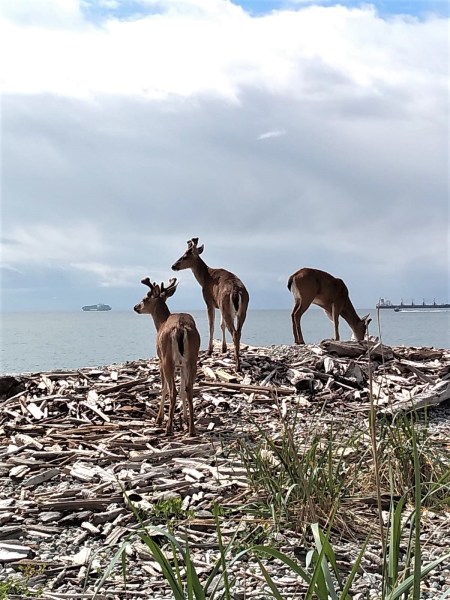
My daughter Angelica sent this photograph today, an image from her walk along Dallas Road in Victoria. When I was a child, you never saw deer in the city of Victoria. Out on Saanich peninsula, yes. I’d ride my horse on Island View Beach and there’d be deer nosing the tide line, nibbling the wind-shaped trees beyond. In the old orchards near the house where I spent my teen years, there were deer feeding on ancient wrinkled apples in fall. This photograph struck me as emblematic somehow. The new world, where deer claim the cemetery where I rode my bike, where peahens strut along the city streets, and where coyotes boldly walk the main thoroughfares in many major urban centres (though not yet on Vancouver Island).  For those of you who don’t know Victoria, Dallas Road follows the shoreline along the city’s southern boundary. On a clear day you can see the Olympic Peninsula on the other side of the Strait of Juan de Fuca, Hurricane Ridge, and the lights of Port Angeles at night.

In early January I bought a small datebook for 2020 and until the second week in March, its pages are filled with scribbled notes of appointments, meals with friends, planned trips to Vancouver. The last actual thing is swimming on March 14, 1.3 kilometers, and I remember the lifeguard assuring us that the pool would remain open for the foreseeable future. It was (at that point) deemed “safe”. What is safe anymore? The glove-box of our car holds sanitizer, masks, single-use gloves.

Yet the days are not without beauty or utility. There are lovely things that happen. My grandchildren call on WhatsApp. I lie on my bed (because it’s close to the modem; otherwise the video connection is erratic) and read them stories. They tell me about frogs in the ravine near where they live, and a porcupine they watched waddle along the path, and they chant We want buttercrunch, we want buttercrunch. This morning I made a double batch to send to three cities where those I love more than anything live their own modified lives. Life goes on, some of it the same (a gin and tonic on a deck in Ottawa, in sunlight; the visit to the frogs in Mill Creek Ravine; walks along Dallas Road), and some of it still working itself out. One grandson in Ottawa told me about the ambulance video he’d seen (suddenly ambulances are everywhere!) and the truck that vacuumed out the storm drains.

We’re adapting. We didn’t want to. I’d rather be swimming those 1.3 kilometers three times a week and I’d rather be setting my table for a group of friends for a dinner stretching into the darkness of these spring evenings when owls would call as we walked our guests out to their cars at midnight. John was anticipating (with some anxiety but also with relief) hip surgery about now. When that will happen is anyone’s guess. But this is what is. What we have. And we are privileged to have the safety we do have, the good food, the bottles of wine from Wild Goose in Okanagan Falls delivered to our door. (Or not quite to our door but close enough.)

The last few nights I’ve up for a couple of hours, not because of insomnia but because I’ve begun a piece of writing that calls me, through the darkness, the anxiety, the little knot of fear that is hard to shake, calls me to pay attention to details about two shacks on the Red Deer River during the Spanish flu epidemic of 1918. The shacks held members of my family, one of them unknown to even my father before he died in 2009, and the others known but never talked about. They died in such sad circumstances and what happened afterwards was unimaginable at first to those left behind. Here I am, though, able to sit at my desk with my desk lamp glowing in the dark. I began the research for this before the virus changed our daily lives and now I have to acknowledge that I feel as though I’ve given a sacred task. Maybe that’s why the photograph of the deer feels so potent to me.

When I tidied my desk a week or two ago, getting ready to really plunge into writing after a couple of months of gathering, accumulating, thinking about the materials at hand, I found a copy of Gary Snyder’s No Nature: New and Selected Poems tucked under something else. I’ve long considered him a guide, having discovered his work when I was 18. I held the book in my hands and it fell open to this:

How Poetry Comes To Me

It comes blundering over the
Boulders at night, it stays
Frightened outside the
Range of my campfire
I go to meet it at the
Edge of the light

“how many times”

buckets

Today, after a morning rain, we went up just past the Malaspina Substation to pick blackberries. Last week there was a fire on the other side, beyond; the B.C. Wildfire site had it listed as the Sakinaw Lake fire but in fact it seemed to be over by Meadow Creek which drains into Oyster Bay. A month ago there was a small fire, started by lightning, beyond the little bay of Sakinaw Lake that is just below our house. In my bedroom one evening I saw the smoke and called the Wildfire number to report it. A man kept asking me about location and he had a map in front of him. I helped him as best I could and when he asked if the hill I was describing had a name, I started to say Grass Lake Mountain and then I remembered that this was our family name for the rise between Sakinaw Lake and Agamemnon Channel. Beyond that is Nelson Island. No, I said, I’m not aware that it has a name but due west of the top end of Ruggles Bay. An hour or so later, I could hear a helicopter over the area.

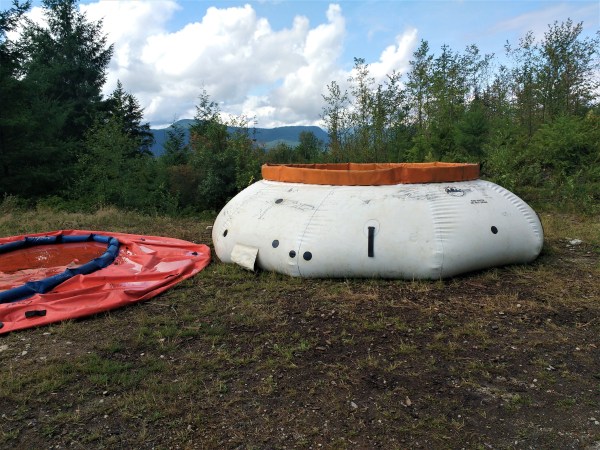
As far as we knew, the fire was completely out up past the Substation. And the patch where we were going to pick was one we’d noticed on our way back from picking more than a week ago. Our buckets were full that day and we passed a beautiful dense thicket with many ripe and ripening berries and today was the first day we had time to return. Guests arriving tomorrow for rehearsals for the Pender Harbour Chamber Music Festival will have blackberry and apple (Merton Beauty) pie for dessert. I hope I’ll have time to make jam on Tuesday. We parked by the patch, just across from two buckets used by helicopters to fight the fire last week, one full of water (with a stamp saying Bad Water Do Not Drink), and the other empty.

Fire and blackberries. The nature of fire in our lives has changed. Many years there was a fire up the mountain. A few years ago we smelled the smoke from the Pemberton fires hazing the air over the lakes and giving the sun an eerie fluorescent glow. But we haven’t had two fires — or four, actually, because there was one at Klein Lake the same week that I called in the fire on Grass Lake Mountain and there was a difficult one on Cecil Hill, overlooking the little community where we shop and where our credit union is and our health centre. Anyway, we haven’t had fires so close to us that what we did and planned had to take them into consideration. To take a nearby fire into consideration is a new thing for me and I can’t say I’m easy with it.

In Back on the Fire (Shoemaker & Hoard, 2007), Gary Snyder contemplates his own changing relationship with the proximity of fire. It’s about balance, how we treat the land, what we leave, what we are careful to protect and maintain. It’s about communities taking responsibility for clean-up and firebreaks and the right caution. In the essay “Lifetimes with Fire”, Snyder describes finishing the work of creating a firebreak. There are piles of brush to burn, carefully. We’ve always had these piles too. Prunings and scrap wood and stuff John regularly cuts away from the bank below the house where a fire could race up and take our home easily (it’s wood-framed, wood-clad). There’s a difference between the smell of a forest burning and the smell of a brush-pile burning, a hose nearby, a shovel and other tools in case of an emergency.

One late November day, standing by a twelve-foot-high burning brush pile, well-dressed for it, gloves and goggles, face hot, sprinkles of rain starting to play on my helmet, old boots I could risk to singe a bit on the embers. A thermos of coffee on a stump. Clouds darkening up from the west, a breeze, a Pacific storm headed this way. Let the flames finish their work—a few more limb-ends and stubs around the edge to clean up, a few more dumb thoughts and failed ideas to discard—I think—this has gone for many lives!

How many times
have I thrown you
back on the fire

When our grandchildren were here a week or so ago, we had a small fire in a ring of stones by the garden, roasting hotdogs wrapped in bannock, followed by marshmallows. The older grandchildren remembered autumn bonfires down the bank where the old orchard was, helping their grandfather add branches and sticks, roasting marshmallows for s’mores in light rain. There’d be thermos of coffee nearby, and maybe one of hot chocolate too. I remember the smoky smell of the children when I read to them later and I remember the smoke of those fires in my hair when I woke in the night to make an inventory of who was asleep in my house. Who’d returned, for how long, and how many more years we would stand by fires and talk.

Note: Thinking ahead to how busy I’ll be this week with the Chamber Festival, I got out my jam pan and made 12 jars of blackberry jam, flavoured with lavender I dried in late June. Our house smells of jam. Is there anything nicer?

redux: “with the days unspooling”

I was looking to see when our cat Winter came to live with us and discovered that two years ago, right around now, we were finding his tracks out in the light snow. No snow this morning, just a hard frost, and Winter is fast asleep on our bed.

_________________________________________

tracks

North America and Europe have been experiencing cold weather, colder than usual. We often have a few very cold days in mid-winter, some snow, but this year — and last, because we’re only just into 2017 — we’ve had a lot of snow and temperatures around minus 10. Last night it rained and everything is melting today. What I’ve enjoyed about the snow is seeing the tracks and realizing, again, how populated this area truly is. Deer tracks, elk, weasels winding up and down the driveway — and a cat. A wild cat. Not a bobcat (we have those too) but a black and white cat hovering around. Yesterday its tracks were so clear in the snow, wandering around under the bird feeder, the woodpile (where mice nestle in for the season), the compost box (where mice nest, too, for the warmth), and then darting under the old dog-house, uninhabited now but restored, just in case. I was surprised because there are coyotes around and a cat would make a good breakfast for a hungry canine. Especially in winter. I put a little dish of food out in a protected area and see this morning that it’s empty.

The other day we went for a walk around what we call the Sakinaw loop. Down our driveway to the highway, along for about a quarter of a kilometer to Sakinaw Lake Road, down that long hill to the lake and Haskins Creek where the coho spawn, and then along a trail that leads through the woods below our property, meeting our driveway again beyond the gate to our neighbour’s place. We were talking, talking, as we always do. It’s been a 38 year conversation at this point in our lives. I’ve just finished a book of essays and John is coming to the end of a collection of poems so we discussed what we hoped the work had done –in my case, to explore old ground in a new way; and in John’s, to complete a sequence long in the making, about animals. At the top of Sakinaw Lake Road, we noticed the coyote tracks, fresh, in the snow, two sets, one on either side of the road, leading down the hill that we were also walking (carefully) down. Sometimes one set of tracks would edge closer to the other set and at one point, there were signs of a skirmish or play in the deeper snow by the salmonberry bushes. You could see at another point that one animal had run for a bit. But mostly the pair was ambling, as we ambled. I expected the tracks to lead over to the creek where there might still be some carcasses to feed on. But no. They continued, as we continued, along the trail through the woods. Fresh scat. The bodies coming closer together as ours came closer together where the trail narrowed.

There’s lots of research that tells us coyotes practice social monogamy – they live together for long periods but might mate with others. But recent research suggests they also practice genetic monogramy. They only reproduce with each other. I don’t know if the tracks we were following belonged to the pair who mate each year, in late February, in the woods near us. We’ve heard them. (It’s something that I wrote about in my essay, “Euclid’s Orchard”, part of the book titled for that essay,  due out in September…) And one year one of their pups came most mornings for a week, in August, eating salal berries just below the deck where we were drinking coffee with one of our sons, watching as it explored, even entering the old dog-house to try out the space.

So I walked down the road with my life partner, talking, and just ahead of us on the trail, the coyotes were ambling too, either talking, or not, with the days unspooling ahead of them.

The creak of boots.
Rabbit tracks, deer tracks,
what do we know.
    --Gary Snyder

redux: boughs

From December 23, 2014.

We did cut our tree this morning, again a tall Douglas fir, but it won’t come inside until December 24. For now it rests in the woodshed, its trunk in a small bucket of water.

*****************************

Our tree has just come into the house. Cut this morning, a nine-foot Douglas fir, it has all the odour of the winter forest, and its boughs are so green and lush that I’m almost tempted to say, “Let’s leave it naked this year.” A paradox — to dress an evergreen in baubles and stars? Little ceramic birds? To remind it of the world it’s been taken from, to give us green through the darkest days? No living bird will settle on these boughs again. No snow will accumulate on the needles, no cones will form. Tomorrow we’ll pull out the boxes of decorations and place them on every branch, against the trunk, the one special star on the top (which had to be trimmed to fit into our house). For now, I want to stand on the edge of the room and look at its splendid undressed beauty.

Trees bring in the scent of the outdoors and they remind us too of moments when we sat by them, cut them for firewood, burned them gratefully all winter for their heat, brushed against them and ran our fingers along their various barks, reminded of them later as we raised resiny hands to our faces.

Remember “Mid-August at Sourdough Mountain Lookout” by Gary Snyder? (From Riprap and Cold Mountain Poems):

Down valley a smoke haze
Three days heat, after five days rain
Pitch glows on the fir-cones
Across rocks and meadows
Swarms of new flies.
I cannot remember things I once read
A few friends, but they are in cities.
Drinking cold snow-water from a tin cup
Looking down for miles
Through high still air.
I don’t have cones from this tree but here’s a pair of elegant long cones I picked up under a small stand of Pinus monticola at the Dominion Arboretum in Ottawa last month while walking there with Forrest and Manon. They still smell alive. They can stand in for absence, tokens of affection, what we keep to remember the miles between us this time of year.
P1110002