“All these years later, Winter Wren is what happened.”

P1020930.JPG

She listened to the creek falling to the beach. She pulled off her sweater, threw it to the rocks. Her corduroy trousers. She left on her canvas sneakers. And darted under the shelf where the fossils slept in the wall of stone. With a little shriek, she stepped forward into the shower of cold water.

She turned so every part of her body met the water, thrusting her chest forward, her breasts stinging at the contact, her legs shuddering. The pool the water tumbled into came half-way up her calves, icy as glaciers. Freshets ran down her back and she could not feel her knees, her elbows.

And now it was dark, moonlight just beginning to glitter on the ocean. Gasping and coughing, she groped with icy hands for her clothing, wrapping her sweater around her shoulders and not bothering to put on her pants. Sneakers squelching, she climbed the bank and found her way back up to the cabin where her candle guttered in the night air. She could not stop shaking. Rubbing her body briskly with a towel and wrapping another around her dripping hair, she realized she had not felt so alive in months.

Any moment now, Winter Wren will be arriving from the printer. It’s the first offering from Fish Gotta Swim Editions and to say I’m excited and nervous about the whole enterprise is an understatement of enormous proportions. It’s a novella about a place — the cabin and the beach in the photograph above the extract from the book. And it’s about a character, Grace Oakden, who appears in an earlier book, The Age of Water Lilies. I visited a book club to talk about that novel and someone asked, What happened to Grace? I had no answer but it got me thinking. And wondering. Winter Wren is the result. In it is buried a meditation on the 19th c. photographers and artifact collectors (Charles Newcombe, et. al.) who plundered and celebrated and recorded the west coast. The issue is complicated and this novella understands that.

On my study wall is a framed series of nine photographs, illustrating the book’s mantra: Bring me the view at dusk. Nine panels for nine window frames. It was given me by my daughter for my 60th birthday.Every morning I study it while I’m waiting for my computer to boot up and every morning I hear the surf, the noisy creek falling over its shelf of sandstone, smell the kelp. When I wrote the book, I had a hard time leaving its world each day to return to the dailiness of my present life, a dailiness I love and that anchors me in a sturdy durable way. But some days I wonder what would have happened if I’d actually left a note on the door of the cabin you can see above the creek, asking if I could rent the place. That was 1974. All these years later, Winter Wren is what happened.

“one who creeps into holes”

house.jpg

This little bird house swings from an eave out my study window. A winter wren (I know they’ve been reclassified as Pacific wrens but old habits die hard) visits most mornings. After Brendan gave me this house for Christmas five years ago, I hoped a wren might nest in it but I suspect the opening is too wide and the house is too obvious.  The genus name Troglodytes is from the Greek (and I can’t do the orthographic decorations here) and means “one who creeps into holes”, a perfect designation for these tiny birds that dart about in the underbrush, in and out of roots. They are territorial and quite fierce about protecting their (small) ground but they will gather communally in cold weather to keep each warm during the long winter nights. I was sitting at my desk in late afternoon in December and saw 6 wrens arrive at this house, one after another, and each one paused at the opening, looking around to make sure of, well, I’m not sure what (they didn’t know I was watching and probably thought no one could see them), before entering. Was it memory of that safety that brought a wren just now to enter the house and peer out? Or, more likely, the prospect of little spiders and pupae to make a breakfast.

In my forthcoming novella, Winter Wren (Fish Gotta Swim Editions), there’s an elderly reclusive man, the son of a famous artefact collector (based loosely on Charles Newcombe), who earned a living by preparing bird skins for museums. I tried to imagine preparing a study skin of these tiny birds and realized the skill it takes to do such work. Skill and love. The man, whose name is Tom Winston, also learns something about the music of wrens. I’ll leave that to prospective readers to discover for themselves. But here’s a passage in which wrens occur — and if you read this novella, you’ll learn that they’ve been there all along and that they don’t forget.

Dreaming of water, further north, near Tanu, the darkness that surrounded them as they edged towards an island where burials had taken place. I only want to look at the mortuary poles, Tom, his father told him as the boat bumped against rock, pipe-smoke damp and sweet in the rain. Only want to look. But then his father was winching a pole to the shore with someone else and Tom was helping them tip it into the boat which swayed and lurched on its tether. The smell of rotting cedar and moss. He was dreaming of what was concealed in the niche in the back of the pole, the bones huddled in scraps of clothing. The remnants of a woven cape, skins around the torso, winter wren song trilling out of the underbrush, witnessing their theft.

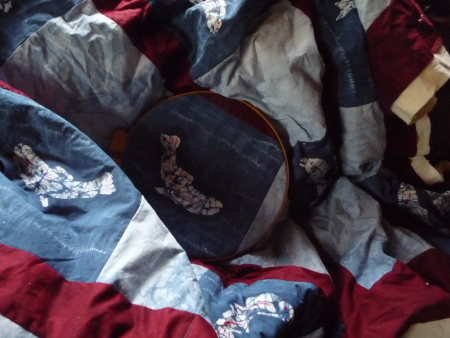
the fish are swimming!

fish

Readers of this blog will know that my friend Anik See and I are both passionate about the literary novella. We love to read them and we write them. Although I’ve been very lucky with publishers in the past — both the Barbarian Press and Goose Lane Editions issued beautiful editions of my novella Inishbream and more recently Mother Tongue Publishing released my Patrin — I’m also aware that current publishing models aren’t exactly embracing the novella any longer. A few stalwarts persist. But when Anik visited here on her way back to her home in Amsterdam after a three-month residency at the Berton House in Dawson City a year or two ago, we were both lamenting that we had novellas that we couldn’t find publishers for. At one point in the conversation, we began to laugh and one of us said to the other, “Well, you know what this means.” And we did know. It meant we had to create a place for novellas so that this wonderful, well, is it a genre? A hybrid? A special variant? Anyway, a place for it to flourish. Anik has a lot of experience as a book designer — have a look at her Saudade, which she both wrote and designed…(She is also an amazing journalist: listen to her recent documentary, “The Illusion of Money”,  for the CBC’s Ideas:http://www.cbc.ca/radio/ideas/the-illusion-of-money-part-1-1.3460225 )

We’ve been working back and forth on the first title of our Fish Gotta Swim Editions, which just happens to be my novella Winter Wren. Anik edited it, then my husband John (a poet and long-time college English instructor) copy-edited it (with a few disagreements of the “Can This Marriage Be Saved” variety, mostly to do with how to present dialogue on the page: as a writer, I want to believe that a text can accomodate dialogue as part of a narrative without setting it off with quotation marks; John is less convinced…), and now Anik has designed the book block which will be sent to the printer in Victoria when we have all the details right. The pdf arrived this morning so I could see and approve and make suggestions. And reader, I have to say it’s absolutely beautiful. I can’t wait for it to be a book in hand. Soon!

We are sorting out details to make it easy to buy this book. Copies will be available for shipping from both Amsterdam and here (the west coast of B.C.). And I think I’ll make a webpage for our Fish Gotta Swim in the next while too. Watch for more information on this. (For now, Anik has a page for it on her website, www.aniksee.com)

We don’t intend for Fish Gotta Swim to be a vanity press. We’re starting with one of our own books simply because Winter Wren is ready. We hope to make a small but relevant contribution to our literary culture over the next few years by finding and publishing novellas.