postcard from a Yalynakivtsi summer kitchen

stooks at tiudiv

At 2 a.m., I was awake, thinking about the novel I am working on. When I began it a few years ago (it has been put aside several times while I got caught up in other writing), I wanted to write about a small fishing community and its legacy of stories, marine engines, and remnant old growth forests. I wanted to see this as a painter might and so the main character is a painter. Many of the scenes are based on her attempts to put down on canvas what she sees and imagines. She doesn’t have a method to explore the layers she sees in the community so she works out various strategies–seams in the canvas, with one thing layered behind another, revealed by opening tiny zippers and other closures. I didn’t know when I began that part of the narrative would shift to Ukraine but it has and I’ve just finished that section. At 2 a.m., I was awake, excited about some idea I had for making a material connection between the two places: Easthope, the fishing village; and Yalynakivtsi, the Ukrainian village. I kept turning over, twitching, and finally I got up and came downstairs to try to piece together my ideas.

This is what I love best: writing that fills my imagination, overflows into my daily life, so that I am walking around with the world of the novel or essay swirling in my heart and mind. This morning I came downstairs, made coffee and a warm fire (it’s raining!), fed the cat, and then came in to see if what I’d written in the dark made sense. And I think it does. It’s led me to a couple more things I want to write today in and around packing for a few weeks in France. We leave tomorrow. Luckily I will have a notebook and a handful of pens and I hope I will come home with the makings of another section.

And because it’s Thanksgiving weekend, I’m also thinking about food. Last week I was bringing my main character to a small Ukrainian village where members of her family are waiting with a meal. It’s late September and they are still using their summer kitchen with its ancient pich. Here’s a postcard from the village.

postcard from a Yalynakivtsi summer kitchen

borshch with pampushky, drizzled with garlic oil, smetana spooned over top; holubtsi, bright with tomato sauce; tangy sourdough rye loaves; varenyky, cheese-filled, potato-filled, mushroom-filled, thick smetana to dip them in; a round of banush flavoured with pork fat and sheep’s milk cheese; ducks roasted in the pich, stuffed with garlic; kutia for dessert, snippings of dried apricots and peaches; and cherry-filled varenyky, this time with sweetened cream. Poppyseed cake, topped with plums in a sweet glaze. Glasses of uzvar, dark and smoky.

cobble

patch 2

Cobble, as a verb: to do or make something quickly and not very carefully (from The Cambridge Dictionary). Cobble, v.t. Put together roughly: mend, patch up (from The Concise Oxford Dictionary)

_________________________________

I use the word cobble all the time. To cobble up dinner from what’s in the garden or fridge; to cobble (as I am now) a novel, using a hodgepodge of parts (postcard messages, descriptions of paintings, memories, half-memories, old photographs); to work out a plan for travel, as we’ve been doing lately for a trip to France; to cobble together a life, I guess.

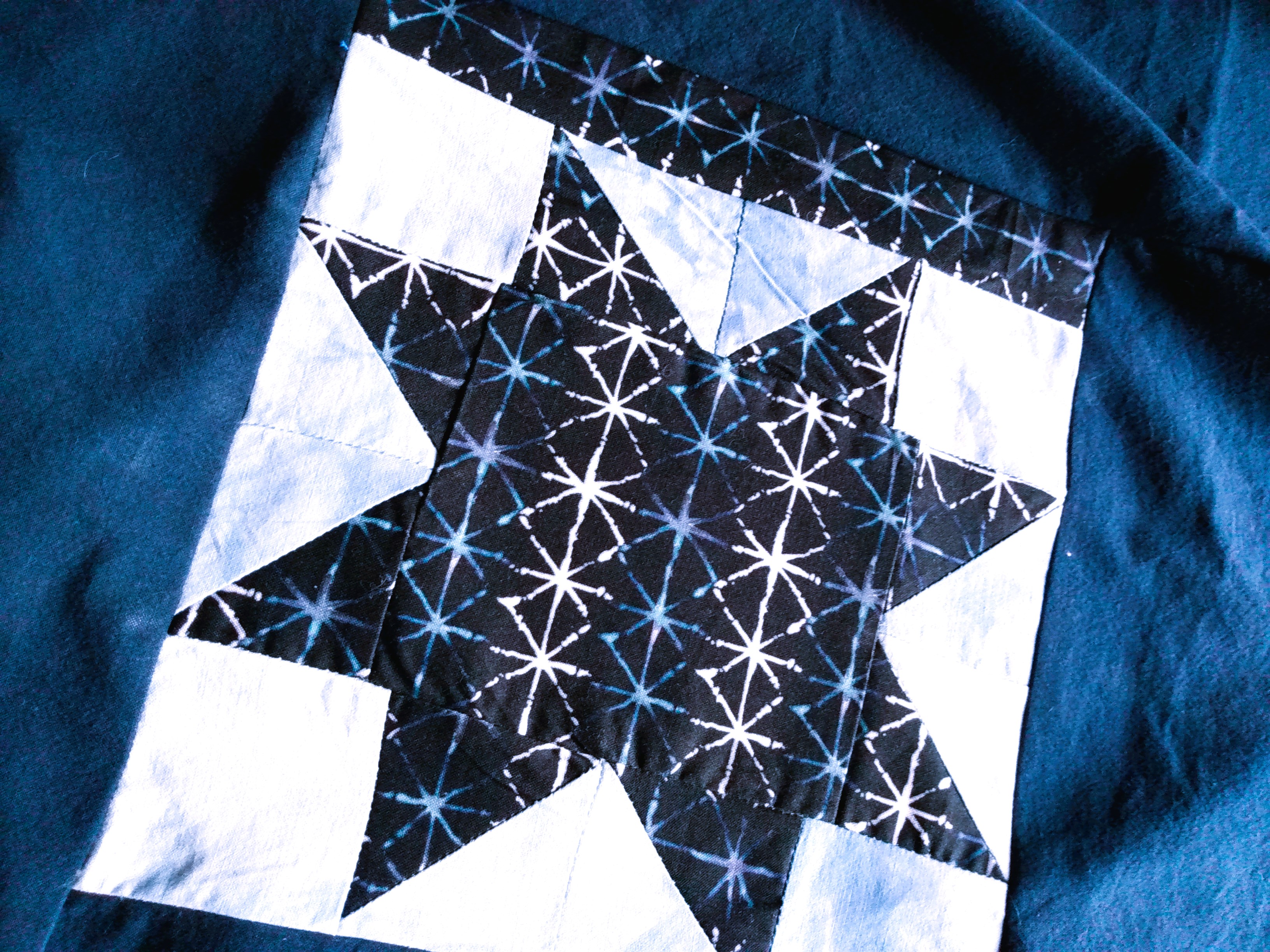
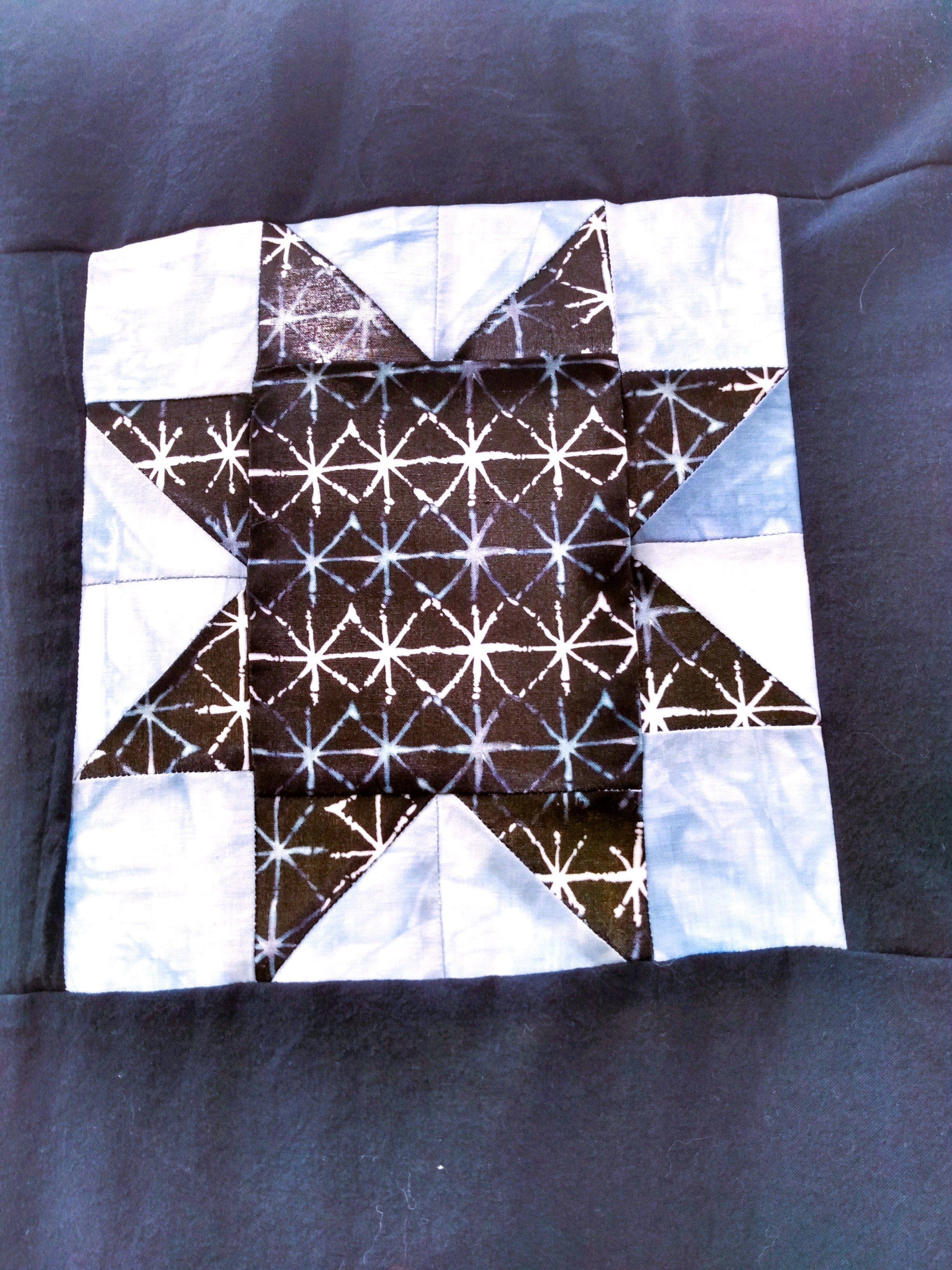
This past week, I’ve cobbled together a quilt top. I had some star blocks I pieced together a few years ago, using a Japanese print and some scraps of woad-dyed cotton, from an old sheet. They turned out the way so much of what I do turns out: the geometrics awry, the sewing uneven, edges not quite meeting, seams careless. I put them away.

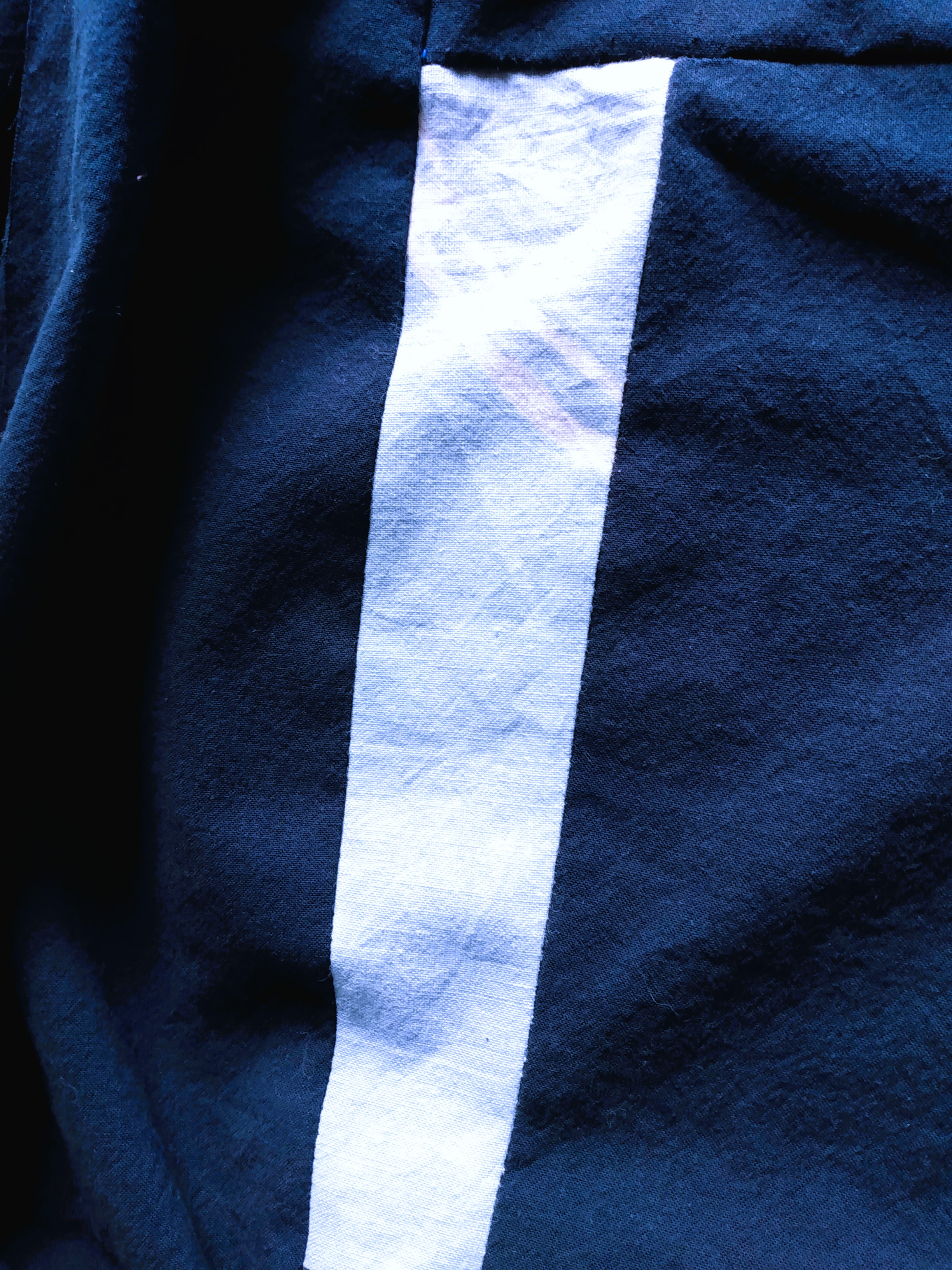
And then I got them out again. I had a large piece of deep blue cotton-linen and at first I’d try to arrange the stars as a constellation. I had in mind the Big Dipper. But the prospect of trying to use my erratic sewing skills to piece together something that deserved care and attention was daunting. I realized though that I liked the pieced stars alternating with deep blue squares. I tried to adjust for, well, the anomalies of the stars and I cobbled together a top for the quilt. But there were problems, the same ones I often encounter. The rows of pieced stars and squares were of different lengths because I hadn’t sewn them carefully enough. I knew I could use sashing to sort of ease out some of the problems but then I’d run into others in the next phase. Short of unpicking the top and putting it together more carefully, I was at a loss. But then I thought, I don’t need perfection here. I just need something I can work with a little more easily. So I cobbled together some patches. You can see one in the star on the top far left and you can see a little patch of woad-dyed sheet below it and another patch on the bottom right star.

blue stars

Does perfection even matter? I’ve told myself it doesn’t in so many things I do. It’s the process, I tell myself; that’s what I love most. And the results? They are what they are. I think of the wondrous Gee’s Bend quiltmakers who created, and continue to create, the most beautiful quilts I’ve ever seen. And yes, there are lots of seams that don’t align, the geometries are quirky, but the results are astonishing.

patch1

So I am entering the cold season with a quilt to work on, a quilt of cobbled stars and patches. The stars I thought so insipid when I first pieced them together glow in their indigo sky. Last night, looking at the Aurora light wash through the darkness, pale grey and green, while Cassiopeia sat regal in her chair above Mount Hallowell, I felt the old excitement of immersing myself in the process of making something, something practical. I have in mind a recipient for this quilt, who will spread it on a bed and sleep under its lopsided seams. When the light returns in spring, I will have accomplished something imperfect and almost beautiful. Something cobbled.

Praise the mutilated world
and the gray feather a thrush lost,
and the gentle light that strays and vanishes
and returns.
 
Note: the lines are from Adam Zagajewski’s “Try to Praise the Mutilated World”, translated by Clare Cavanagh. Also, the link toggle isn’t working here this morning so I’ll just add the Gee’s Bend site here:https://www.soulsgrowndeep.org/gees-bend-quiltmakers

“We are fibrous structures.” (Magdalena Abakanowicz)

first arashi dip

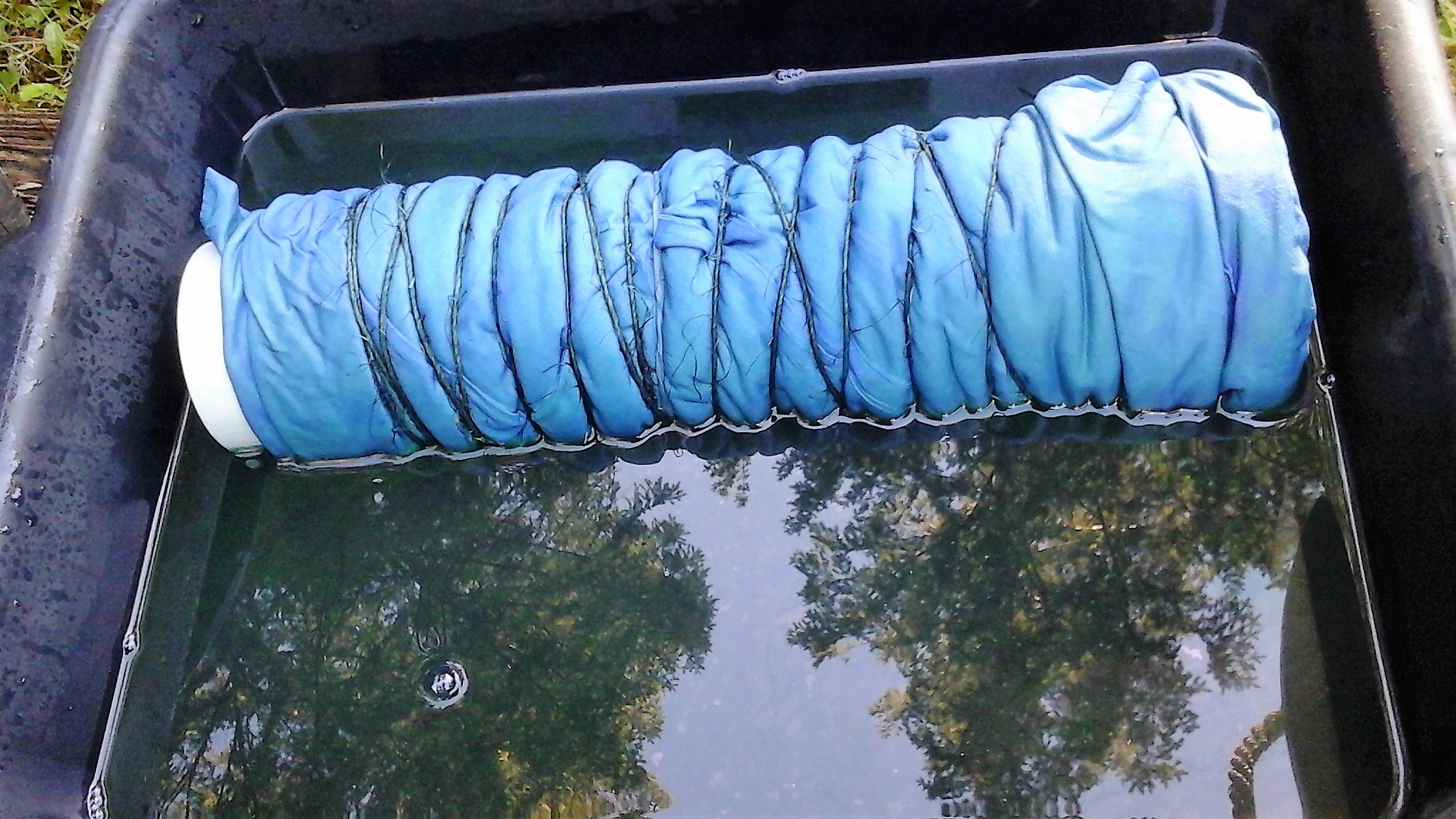
This is a passage from a long essay (still unpublished), “On Swimming and the Origins of String”. Today I am hoping to complete a quilt top, simple stars pieced of Japanese print and scraps of woad-dyed cotton, sashed with a deep blue cotton-linen blend. For the actual quilting, I want to try something to give the piece more texture and so I’ve been remembering particular encounters with beautiful work by women that speaks to the quality of living fibre, living structures at the heart of artistic creation.

In Baja last year, I entered a small gallery in Todos Santos and was drawn to a huge painting. It was mostly blue, many shades, the same blues I saw most days of my time there, vivid aqua, ultramarine, saturated cobalt, Egyptian blue. And fastened to the work, painted into it with impasto or maybe some sort of glue, was a fragment of fishing net. I stood in front of the work and brushed tears from my eyes. I had been swimming every day in Baja, first thing in the morning in a blue pool shaped like the symbol for infinity, and later in the day in the ocean, the wild Pacific and then the calmer waters of the Gulf of California at El Tecolote. I had been taken into the blue water, under the blue sky, and I felt cradled in it, a hammock of coarse rope, rocked by currents. The painting spoke of that relationship, the layered blue, scrap of net. I couldn’t get it out of my mind. It looked like it was made of hemp rope, not the high-density polypropylene or polyethylene or nylon most fishing nets are made with now, giving them the capacity to go on forever in our oceans, abandoned or lost, marine creatures entangled in their filaments.

In some ways I was reminded of Polish textile artist Magdalena Abakanowicz’s magnificent sculptural works, the ones known as Abakans. I haven’t seen them in person but have followed the reviews of the exhibition at the Tate in London: Every Tangle of Thread and Rope. In an ideal world, if I could travel at will, at the drop of the hat knit by Cowichan women and hanging on a hook by my front door, I’d have spent hours looking at these brilliant three-dimensional works, suspended in air, turning a little in drafts. They are like hollow trees, vulvas, caves, encompassing cloaks, wombs, embellished with lichens, entrails, long intricate veins or roots. One dark one, bifurcated, reminds me of my lungs seen in an xray image: the cilia, the primary bronchus, densely and richly textured. Deep charcoal, olive, red, saffron, woven of sisal, fleece, horsehair, flax, haunting in their, well, I can only say otherness. But it’s an otherness that we know and long for. Seeing them on film, I want to touch them, trace my fingers along their openings, enter their openings to leave the world behind. She knew fibre, was drawn to its possibilities and potentials “I see fibre as the basic element constructing the organic world on our planet… It is from fibre that all living organisms are built, the tissue of plants, leaves and ourselves… our nerves, our genetic code, the canals of our veins, our muscles… We are fibrous structures.”

Seeing the painting and thinking about the Abakans, I find myself wondering about how to make a partial turn from the quilting I love so well to constructing something organic and emblematic of the ideas I have constantly: the cradle of the earth, the lines connecting us to the living world, the temporary and permanent nests we yearn for and abandon. I think of gathering rope to add to the stash I’ve picked up on beaches, roadsides, and then somehow knitting it into huge bags to hold, well, what? Something, if only possibility. I think of those ropes at Mersa/Wadi Gawasis, coiled in readiness, and I imagine the scent of them, ripe and redolent with that possibility.

Sometimes, when I’m swimming in the lake, a cirrus cloud formation will float over and I wish for it to settle on me like a net. Or I could turn over and lie in, a hammock of sky, a bag cast out of the heavens.

Draw history through the eye of the longest needle in your basket, the twined thread—flax stem, inner bark of a pine, pounded nettle, strands of a coarse-haired sheep—and make the seam to hold the bag together. In it, the story of the blood clot, the blue lane of the pool, the tiny merganser chicks light as the air itself. This is yours, to give away or to keep.

A little later, that same day:

blue stars

single blue star

redux: “I keep meaning to stop,/to wait for you.” (Carl Phillips)

Note: this was first posted 3 years ago.

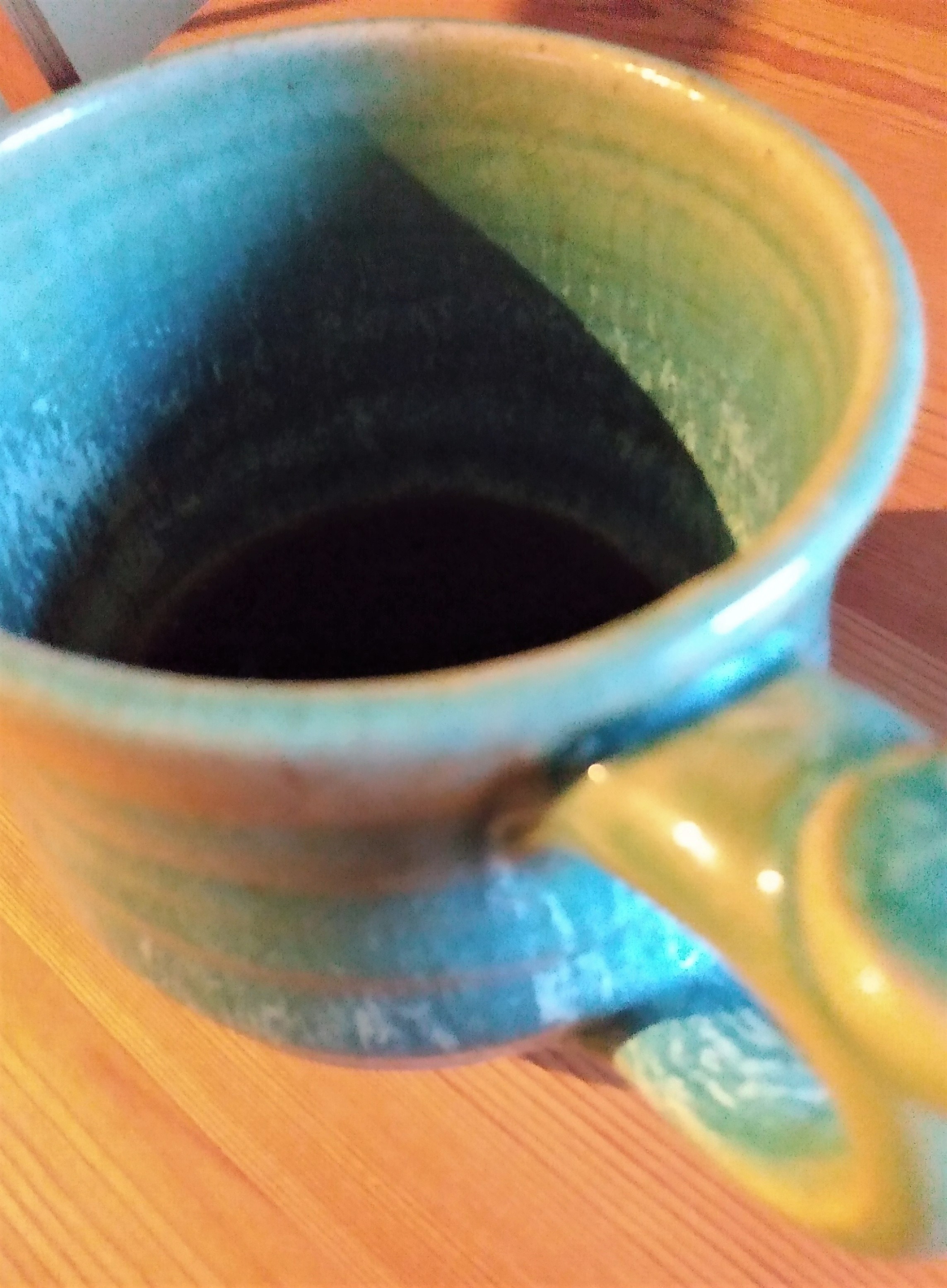
morning coffee

It was after my second sleep that I woke from the dream. After waking at 4 in panic to realize I hadn’t closed the greenhouse door last evening–yesterday morning I went out for kindling and smelled a bear, maybe the same one that came two nights earlier to tear apart one of the compost boxes; and most mornings there’s evidence of deer–in panic, I went out in the dark in my nightdress to make my bare-footed way to close it up. (I don’t think anything found it because a bushy tomato plant was still filling part of the threshold.) So after the second sleep, the brief one, when I woke in tears because of the dream. Everyone was here, all the children, their parents, and it was today, the day I’m making a feast for friends we haven’t seen for months. But in the dream I was making the meal for them. Two were racing out to the mossy area they called The Field, still in their pyjamas, and I told them to go in and put on warmer clothes if they were going to roll around on the ground. I was looking for something. Firewood maybe. And I came up on to the deck, standing for a minute in the quiet to plan pancakes for breakfast, when Friday came up behind me. Friday was the dog John had when we met in 1979, an English sheepdog X, and she became the dog of our children’s early childhoods. She died when Angelica was an infant. I have always regretted the way her death was a little too perfunctory. A year earlier a vet had given her vitamin shots and told us it would give her a good year. It did. And then everything seemed to go at once but mostly her bladder. She was on a course of antibiotics. Then another. Then her entire backend collapsed. It was a loss of proprioception, the vet said. She no longer knew where her limbs were in space. Every morning I’d come downstairs with a baby over my shoulder, two small boys needing breakfast, John getting ready to drive down the Coast to work (he was teaching in those years), and the kitchen would be flooded in pee. Before anything else, the floor had to be washed. Before the fire, before coffee, before breakfast. One morning, John just said, Boys, say goodbye to Friday, because we knew this day was coming but didn’t expect its arrival. So suddenly, so soon. There were tears. Goodbyes. She was carried out to the car. For the next year, Brendan, who was 3, said he could hear her barking underground. So she came up behind me in the dream, joyous to be home, a chain attached to her collar and wrapped around her back legs, but still she had found her way to us, through the woods, her curly hair tangled with sticks and bramble. Can I tell you my dream, I said to John, and afterwards he said, You want the dead back. I do. It’s true. I want them all back. The parents, the friends, the dogs, the cats. I want them all here for the turkey I will be roasting this afternoon, dense with dried-fruit stuffing, the caramelized brussels sprouts, the salad of garden tomatoes and basil, the vanilla and maple ice cream I made last night to have with Amy’s dessert. I want them all home. John brought me strong coffee to drink in my bed and I opened Double Shadow, by Carl Phillips, and wept again as I read these lines:

                                      I keep meaning to stop,
to wait for you.

Coffee in my green cup, face damp, the scent of the fire either coming in the open window or else drifting up the stairs. I want them all back.

“A little bow to those bears…”

morning amble

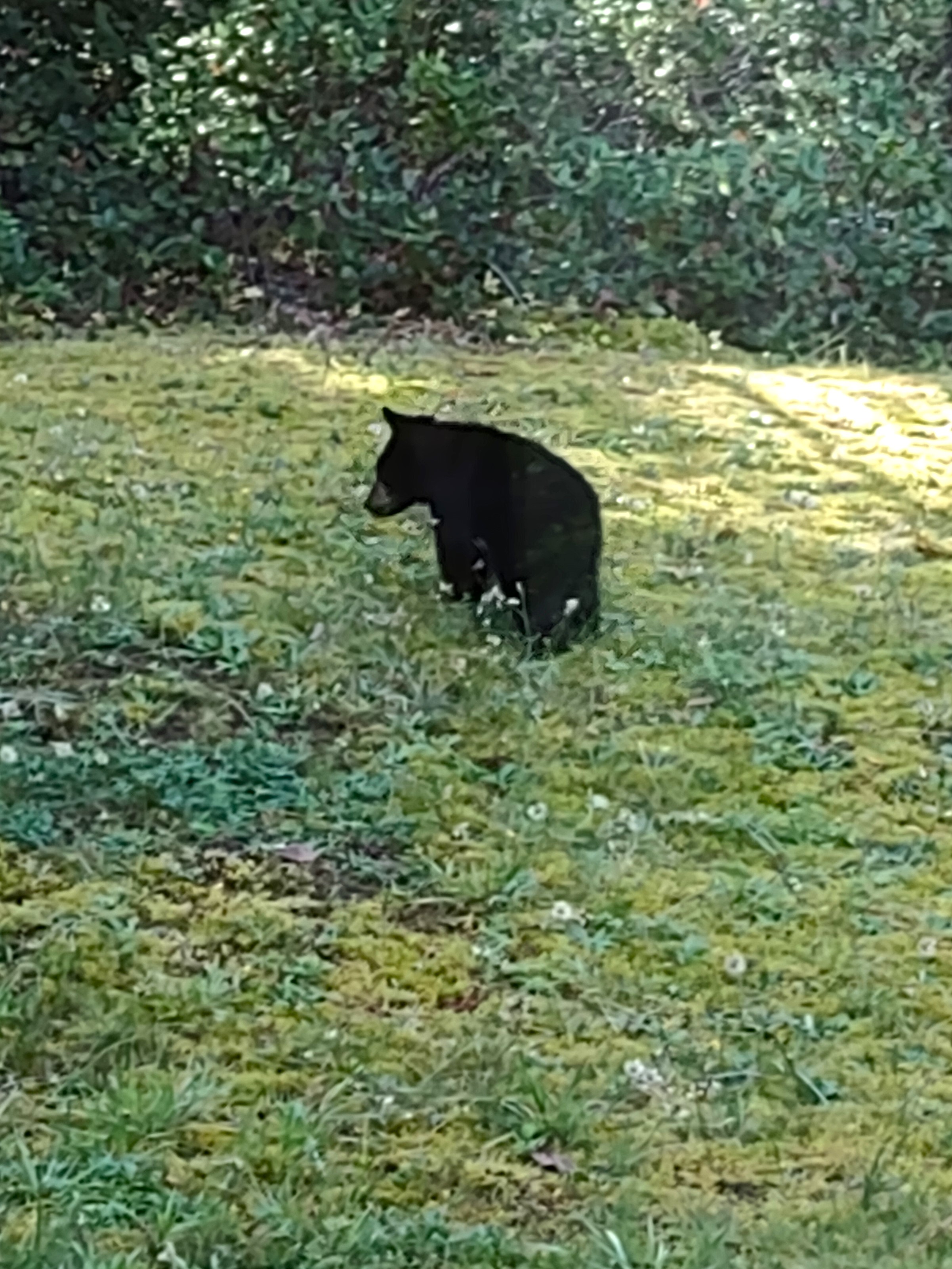
It’s been a season of bears. Looking out to see one swinging in the high branches of the crabapple tree, watching another (or maybe the same one?) walking up from the old orchard and slowly circling the garden, seeing a mother and a cub* amble across the grass just beyond my study window, chasing two cubs off the upper deck where they’d been sent by their mother to check for grapes (all picked). In late November or early December, there will be coho in the creeks draining into Sakinaw Lake, and soon, maybe even now, there will be pink salmon a little further afield, in Anderson Creek. We don’t usually see bears after the salmon have finished. They don’t reliably hibernate but they do sleep for long periods. The other day we went down to a favourite chanterelle site and I have to say I kept thinking about bears as I saw areas dug away under trees, places we’ve found pine mushrooms in the past. Oh, and the chanterelles? So abundant this year. We came home with a shopping bag full.

On Sunday I swam in the lake and realized I couldn’t feel my toes. Time to shift, I thought, and so this week I’ve been swimming in the local pool. I’m glad to be able to do it but already I miss the quiet mornings, the kingfishers, the fish jumping for flies. I miss the living quality of the water, even if it got too cold for me to continue comfortably. Over the winter I’ll take the occasional plunge in the lake, just to maintain our relationship. I love the way it closes over my shoulders when I first glide out, love its buoyancy, its clarity.

After a long period of not being able to think my way back in the novel I’d put aside, I found a way to proceed with the material I was exploring, the characters who’d emerged out of it, and also a way (I hope) to create a trajectory for the two separate locations of the novel. Every day this week I’ve been writing, writing, and yesterday, when I closed my computer to drive down to Sechelt on errands, my main character was in a car with a newly-found cousin, driving south-east out of Lviv towards Chernivtsi. This is 2015 and so there’s no danger of missiles or drones and they are talking about food. What will happen next? I have no idea — and that fills me with excitement.

In less than 2 weeks, John and I will fly to France for a few weeks of exploration. We will mostly be in the Dordogne and I’ve been looking at maps, planning routes. Last night I dreamed we were about to enter the Font-de-Gaume cave in Les Eyzies but somehow we got sidetracked somewhere else. Luckily I’ve booked tickets for the cave and with any luck I’ll be able to go on with the dream. When I was 19, I wrote a poem about one of the Dordogne caves and reading now reminds me that it’s a dream that has always been part of my consciousness.

We have come
hearing of Paleolithic animals
hearing of underground galleries/

An electric rain holds fifteen people,
goes down into the caves each day…

The electric train is at Rouffignac and luckily we’re going there too. I understand there’s one cave bear image in this cave and scratch marks from the bears who lived here earlier than 15,000 years ago. A little bow to those bears from the ones who amble by my window, waiting for salmon.

*John took this photograph. The mum was just in the woods beyond.

redux: pioneer jacket

Note: this was written 6 years ago. The jacket is still being worn.

________________________________

Maybe it’s the light, the grey light, and the sound of rain on the metal roof. Maybe it’s the time of year, the maples turning, the scent of elk in the air, and the last of the apples turned into pies. But there are ghosts everywhere. Looking out my window just now, I saw…my father? in the woodshed. No. It’s my husband, sorting out kindling.

pioneer jacket

As he was heading out earlier, we were talking about how time seems to be moving backwards for us. We hear our parents, their sayings—our mothers and their habitual frugalities, our fathers and how their notions of the world were shaped (inevitably) by their experiences of the war. So we laughed and then John came back into the kitchen, laughing. “I’m still wearing his jacket,” he said.

My dad loved Pioneer rainwear. I don’t know if it’s even available any longer. But he always had a green jacket, replaced perhaps once in his life. And when he bought the one new one I remember him buying, he passed along his old one to John. My father hasn’t worn the jacket since at least the early 1990s (and he’s been dead since 2009) but it still smells like him. More than him, it smells like my life with him, as a child camping, or walking some evenings with the family dog.

So the jacket reminds me. The air reminds me. The scent of elk. Apples with wrinkled skins on the counter. The way the rain sounds its own soft music until you don’t hear it anymore but it’s in your blood, your heart.

And I’ve been here before, I thought, my father’s old jacket taking me back as surely as anything can. In the mid-1990s, I wrote about his jacket, published in Red Laredo Boots, my first collection of essays. So I found my copy of the book and yes, here’s the passage:

rlb

The fire is warm, soup is simmering, and all the old ghosts are waiting in the grey light. Listen, listen, rain on the roof, the return of the Steller’s jays, the rustle of the jacket as my husband returns it to its hook.

a postcard from Doriston

postcard

For some months I’d put my novel-in-progress aside. Too many things were on my mind and settling (imaginatively) back into a small coastal village just wasn’t possible. Throughout September, I worked a little on it, in it, each day. But I wasn’t sure how and why I might proceed. But yesterday afternoon the power went out unexpectedly and when it still hadn’t come back on in time for dinner, we went out for Mexican food. Maybe it was the bright lights, maybe it was the delicious Ixtapa ceviche, but somehow I was leaning across the table and telling John that I’d found a way to organize what was beginning to feel like too much material without a clear direction. Earlier in the day, in search of information about Doriston, a tiny hamlet that is, in a way, the presiding muse of this novel, I’d found an article online, part of my friend Andrew Scott’s BC Postal History Newsletter. This article repeated some of the information from Andrew’s 2005 Doriston article in the Georgia Straight but it also included more stuff about the short-lived Doriston Post Office. And in the way that an unexpected thing lights the flame that is inspiration, I spent the rest of the afternoon, or at least until the power went out, sketching a scene that allowed me to see my novel in a new and different way.

Somehow I was leaning across the table and telling John that I was going to organize the sections of the novel–the Easthope one and the Lviv one–as a series of postcards. In a way this is what I’ve already been doing but I’ve been nervous about also finding a more conventional way to connect the scenes, the moments, the sketches. Maybe I don’t need to though. Maybe the postcards themselves will make a coherence that is accumulative rather than simply narrative. I’m going to try anyway. The clues have been there all along. The cabin that my characters live in is on the Doriston Highway–if you’ve walked the Skookumchuck trail, you’ve been on the Doriston Highway–and some historical events concerning Doriston have inspired a series of paintings one of the characters is working on. So Postcards from Doriston, Postcards from Lviv. Today I feel the old excitement.

Note: the image at the top is from British Columbia Postal History Newsletter, Volume 28 Number 3, edited by Andrew Scott. Andrew isn’t well so I haven’t asked him for permission to use the image but I feel sure he wouldn’t mind. We have shared our fascination with Doriston many times.

autumn thinking: wolves and bears

autumn lake

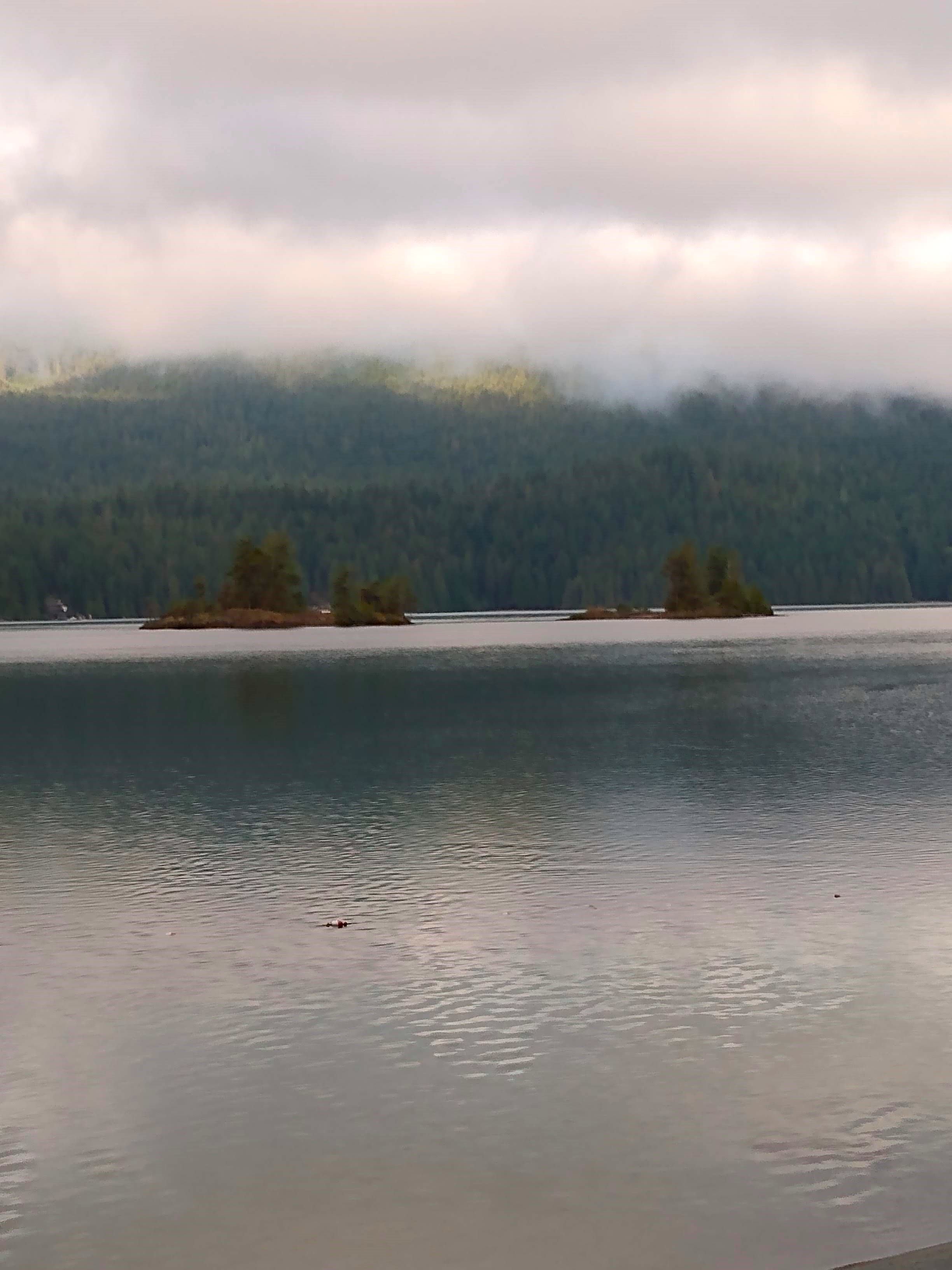
Yesterday, swimming, I wondered how many days I could continue. John has begun to swim in the local pool and soon I’ll join him but I’m not ready to give the lake up just yet. Just yet. Though the water is very cool, I have to say, and there are moments when I can’t feel my toes. What I don’t want to give up: the kingfishers, the quiet, the muffled cloud over the other shore, the trout jumping for insects, how it feels to glide through the green water, eyes closed. I don’t think I’ve ever felt so alive as I do on these mornings. But one day, not this one, I will wake and think, No, it’s just too cold. As it is, John sits in a folding chair under the big fir in three layers, with gloves on. When I get out of the water, he holds my big towel so I can wrap up. I’ve been in the lake each day since May 19th, with a little break to go to the Island for Angelica and Karna’s wedding.

Last night I was awake for hours, thinking about the chaos of the world right now. How far we are from the civility I believe we are capable of. In the night the situation(s) felt perilous–and I don’t think that’s an exaggeration. I’d been reading a book before sleep, by flashlight because the power had gone out in our first autumn storm, and I didn’t want it to end. Gumboot Girls, a gathering of stories and recollections of women who’d arrived at Prince Rupert and Haida Gwaii in the 1970s to make new lives for themselves. They built houses, learned midwifery, grew food, towed logs to beaches to cut into firewood, canned salmon and clams, learned to dress venison, to smoke fish, make cheese from goats milk. One of them, Chloe Beam, wrote about going up the Skeena River in her skiff to pick up a box of tiny chicks in Terrace. She was also the woman who wrote so beautifully of wolves, a song I’ve heard in the early morning once or twice:

I stepped outside on the dock this particular night. I was astounded by the brightness. I looked up and behind undulating dripping curtains of aurora borealis filling the entire sky. I had just seated myself on the rocks of the point to enjoy the electromagnetic spectacle, when from the next point over, a pack of wolves started to howl. At first it was intermittent. Then the wolves got into full swing. They bayed and chorused, sometimes in unison, sometimes in solo arias, calling down the northern lights to dance and snap in rhythm.

So one world, the one that feels upended and troubling, and the other world, where women cut wood with a swede saw, tend babies next to tin stoves, make quilts together, held in a kind of uneasy balance. Part of the uneasy balance is closer to home. Yesterday I was shopping in Sechelt when a woman asked me if I’d heard about the grizzly seen on the beach that morning. The beach where I gather the stones to tie into linen for indigo dye work, where my grandchildren love to swim in the summers and explore the tidepools at low tide. The beach right in front of the condominiums, one hotel,the walkway usually lively with bikes, dogs, little kids on scooters, leading to the play park. This beach:

where the grizzly was seen

No, I said, I hadn’t heard. She said the RCMP and the conservation officers were at Chapman Creek where the bear had walked to along the beach (Chapman Creek is a salmon stream). And later I learned that the bear had been trapped and relocated. But grizzly bears are so rare in our area, almost always young ones who’ve somehow arrived by water –one swam Jervis Inlet to terrorize pigs in Egmont about 8 years ago– or across the ridge from Salmon Inlet to explore Gibsons. I’ve only seen one, and not here; in April, at the head of Bute Inlet, watching guys unload a tanker truck full of 70,000 Chinook salmon smolts to be released in the Southgate River, we were alerted to a grizzly bear at the Homathko River estuary, just on the other side of the inlet. It was leisurely grazing seaweed (it looked like), raising its huge head occasionally to look our way. We don’t often get to see something so completely wild and beautiful. Though three days ago I was at my desk when I saw the grape vines moving around a corner of the house just beyond my window and when I went upstairs to see what was going on, I saw two black bear cubs, this year’s, scrambling across the upper deck to the stairs leading down. No doubt their mum had alerted them to the possibility of grapes–bears have very sophisticated memory maps of food sources– though ours had been picked and they were out of luck.

When I swim later this morning, after John returns from the pool, I’ll be thinking about bears and our planet, and the shifts and dangers of being alive at this time in history. I want to believe we can do the right thing, as a species, as citizens, and that our precarious arrangements, social, political, ethical, and ecological, can somehow be brought into a healthier balance. I hope the bears can find a balance too that doesn’t require them to graze on seaweed on the beach of a small town on the Sechelt Peninsula because these stories seldom end well for them. When I swim, I’ll remember the bear prints I sometimes find in the sand at the edge of the lake and Gary Snyder’s lines for bears.

A bear down under the cliff.
She is eating huckleberries.
They are ripe now 
Soon it will snow, and she 
Or maybe he, will crawl into a hole
And sleep.


redux: “I have walked behind the sky.” (Derek Jarman)

Note: 5 years ago this week, I finished a collection of essays that I called Blue Portugal. It was published by the University of Alberta Press in the spring of 2022. I loved writing the essays and was interested to find this post while looking for something else. So much of my life is cycles! Indigo dye (the first photo certainly has echoes of last week’s post), quilts, even the essays themselves. (I have another collection, Kingfisher, making the publishing rounds.) I didn’t end up using the Robert Penn Warren lines as an epigraph, I used a passage from the Odyssey instead, but I still love the lines. Make it a story of great distances, and starlight.

________________________________

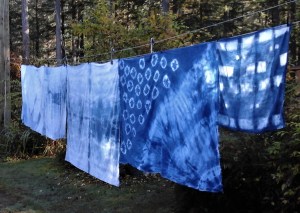
clothesline

So. Yesterday I finished writing the final essay for Blue Portugal. Or at least I finished a full draft, with some parts a little rougher than others. There are ten essays in this collection, ranging from meditations on colour, investigations into ampelography, entoptic phenomenon, Bach’s Violin Partita No. 2 in D minor as a soundtrack for navigating grief, the relationship between the venous system and rivers, and using Dante’s Inferno as a means to recover from fractures. I know. It doesn’t sound like a manuscript that will be easy to place with a publisher, does it? In truth, I don’t think the essays themselves are difficult or chilly. But they’re not issue-based. They’re not life-style pieces. I read those and enjoy many of them but they’re not what I write. Or at least they’re not what I need to write right now.

There’s a lot of blue in this collection. The title piece for example begins with wine, Modry Portugal, a beautiful light red wine we drank in the Czech Republic. Modry means blue in Czech (and other Slavic languages) and I wondered about the Portugal. Where did the grape come from, and how, and why. I also wanted to look more deeply at family origin stories. There’s another essay, “The Blue Etymologies”, that I wrote to puzzle through what I experienced when I fell last November and damaged my retinas.  I have walked behind the sky, wrote Derek Jarman in Chroma, and yes, that was exactly where I went. “blueprints” revisits housebuilding and various kinds of fabric resist printing and the cyanotypes of Anna Atkins. Several of the essays use maps and land surveys in an attempt to locate the past and a couple of them might be too personal to interest anyone but members of my family. Who can say.

What I want to say is how much I’ve loved writing these essays. They are messy, imperfect, badly constructed in parts, and the craft is often careless; if you’ve read previous posts and seen images of the quilts I make, then you will recognize the parallel. But in an odd way they’ve kept me alive. Or they’ve kept my mind alive as I’ve navigated some health issues, have lain awake in the night thinking of my children and their children and how we’ve ended up living so far apart, have learned to do particular techniques with textiles, and have tried to keep what’s beautiful close to hand in the face of climate change, dangerous political systems, and an aging body.

hooped

The epigraph for this collection is a passage from a poem by the American poet Robert Penn Warren.

Tell me a story.

In this century, and moment, of mania,
Tell me a story.

Make it a story of great distances, and starlight.

The name of the story will be Time,
But you must not pronounce its name.

Tell me a story of deep delight.

–Robert Penn Warren

Deep delight, in a moment of mania. That was me, in the night, writing by starlight, telling the story over and over again.

orphan girl

basket of grapes

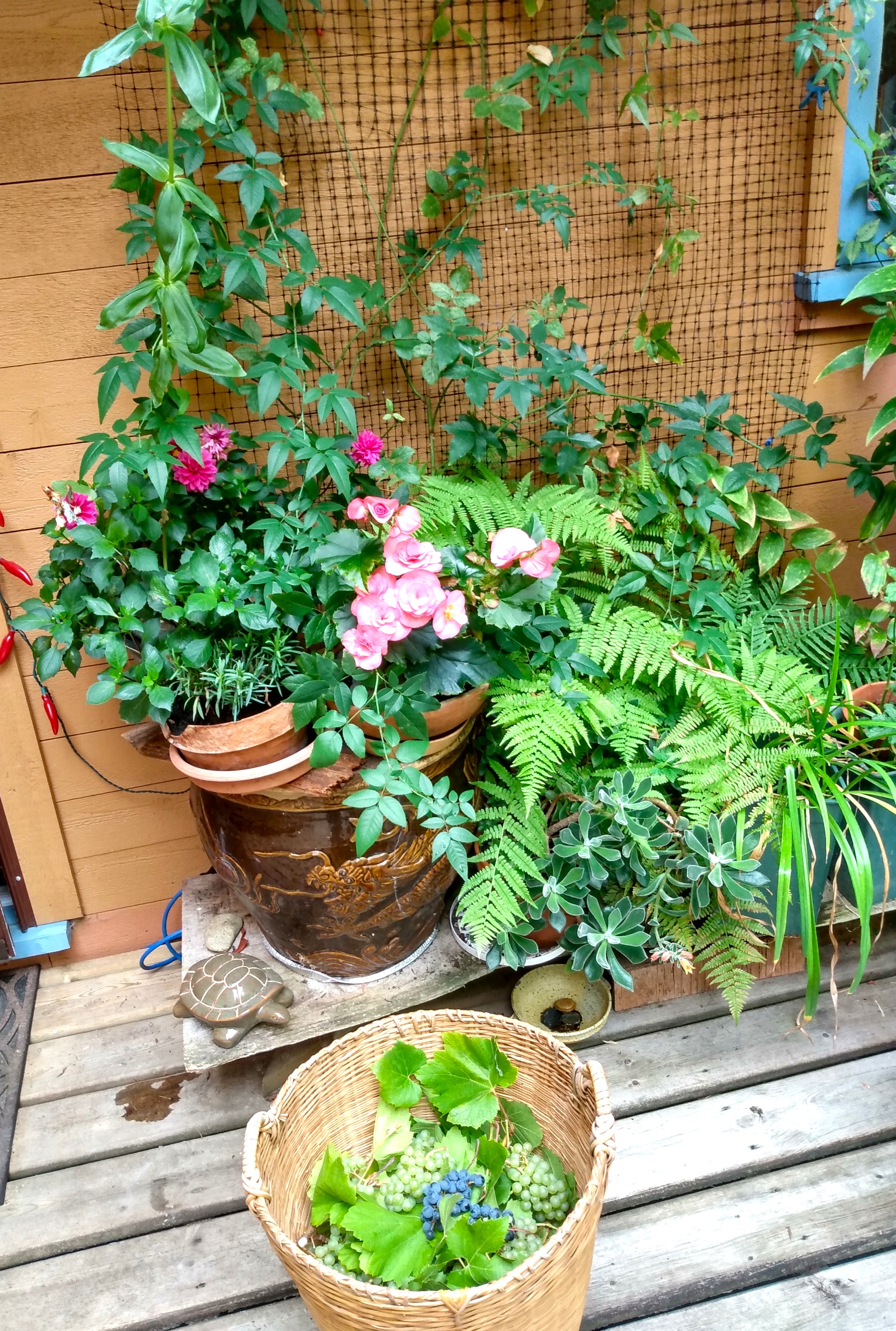
Yesterday we picked the last of the grapes. Not the table grapes growing over the west-facing deck — we picked those last week, ahead of the raccoons who’ve come since, scrambling over the roof and trellis, a whole family in search of grapes. The ones in the basket are wine grapes, from vines planted more than 30 years ago, Chardonnay and Marechal Foch. I don’t think we ever thought we’d make wine but the garden centre had these varietals and we thought their leaves would keep the south side of the house cool in summer. And they do. Tree frogs love the green leaves and of course raccoons and bears love the fruit. The other morning I stood at a north-facing window at 7 a.m. and saw the big bear who’s been up and down the trails lately, well, I saw him in the crabapple tree, swaying near the top as he feasted on the scabby crabs. I didn’t want him in the grapes.

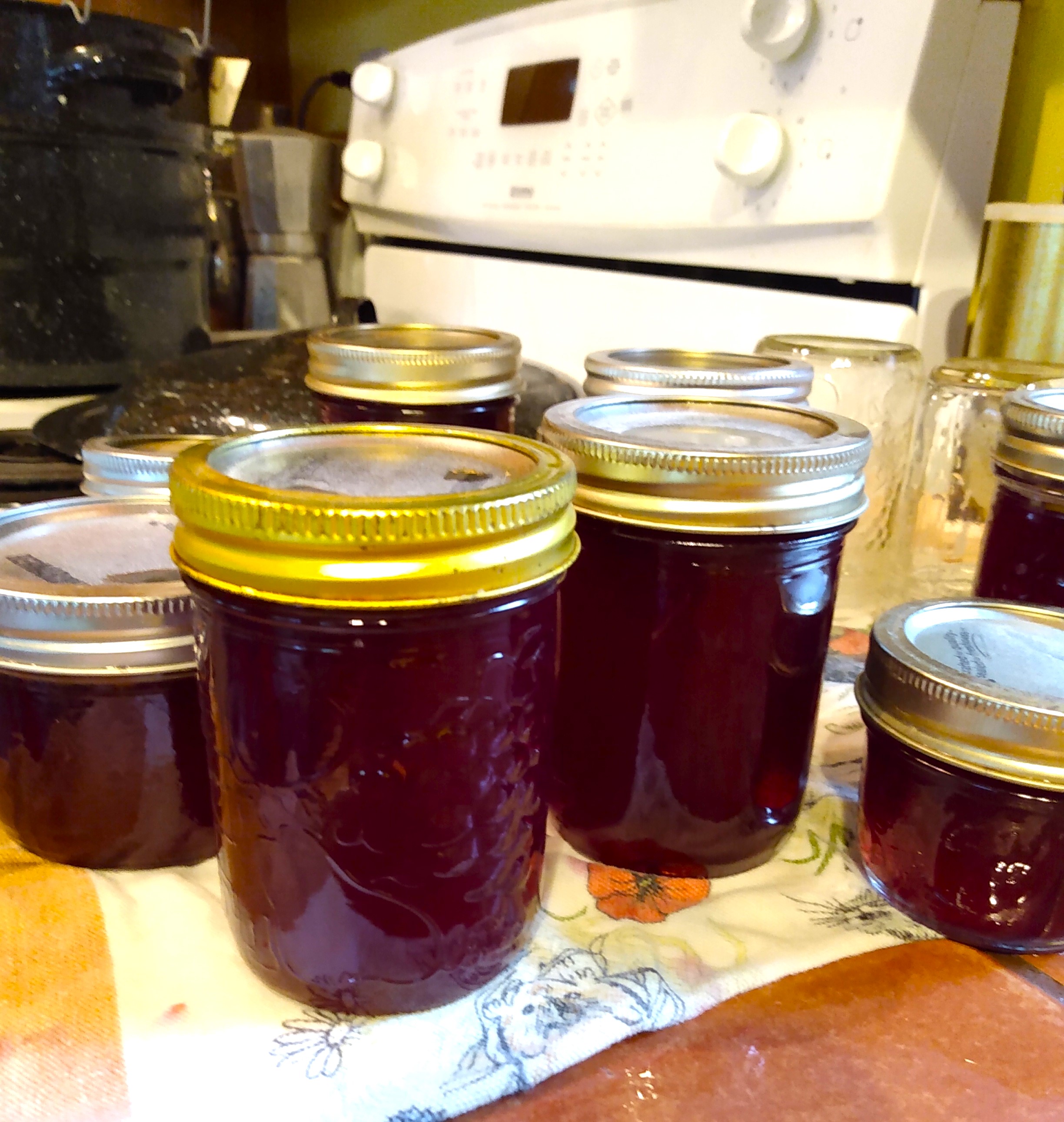
I juiced about 6 pounds of grapes and I made a batch of wine grape jelly flavoured with port and rosemary. It’s delicious. I like it best with mature cheddar on good bread. It truly distills the flavour of late summer and it seems appropriate to preserve that flavour on the first day of fall.

wine grape jelly

Mostly today I am thinking about a dream I had early this morning. I’d been awake for hours in the night, coming down to my desk for an hour or so, and then returning to bed. What kept me from sleep was a series of regrets. The usual ones. Not having been a better daughter, a better mother to my children. So my mind was filled with these difficult feelings and when I fell back to sleep, I dreamed I knew I had to tell my mother, who was somehow still alive, about her parents. She was given up at birth and placed in what she called a foster home but the 1931 census lists her as a “boarder”. She was 5 years old. And I’ve learned this was because her biological mother paid for her to be lodged in that household. There are lots of reasons for that particular house though I can’t prove any of my suspicions. But what I do know are the names of her biological parents and some things about them, My mother never knew these things. She knew nothing about them, apart from the fact that she carried both their surnames until she went to school and then one, her mother’s, dropped away and she was known by her father’s name. Her parents continued in their lives. Her father married, had two sons, and a successful life. I’ve been corresponding with one of his family members and will meet her one of these days. Her mother is a different story. She was a widow, with 4 children. She had expectations of the father and those didn’t transpire. She did go on to remarry. And I guess she–they, because the father contributed too–kept my mother in the home where she’d gone as a newborn. Her mother died in 1949 of cervical cancer. (This was the year before my mum met my dad.)

My mother knew none of these things. No one ever tried to find her–she had 3 half-sisters and 3 half-brothers. Many people knew about her, and some didn’t. I was kind of persistent because I wanted to know the hidden history of her origins and now I know but she’s been dead for 14 years next month. I dreamed she was still alive and I was trying to figure out how and what to tell her. Would it change anything, I wondered in the dream? Would it make her sad? I’ve been sad on her behalf. Sad as I pulled grapes off the stems, juiced them in a big stockpot, strained the juice, boiled it with sugar, port, and rosemary.

Here’s rosemary, that’s for remembrance.
Pray you, love, remember.
And there is pansies, that’s for thoughts …
There’s fennel for you, and columbines.
There’s rue for you, and here’s some for me.
We may call it “herb of grace” o’ Sundays.
– Oh, you must wear your rue with a difference.
There’s a daisy. I would give you some violets,
But they withered all when my father died.

No pansies or columbine right now, but fennel, yes, and rosemary, and a little clump of rue among the weeds. As I stirred the jelly, I listened to Gillian Welch sing “Orphan Girl”, a song that made me cry as the jelly boiled, and I thought, we are both orphan girls, on either side of Continue reading “orphan girl”