redux: “The people of coming days will know…” (Yeats)

Note: we’ve been somewhere like this before, at the whim of a chaotic and cruel man who loves the sound of his own voice but who actually has nothing to say. I’m trying to listen to other voices and revisited this post from January, 2017.

_______________________

All morning the news was of the marches in cities across the world. A form of protest, a series of statements about justice and democracy, the moving sight of rivers of people holding signs, crossing bridges. A group of people on a research boat in Antarctica, holding up their signs. The hundreds of thousands in Grant Park, Chicago, a number considered too many for a march. Closer to me, just across Georgia Strait, in Nanaimo, a thousand. One for the history books, for certain

It’s interesting how we record history, the stories that are included, abandoned, neglected, overlooked, revised. I was talking to my older son this morning — well, talking to his family! His wife Manon and their son Arthur, who remembered his grandparents from his Christmas visit and who blew kisses cheerfully — about the stories remembered and handed down by Indigenous people in British Columbia. Forrest is teaching a survey course in B.C. history and I wondered if he knew a story recorded by Imbert Orchard in 1966, collected in Robert Budd’s Voices of British Columbia, in which Lizette Hall, a member of the Dakelh First Nation, remembers an incident from 1828 involving James Douglas, working then as a Hudson’s Bay Company clerk at Fort St. James, and Lizette’s great-grandfather, Chief Kwah. It’s a story her family kept intact because of her great-grandfather’s involvement. She acknowledges that the story she tells has been “retold so many times, and a thing added here and a thing added there. Well, this is the true story of what, just what did happen.”

We sometimes think that because things weren’t written down, well, then they can’t be reliable. Good stories, maybe. But history? Lizette tells her story so emphatically and clearly that I have every faith that her version is “the true story”. And remember the “discovery” of Franklin’s ships in Nunavut, in a place where Inuit people had said they were located? An oral tradition held the story of the ships carefully and accurately but not many “experts” believed the validity of something not written down. I’ve read that the Inuit called the area on Queen Maud Gulf where the Erebus was found “the Ship Place”. (What would have happened if archaeologists paid attention to such names a hundred years ago? Had paid attention to generations who told essentially the same story?) Louie Kamookak is an Inuit historian and it’s fascinating to read about his expedition to visit areas remembered by his great-grandmother Humahuk:

Humahuk’s father took one item that he later made into an ice chisel (in later years she learned it had been a dinner or butter knife). As they were looking for more objects they noticed a man-made mound the length of a full-grown person. At the end of it was a stone with strange markings on it. Seeing this, her father became afraid and they made their way down to the shore.

Once at the shore they found more strange objects: wood and a metal chain going into the sea.

The world is an intricate collection of stories, if we learn how to hear them, read them, hold them in our hands and decode their own particular language. I keep two rocks on my desk, pieces of conglomerate dense with fossils from the Sooke Formation, a geologic formation on the west coast of Vancouver Island, dating from the Oligocene, about 20-25 million years ago. The stones are heavy enough to hold paper down, literal enough to contain their own pages of marine history. I can read a little of it, recognize the marine fossils of gastropods, pelecypods, and oysters in the stones:
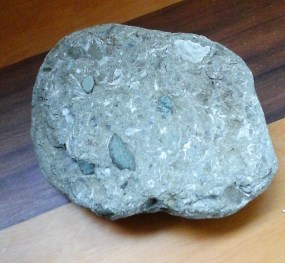
oligoscene fossil.jpg

That tiny remnant of oyster on the top of the stone — it’s as beautiful as any pearl. And the other stone, with its ridge of bivalve — a clam? I run my thumb along its edge. 20 million years of calcite seamed into rock.
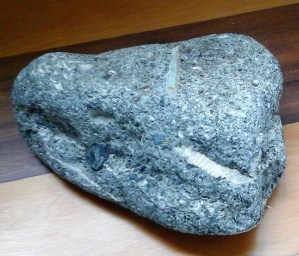
fossil

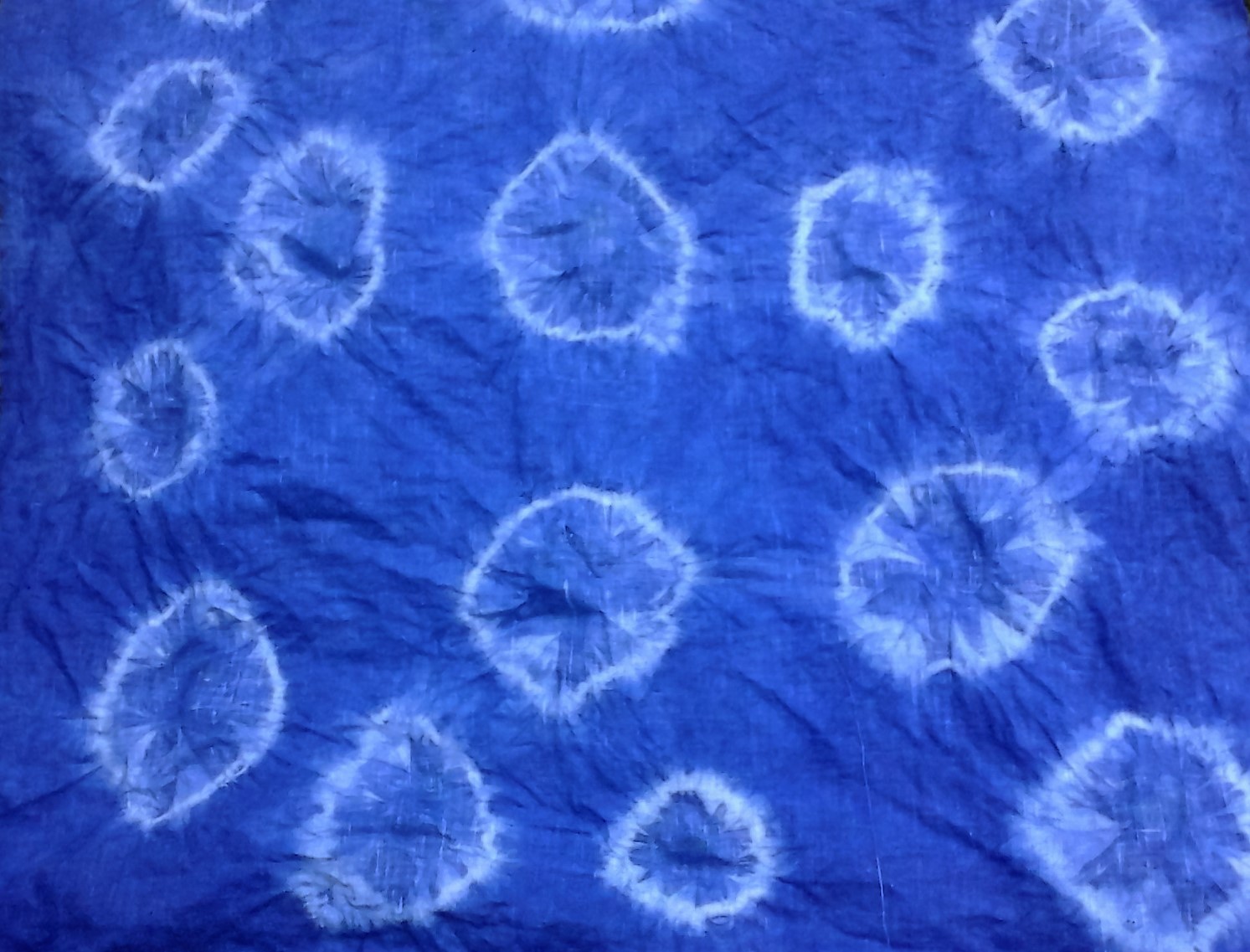
Instead of marching in Vancouver, we hiked the Cedar Bridge Trail. (We have to be in Vancouver twice next week, and it’s several hours each way, including a ferry…) Watery sunlight, pink buds on the alders, the sound of water running down the mountain (snow-melt!), the unsettling sight of a dead coyote in a creek by the highway, and as we came down off the trail, I had a sudden idea for a quilt. I’ve been working on one that somehow didn’t end up being as beautiful as I’d hoped. Strips of deep red, various dark blue plains and prints, and white damask from old tablecloths too worn for the table (but still with usable areas). Sashing of Japanese-inspired red and white prints. The backing is a big piece of Japanese cotton, indigo-dyed. It should be beautiful but instead it’s like a whole lot of French flags. I’ll finish it of course — I’m too thrifty not to. But I’ve been wondering about starting something that I’ll love as a process and as a finished quilt. I have two vintage linen sheets, found in a thrift store some years ago, and I thought today that instead of cutting them, I’ll batik salmon on one of them, making a whole life-cycle with varying sizes of fish, and even shell buttons for the eggs. Then I’ll dye the sheet using one of the shibori techniques I tried on smaller pieces of fabric last summer. This arashi, maybe, done with an old damask cloth.
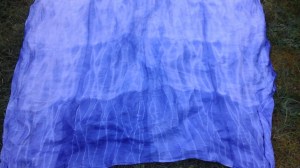
arashi

Arashi means “storm” and if I can figure out how to do it with a large (single-bed sheet-sized) length of fabric, then I think it might be lovely. When I did this batch of indigo, I loved the process but wondered afterwards about the actual colour. I think this time I’ll use more indigo and do more immersions than I did last summer. I want a deeper blue. The fish will look something like this:

button-fish

Now the snow has melted and I can be outside (if it’s not raining) with my dye vat and stick for stirring the tied lengths of fabric. I imagine them hanging on the clothesline to dry. It will be a story, told in dye and image, detailed in thread. Fish swirling and swimming, water rippling, shell buttons catching the light. A story open to interpretation.

Although you hide in the ebb and flow

Of the pale tide when the moon has set,

The people of coming days will know

About the casting out of my net,

And how you have leaped times out of mind

Over the little silver cords…

                                –from “The Fish”, by William Butler Yeats

quotidian, minus zero

firewood in back of Element

1.

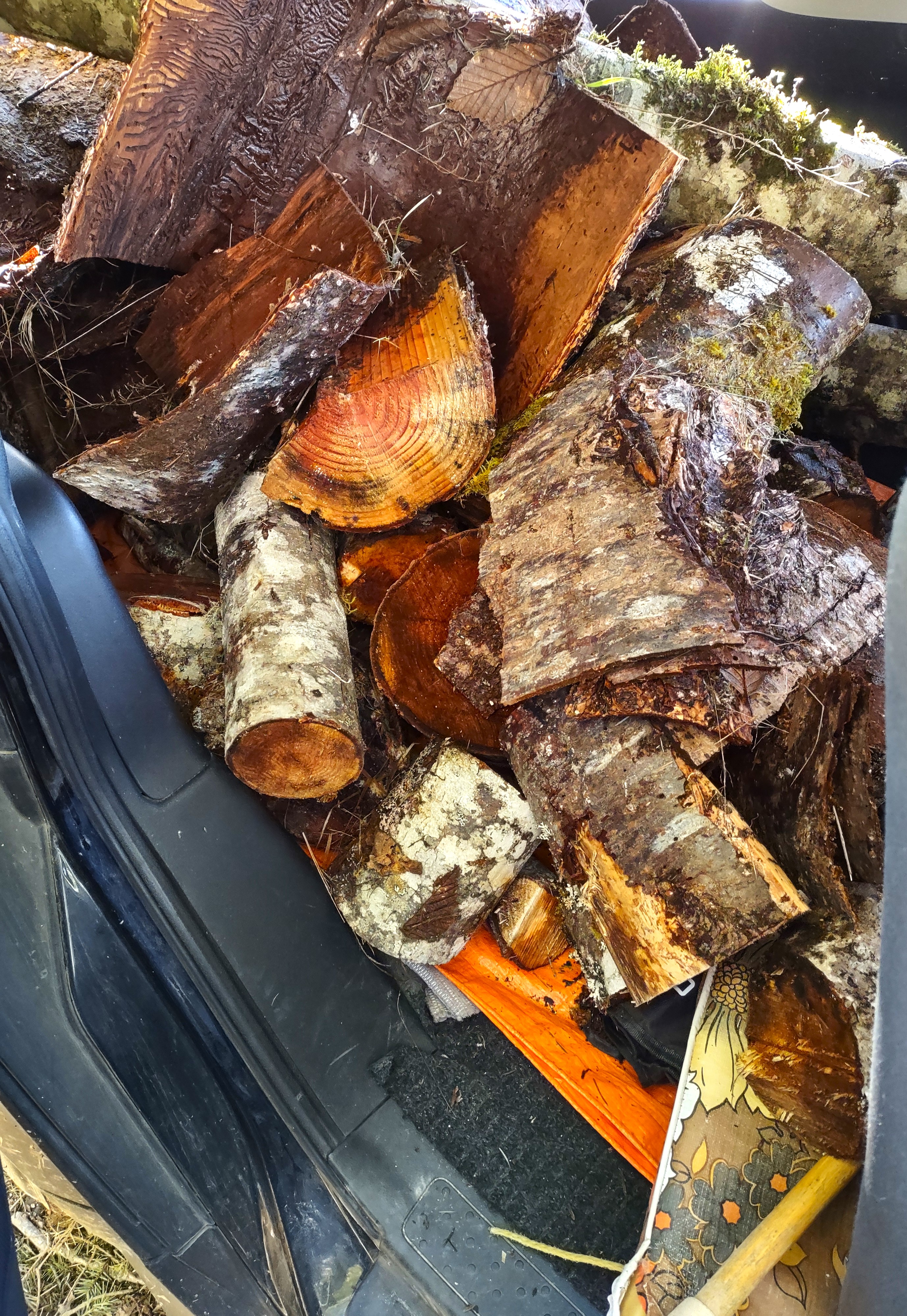
On our walk yesterday, we noticed again the piles of wood off the gravel road up the mountain, alder and firs cut to keep the Hydro easement clear. Cut last spring, I think. We noticed them every time. But yesterday we decided to fill the back of our Honda Element with wood. Luckily the back seats had already been removed. We didn’t have a saw so we only took the lengths we could lift and toss to the road. Already they were knitted to the earth with long strands of trailing bramble.

kelly's quilt

2.

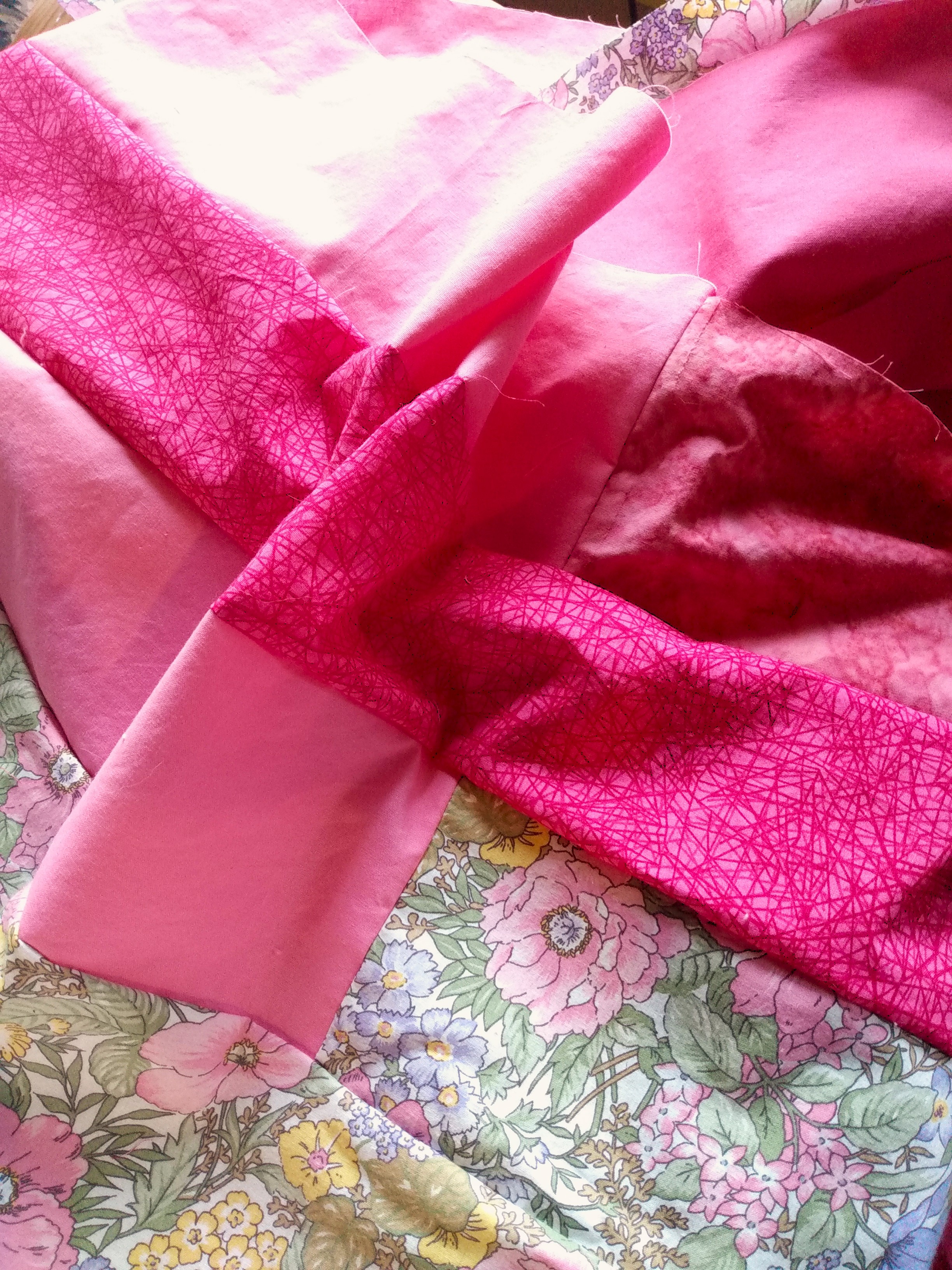
What colours would you like, I asked my granddaughter, who is ten, and for whom I am making a quilt. Her second–the first was made long ago, when she was two, a bright French patchwork with big buttons for her small hands. In response, she sent a bar graph: various shades of pink, with a small amount of purple. (I am someone whose idea of the perfect quilt is home-dyed indigo…) In response, she said, Please don’t do a crazy design. (I am someone who…) I thought long about how to use the pinks, a bit of mauve, a flowery print someone passed along to me years ago. And of course the solution was in front of me, carefully drawn on a card she sent in the mail: a bar graph. I am sewing strips of two shades of plain pink, two bright pink prints, one marbled, one scribbled, the mauve, and the flowery print.

3.

A weekend of baking with my new sourdough starter: chocolate cake made with the discard, glazed with caramel; and a big loaf studded with walnuts to have with Portuguese kale and potato soup. Tonight, maybe pizza with more discard. I have named my starter Artemis.

firewood in Element 2

4.

On these cold mornings, after a swim, the fire is the place to settle and think. I think about the strips of pink cotton, the remaining cabbages in the garden, grown from seed bought in Portugal, the beauty of the Anna’s hummingbirds who dart in to feed and then hover on the bare wisteria. I don’t think about what’s happening south of the border. I won’t. Next year the big slabs of fir bark I gathered yesterday to add to the logs will burn hot and fierce.

redux: optimus

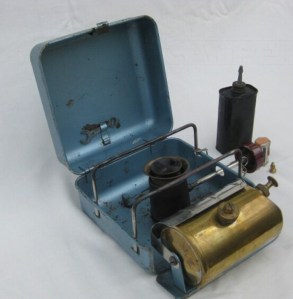
Note: this was first posted 7 years ago. But last night I dreamed again of Ireland and woke in the spell of music, seaweed, the scent of turfsmoke in my old brown sweater, my father’s little Optimus stove that I wish I’d saved.

___________________

the optimus

When I was 23, I went away to Ireland to live for as long as my money lasted. I had $1200, mostly because I sold my little Datsun and a Walter J. Phillips woodcut I’d bought with some excess scholarship money a few years before. I’ve written about that time in my novella, Inishbream, as well an essay, “The One Currach Returning Alone”, in Phantom Limb. It was a strange and beautiful time of my life. I’d gone because I felt I’d burned my bridges in Victoria—several failed romances, a difficult relationship with a much-older painter, the sense that I needed to be alone in a way I couldn’t be in a place where I was known; I was young, remember, and not unfamiliar with drama…. I didn’t know where I’d go after the cottage someone had offered me turned out to be unsuitable (it was remote and people had camped in it and burned the floorboards for warmth…this wasn’t discovered until I was taken there to settle in) but luckily I had subsistence supplies: my down sleeping bag and a small Optimus stove my father had given me. I was willing to live quite rough (though I did think floorboards were a necessity, not a luxury). I wanted to try to find out if I was truly a writer. I wanted to test myself in ways I couldn’t really have articulated but somehow I knew I needed to try to find out what I could live without and what I could do in complete isolation. (Remember, I said I was not unfamiliar with drama.) Through a series of lucky encounters, I was led to an island off the Galway coast and a little cottage facing north. I had a big fireplace for heat and a small pile of turf to burn, along with any sticks I could scavenge on the beach, and I had an oil lamp for light. And candles. My down sleeping bag came in handy but I never did need my Optimus stove because the cottage came with a small propane stove. I had to lug the bottle (the islanders called the tanks “bottles”) over to the mainland and get it somehow to the nearest town when I needed a refill so I didn’t cook much, apart from steaming mussels from the rocks below my cottage, cooking nettles into soup, and making rice from the five pound bag I found in a health food store in Galway.

Sometimes I dream of that time so vividly that I wake in tears. I feel such tenderness for that young woman and her loneliness. Last night we were talking in bed and I sipped some Laphroaig, inhaling its wonderful aroma of seaweed and smoky peat, and maybe that’s why I dreamed again of Ireland. Not because I could afford fine single-malt. I couldn’t. I could barely afford the rice. But the turf fire often crozzled and I’d lean into the fireplace, adding bits of stick to try to encourage it to catch and the smoke permeated my sweater. It’s a beautiful smell, I think, and it lasted for ages in the big rough wool sweater I lived in that year. I’d sleep with my window open to the iodine tang of the ocean and it made me dream of storms, of drowning. Sometimes I’d hear a tinwhistle in my dreams, but it was almost certainly the man who played on the little lane above my house. He’d lean over the stone wall and the music would waver in the wind. By the time it found my open window, it was unearthly.

So last night, Ireland, and the Optimus stove, unused, but given pride of place on the table in my cottage. Just in case.

This is all so long ago now but thinking of it brings back the music of Miceal’s tinwhistle as clear as anything and I ache to walk out to the boreen and learn to play along.

—from “The One Currach Returning Alone”, Phantom Limb (Thistledown Press, 2007)

lines in winter

one stone

1.

First a bright planet with two stars above it, a string of lights. Mars. And then Orion, so close we stopped on the side of the highway last night to look at him, the stars of his belt–Alnitac, Alnilan, Mintaka–glittering. And the Great Bear, “pivoting in the sky before Orion”, Jupiter just above. To the west, Venus through the Douglas firs, and a huge moon rising.

2.

Just now, as I write, a winter wren alighted on my window frame, in search of spiders. To whom do I owe this pleasure.

3.

From Brendan, a photograph of a great horned owl. From Manon, A. plunging through the pool, his first length of the butterfly stroke. During my own swim this morning, I watched ravens high above the school field, courting. Everywhere frost, the moon on its way west in the the blue sky.

4.

Empty peaks, silence: among sparse stars,
Not yet flawed, it drifts. Pine and cinnamon
Spreading in my old garden . . . All light,
All ten thousand miles at once in its light!

5.

A single yellow primrose is blooming by the greenhouse door.

constellations

Note: the quoted fragment in number 1 is from the Odyssey, Book V, translated by Robert Fitzgerald. Number 4 is a passage of Du Fu, translated by David Hinton.

redux: when Winter came to the door…

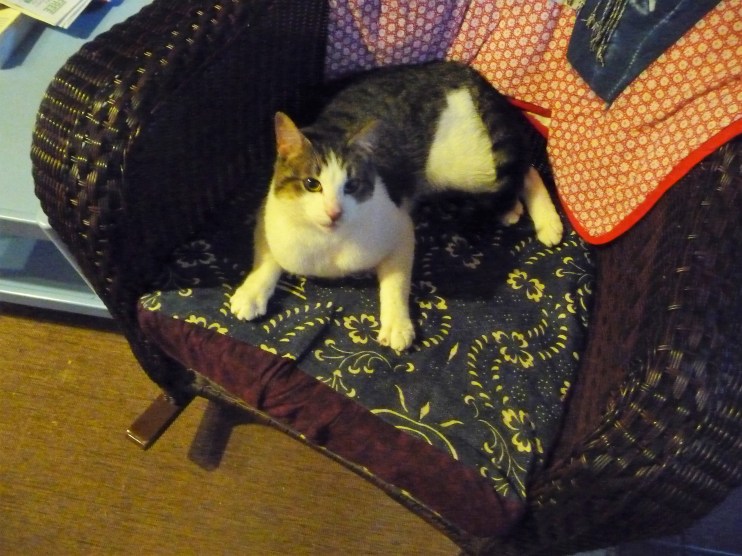
Note: this was posted 8 years ago yesterday. Winter is the best companion. For two years after his arrival, his origins were mysterious. No one replied to my notices about him, posted in our area and on Craigslist. And he settled in very happily. And then we found out where he’d come from, which made his arrival slightly less mysterious but still quite amazing: he’d left his previous home, several miles away, across a lake in a water-access cabin. He’d come through the woods in winter and he found us. When we learned of his previous life, we had his former family over to dinner to spend time with him. So we know now that he was 2 years old when he came to us which makes him 10 now. The other day when he went to the vet for his booster vaccinations and a check up, she pronounced him a perfect weight and in excellent health! And the rocking chair is still a favourite place.

___________________

… we fed him. (We think the cat is a male but we’re not actually sure.) He came out of the woods on the coldest days, timid at first, wild. I put out dishes of food and he’d approach quickly, but without making any eye contact. But he’s not wild at all. Abandoned, maybe. Because it’s so cold, I made him a bed in a sheltered area, with an old pillow and some polar fleece. When I went to straighten it while he was eating the other morning, I found a tiny dead shrew tucked into one fold of the fleece. (Just in case?) I’ve put a note on Craigslist and a little card on the community mailboxes where everyone in our sparsely-populated area collects mail. Silence so far. This morning he came in and looked around. He found the rocking chair by the fire.

winter.jpg

“But what is the light?” (Virginia Woolf, 1929)

under the bridge

In the middle of some difficult work, my nights filled with dreams in which I must take on my mother’s life in a room darkened by motheaten drapes, photographs tacked to the wall. In my own room, a wide window, a pair of elk toes dangling from a hook, a tiny birdhouse woven of willow and grasses just beyond. I am doing the difficult work, keeping a journal with dreams, answers to questions posed by a wise woman, descriptions of the past, of places, of recurring behaviours. And on my desk, my morning divination:

Friday, January 4th, 1929
     Now is life very solid or very shifting? I am haunted by the two contradictions. This has gone on for ever; will last for ever; goes down to the bottom of the world–this moment I stand on. Also it is transitory, flying, diaphanous. I shall pass like a cloud on the waves. Perhaps it may be that though we change, one flying after another, so quick, so quick, yet we are somehow successive and continuous we human beings, and show the light through. But what is the light? I am impressed by the transitoriness of human life to such an extent that I am often saying a farewell–
                           –Virginia Woolf, A Writer’s Diary

A few nights ago, I dreamed of where two rivers meet, the Thompson and the Fraser, a bridge crossing, an osprey taking long strands of orange ribbon to its nest in the trusses, I dreamed of the scent of rabbitbrush and sage, the long dry vistas.

And everywhere the sound of water.

“It is as if a silent, greater family, stretching down the centuries, were peopling the house.” (Carl Jung)

houses

Swimming this morning, I was thinking of Dogen, the green mountains walking. The blue mountains walking. This is my morning meditation, up and down my blue lane. In the clear water, I was swimming and thinking of houses. Last March I went to Unravel at the Barbican Centre in London, a really astonishing exhibition of textiles that were subversive and beautiful, some of them calling to images I keep in my own subconscious. (The haunting black garment woven by Magdalena Abakanowicz, for example.) When I came home, I was determined to make something myself, something that drew together strands of housebuilding, homemaking, family life, things central to the life I have lived for the past 45 years. But then for reasons I am still puzzling through and untangling, those steadfasts altered, shifted. The urgency to make a textile drifted away. It’s taken me until now to feel the draw again, in part because my sense of home has changed. My old dreams of houses and home have become something else. In the dreams I am elsewhere, trying to find shelter. Enough wood for the winter. A warm place to sleep.

Maybe it is a good thing for us to keep a few dreams of a house that we shall live in later, always later, so much later, in fact, that we shall not have time to achieve it. For a house that was final, one that stood in symmetrical relation to the house we were born in, would lead to thoughts–serious, sad thoughts–and not to dreams. It is better to live in a state of impermanence than in one of finality.
                       –Gaston Bachelard, The Poetics of Space

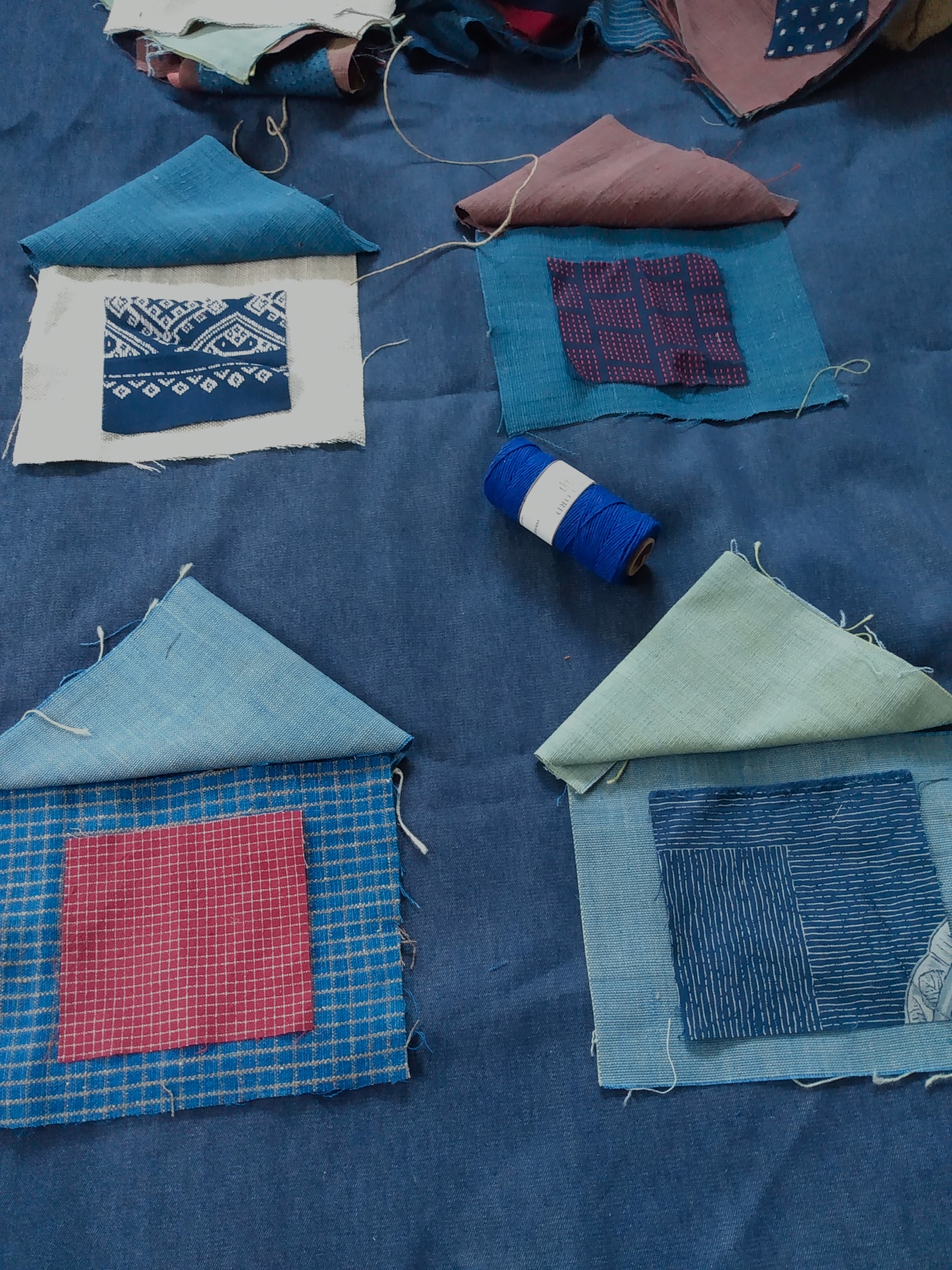
This morning, swimming, I was thinking about houses. I’ve been reading some psychoanalytic literature and realize that my recurring dreams of lost homes fit into the Jungian matrix: our homes are among the oldest of our collective symbols. They are sacred ground. And what happens when the ground shifts? That’s what I’d like to find out. A textile might help me. Arranging blocks of Indian and Japanese fabric on sturdy denim, a community might emerge. Rectangles for chimneys, triangles for roofs, tiny squares for windows: a geometry of memory and hope. In the past ten years I have been reaching back, back, to the lives of family members who were born in the late 19th century and I have learned something about continuity. I thought I was also learning about myself but there are certainly gaps in the process. So maybe I will make room in this new thinking about a shelter that will hold all of us, keep us safe, settle our old differences. A door that opens inward and out. Windows that let in the light.

Moreover, my ancestors’ souls are sustained by the atmosphere of the house, since I answer for them the questions that their lives once left behind. I carve out rough answers as best I can. I have even drawn them on the walls. It is as if a silent, greater family, stretching down the centuries, were peopling the house.
                         –Carl Jung, “The Earth Has a Soul: the Nature Writings of C. G. Jung”

a knock at the door

birthday morning

Last week John said, Don’t make plans for Sunday or Monday. So I didn’t. Pack for overnight, he said. So I did. He promised surprises. We left on Sunday morning and drove to the ferry. First stop on the other side of Howe Sound: brunch on the waterfront in Dundarave. Then across the bridge and where were we going? The second surprise. It turns out we were going to the Sylvia Hotel, an old favourite. We checked in to a sweet room with a view of English Bay with windows that opened and a tangle of ivy vines along the sill. It was a good day to walk along the seawall, looking out at the tankers and seabirds and kayaks. There were a few herons far along the beach and crows scrapping with gulls, Canada geese grazing on the sparse grass. When we came back to our room, I lay on the bed with my book, Stepping Stones: A Journey Through the Ice Age Caves of the Dordogne, and was reading about Bernifal when, what, there was a knock at the door. More towels, I wondered? I opened it, not knowing. But it was Angie and Karna, the third surprise! We all went back to the seawall for a walk, pausing in the Sylvia bar on our way back for a cocktail. And then later, we went out for dinner to the Homer Street Cafe, where we’ve had good meals in the past and a stellar one on Sunday night.

So many times this past fall I’ve wanted to see my children. There were things I could have done but I didn’t. It was a difficult time in many ways. But a knock at the door, a walk in sea air, dinner of duck confit, pumpkin gnocchi, various shared plates, a tart with a candle brought to the table in anticipation of my 70th birthday: I felt like myself again. Or at least a better version of the self that has been lost in the shadows. Looking out the window in the middle of the night, the sky smudged with cloud, a pretty moon shining through, I thought of all the birthdays of my life, the sense each time of new possibilities in the arrangement of numbers. 10; 13, when I was training a young horse; 21, when friends in France took me to the casino in Monaco for a glass of champagne; 30, newly pregnant with the daughter who knocked at the door; 60, with its echoes of 21, and the quick run of the last decade when it was hard to hold on to the old years passing.

These were the woods the river and sea
Where a boy
In the listening
Summertime of the dead whispered the truth of his joy
To the trees and the stones and the fish in the tide.

In the morning John and I woke to the sound of gulls. We walked the seawall again, before breakfast, before opening gifts, and when I packed my bag later, it felt lighter. When we got home late yesterday afternoon, friends had left a box of flowers and gifts on our kitchen counter. And there were video calls from Edmonton and Ottawa, greetings and birthday songs across the distance.

I have work to do, shadow work, and there’s fabric from Angie and Karna to sew as I take myself into that work, an opera to anticipate from my Edmonton family, warm socks from Ottawa, a bottle of excellent French Chablis from John to sip at intervals along the way.

Note: the lines of poetry are from Dylan Thomas, “Poem in October”

No intentions but words

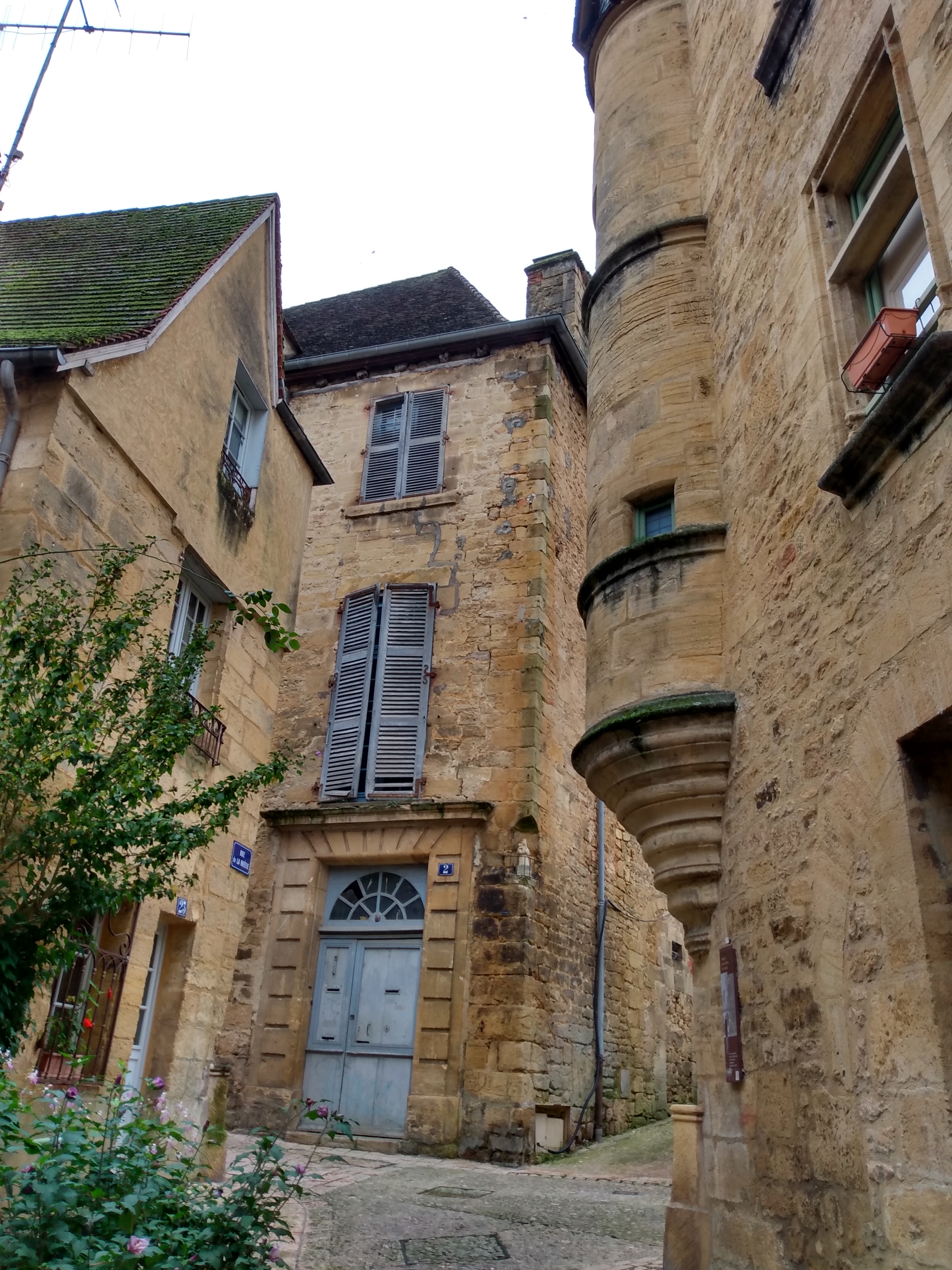
This morning, swimming, I was thinking of words. I had the entire pool to myself, its blue expanse, and the light coming in the big western window was grey, wintry. I thought about light, how places have their own. In October, we were in France and I fell in love with the Vézère Valley, the way sunlight made the golden limestone buildings glow as though from within. And within? Caves, caves filled with images of reindeer, bison, aurochs, horses, hands outlined with red ochre. I remember the light on the trail up to Font-de-Gaume, how I kept stopping to look at tiny ivy-leaved toad-flax growing in crevices in the stone, and ferns, and leaves of bee orchids, and a blue campanula. The campanula in particular held sunlight in its bell. I think now of that light and how different it is from the light I am accustomed to here on the west coast of Canada. This morning, swimming, I remembered my early swims in the lake nearby, the trail from the parking lot to the little beach overhung with mature bigleaf maples. Even on mornings when the sun was already hot, the trail was cool and green-dappled.

fractal

This morning, I was thinking about words, how they can be difficult, how they can pierce our hearts, and how they can be generous and loving, sometimes in the same sentence. It’s in the hearing, the reading (if the words are written down, a letter, say). Places have their own words too. What would the words be from my week near the Vézère Valley? Duck confit, for sure, and sarladaise potatoes. The mysterious beauty of the narrow cobbled road that passed the pretty flat where John and I woke late in the mornings because we couldn’t hear any sound through the thick stone walls. What time is it, I’d ask, and he’d look his watch. 8:30. At home I’m usually awake at 6.

IMG_20241022_022223188_HDR

I have no resolutions. I have no specific intentions for the year. I have words, the ones I thought of while swimming–light, ivy-leaved toad-flax, limestone, grey. This morning I listened to Hilary Hahn play Ralph Vaughan Williams’ The Lark Ascending, the final cadenza so exquisite I was in tears as I washed the dishes. There are no larks here but the day before yesterday I went out to water plants in the greenhouse and heard a winter wren in the woodshed, its high sweet notes as lovely as anything I’ve ever been gifted. If I closed my eyes, listening to Hilary, listening to the wren, I could imagine myself back into that golden valley, blue campanula, pink toad-flax, green ferns fringing the path.

For singing till his heaven fills,
‘Tis love of earth that he instils,
And ever winging up and up,
Our valley is his golden cup
And he the wine which overflows
to lift us with him as he goes.
                  –George Meredith, “The Lark Ascending”

“And we’ll tak a cup o’ kindness yet”

your table is ready

There have been years where we were awake long after midnight, having eaten feasts, waving sparklers in the darkness with friends, listening to fireworks down on Ruby Lake or over Oyster Bay or wherever we were. This year we drove down the Coast to a lively lunch and were home by 4. I was in bed early, reading about old age. (Was it only a trick of light that this book caught my eye at the library yesterday, 7 days short of my 70th birthday? I wonder.)

And we’ll tak a cup o’ kindness yet,
For auld lang syne.*

So let the year begin. It comes on the heels of one of the worst years of my life, filled with sadness, rejection, and despair. This morning I look out at the trees I have known and loved for more than 40 years and see through them a shred of blue sky in the south. At hand, a mug of dark French roast coffee, a kindness brought to me in bed by my husband. In those years of the sparklers and midnight joy, I’d lie in my bed afterwards and feel such excitement about what was to come. And what came? Lots of good things: books, visits from my children, the births of grandchildren, the constancy of my husband’s love and faith, the discovery of relatives across time and place. I am grateful for all of it. Maybe the old resilience will return, as it was, or in a new form.

I hope the year is good to you and yours, to all of us on the planet, and the planet too, which we have not loved enough to insist on its care, though some set excellent examples. I hope your cup is filled with kindness, on this day and all the days to come.

*from Britannica online:
“Burns first wrote down “Auld Lang Syne” in 1788, but the poem did not appear in print until shortly after his death in 1796. It was first published in volume five of James Johnson’s Scots Musical Museum. Burns, a major contributor to the compilation, claimed that the words of “Auld Lang Syne” were taken “from an old man’s singing.” However, the song has been associated with Burns ever since. As published by Johnson, the lyrics were set to a different tune from the one that later became familiar.”