

It’s tomato season. We’ve eaten panzanella salad every couple of suppers for weeks now (and I never get tired of it). We’ve had tomato sandwiches, Caprese salad, fresh tomato pizza, wide pappardelle noodles with slow-roasted Principe Borghese tomatoes and garlic and basil. (I could eat this weekly, maybe even more often, and so I’ve been making big pans of these to freeze for winter). Every day there’s a basket of tomatoes to pick and this morning I’ve just put two big pans of sliced Amish Paste and big beef heart tomatoes (from seed I bought in Porto the year before last) to make a sauce my friend the late Barbara Lambert taught me. Our vines are still heavy with green and ripening fruit. It always feels like a miracle: the tiniest of seeds pressed into pots of soil, kept warm by the woodstove, green sprouts emerging after a week or so, and then before you know it, baskets of heavy red fruit. The other morning when I was picking the day’s crop, a beautiful green tree frog leapt from the leaves: another miracle.
And another? Mixing indigo power with thiourea dioxide and calcium hydroxide, then immersing well-scoured lengths of cotton (including old sheets) for timed dips over the long hours of a summer afternoon, a day made more perfect by the blue inspiration of Steller’s jays. There are lots of opinions about what to do with the newly-dyed cloth — rinse immediately or let rest or wash immediately or, or, or — and what I do is let the cloth rest overnight, still tied with its twine and beach stones or else nothing (because I decided to dye some cloth this time without a resist design), then I untye the lengths the next morning and look at them before I rinse them.
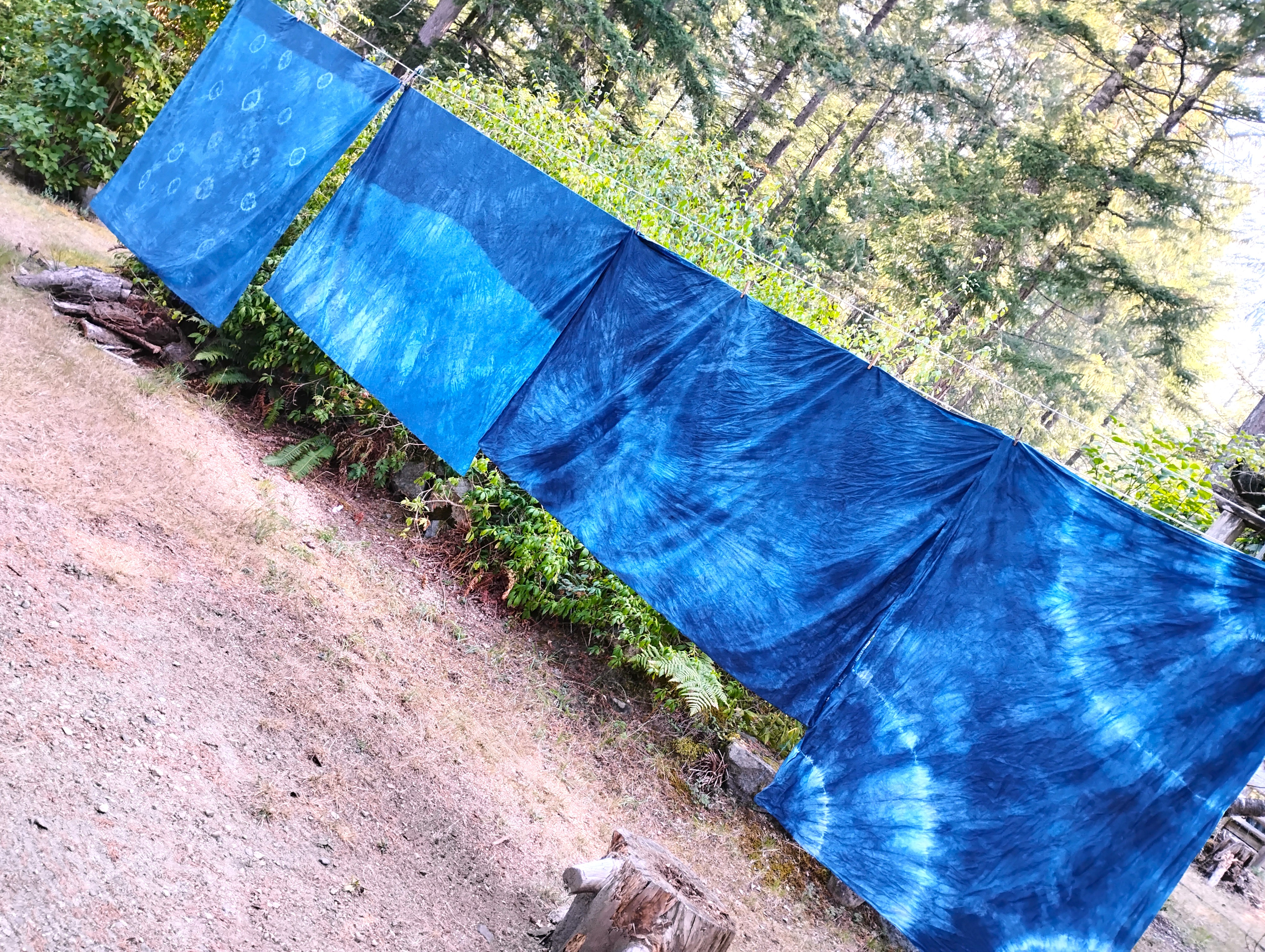
They lose some colour when they’re rinsed, even with vinegar added to the water to help set the dye, and then washed with a PH neutral soap. But they are always beautiful. This time I dyed some fabric I’d bought at the thrift store, 2 bundles of 2 yards each. (There was a 3rd but I dyed it with marigold over the weekend.) I wasn’t sure if it was cotton or a cotton-poly blend. All the books and websites tell you that polyester won’t take a natural dye but I had little to lose (the bundles cost almost nothing), maybe time, but I have time to spare, and anyway what if something wonderful happened? And it did. Those lengths look like marbled paper and I couldn’t love them more.
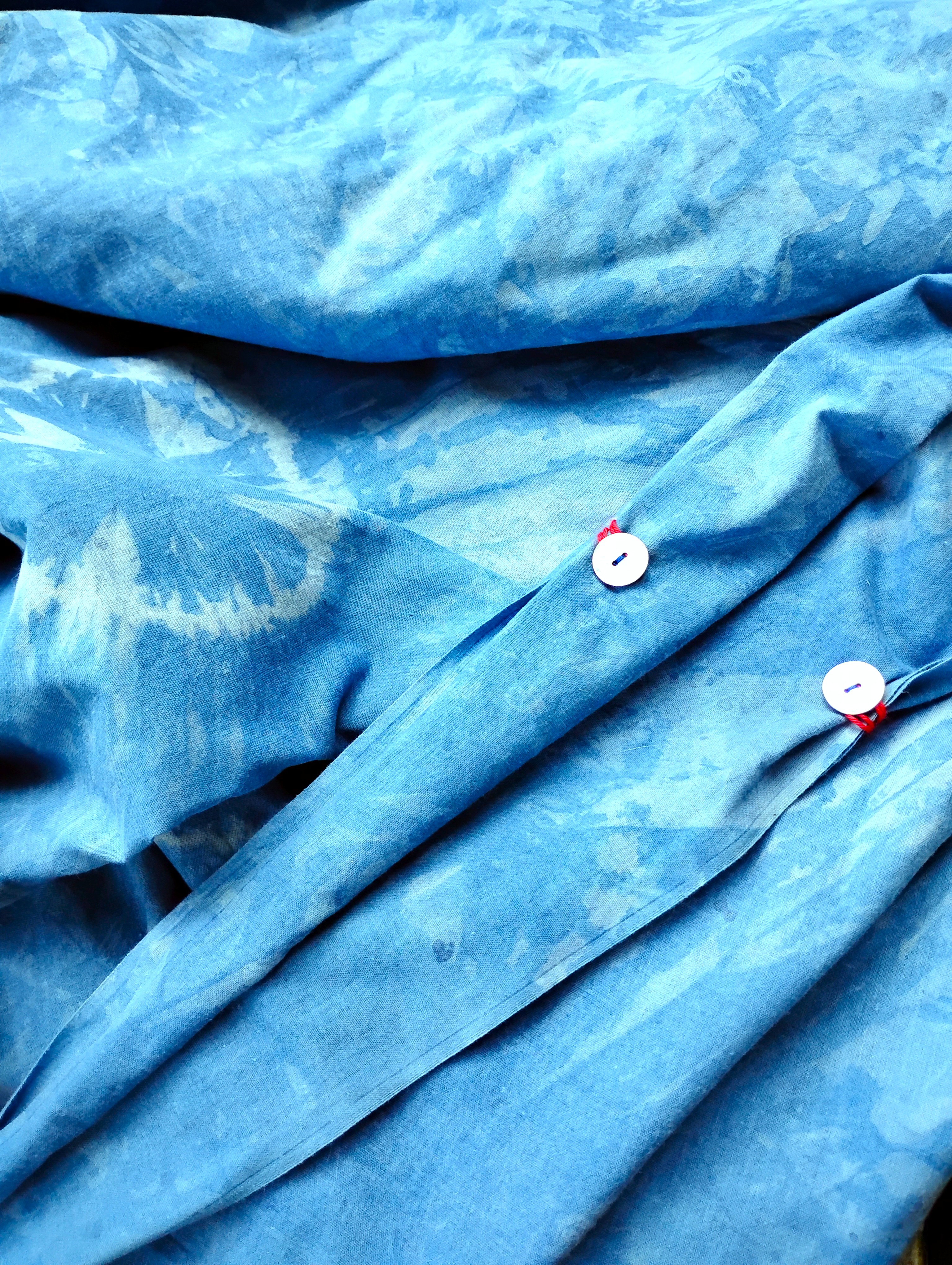
This photo doesn’t do the colour justice. It’s nicer. And already the lengths have been made into something as a gift for someone I love.
As I folded the fabric for wrapping and sending, I thought of the word “make” and its origins:
make(v.)
Old English macian “to give being to, give form or character to, bring into existence; construct, do, be the author of, produce; prepare, arrange, cause; behave, fare, transform,” from West Germanic *makōjanan “to fashion, fit” (source also of Old Saxon makon, Old Frisian makia “to build, make,” Middle Dutch and Dutch maken, Old High German mahhon “to construct, make,” German machen “to make”), from PIE root *mag- “to knead, fashion, fit.” If so, sense evolution perhaps is via prehistoric houses built of mud. It gradually replaced the main Old English word, gewyrcan (see work (v.)).
And what I loved most reading the Online Etymology Dictionary was learning this:
“match, mate, companion” (now archaic or dialectal), from Old English gemaca
Doing this work — making sauce of tomatoes I started in early March, from seeds I bought in a Portuguese market two Februaries ago, dyeing old sheets and thrift store cloth (of unknown fibres) with indigo powder on a bench near the garden, shadowed by Steller’s jays — felt strangely companionable, though I was alone (apart from those jays). My friend Barbara was near, the generations of people who’ve known the mysterious pleasure of dyeing with indigo were near, some with advice, some with a knowing smile. And the two people who will eat pappardelle noodles glossy with earthy red sauce, they’re waiting at the table, months from now, remembering summer.

 ...Theresa Kishkan
Tomato season is just the best, isn’t it! And what a lovely homage to think of your friend while roasting and seasoning (and later savoring). Lovely shades of dye too.
There’s nothing like a sun-ripened tomato, glazed with good olive oil, a few flakes of sea salt. Tonight’s supper, again, but with some fresh sockeye. Yum!