

I’m in Easthope again, imagining paintings in a little hidden room.
When Tessa found the little door behind the stack of canvases, only visible when the last canvas had been moved and she saw that the soft edges of a painted tree held a brass toggle, she wondered about opening it. She’d heard mice in the walls a few times and possibly—probably—she’d find their droppings, maybe chewed wires, maybe worse. But she couldn’t resist. Tentatively she pulled the toggle.
What she smelled first was turps. Wood. Peering in, she let her eyes adjust to the dimness. A small skylight overhead, one she’d never noticed because it was on the steep eastern slope of the roof, provided a little light to what was a very small storage space, tucked under the gable. It was lined with clean plywood. And it was hung with paintings, three rows of them. She stepped through the door.
Each painting—and there were, what, 25, no, 27 of them—was of a stump. A huge stump, almost filling the canvas; its wood runnelled and lichened and sometimes green with moss. Tiny plants grew up from the flaring bases. Most of the stumps were notched with horizontal cuts, some barely visible under the lichens, carefully detailed. Against one stump, a long board with a metal tip. Against another, a long crosscut saw, rusted, with worn wooden handles. Trees—hemlock, whippy cedars, even a supple maple—sprouted from some of the stumps and around them, the newer growth, long green boughs, tall sword ferns, delicate huckleberry. She knew she’d seen some of the stumps alongside the Easthope Road. She and Marsh had even stopped once to take a photograph of one beauty. On each canvas, the lower left corner, a small jewel-like image of a tree. Tessa figured Richard had imagined each stump back to its original majesty, establishing the species from its bark or odour or any characteristic he could determine from what remained. She knew she’d seen some of the stumps alongside the Easthope Road.
And what remained? A sturdy ghost, a presence in the green woods, a reminder of what the forest had looked like before the huge trees had been felled, with considerable skill and effort, and hauled away to become houses, factories (Marsh had bought some Douglas fir beams reclaimed from a factory in Gastown to shore up the floor on the netshed), schools, windows. Together, a gallery of ghosts, hidden away, lit by their own grey quiet light. She found a light switch just to the left of the door. With more light, she could see something else, something extraordinary. Just visible through the boughs surrounding the stumps, silvery stars. No, silvery constellations. Actual constellations, because she recognized Ursa Major, Orion, the Pleiades. She called Marsh to see. This house, she told him, is full of the past, but somehow it’s alive too. Look, Marsh, look. There are even stars in these. How did he do that? I thought I’d seen every room but now there’s this one, these canvases, 27 of them. Truly beautiful work. What else will we find? I don’t even want to think about it.
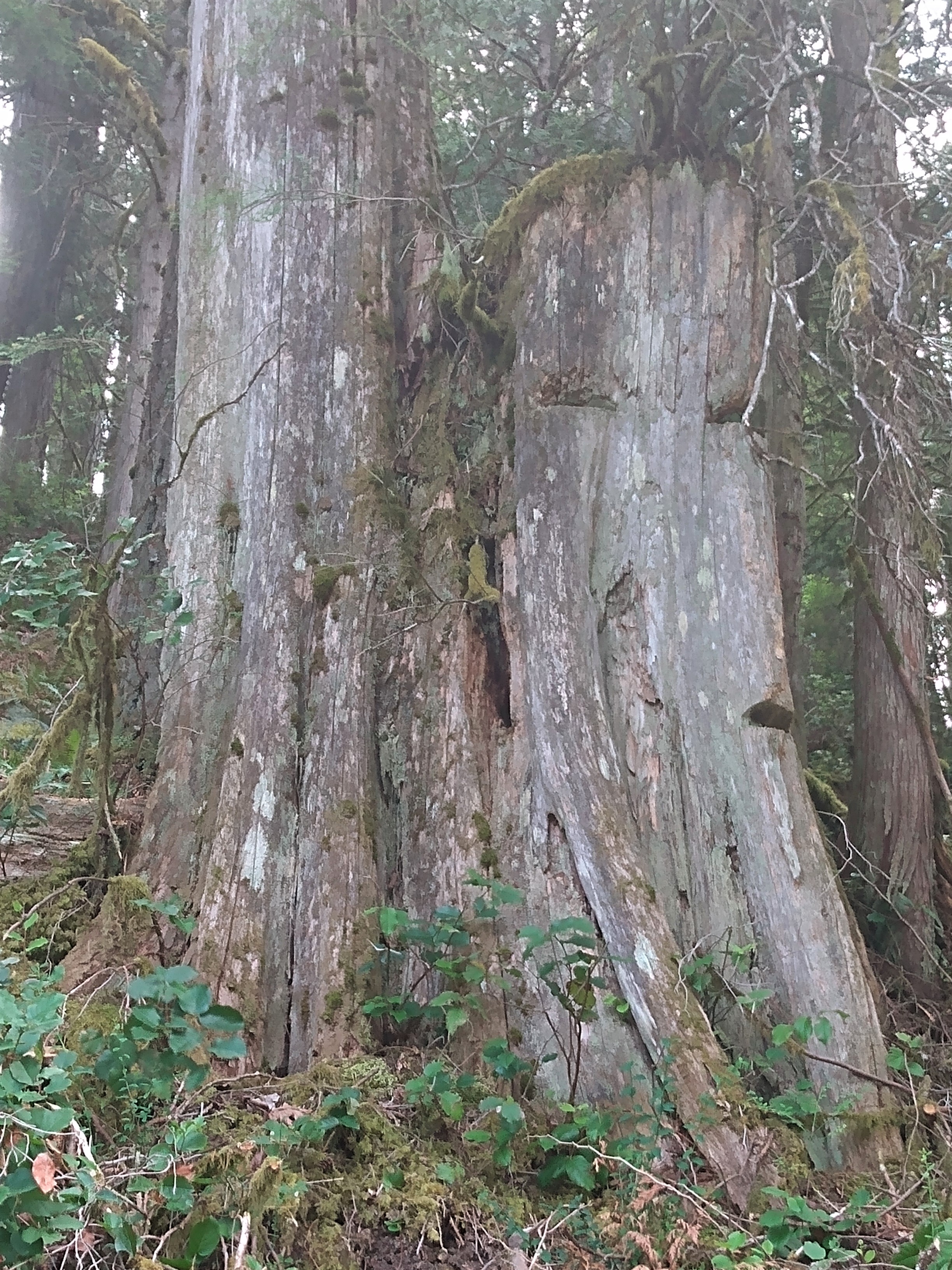

 ...Theresa Kishkan
Beautiful and haunting, Theresa. Onward!
Thank you so much! Grateful to have found my joy in it again.