optimus

the optimus

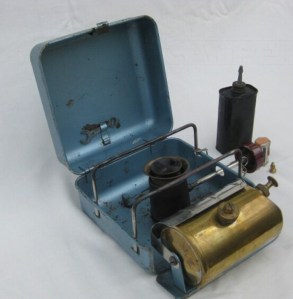
When I was 23, I went away to Ireland to live for as long as my money lasted. I had $1200, mostly because I sold my little Datsun and a Walter J. Phillips woodcut I’d bought with some excess scholarship money a few years before. I’ve written about that time in my novella, Inishbream, as well an essay, “The One Currach Returning Alone”, in Phantom Limb. It was a strange and beautiful time of my life. I’d gone because I felt I’d burned my bridges in Victoria—several failed romances, a difficult relationship with a much-older painter, the sense that I needed to be alone in a way I couldn’t be in a place where I was known; I was young, remember, and not unfamiliar with drama…. I didn’t know where I’d go after the cottage someone had offered me turned out to be unsuitable (it was remote and people had camped in it and burned the floorboards for warmth…this wasn’t discovered until I was taken there to settle in) but luckily I had subsistence supplies: my down sleeping bag and a small Optimus stove my father had given me. I was willing to live quite rough (though I did think floorboards were a necessity, not a luxury). I wanted to try to find out if I was truly a writer. I wanted to test myself in ways I couldn’t really have articulated but somehow I knew I needed to try to find out what I could live without and what I could do in complete isolation. (Remember, I said I was not unfamiliar with drama.) Through a series of lucky encounters, I was led to an island off the Galway coast and a little cottage facing north. I had a big fireplace for heat and a small pile of turf to burn, along with any sticks I could scavenge on the beach, and I had an oil lamp for light. And candles. My down sleeping bag came in handy but I never did need my Optimus stove because the cottage came with a small propane stove. I had to lug the bottle (the islanders called the tanks “bottles”) over to the mainland and get it somehow to the nearest town when I needed a refill so I didn’t cook much, apart from steaming mussels from the rocks below my cottage, cooking nettles into soup, and making rice from the five pound bag I found in a health food store in Galway.

Sometimes I dream of that time so vividly that I wake in tears. I feel such tenderness for that young woman and her loneliness. Last night we were talking in bed and I sipped some Laphroaig, inhaling its wonderful aroma of seaweed and smoky peat, and maybe that’s why I dreamed again of Ireland. Not because I could afford fine single-malt. I couldn’t. I could barely afford the rice. But the turf fire often crozzled and I’d lean into the fireplace, adding bits of stick to try to encourage it to catch and the smoke permeated my sweater. It’s a beautiful smell, I think, and it lasted for ages in the big rough wool sweater I lived in that year. I’d sleep with my window open to the iodine tang of the ocean and it made me dream of storms, of drowning. Sometimes I’d hear a tinwhistle in my dreams, but it was almost certainly the man who played on the little lane above my house. He’d lean over the stone wall and the music would waver in the wind. By the time it found my open window, it was unearthly.

So last night, Ireland, and the Optimus stove, unused, but given pride of place on the table in my cottage. Just in case.

This is all so long ago now but thinking of it brings back the music of Miceal’s tinwhistle as clear as anything and I ache to walk out to the boreen and learn to play along.

—from “The One Currach Returning Alone”, Phantom Limb (Thistledown Press, 2007)

an algorithm for the passing of time

I’ve been sorting through some photographs I took while my family was here last week. I love this one, my grandbaby Kelly in the rocking chair in my study.

kelly in rocking chairJohn’s mum brought this chair for son Forrest when he was a toddler. For years it was in the kitchen, among the chairs in front of the woodstove (“Here’s an rocking chair for someone who likes to rock, an armchair for two more to curl up in.” Yup, we liked the Friendly Giant television show and yup, we had the chairs…) Then I moved it to my study when there was no one small enough to sit in it any longer. The quilt behind Kelly is one my paternal grandmother made for my older brother Dan when he was a baby. (He’s 64…) I never appreciated it fully until I began to make quilts myself, nearly 30 years ago. There’s nothing grand about it but it’s one of the few things I have from my grandmother. This little quilt appears in one of the first essays I wrote when I returned to writing after my children were born. For some reason it didn’t make it into my first collection of essays, Red Laredo Boots, but it did appear in Phantom Limb in 2007.

In Provo, I thought for the first time in years of the small crib quilt my grandmother had made for my older brother. Nothing of the sort had been made for me but the little quilt somehow ended up in my possession. I used it for my children when they were babies, its rough squares of old cotton — remnants of curtains, housedresses, my grandfather’s pyjamas — offering a comfort beyond warmth. I didn’t know my grandmother very well; she died when I was nine or ten. When she was alive, we visited in the summers and I found her to be rather terrifying — an ancient Slavik-accented matriarch who was practically deaf and lived surrounded by daughters and grandchildren and great-grandchildren, seated in a yellow rocking chair on a porch of a house in Edmonton, far from our home. I looked, all the years later, at the crib-quilt she’d stitched and knew something of her hands, the way she saw colour, the thrifty spirit that must have been so pleased to find a use for the bits of good cloth. The quilt was backed with red and white ticking, perhaps left over from stuffing mattresses with goose feathers from the fowl kept by my grandparents in the days of my father’s childhood. It was obvious that my grandmother was not an accomplished quilter; her squares were lopsided and the stitching irregular; but I felt a kinship with her in a way more profound than I ever felt sitting by the yellow rocker and trying to decipher what she was saying to me, all those years ago, in summer.

The rocking chair in my study doesn’t sit empty. My old teddy bear Georgie has pride of place during the times when Kelly isn’t here.

georgie in rocking chairGeorgie was bought in Hawaii in January, 1955. My father was on the HMCS Stettler, enroute to Pearl Harbor, and my mother sent him a telegram to let him know he had a daughter. He returned home a few weeks later with Georgie. I’m sure Georgie was more handsome in those days but in some ways he has always looked the same to me. I couldn’t sleep without him as a child. Or at least I wouldn’t. Once, when I was three and living on May Street in Victoria, I left him on Moss Rocks across the road from our house. At bedtime — it was winter, I remember, and dark — my father had to go out with a flashlight to find my bear. In my family it became a story of how much my father loved me, though I always thought of it as a story about how much I needed my Georgie.

I know I keep saying this but where does time go? How can all these things whirl in my memory, retrievable but murky, how can it be that I remember something that happened when I was three and how can I still feel like the girl of six who made a bed for her bear in a wooden mandarin orange box and did the difficult thing and let him sleep alone? There must be an algorithm for this, for time passing and accumulating, though when I try to find out how that might look, I come across formulae too difficult for me to wrap my mind around. Time complexity analysis. Polynomial time algorithms. The sublinear time algorithm sounds promising and maybe I’ll try to figure that one out.

The person in my family who might know is my son Brendan, the father of Kelly. He’s a mathematician. He’s also the one who was musing about something like this as a boy of about five (it seems like yesterday) and who said, not to anyone in particular, but with a kind of wonder: “Stuffed animals are a lot like grownups. They get older and older and older but they never grow an inch.”

my hands are full

In April, 2008, I travelled to a number of small communities along the Yellowhead Highway and beyond as part of a book tour for authors shortlisted for B.C. Book Prizes. (My collection of personal essays, Phantom Limb, had been nominated for the Hubert Evans Award.) I particularly remember the drive to Kitimat where Mary Novik and I spent time with high school kids in the afternoon and then, before the evening reading at Book Masters, Bryan Pike (the amazing organizer and driver for the tour) took us out to the Haisla village of Kitamaat for dinner at Sea Masters. The restaurant was right on the edge of Douglas Channel and we sat by a window and ate wonderful food — crab cakes with mango salsa, snapper,  halibut: food taken from the waters we looked out on. Pristine waters, alive with seabirds, mists, and seals near the shore.

It was a sublime experience. I’ve often thought of that channel, particularly now that the news is full of the federal government’s go-ahead to the Enbridge Northern Gateway Pipeline proposal which would bring bitumen from the Alberta tar sands to Kitimat where it would then be taken to offshore markets by supertankers navigating the wild waters of our western coast. I’m not an economist nor a energy expert nor a captain of any kind of industry apart from my home and garden. But I’m a citizen and I don’t believe this project is sound. I recall the terrible days following the Exxon Valdez oil spill in Prince William Sound in 1989. The giant tanker ran into Bligh Reef, releasing up to 750,000 barrels of crude oil into those pristine waters. This was an accident that “couldn’t happen” — statistically, at least. But it did. I remember the photographs of seabirds, sea and river otters, seals, orcas, all covered in oil and dying. The long-term damage and losses were catastrophic — think of the communities dependent on those resources: the mussel and clam beds, the herring and salmon runs, the eel-grass beds providing nurseries for little organisms.  All these years later, crude oil continues to be a problem in soils and sands.

So the petitions are circulating and I’ve signed one: http://www.letbcvote.ca/ And I’ll do whatever I can to make sure that this pipeline doesn’t progress any further than it already has.

But I was delighted to learn that the Gitga’at First Nations have come up with a plan. http://chainofhope.ca/ “Made of multicolour yarn and decorated with family keepsakes and mementos including baby pictures and fishing floats with written messages on them, the chain will stretch from Hawkesbury Island to Hartley Bay, a distance of 11,544 feet.” http://westcoastnativenews.com/first-nation-plans-symbolic-blockade-on-douglas-channel-against-enbridge-northern-gateway-pipeline-and-supertankers-project/

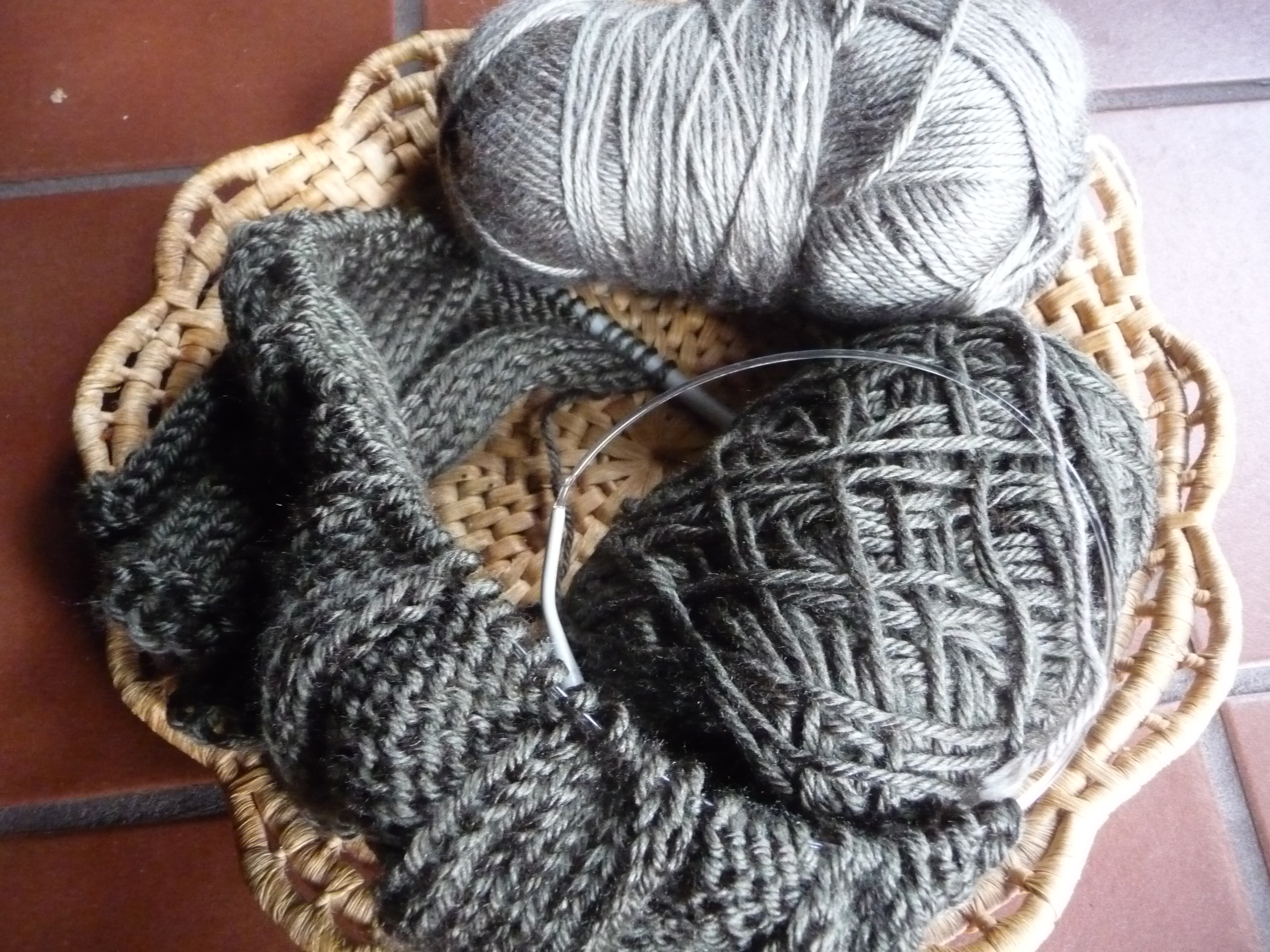
It doesn’t surprise me that women are protesting with yarn and old skills. I sometimes think we meditate with our hands, we come to solutions by feeling our way through problems, loneliness, grief, hardship, and traumas by immersing our hands in the materials of creation. And while I’ve been listening to news of this yarn blockade, I’ve been meditating myself, knitting a blanket for my first grandchild, due in July. The connection between keeping a newborn baby warm and safe and protecting the place I love so dearly is as clear as anything I know.

P1100318


“What did the thrushes know?” (for Anna)

I’m writing this while snow falls. Again. Snow is not unheard of in our part of the world but it’s late this year, and abundant. Usually by now we are seeing salmonberry blossoms in the woods near us  — single blooms as early as February 17, I see in my notes, and often many by the end of February — and am I completely wrong or do we also hear the long whistles of varied thrushes when we walk down Sakinaw Lake Road in March? That may be pushing it — memory is not always reliable when it comes to hope.

The varied thrushes are around right now but this is because it’s cold and they’re drawn to the seeds that fall from the bird feeder strung on the clothes line. The clouds of chickadees and the animated Steller’s jays always spill some seed while eating and the thrushes wait quietly on the ground for an opportunity to forage a bit. They’re shy. This is the only time of year we can reliably see them. But that whistle — a long note on one pitch, then rising to another, ringing out of the dense woods: it’s one of my favourite bird songs. It’s both sweet and mysterious, somehow. Some mornings I hear it when I first wake, the rising notes pulling me to consciousness, and I lie in my bed listening with something close to pure joy.

Friend Anna in England sent me a link to an Edward Thomas poem this morning. “March” is a poem about spring, about thrushes, primroses, and snow. About faith too. These lines spoke to me so clearly:

What did the thrushes know? Rain, snow, sleet, hail,
Had kept them quiet as the primroses.

I had them in mind when I went out to fill the feeder just now, though the thrushes were not in sight. And the only primroses are in memory, the drifts of them in the hedgerows near the island where I lived for a time in Ireland and used to pass on my way to the nearest town for groceries. I wrote about those hedgerows in an essay, “Well”, in my book Phantom Limb: “…a dense hedge, with fuchia among it, on either side of the narrow road and the raised banks white with wild garlic, yellow with primroses. Birds sang unseen within its depths.” The only time in my life I’ve seen a badger was then. I watched it amble across the road and disappear into a tunnel or sett in the hedgerow. The rich growth above the ground was all the more remarkable for the thought of the tunnels below with their sleeping clans.

Edward Thomas’s poem has a special poignancy when I think of his life. He suffered from depressions and physical and psychological breakdowns. He wrote all his poems during a two-year period before his death, at the Battle of Arras, on April 9, 1917. His great solace was the natural world. His poems are filled with birds, with the sights and sounds of the countryside.

Something they knew–I also, while they sang
And after. Not till night had half its stars
And never a cloud, was I aware of silence
Stained with all that hour’s songs, a silence
Saying that Spring returns, perhaps to-morrow.

It’s still snowing — even harder now. I couldn’t resist taking a photograph of the tray of  primula from the supermarket, arranged by our front door. I always buy the creamy ones, the closest thing to the Irish beauties I still dream of and which Edward Thomas quietly memorialised more than a hundred years ago.

P1090505

Paperweight

“My husband went on a trip…and returned with a gift for me, a hand-blown paperweight with a beautiful sea anemone inside. There are five tentacles of pink and blue glass. I believe it was made with rods of glass, like in millefiore, but the rods have been hollowed or opened rather than stretched. I know that sea anemones are carnivorous — we see them on the local beaches, at the intertidal zone, waving their tentacles in the air for prey. Touching them with a finger, we feel the faint suction, then see them retract. I know they are territorial and can clone themselves so that often a colony will develop which consists of genetically identical anemones; when another colony encroaches, those on the periphery engage in battles to defend their little area of rock. Maybe they are defending their genetic integrity. Looking at my paperweight, I imagine that something has been captured inside it, something precious and rare.” (from Phantom Limb, published by Thistledown Press in 2007)

I’ve returned to work on a memoir about my mother and my paternal grandmother. My mother was given up at birth — she was born on Cape Breton Island — and put into a foster home where she lived until adulthood. She kept the surname of her biological father, MacDonald, and she knew the surname name of her biological mother, McDougall. But everything else is a mystery. She insisted she never wanted to know about her birth parents because she felt she’d been abandoned and any loyalty she felt was directed to her foster mother and sister. But when she died in 2010, I felt compelled to try to find something about her origins. I have some papers but nothing leads to me to anything like a source. Vital Statistics in Halifax, where she was raised, have told me that I have no right to a copy of her birth certificate (which she knew about and which she said included the names of both her parents) until 100 years after her birth — that will be February 8, 2026. I’ve posted queries on genealogy websites in Nova Scotia and I’ve tried a few other things as well. But so far, nothing.

The paperweight John gave me when I was first musing about my mother and everything I didn’t know about her background sits on my desk, to the left of my computer. Most days I pick it up, look at it, use it to hold down bits of paper or file cards. This morning I looked into it, wondering if family secrets can ever be truly solved or understood. I have a renewed interest in pursuing my mother’s mysterious story, the sensitive tentacle of her connection to Cape Breton Island and further back, Scotland.

P1080156

P1080157