redux: quotidian lines: is it too late?

Note: this was posted 4 years ago today. And today? I am working to finish the extended work of fiction alluded to in the last section of this. It’s become a novel and the red threads run through it like rivers of connection. (And this year’s garlic is planted.)

rushnyk

1.

I meant to plant the garlic earlier. It’s usually in the ground and mulched with maple leaves by this point in the fall. But this year? Time raced, as it sometimes does, and I held on for dear life as we prepared for John’s surgery in October, clearing paths through the house so he would be able to use a walker from one room to the next. Instead of digging over the garlic bed, I was reading about wound care, making sure we had everything we needed for the months to come. But the other day there was a clear space in the day and I dug the bed. I went out in the rain an hour ago to dig the furrows and plant the cloves of Metechi (my favourite, originally from the Republic of Georgia or maybe Kazakhstan, though ours came from a farmers’ market in Lytton about 5 years ago), Music (from Peter Haas), and Red Russian, strewing the furrows first with kelp meal and bone meal, and tucking the cloves in with fish compost from Salish Soils.  Is it too late? I don’t think so. The fall has been quite mild, though on Monday when I drove out for a swim, there was a dusting of new snow on the mountain and few delicate flakes falling from the sky at the top of the Sakinaw hill.

2.

Yesterday we went to Sechelt for a medical appointment and physiotherapy for John. While I was waiting for him, my hands were exploring the texture of the poppies on my shirt, a vyshyvanka I bought in Kosiv, in Western Ukraine, last fall. This embroidery is hand-done. I bought two shirts on that trip, one with geometric embroidery (machine-done), and this one, with brilliant red poppies strewn across the chest and sleeves. As my fingers traced the shape of one flower, I felt a jolt, a small electric volta, like the moment in the sonnet when everything shifts, when the argument or thesis presented in the first part resolves itself in the second. It is the hinge, the fulcrum. Could the shirt with poppies be my own fulcrum?

3.

I’ve begun a new extended piece of writing, fiction (I think), and I’ve been wondering about how to move between what I know and what I need to find out. I need a device, a strand to follow, to allow me to make sense of material, some of which is historical, some contemporary. (I think of the time brackets, or volta brackets, in music, when a passage is played two or more times, but with different endings.) I need a strand, a length of red embroidery thread to lead me into the early 20th century in Western Ukraine and back again. In my trunk of textiles, I have 4 lengths of rushnyk, the ritual cloths you see in Orthodox churches, wrapped around bread, given at weddings; they are coded, richly symbolic. When distant relatives came to our Carpathian hotel last fall to meet me, they brought champagne and a beautiful rushnyk, chocolate and photographs. Is it too late to learn how to read these cloths, how to run my hands along the borders of stars and berries, sheaves of wheat? One source implies the cloths can be a link between the living and the dead, those who stayed and those who left. Is it too late?

in cloud-light (with thanks to Les Murray)

gooseberries

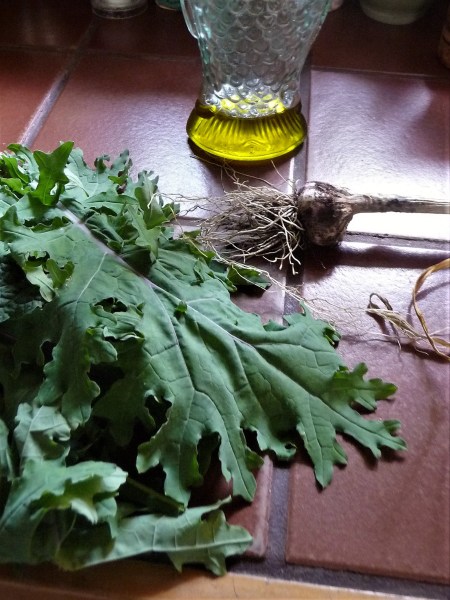
Overcast, cloudy, a good day to pick gooseberries (as John did), and then to sit in the cool kitchen to top and tail enough for jam, for a fool. (Every pun intended.) To pick broad beans and to sit (as I did) to shell them and inhale that earthy odour. Those, with a head of garlic and some kale, will be dinner tonight, with a small steak on the barbecue, and maybe even the first tomatoes, 3 Black Plums, that have ripened on the upper deck. These are the days. They go on for months, vegetables ripening, berries ready to pick, the failures forgotten as you reach into the bean plants to find yet another big pod filled with silken beans.

…beans upright like lecturing, outstretched like blessing fingers
in the incident light, and more still, oblique to your notice
that the noon glare or cloud-light or afternoon slants will uncover

till you ask yourself Could I have overlooked so many, or
do they form in an hour? unfolding into reality
like templates for subtly broad grins, like unique caught expressions,

like edible meanings, each sealed around with a string
and affixed to its moment, an unceasing colloquial assembly,
the portly, the stiff, and those lolling in pointed green slippers …

—from “The Broad Bean Sermon”, by Les Murray

kale and garlic

“The moon is just as bright as in my homeland”

The eerie dark pink sun rising over Mt. Hallowell as we swim early mornings. The moon, almost the same colour in the dark trees, glowing as it passes the house. Smoke haze everywhere, the taste of it bitter at the back of the throat. My brother and his wife evacuated from their home in the Nazko valley. Always a mild anxiety as we look around, wonder about new fires, though the smoke comes from the Interior. No rain for weeks, none is forecast. I left laundry out for two days and when it came in, it smelled of fire, a dusting of fine grey particulate on the linen sheets.

But there are things to celebrate. John lifted the garlic and sorted it, letting it dry for a few days in a safe place (bears!), and then tying it to the rafters in the woodshed to cure for the winter. Next year I’ll plant more (I always say this) but I’m grateful for the beautiful heads of Red Russian, White Italian, and the gorgeous purple striped Metechi, from Kazakhstan.

metechi

I look forward to rain. We all do. And good news from the Nazko valley. In the meantime, I think of Du Fu and his brothers, though I know mine are safe:

Tonight we start the season of White Dew,
The moon is just as bright as in my homeland.
My brothers are spread all throughout the land,
No home to ask if they are living or dead.
The letters we send always go astray…

morning

On these hot days, as we wait for rain, haunt the news reports of fires and evacuations (my brother in the Nazko Valley, waiting…), I like the mornings best. There’s still a cool thread in the air, still a memory of dew. I try to do my outdoor chores by 11 or so because otherwise it’s too warm to be out in the sun. This morning, I thought of Billy Collins and his poem about morning:

Why do we bother with the rest of the day,
the swale of the afternoon,
the sudden dip into evening,

then night with his notorious perfumes,
his many-pointed stars?
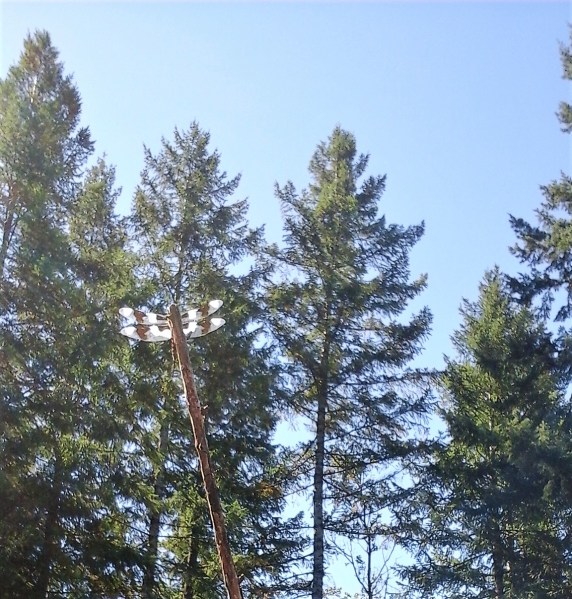
I tried to make a record of as many moments as I could. The dragonfly on the tip of a sweet-pea cane:
dragonfly
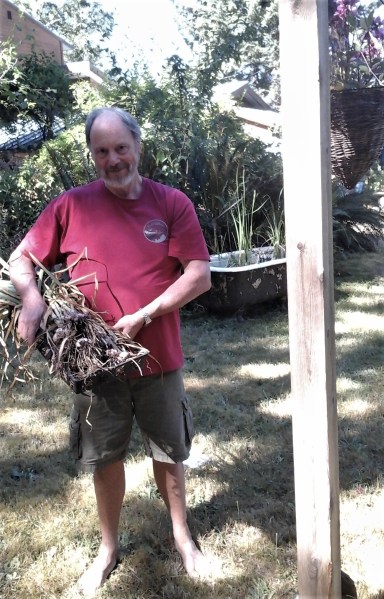
My husband coming out of the garden with an armload of garlic:
john and metechi garlic
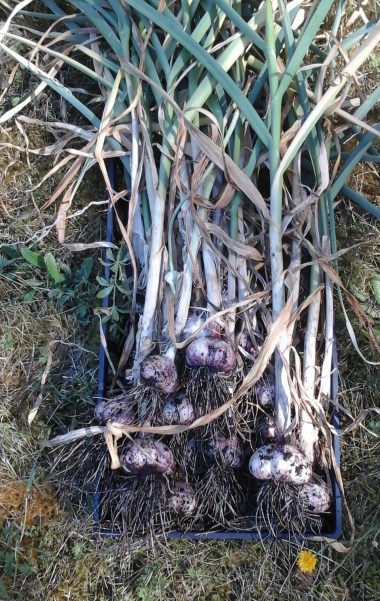
And a pile of the beautiful white Italian garlic already gathered:
white garlic
And always the lilies, full and buoyant in sunlight:
morning lilies
We’ve been swimming around 8, before the sun even comes over the mountain, and the lake is green and still. This morning we looked at all the tracks leading to the water’s edge: small prints of raccoons, many crows, ducks coming in and out of the water, and then the heavy tracks of elk. Of course! The creeks up the mountain must be dry and the local herd comes down to drink after the swimmers have all gone home. Do they enter the lake and stand up to their bellies in cool water? Do they swim by moonlight and in the light of those many-pointed stars? I wonder.
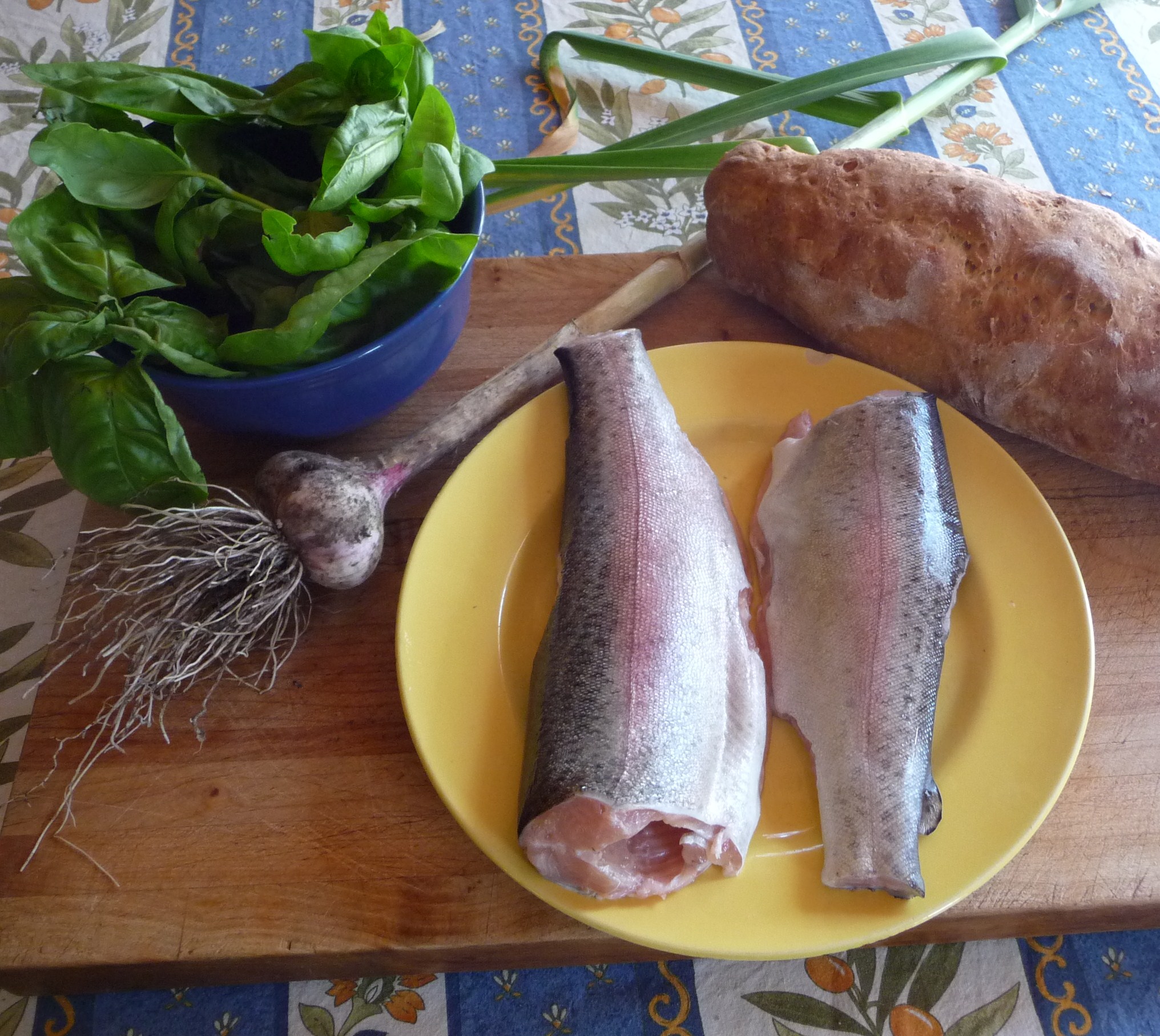
For dinner tonight? Something with that fresh garlic. And for dessert? John’s out picking raspberries now, the last of the crimson Willamettes, sweet with sunlight. And look who else is waiting for rain!
morning frog