
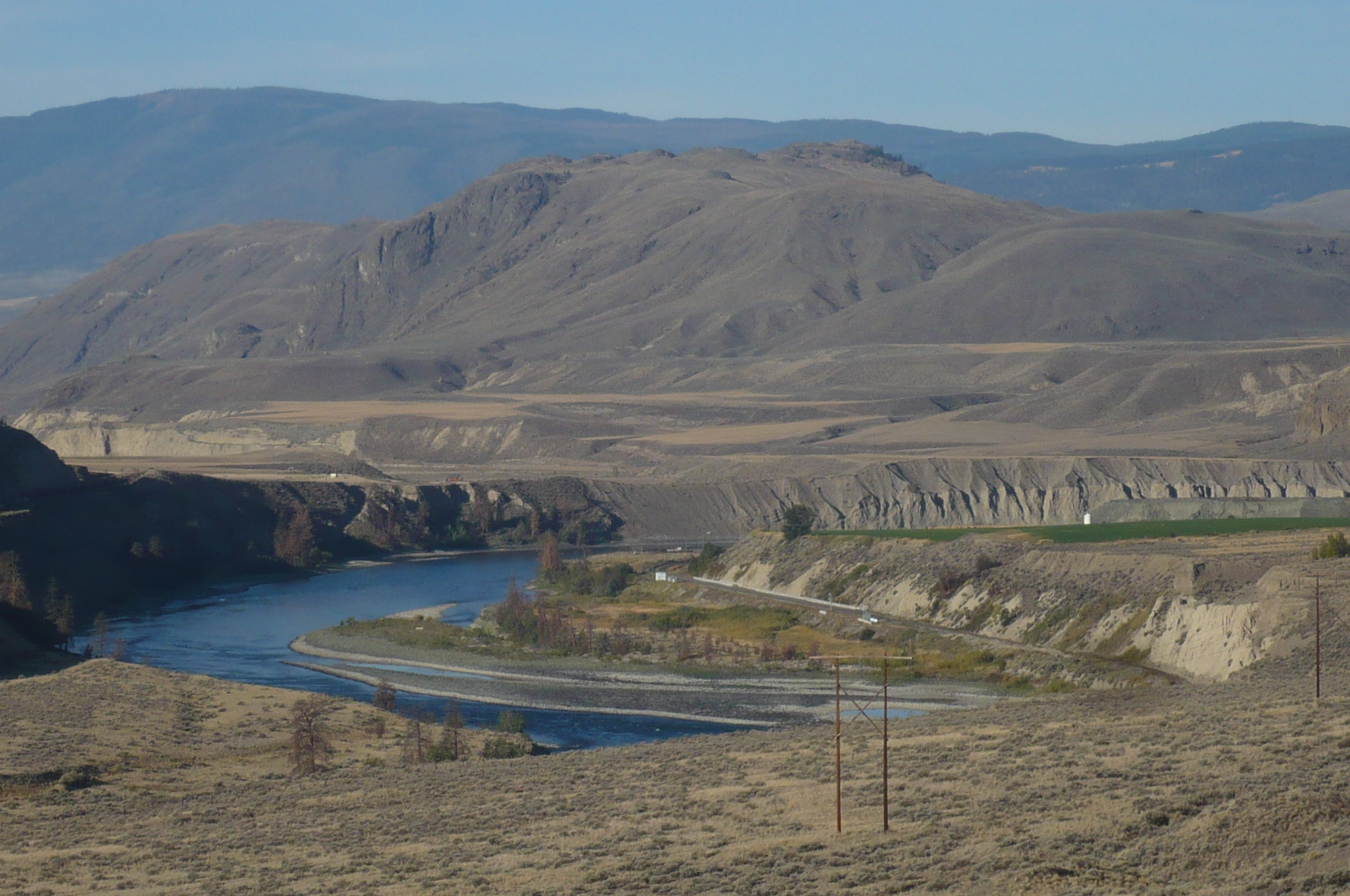
As I write this on a rainy Monday morning, I am listening to “Become River” by the extraordinary composer John Luther Adams. I’ve written about him before. His composition “Become Ocean” is one of my favourite pieces of music, holding within it both the beauty and power of the world’s oceans but also the dark presence of the climate emergency. Alex Ross, who writes about music for the New Yorker, says this about “Become Ocean”:
The title comes from lines that John Cage wrote in tribute to the music of his colleague Lou Harrison: “Listening to it we become ocean.” There are also environmental implications, as Adams indicates in a brief, bleak note in the score: “Life on this earth first emerged from the sea. As the polar ice melts and sea level rises, we humans find ourselves facing the prospect that once again we may quite literally become ocean.” A onetime conservation activist who moved to Alaska in the nineteen-seventies, Adams has witnessed the effects of climate change at close range, and his music often reflects what he has seen. The 2007 orchestral work “Dark Waves,” among others, evokes mighty, natural processes through the accumulation of gradually shifting patterns. “Become Ocean” is his most ambitious effort in this vein: its three huge crescendos, evenly spaced over the three-quarter-hour span, suggest a tidal surge washing over all barriers.
These days I am flooded with fear about the future, what it holds for us as a species but more importantly (because we are only one of the estimated 8.7 million species that call the earth home), for our planet. It might go on. Will we? Do we deserve to? These are things I think about in the night when I can’t sleep. Yesterday I did what I always do this time of year: I planted seeds and transplanted hardy seedlings (begun a month ago, or two) into the garden. Purple sprouting broccoli, volunteers of perennial arugula, some cauliflower. I planted the peas out earlier in the week. I tidied the greenhouse and wondered how on earth to prune the little olive trees, where to plant the hardy pomegranate. Twenty years ago I would not have been thinking about olives or pomegranates but our climate has changed. Who can forget the heat dome last year, the one that claimed the lives of 600 people in British Columbia? Or the weather system known as an atmospheric river that caused extreme flooding, landslides, entire highway systems collapsed, loss of prime agricultural land in the Fraser Valley (along with huge numbers of farm animals who drowned in barns or flooded fields). The king tides. Or the fires: 8,700 square kilometers burned, driving people from their homes. The town of Lytton, at the confluence of the Fraser and Thompson Rivers, was completely destroyed. Imagine that for a moment. A vital community, one with a long history, Indigenous, settler, Chinese, the setting of Ethel Wilson’s gorgeous Hetty Dorval (and my own novella, The Weight of the Heart), burned to ash.
Over the past few days I read a compelling novel, The High House, by Jessie Greengrass. A small group of people in an isolated house on the edge of England are learning how to survive the unthinkable: the loss of a nearby village due to extreme flooding, with the ripples of climate events moving out into the larger world. These people are resourceful, in part because someone has made preparations for them, and in part because one of them has memory of previous floods, knows how to grow food to supplement what’s been hoarded for them, and provides practical advice and durable wisdom. One of the characters muses that floods had always happened elsewhere, far away, and one could feel sympathy but a kind of illusory confidence that surely it couldn’t come to that on one’s own doorstep.
The whole complicated system of modernity that had held us up, away from the earth, was crumbling, and we were becoming again what we had used to be: cold, and frightened of the weather, and frightened of the dark. Somehow, while we had all been busy, while we had been doing those small things that added up to living, the future had slipped into the present—and despite the fact that we had known that it would come, the overwhelming feeling, now that it was here, was of surprise…
The glaciers are melting, the rivers rising, already a fire in northwestern B.C. has closed a major highway, and what can we do but plant seeds and hope for the best? Try our best? We are waiting for the installation of a heat pump here, in part for its energy efficiency and in part to cope with the high temperatures that we are told to expect again this summer. Reading and thinking into the small hours of the night does no one any good and I can’t recommend it but in daylight, I can recommend the transporting beauty of John Luther Adams, his oceans and rivers and deserts transposed to violins, percussion, harps. Sit in a quiet room and listen. Let your heart slow to the watery sonorities of oceans and rivers, the distant thunder and bells and the dry vibrations of heatwaves. These are stories we might need when the future slips into the present. Listening, I am remembering the Thompson River as it winds below Walhachin, the air redolent with sage and dry earth, a few low junipers, their bark peeling away. Listening in my own high house, rain on the roof, Steller’s jays churring for their breakfast.
If you hear the Mississippi in Become River, I wouldn’t disabuse you of that notion. I’ve been a lifelong river rat; And the river I know best is the great Tanana river in central Alaska that feeds into the mighty Yukon.
But from time to time, people will ask me, which ocean, which desert, which river, and my answer is always the same.
Your ocean, your river, your desert. What I hope the music does is invite you into this beautiful, enveloping place, and for you have to your own journey, your own experience, your own float down the river, rather than me telling you a story about mine. (from https://thegreatnorthernfestival.com/blog/winter-walk-with-john-luther-adams)

 ...Theresa Kishkan