reading in the night

daybook

I don’t really keep a regular journal. I’d like to be that person, and maybe I once was, or at least I was when I lived in Ireland, when I travelled in Europe as a young woman with a backpack and a little notebook tucked into one side pouch. On trains, I’d be noting every detail. In Ireland, it was as though I had my finger on my own pulse on a daily basis. Reading those old journals is interesting to me but in some ways it’s also excruciating to realize how self-absorbed I was, perhaps out of necessity. I was my own company for the most part because I travelled alone, lived alone. A few years ago I bought the little book in the photograph at a Christmas craft market in Madeira Park. It was handmade by a woman in Roberts Creek. The cover is yellow cedar, edged with black walnut. The binding is Coptic stitched, sewn with waxed Irish linen thread, each signature quarter-wrapped with screen-printed Indian cotton paper.

I
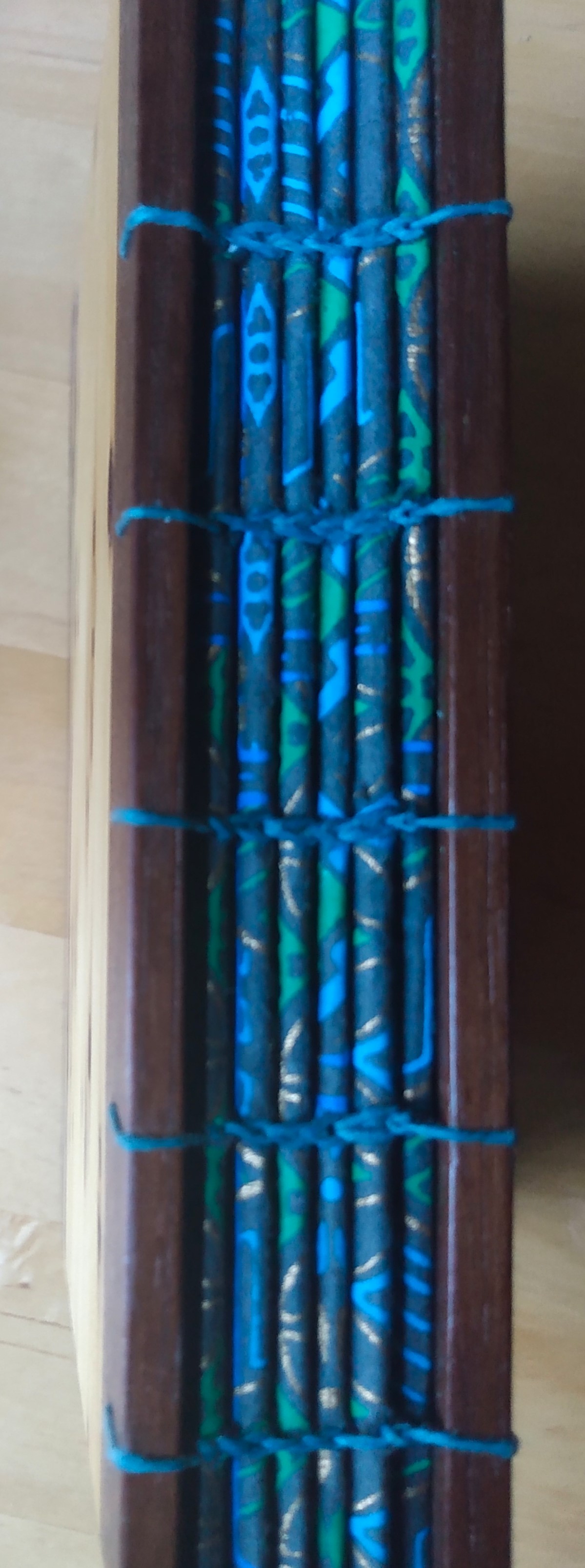
signature

I wanted to write in it regularly and I wanted what I wrote to be worthy of its beauty, the time and care its maker took to create it. And I do try to write in it from time to time but reading back, I see that I’ve been trying to work out my relationship to writing and publishing and it makes me kind of sad to recognize how unresolved those things are for me. Partly this is because the work I’ve been doing is personal and I wonder how it would be of use or interest to anyone else. And partly it’s because I’m no longer young and the writing world feels to be like a place for young writers, their concerns and their values. Reading back, I see that I’ve been pondering this for at least 2 years, without any clear notion of what to do about it. Maybe there isn’t the kind of clarity I’m hoping for.

At night lately, when I’ve been awake, I’ve been re-reading the artist Anne Truitt’s 3 books, bought many years ago, read with great interest, and still of great interest to me. Daybook, Turn, and Prospect, each of them subtitled “The Journal of an Artist.” I first discovered Daybook about 30 years ago, a young(er) woman returning to writing after the intense early years of motherhood. Her quiet and elegant entries about her life, her work, well, they spoke to me with such depth and warmth. I remember looking for images of her sculpture and not really understanding it. But when I learned there were other books, later on, I bought them and found in them that same quiet exactitude. I still don’t entirely understand her sculpture but I see more and more resonance in it and I respect the artist. She writes, in Prospect, that after she’d figured out how to put the wood together for her columns, and how to mix the paints to the right consistence so that she could layer the works with repeated coats so that the radiance of the paint itself was released, “the sculptures had become what I have been making ever since: proportions of structural form counterpointed by proportions of metaphorical color–essentially paintings in three dimensions.”

Truitt is one of 3 artists I’ve become interested in over the years. Ann Hamilton and Magdalena Abakanowicz are the other two. I am drawn to the materiality of their work, the complexity of it as it moves easily between (and over) methods and outcomes. I look at Abakanowicz’s magnificent Abakans textiles and realize how one-dimensional my own work is. Ann Hamilton’s indigo work, so multi-layered and rich. I wonder if it’s too late to somehow draw the threads of my thinking and doing together in some organic way that I haven’t yet found. Maybe too late but maybe not? To that end, I’ve been trying to figure out how to knit netting because somehow that feels like the right direction to take.

I’ve just learned that there’s a 4th Truitt book, edited by her daughter (Anne Truitt died in 2004), Yield, and I can’t wait to read it, can’t wait to have her company in the dark hours when every regret, every blank journal page or self-absorbed notebook, accumulates in the heart and mind to remind me of what I haven’t accomplished in my life, either through neglect or too little confidence or even a lack of courage.
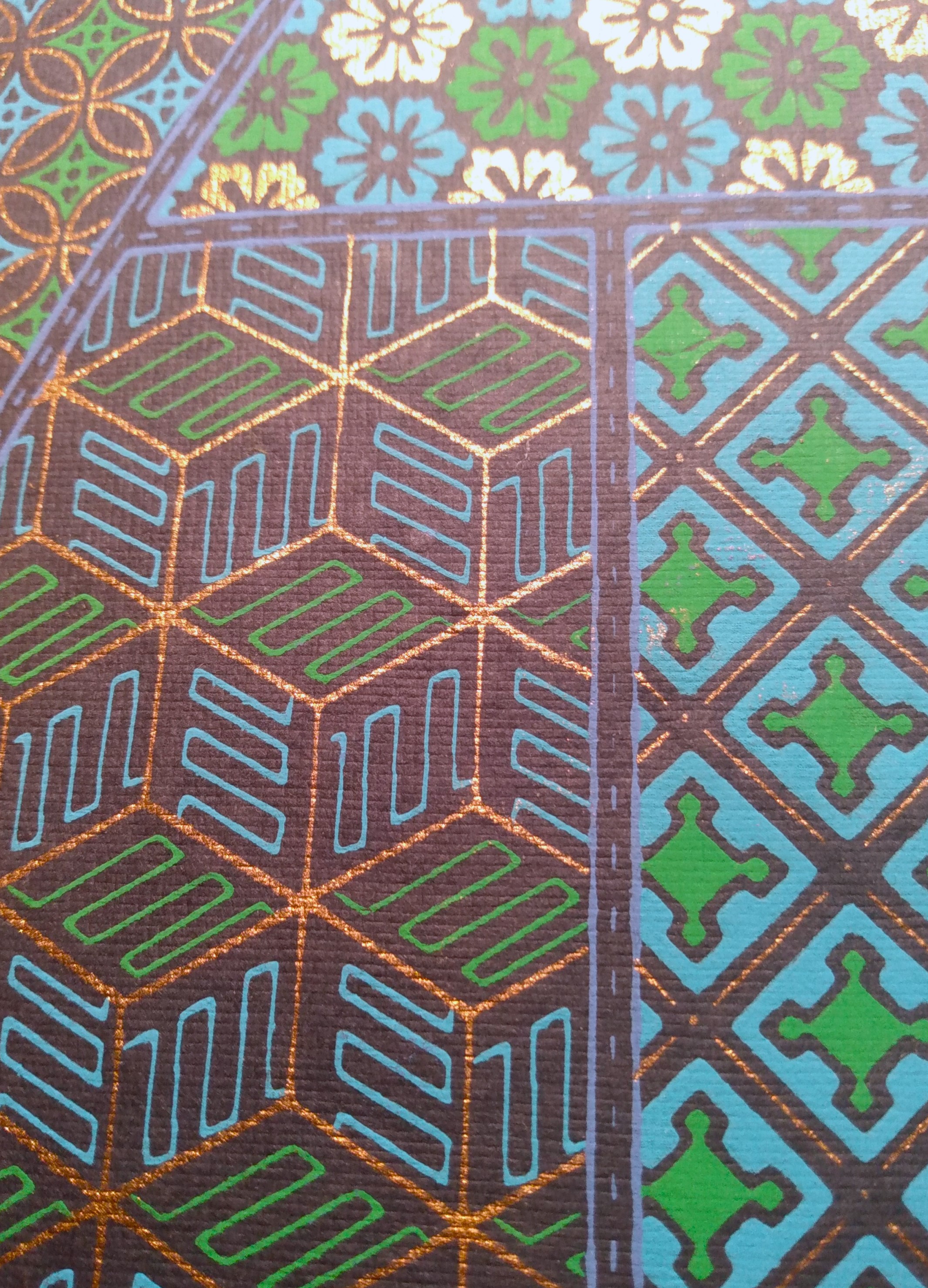
endpaper

Prospect

In Victoria on the weekend, I spent a happy half-hour in Russell Books on Fort Street. It was hard to know where to start so I simply browsed at random and came away with a bag of unexpected treasures, one of them Anne Truitt’s Prospect: The Journal of an Artist.

When my third child, Angelica, was born in 1985, I wondered if I’d ever write again. I’d published two collections of poetry in my twenties, and a chapbook, and when my sons were tiny, I somehow found time to slowly but steadily write enough poems for a third book. John and I were building a house in those years and the word “busy” doesn’t even begin to describe the days but poems would begin, often in the night, and bit by slow bit I’d work on them, gradually complete drafts, and revise. It may be the rosy glow of memory that has me remembering that I often thought of my life as seamless, moving from washing diapers to making soup to cobbling together lines of poetry.

A third child tipped the balance, though. In part this was because there were added elements to the domestic routine beyond simply childcare and daily household work. Forrest began to attend a pre-school in our small community and that entailed driving back and forth  several days a week from our home at the north end of the Sechelt Peninsula to the village where all the services are located. And when he began kindergarten a year or so after Angie’s birth, then Brendan went to pre-school; and somehow there was never enough time to sit at my desk and find my way to writing. Yet I was quite certain that elements of daily life were potent elements of what could be art, if I could only find a way to put them together. The smell of fresh laundry, the act of making bread, the transformation of homely vegetables into soup, the basket of cottons crying out to be quilts, the beauty of my sleeping children, my husband, the way moonlight illuminated our dark trees or stars pierced the night sky over Sakinaw Lake – I wanted so much to do them justice. Somehow. Someday. And I wanted to engage in the physicality of art and its potential materials, though I didn’t know quite how to begin.

I can’t remember when I bought Anne Truitt’s Daybook but it was certainly during those early years of motherhood. She was an American painter and sculptor (1921-2004) and she wrote beautifully, powerfully, of the sources of her work and her own process of making art.

“I sat for a long while in one of the rectangular courtyards, listening to the fountain. Feeling the artists all around me, I slowly took an unassuming place (for two of my own sculptures were somewhere in the museum) among the people whose lives, as all lives do, had been distilled into objects that outlasted them. Quilts, pin cushions, chairs, tables, houses, sculptures, paintings, tilled and retilled fields, gardens, poems—all of validity and integrity. Like earthworms, whose lives are spent making more earth, we human beings also spend ourselves into the physical. A few of us leave behind objects judged, at least temporarily, worthy of preservation by the culture into which we were born. The process is, however, the same for us all. Ordered into the physical, in time we leave the physical, and leave behind us what we have made in the physical.

She wrote honestly and convincingly of the difficulties of balancing art and motherhood while convinced that the two had areas of compatibility and were connected to the reservoirs of her creativity. Every couple of months, I’d reach for Daybook and read a page at random, finding in it both wisdom and solace. I’d like to say that I always had faith I’d begin to write again once my children were all in school but in truth I had nights of despair when I couldn’t imagine ever knowing how to make a sentence, let alone a paragraph, a chapter, or (oh how?) a book.

I’ve been reading Prospect this week. Written when the artist was in her seventies, preparing for a series of important retrospectives of her work, it is as rich and intelligent as Daybook. Truitt remembers the process of making her early sculptures and she captures so marvellously the moments when one conceives of a work, in this instance her wooden sculpture First:

“And, suddenly, the whole landscape of my childhood flooded into my inner eye: plain white clapboard fences and houses, barns, solitary trees in flat fields, all set in the wide winding tidewaters around Easton. At one stroke, the yearning to express myself transformed into a yearning to express what this landscape meant to me, not for my own emotional release but for the release of a radiance illuminating it behind and beyond appearance. I saw that I could trust that radiance, could rely on its presence, even in the humblest object.”

There are many thousands of books in Russell Books. It would take weeks to go through the shelves properly and a more methodical person would work out a system which would involve using those ladders which leaned against the tall columns of books. But somehow on Saturday morning, in between the flurry of activities leading up to Brendan and Cristen’s wedding that afternoon, I found the one book that I needed to remind me of those early years and to offer some guidance for the work ahead.