posts

redux: the book of mornings

Note: this was posted 3 years ago. This morning, the jays have visited for breakfast and I am thinking about indigo, the next project. But what I’m also thinking is that I might not write another book. I don’t say this lightly or sadly. I am very excited about the one coming out in May, The Art of Looking Back: A painter, an obsession, and reclaiming the gaze (excited and nervous: you’ll see why when you read it…) but it feels a little like a swan song. Anyway, here are the mornings, with love.

really

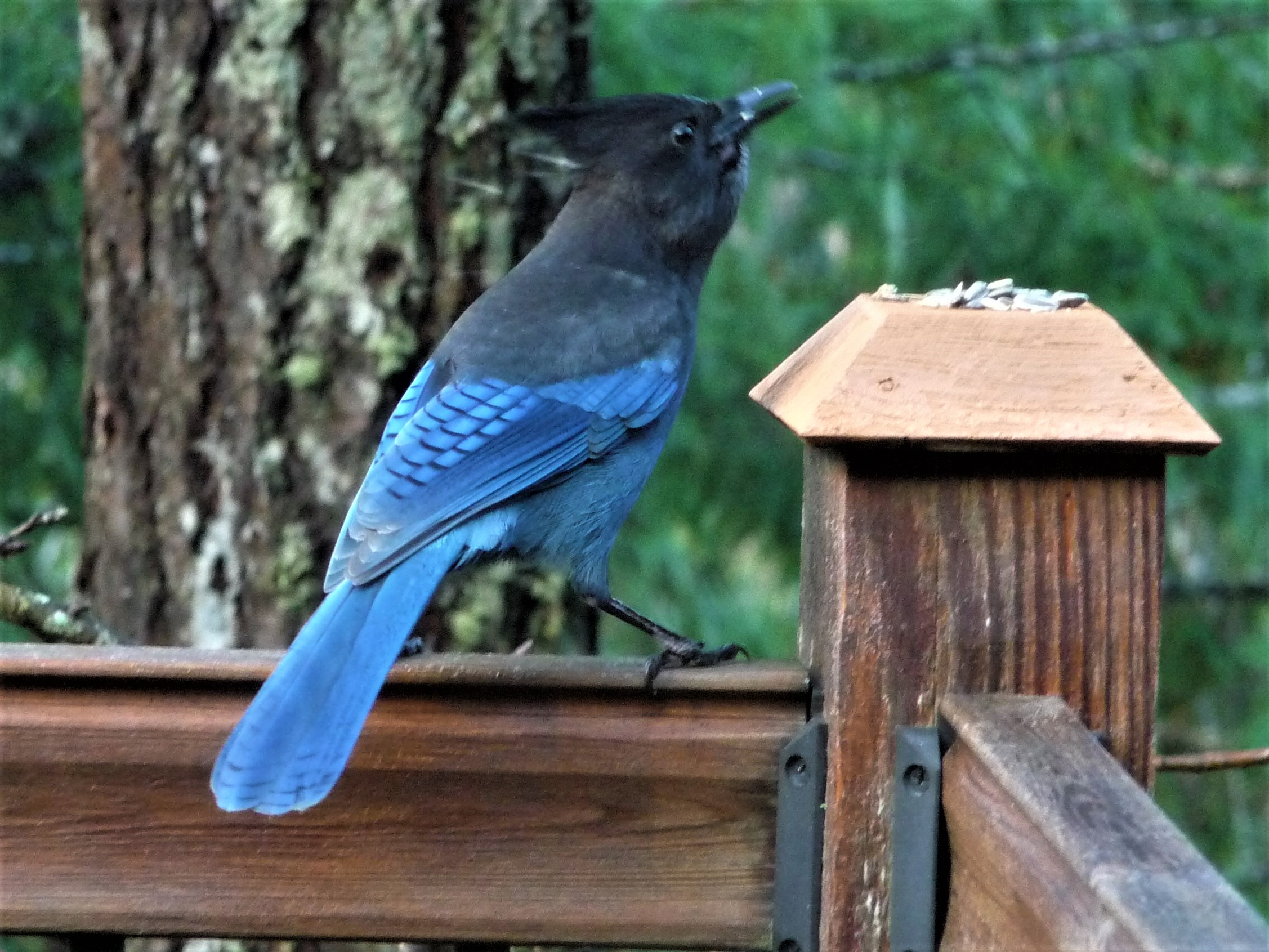
Almost every morning begins the same. I come downstairs (if it’s my morning to get up first), put the kettle on for the dark French roast coffee that is my mainstay, feed the cat, and sit in the rocking chair between the sliding doors and the woodstove. And almost immediately one or two or (this morning) three Steller’s jays come to the deck railings right outside the kitchen. For forty years they’ve come. I guess the current jays are great-great-great grandchildren of the original morning birds. They know when to come and they know what they’ll get: black sunflower seeds and peanuts.

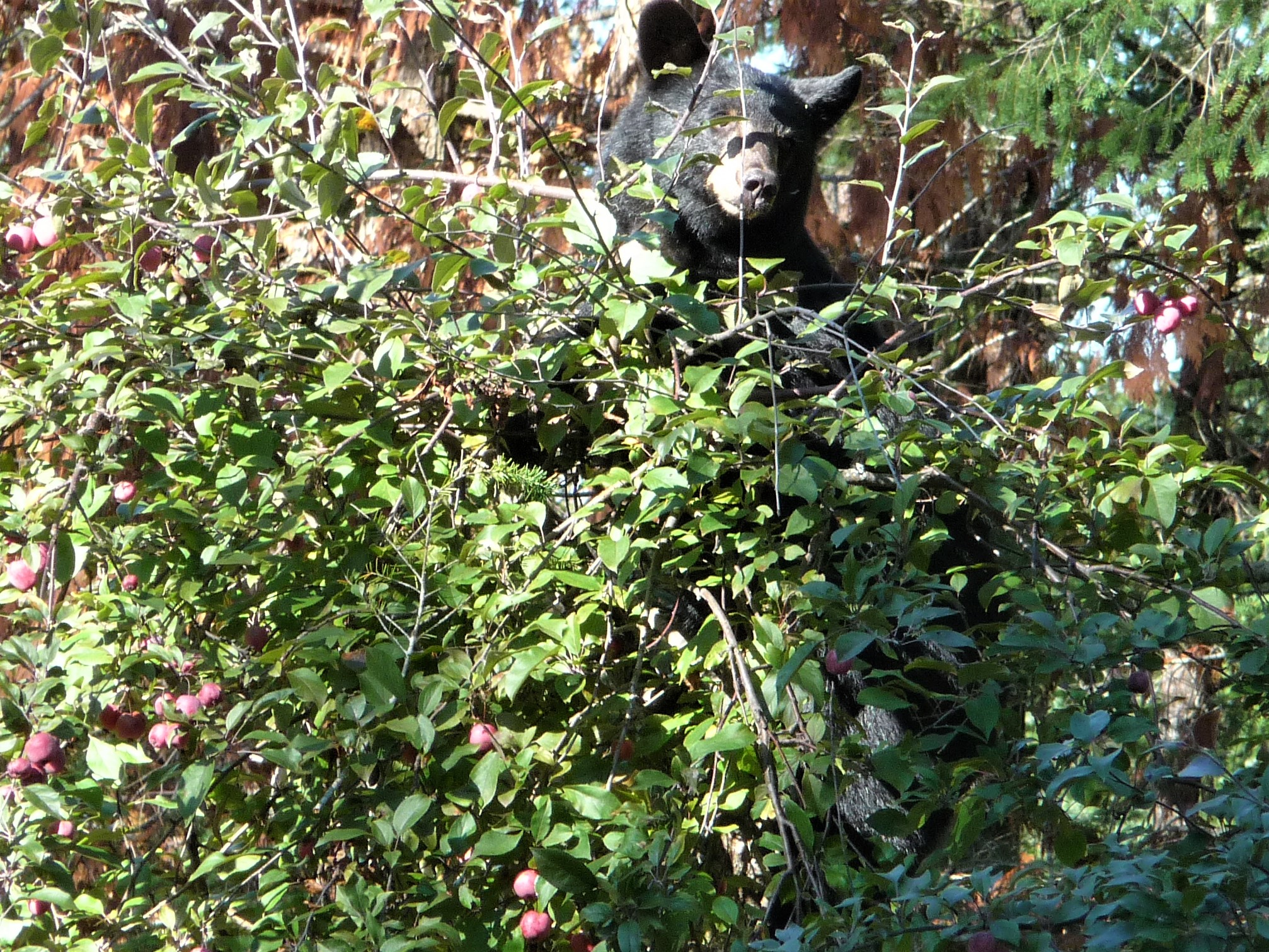
This morning, John called down to say a bear was at the top of the stairs leading to the deck just outside his study window. He shouted at it and it ambled back down, not in a rush, and a minute or two later I saw the branches of the crabapple tree swaying. There’s hardly any fruit this year but the bears too have been coming for more than 40 years and the crabapple is on their memory maps. The back gate to the garden, the one they can pull apart if they put enough effort into it? That’s on the maps too. In a few minutes we’ll go out to pick the green grapes over the pergola on the front deck. They’re not quite ripe but that’s never mattered to bears and raccoons. Once I was sitting in the living room and I saw something big and black falling past the window. It was a young bear, tumbling off the pergola onto the cart where I keep kitchen herbs. It wasn’t hurt but pots holding thyme and winter savoury were broken and scattered.
prince of the apple towns

Almost every morning is the same. Coffee, the company of jays who were particularly scrappy today, one kicking the others away from the seeds, squawking, charging at the more timid bird that waited, waited in the stray apple. Almost every morning.

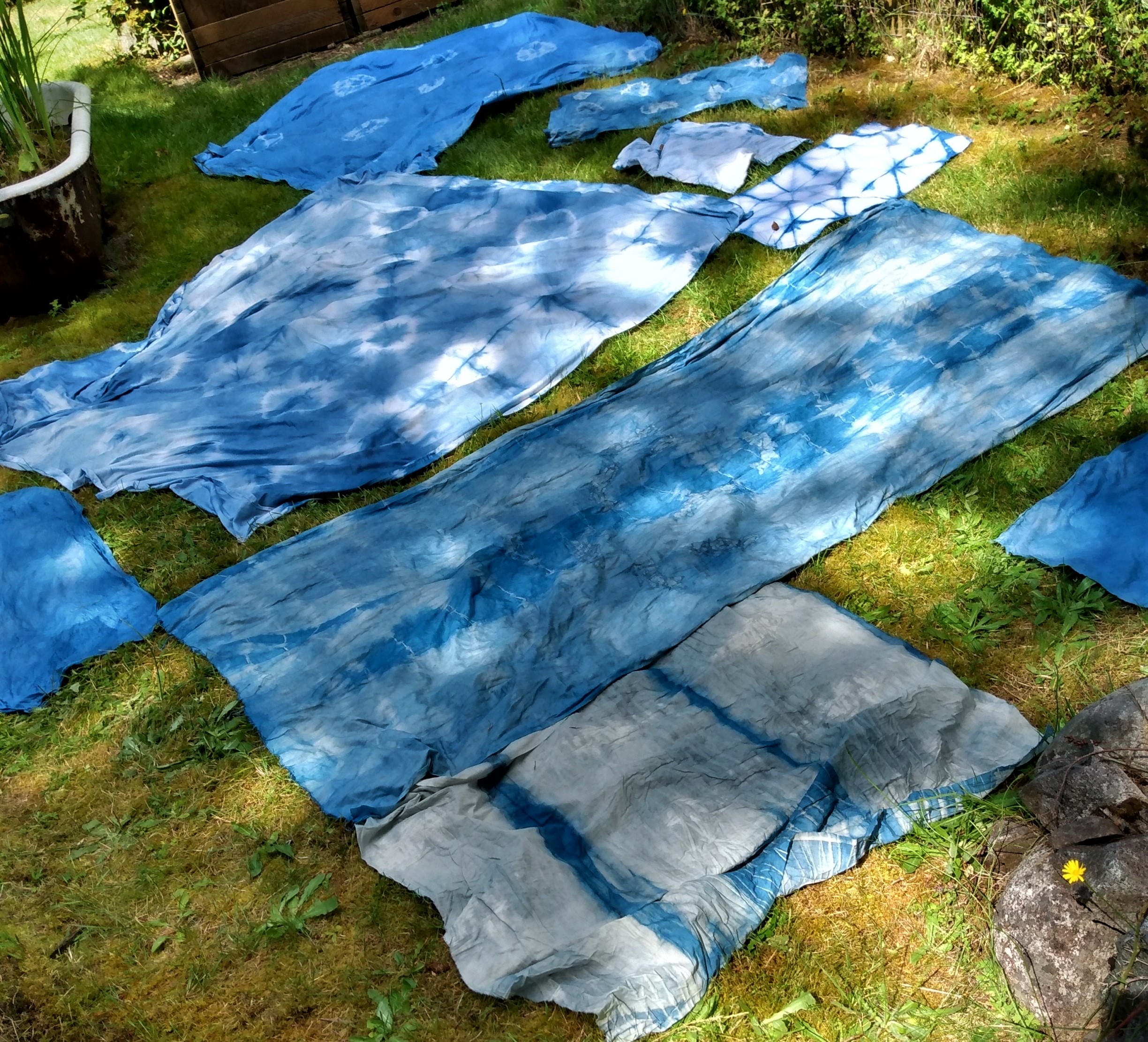
The morning we unwrapped the cloth we’d soaked in indigo, my granddaughter, my daughter, and I, talking quietly as we stirred the bundles with a long stick, bundles tied with string, pebbles, some clamped with small squares of wood, the morning we unwrapped them to spread on the dry grass, each length like a scrap of sky.
summer blues

The book of mornings would hold these things. The scent of coffee, the blue of the jays as they glide to the railing, the smudge of brown on the black bear’s nose. Was he coming for tomatoes when John saw him at the top of the stairs? Basil? Did he just want to explore the table where we sit after our swim, a cerise bougainvillea to one side, a Desert King fig to the other, a tin from Greek olive oil holding a rosemary at its roots?

These are notes I am making towards a book. The book after the novel I am writing, taking time each morning to imagine my protagonist painting the ancient stumps on Egmont Road, preparing for a boat trip up the inlet I was lucky enough to see the week before last, the book after, and after. When I read Virginia Woolf, I want to write about mornings, about thinking, about climbing the aluminum ladder into the wide grape leaves to cut the clumps of green fruit from the shaggy vines, the jays arriving like a blue clock, and everything, all of it, held in the golden light of September, every September, the bear pushing his face into the crabapple leaves for the tiny bitter fruit.

And somehow or other, the windows being open, and the book held so that it rested upon a background of escallonia hedges and distant blue, instead of being a book it seemed as if what I read was laid upon the landscape not printed, bound, or sewn up, but somehow the product of trees and fields and the hot summer sky, like the air which swam, on fine mornings, round the outline of things.

                           — Virginia Woolf, from “Reading”
breakfast

another swallow morning

I swam alone yesterday and this morning, mine the only footsteps in sand, mine the only arms windmilling between the trees I use as markers. Although it’s only August 18, the season feels late. The weather has changed, the hot days cooling, rain arriving in the tumble of dark clouds. This morning’s loon sounded forlorn somehow. Alone.

The other day just one swallow swooped as I swam. Not a violet-green–they’ve already flown south. But I think that one was a barn swallow, grey-blue on top, the underparts pale russet. This morning there were many of them, flying high, and then low over the water. At one point there were six directly around me, hovering, then darting away so quickly they disappeared into the atmosphere.

I’ve been thinking as I swim, mostly about the final copyedits of my forthcoming book, The Art of Looking Back: A Painter, An Obsession, and Reclaiming the Gaze. There was one particular and vexing issue that I was being stubborn about but the other day I sort of let it go, with some good advice from my husband. (I am sort of old-school about punctuation, even for section headings, which apparently work better without.) I felt lighter this morning as I stroked back and forth between trees, the swallows over me and around me. Thinking about the drama in the book, how long ago it was, and yet how writing about it, reading about it, brought back the complicated tangle of emotions, good ones and sad ones. In my house, there are paintings and drawings to remind me.

He drew me once with my third child. He drew on rough paper that began to deteriorate almost at once. He made a copy and brought it when he came for a visit. It’s on the wall outside my study and I see it every time I come in to work at my desk. When he brought it, I almost forgot the difficult weeks, the letters, the pressure, the insistent pronouncements of love. Look at my strong arms, the drapery of my clothes, the soft curl of my hair down my back, like water in motion.

Look at my hands.

This drawing is on the wall by my study door and I see it, oh, ten times a day. The heading for this section is a quote from the notebooks of Leonardo da Vinci.

Thinking and swimming. The two are perfect companions. And this morning my companions were barn swallows hovering over me, perhaps seeing me as a bird trying to fly, mistaking my backstroke for panic, my arms for wings.

how many swallows

How many swallows make a summer, how many does with their fawns crossing the grass beyond the greenhouse, how many tree frogs in the tangle of plants by the front door, how many waves of honeysuckle blooming over the garden gate? How many morning swims, how many ripe tomatoes sliced into a bowl with basil and good oil, how many nights lying awake and wondering how many more there will be?

Last week, walking down to the lake, I saw a mink dart out of the woods, on its way to water until it saw me approaching and it turned back to the safety of the underbrush. John was swimming that morning or another when he came face to face with a frog in the deep water. I came face to face with the sky, patches of blue after rain, and I watched the moon on its way west, its trajectory the arc of my arms as I swam.

How many swallows? There were mornings when so many dipped and turned in the early air that I couldn’t count, their wings so close I could have touched one or more. So many insects on the water’s surface, so many little fish rising. Crows, an eagle, two mergansers leading their young along the shore, loons, two adult geese and nine full-grown goslings swimming in formation and then all of them taking to the air, flying away, away, all but one swimming after them, its wings fluttering.

How many swallows? This morning, just one.

redux: “Songs so old/and tied to the season that the very sound/seemed to turn the weather” (Karina Borowicz)

Note: this was first posted 3 years ago. I am ready for the season’s turn. It’s been so hot and the Douglas firs are showing the strain of the weather.

_________________

lake1

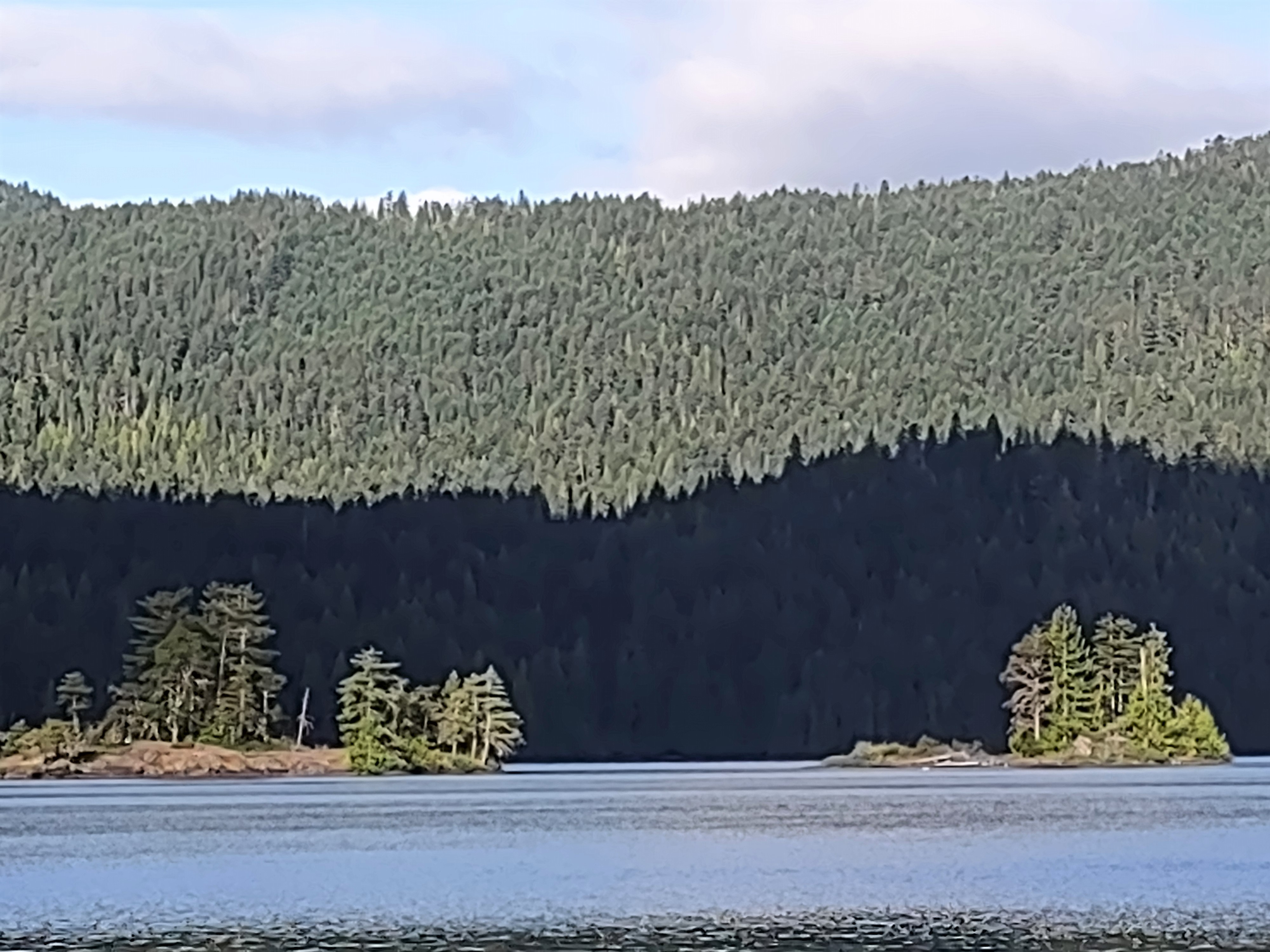
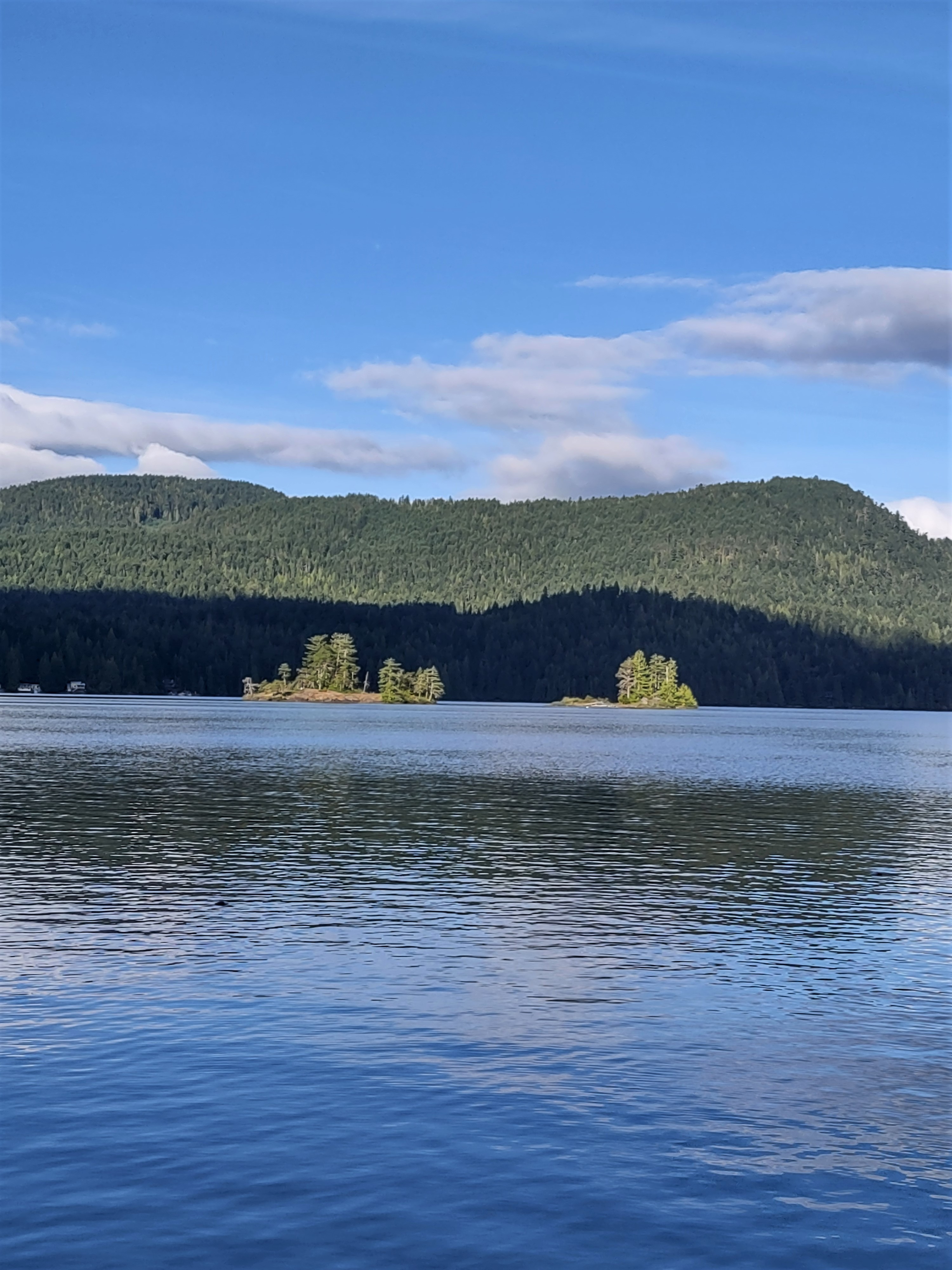
This morning, swimming, I was thinking about vegetables. And fruit. Thinking about what I need to do to with the tomatoes, the basil, the huge stems of rhubarb. I was swimming and thinking and I saw the light on the islands in the distance. John was finishing his swim so I called, Will you take a photograph? Somehow the light has turned from summer’s honeyed gold to something more austere. While I swam, the last of the swallows were dipping over the surface of the water, two of them swooping right over my arms, windmilling me backwards from one grove of cedars to the other, my sentinels.

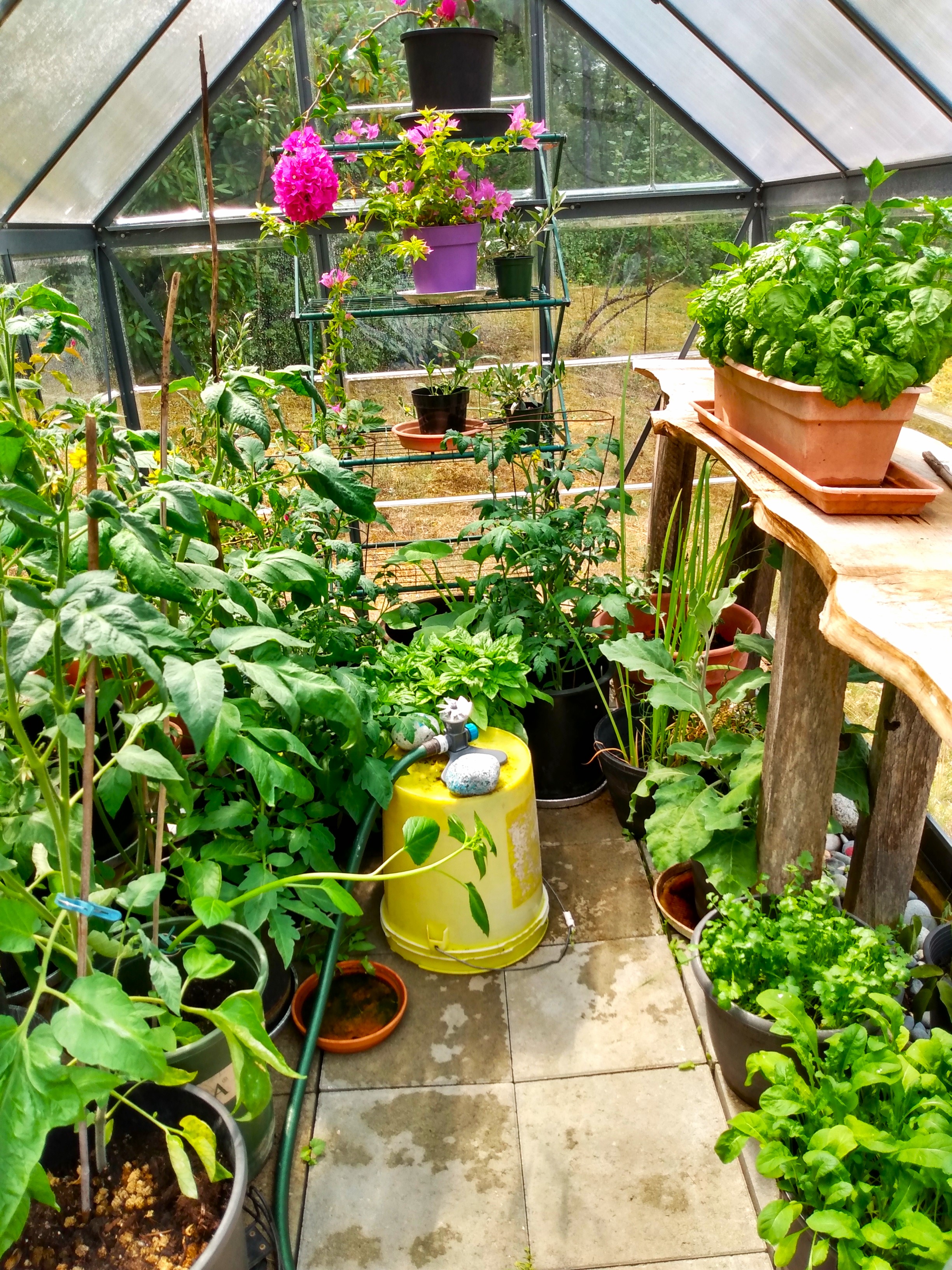
I’ve made four batches of roasted tomato sauce, filling 3 pans at a time with halved tomatoes, a head of peeled garlic, an onion cut into quarters, and a few branches of rosemary, everything slick with olive oil. When they’re melted and slightly dark on the edges, I put everything in the blender with some red wine, a handful of basil, juice and zest of half a lemon, and puree until I have a smooth ochre sauce. I freeze this in glass canning jars (leaving lots of room for the sauce to expand). It’s wonderful as is on pasta, pizza, and is the basis for bolognese sauce. Defrosted and thinned with milk or light cream, it’s a delicious soup. So there’s lots of that for winter. There are 9 jars of savoury tomato jam, which I think might be really great with cheese and pâté. I also roasted 6 cookie sheets of halved San Marzano and Principe Borghese tomatoes, topped with oil and chopped herbs — rosemary, basil, thyme, savoury, and lots of minced garlic. These get frozen in tubs lined with parchment. These are also wonderful on pizza or as simple bruschetta topping or as a side dish with roast chicken or fish. There are still bees in the tomato plants (which are still blooming because they’re indeterminates) but I don’t expect a late crop. Tomatillos, peppers, and eggplants are doing well in the greenhouse, along with cucumbers, including one I didn’t plant: lemon cucumbers. I grew them years ago but this year I only planted Armenian and Marketmore and so where did these lemon cucumbers come from? A late summer mystery.

It feels cruel. Something in me isn’t ready

to let go of summer so easily. To destroy

what I’ve carefully cultivated all these months.

Those pale flowers might still have time to fruit.

lake2

While I was doing the last part of my slow morning kilometer, I was wondering what to do with the case of peaches I brought home from Sechelt on Wednesday. Jam, yes — and I chopped equal quantities of peaches and rhubarb to mix with crystallized ginger, brown and white sugar, and a dollop of rum; it’s in a big bowl in the porch to sit overnight. Tomorrow I’ll boil it for jam. I also sliced enough peaches to fill two cookie sheets and put them in the freezer. When they’re frozen, I’ll put the slices in bags for winter pies, cobblers, and the trifle John makes every Christmas. Tomorrow we’ll go blackberry picking–for jam and also just to freeze in bags for winter desserts. And summer desserts. When Brendan, Cristen, and their children were here, Brendan asked for his favourite simple ice-cream, one we call “Blackberry Whip”. Put frozen blackberries (or raspberries or mango or, or, or…) in the food processor with a little sugar. Pulse a few times. Then add heavy cream, pulsing until everything has turned to the consistency of ice-cream. It doesn’t freeze well so don’t even think of not eating the entire batch. I think we had it 4 times when those guys were here. (I made other ice-creams with my KitchenAid attachment for Angie and Karna; and Forrest, Manon, and their kids: chocolate, vanilla, and the most delicious ginger…)

Every summer is different. Some are the years of beans. Not this year. Weather, I guess. We have enough to eat every other day but not the mountains of them from years past when I would be filling jars for pickled beans and giving bags away.

So the light has changed, shifted, and so has the weather. It’s cooler, even though the sun is out right now. Our morning swim is in shade.

My great-grandmother sang with the girls of her village

as they pulled the flax. Songs so old

and so tied to the season that the very sound

seemed to turn the weather.

In July and early August, I’d feel its warmth on my face half-way through my swim, and we’d have coffee on the upper deck when we got home, our towels on the railing and the umbrella up to shade the table. (What was your favourite thing about your visit with Grandma and Grandad, Forrest asked Arthur when we were saying goodbye at the ferry, and he thought for a moment and then replied, The upper deck. I suspect it was Grandad’s chocolate digestive biscuits that made it memorable but the boys were also good helpers with watering and picking tomatoes.)

lake3

When I’m preparing food for the freezer or for jam, when I’m thinking ahead to winter, I’m also working to preserve the light, the warmth of the sun that ripens tomatoes, brings the bees, catches my bare shoulders under my straw hat and turns them brown as hazelnuts. Often I am singing as I fill the jars, slice the peaches from their stony heart. If you miss the train I’m on, you will know that I am gone, the song all my grandchildren asked for as a lullaby. In the dark room, I’d hold them, their hair damp from swims or baths, singing, All these years and all these roads/Never led me back to you. Songs so old and so tied to the season, sweetly sad departures, the long highway to the ferry, the flights, the drive back over the mountains.

But they do lead back, too. And I’ll be here, with blackberry jam, peach and rhubarb jam bright with ginger, and the summer’s tomatoes waiting.

Note: the lines of poetry are from Karina Borowicz’s “September Tomatoes”.

quotidian

Listening:

Sam Lee, on repeat, Old Wow, and this song, “Soul Cake”, in particular:

Bless the makers of this house
the company, our kin
The chosen word, the dramaturge
The flesh, the sweat, the skin
Bless the babies in this bed

Reading:

Because I’m not going to pursue a degree in paleoanthropology–I’ve been looking into the hows and whys but it seems too complicated from this distance and at this age–I’ve been studying the reading lists for the courses I might have taken and am ordering books to do my own Teach Yourself programme at home. And right now I’m reading The Cradle of Humanity: Prehistoric Art and Culture by Georges Bataille. Some evenings I can’t wait to get into my bed with all 4 pillows…

Thinking:

Mostly I’m thinking about the past 70 years and how I might have been a better person.

Remembering:

How it felt to wake in a tent, listening to loons, in the early days of our residence here.

Wishing:

See “Thinking”.

Eating:

Last night I made a salad of our beautiful Coração de Boi tomatoes, the ones I bought seed for in Porto winter before last, with little dollops of fresh mozzarella, a handful of chopped basil, a drizzle of Frantoia olive oil, and some flaky Maldon salt. I could eat this every day.

Finishing:

Nothing. But I am about to baste two lengths of hand-dyed linen together, with an inner layer of organic cotton batting, for a small quilt.

Watching:

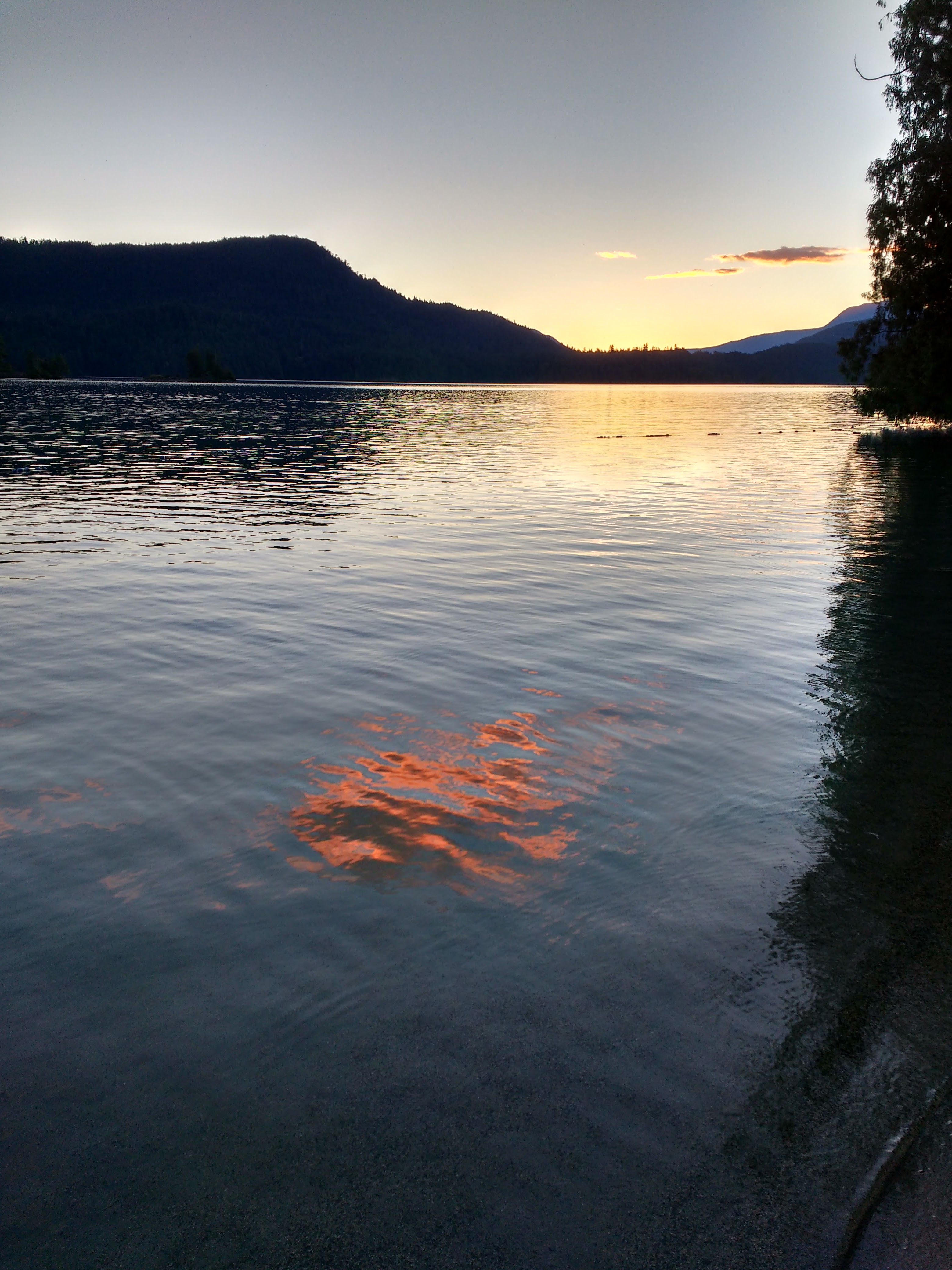
The sunsets have been beautiful. (See John’s photograph above.) And so have the stars.

Wearing:

My bathing suit. Since May 19th, I’ve gone swimming 85 times, mostly in the lake, but a couple of times in the ocean.

Loving:

The curve of each grandchild’s shoulder. Their bodies tucked close as I read to them over the past 3 weeks.

Hoping:

That someone, somehow, does something about Donald Trump. It goes on too long.

Enjoying:

Right now? The utter quiet of my house.

Appreciating:

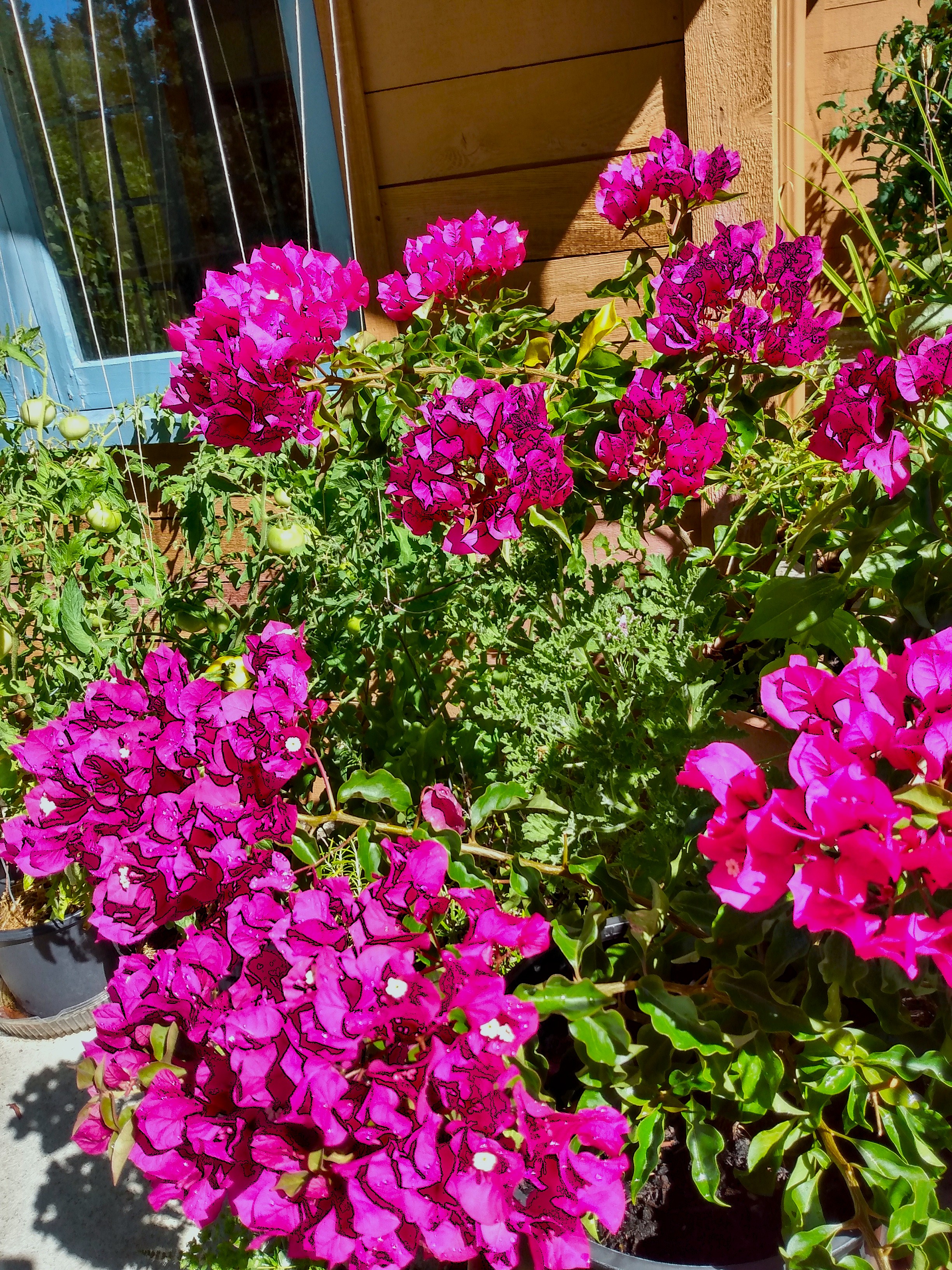
Our well. The beautiful cold water it gives us daily. The bougainvillea that thrives in heat.

redux: “the diver’s clothes/lying empty on the beach” (Rumi)

Note: this was first posted in July, 2023. I’ve been awake since 4, the big-eyed Sturgeon Moon flooding my bedroom with light. My older son and his family just left, driving down to the ferry in a rush, and I’m left with nearly a month of feelings. The visits of both sons overlapped last week and it was lovely to lie in my bed, hearing grandchildren wake, fielding requests for archery, swims, badminton, more cookies. Last night we sat out on the deck in the dark, drinking a dram of Laphroaig (ok, maybe we drank 2 drams), and I didn’t even mind the mosquitoes stinging my ankles. This morning’s swim will take care of the itching and the little beach will be so quiet without those grandchildren. Too quiet. Oh, and that memory of Frank? I did write it down and it will be part of the book coming out next year: The Art of Looking Back: A Painter, An Obsession, and Reclaiming the Gaze.

_________________________

july 4

Last night the full moon (the Full Buck Moon, one of the 4 supermoons of this year, when the moon’s orbit is closest to earth) kept me awake for ages. It hovered out the south window by my bed, like a lantern in the tall Douglas fir the bear mother sent her cub up a month ago when they saw me watching them. It hovered and there was no point drawing the curtains — they’re white linen and moonlight comes through them as bright as anything. I lay awake and thought. I thought of the long essay–well, a book, really–that I’ve been revising. I’ve described the book here. Yesterday, talking about it with John, I suddenly said, I forgot about Frank! He was puzzled until I told him about another painter, one who’d worked at the same place as I did in southwest London and who was, true to form, much older than me, who’d asked me to take off my clothes when I was 21, first giving me a beautiful lunch in Wimbledon with a glass of Château d’Yquem to follow, then the request. I was spared more of Frank’s attention because I was suddenly called home to Canada. I don’t share this with any kind of vanity or pride. I was foolish, I didn’t always make the best decisions, and in the essay I am careful not to let myself off any hooks. I’d forgotten about Frank so I spent part of the day writing a section about that period. I was thinking about that when the cat trilled at the side of the bed, wanting out. I thought until the moon made its journey to the west, out of sight. The morning came early.

Mostly I try to go for my swim before 8:00. I’m almost always the only one in the water, with John reading on a bench nearby. (He’s having a reaction to swimmer’s itch these days so reluctantly doesn’t join me in the lake.) This morning, with one thing or another, we didn’t go down until after 9 and the parking lot was half-full. The prospect of doing my meditative swim between the big cedars at either end of the little beach, back and forth, back and forth, an eagle overhead sometimes, swallows dipping over the surface for mayflies, dragonflies skimming the water, anyway, the prospect of others around had me say, Let’s just go home. Maybe we’ll go in the evening though it’s not the same. A morning swim energizes me for the day, both physically and mentally, because I think in the water too, deep thinking, working my way through writing issues, personal dilemmas, even new ways to cook kale.

A supermoon, an abandoned swim, and now some smoky haze in air that has been so clean and clear for the past weeks. One thing doesn’t always lead to another. The days don’t go as planned. An essay begun to work out my feelings about something that happened 45 years ago, with ripples that continued for years, even continue now, has grown to include Frank. I’ve watered the greenhouse with its two new olive trees and the cucumber boxes and now at my desk, I am wondering about the future. I am working hard on something I will probably never publish but I need to get it right. I need to swim to keep the workings of my mind clear and nimble. A polished red branch of arbutus has meandered into view.

You’re in your body like a plant is solid in the ground,
yet you’re the wind. You’re the diver’s clothes
lying empty on the beach. You’re the fish.

In the ocean are many bright strands
and many dark strands like veins that are seen
when a wing is lifted up. (Rumi)

The undersides of the swallow wings are creamy, the dragonfly wings are tiny stained glass windows. Looking through them, you see the sky or the water, depending. Today I am the diver’s clothes, empty on the beach, no swimmer in sight, and the past, oh the past! It happened so long ago.

summer afternoon

“Summer afternoon—summer afternoon; to me those have always been the two most beautiful words in the English language.”
–Henry James

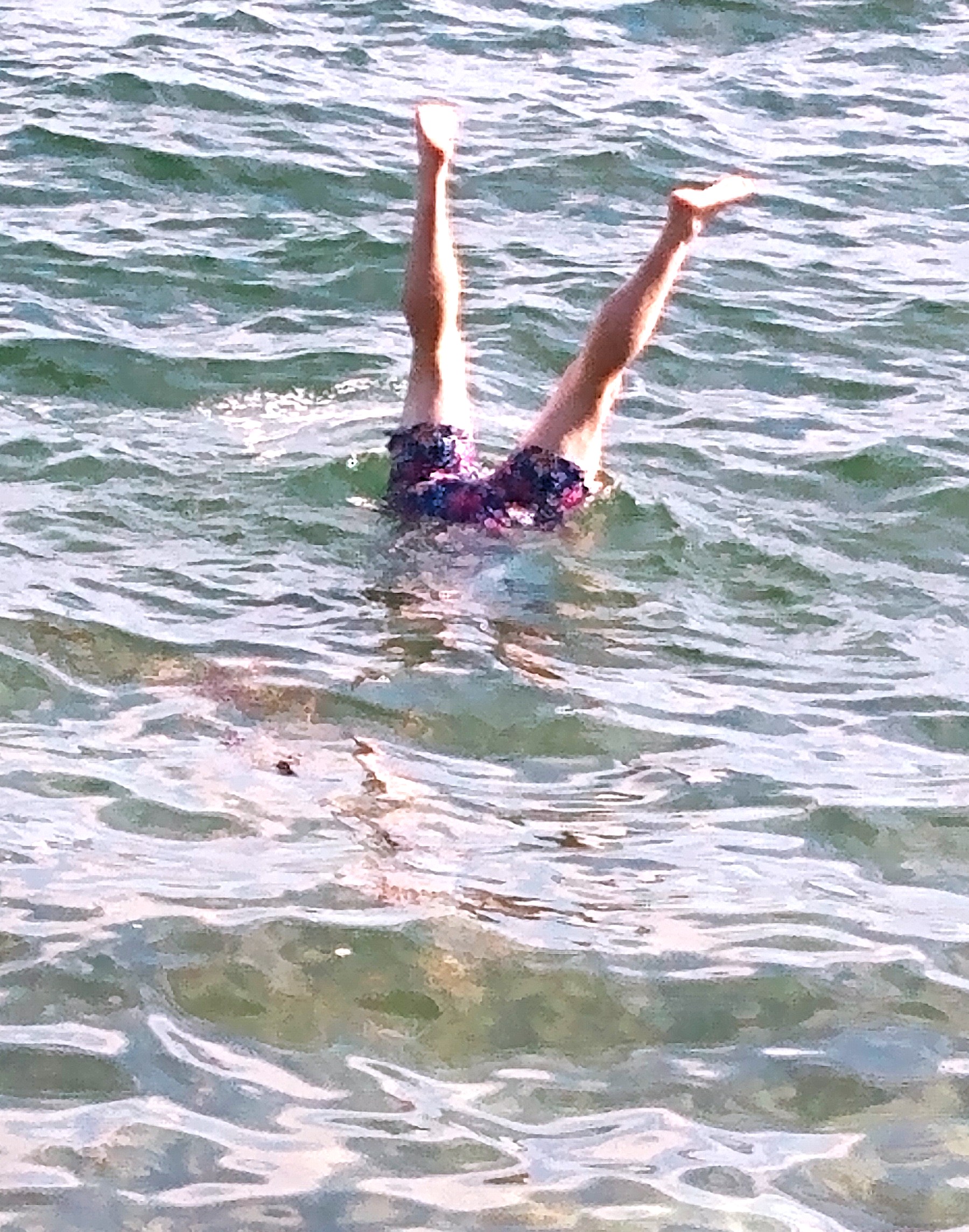
This is the third week of family visits and we have had our share of summer afternoons. Yesterday I sat on a log at Trail Bay, drying off after a swim, watching my older son do handstands. His sons were exploring the tidepools. One saw a rat in a crevice, another watched little crabs scuttle sideways. The week before, their cousins raced along the shore for ice cream. On one of those afternoons, we all met at the old school field in Egmont where the kids played soccer while their parents talked in the shade. The other day, Forrest, Manon, and their boys were in the printshop, working on projects–bookplates for the children, notecards for the parents–, one of them saw a stag with full antlers just on the bank. Another afternoon, a doe visited with her spotted fawn. And the afternoons grow into evenings: Brendan and Cristen sat out on the deck last week after their children had been put to bed and then they called those nearly-sleeping children out again because two bears were in the orchard below the house.

Summer afternoons, towels drying on every railing, a forgotten shoe by the front door, baskets of laundry waiting to be sorted and folded, and a boy who somehow grew to be the father of two doing a handstand in the ocean.

redux: it’s all yours

Note: this was posted in August, 2023. The boy in this photo left with his parents early this morning. His cousins and their parents are here until Sunday. So lots of swims, lots of thinking. And the essay I was working on can be read here.

henry, fishing

This morning, swimming, I was thinking about an essay I’m working on. Right now it’s in fragments. It begins as sort of pure narrative:

When I began the season’s regular swims in early May, I saw kingfishers most days. Some mornings there were two of them when I arrived, a nesting pair. Small streams enter the lake along the shore where I swim and I often see fish surface near their mouths, feeding on insects. I’ve seen crayfish scuttling in the clean sand under the hardhack. In May, I saw the male kingfisher fishing to feed his mate. These mornings I only see one. The young have fledged, the season is turning.

But it doesn’t continue that way, or at least not yet. I keep writing out of the torrent of daily news–the fires, the boats carrying refugees off North Africa sinking, the missile strikes in my grandfather’s country. So the fragments accumulate and one day soon I’ll figure out what to do with them.

In the meantime, this morning, thinking about the essay, a bird flew over my head and landed in a branch on the cedar that is one of my sentinels as I swim back and forth in front of the empty beach. It was a kingfisher. It gave its rattly cry and then simply perched. As I swam back and forth, it watched, quietly. Maybe it wasn’t watching me. Maybe it was watching the lake entire, not a boat in sight, not the seaplane that either delivers or collects someone from one of the summer cabins at the far end. No other swimmers. No loon cry or the muttering of ravens. I thought some more about the world that feels so perilous right now.

Trumpeter Mountain, Dean River, Horsethief Creek, Casper Creek, Landmark Mountain, Deep Bay, Tugwell Creek, Donnie Creek, Ittsi Creek, Greer Creek, Rossmoore Lake, and hundreds more in British Columbia this summer of 2023, fires across Algeria, on the Greek islands, the town of Lahaina on Maui where fire decimated the historic town, leaving at least 100 dead and more than 1000 missing, echoing the Lytton fire of 2021 which turned the town to ash, and Paradise, California which burned in 2018, and Malacoota, Australia in 2020, and Pedrogao Grande, Portugal, in 2017, with 66 dead.

When I finished my swim, I walked out of the lake, just under where the kingfisher perched on a long branch. It’s all yours, I told it, reaching for my towel.

redux: old rapture: a spiral

Note: this was five years ago. Having just returned my responses and notes to the copyedited file of my forthcoming book, The Art of Looking Back: a painter, an obsession, and reclaiming the gaze, and having a novel, Easthope, out making the rounds of publishers, I am aware that I’m not actually working on anything new. Maybe I won’t. Maybe this is it. But listening to my granddaughter make waking sounds in the room (almost) next to me, her parents and brother still deeply asleep, and thinking about my Gatineau family arriving this evening to join us, making 10 altogether, maybe there will be an opening, a red thread, a spiral.

_________________________

memory game

Will another novel ever swim up? If so, how? The only hint I have towards it is that it’s to be dialogue: and poetry: and prose; all quite distinct. No more long closely written books. But I have no impulse; and shall wait; and shan’t mind if the impulse never formulates; though I suspect one of these days I will get that old rapture.

—Virginia Woolf, A Writer’s Diary, Friday, August 6th, 1937.

The other day, as we drove home from a few days in the Interior, John asked me if I had a new book in mind. A good question. I finished two manuscripts this winter and spring: a novella, The Occasions (a loose homage to Mrs. Dalloway); and Blue Portugal, a collection of 10 essays. The last ten years have been quite productive for me in that I had work I wanted to do and I had time. I published my memoir in essays, Mnemonic: A Book of Trees in 2011, followed by two novellas (Patrin in 2015 and Winter Wren in 2016), a collection of essays called Euclid’s Orchard in 2017, and just this spring a novella, The Weight of the Heart. I think John’s accustomed to discovering I’m not in bed in the middle of the night because I’ve gone downstairs to work. It might be my favourite time: the house sleeping, the mystery of the dark trees beyond my window, owls calling deep in the woods, weasels at work in the eaves-troughs. I love the netted moon in the big firs and the promise of light as I head back to bed. He’s also accustomed to the cycle of joy and despair as I send out work and wait for responses because let’s face it, when you’re 65 and you aren’t writing best-seller material, agents and publishers aren’t exactly welcoming. Or at least most of them aren’t. The latter, I mean, because no agent will take me but some smaller publishers have accepted my quirky books with an enthusiasm I am grateful for.

So: a new book? I can’t say I know exactly what I have to do next but I have glimmers of that old rapture. When my grandsons were here from Ottawa, the older one (he is 4) kept picking things up from my desk and asking questions.

What’s this?
A barnacle.
What’s a barnacle?

And from there, we’d look it up, I’d tell him that barnacles grew on rocks, on whales, on shells, even the oyster shells we found north of Powell River while he was here. He wanted to look at my fossils, the horned corals from the mountains by the Great Salt Lake in Utah and the shell fossils from Sandcut Beach west of Sooke (the locus for Winter Wren). He wondered what a wishing stone was for. He wanted to know if he could take some of the bones on my desk home with him. When I was walking at Nicola Lake with my grandaughter, who is 6, she wanted to know if the squirrel racing up a tree with a pine cone was going to eat the whole cone so I showed her how to shake edible seeds from between the scales of a cone. We looked at the spirals formed by the bracts and I began to tell her about the Fibonacci sequence but then realized that her father (a mathematician) could do a much better job of that than his mum, who still has dreams about failing high school math. (Last one two nights ago…)

The older grandchildren kept asking why. And why and why and why. It’s a good question. It’s one I ask myself. I ask myself why I’m drawn to spirals, why I am comforted by sewing them when I am making quilts, why I think of them as the perfect analogy for the writing I do, and how astonished I am to find them in so many places. This moon snail shell for example.

moon snail

It’s an example of a logarithmic spiral, also called the golden section spiral. Many organisms share this growth curve: snails, certain galaxies, those spirals evident in the bracts of pine cones, the seedheads of sunflowers, human embryos in utero (and the whorls on the scalp), and even well-constructed highway turns. On the other hand, the Archimedean spiral (the one I use when quilting) differs in that the turns of the curve maintain a constant distance in their progression. I don’t know that I could quilt a logarithmic spiral freehand but somehow the Archimedean one comes naturally to my hands, a form of meditation as I stitch my way across lengths of cotton and linen.

My grandchildren’s questions were spirals that led me inward, as though I was moving from the endpoint towards the starting point. From the sound of them asking back to the origins of our connection. Waves of sound, spiralling to their source.

Did you hear owls last night?
Maybe I did.
They were close!
How do you know?

I am not putting this clearly but maybe I’m beginning to thread the needles that will sew me into a pattern that might, if I’m lucky and I pay attention, become something.

What I want is a season of calm weather. Contemplation. I get this sometimes about 3 a.m. when I always wake, open my window and look at the sky over the apple trees. A tearing wind last night. Every sort of scenic effect—a prodigious toppling and clearing and massing, after the sunset that was so amazing L. made me come and look out of the bathroom window—a flurry of red clouds; hard;a water colour mass of purple and black, soft as a water ice; then hard slices of intense green stone; blue stone and a ripple of crimson light. No: that won’t convey it…

–Virginia Woolf, A Writer’s Diary, Wednesday, August 17th, 1938

“And every star, like a lantern…” (Emily Dickinson)

Last night, sleepless, I went out to stand under the stars, the long wash of the Milky Way. It was quiet, so quiet I could almost hear the music of the constellations. The grape leaves were cool on the railings and I could smell the sharp scent of ripening tomatoes. When a star fell in the northern part of the sky, I almost forgot to make a wish. Almost. Returning to bed, I carried stardust on my shoulders. In Egmont the other evening, I looked down from the ramp after looking at boats with my grandchildren and two stars were looking back at me. I am a little lost these days, my heart in tatters. “And every star, like a lantern,” wrote Emily Dickinson. Twice this week I’ve hoped for directions, once from the sky, once from water.