posts

redux: “we are nothing if not impulse to direction” (John Pass)

Note: this is from 2015, though it reaches back, back. And I am still thinking about these things. The other day I heard Sarah Louise Butler talking about her new novel, Rufous and Calliope, on the radio and she said how arranging sections written in two different periods of time — I guess the novel moves back and forth — had been like arranging quilt blocks and I smiled, because, well, yes, a woman who makes quilts knows something about possibilities of time and space in textiles. I can’t wait to read her novel.

____________________________

When John and I met and fell in love in 1979, we spent a fair amount of time arguing about poetry. Not our own but what we imagined the important contemporary writing to be. I remember running out into the night, in tears, wondering what on earth I’d done by marrying someone whose ideas were so different from my own. I’d barely heard of Robert Duncan, Charles Olson. What on earth was “projective verse” and how could it possible matter. We did have many favourite writers in common; we were both reading Wendell Berry and Gary Snyder, for instance. And in truth, our work was far more congenial than we knew during those first months, that first year. We used different language to talk about writing and in time our vocabularies became as acquainted and then as familiar as everything else.

I’ve been remembering all this for the past month or so as I sit in audiences listening to my husband read from his new book, which isn’t really new. It’s Forecast: Selected Early Poems, 1970-1990 (Harbour Publishing). The poems come from out-of-print chapbooks and books and some of my favourites are there, including “The Crossing”:

here the star, the far shore
or this tree. we enter with attention

what passes and must pass
to bring us closer

the ocean heals behind the ship
the trodden brush springs back

and we are nothing if not impulse to direction

This poem concludes with the line, “we cannot hold our coming through the world”, which has always seemed to me a deeply powerful mantra. Our mantra, in a way.

So. “Projective Verse”. This morning I remembered the phrase and asked John about it and he immediately opened his copy of Donald Allen’s The New American Poetry to Charles Olson’s essay.

projective verse

John’s notes on the pages are as interesting to me as the essay itself. What he noticed, what he underlined, what spoke to him. This passage, for example:

It would do no harm, as an act of correction to both prose and verse as now written, if both rime and meter, and, in the quantity of words, both sense and sound, were less in the forefront of the mind than the syllable, if the syllable, that fine creature, were more allowed to lead the harmony on.

And later, this:

The objects which occur at every given moment of composition (of recognition, we can call it) are, can be, must be treated exactly as they do occur therein and not by any ideas or preconceptions from outside the poem, must be handled as a series of objects in field in such a way that a series of tensions (which they also are) are made to hold, and to hold exactly inside the content and the context of the poem which has forced itself through the poet and them, into being.

And this:

Let me just throw in this. It is my impression that all parts of speech suddenly, in composition by field, are fresh for both sound and percussive use, spring up like unknown, unnamed vegetables in the patch, when you work it, come spring.

In those years, I was trying to find a way to integrate all the elements of my life — my love of place, of plants, of textiles, of food (the making of it, the history of it, the science of it); I was hoping to find a form which would allow all those parts of daily life to take their place in my artistic practice, to find the right tension (like knitting!) to hold them in a way that enhanced their textures and relationships. I remember making paper one summer, using a kit brought by a friend for our children, and we were experimenting with adding flowers to the pulp, which we’d made with various kinds of newspaper and other paper, chopping and blending them all together. In those years we were the grateful recipients of passed-on copies of the Times Literary Supplement and that particular light newsprint was perfect for the pulp. When I’d pressed the pulp into the screen and then removed it and let it dry, I was astonished to see that words and phrases from the TLS had survived the process of blending and had emerged at various points in the finished sheet of paper, along with flowers and stems. (Somewhere I still have this piece of paper, I think.) I realized I could manipulate the contents of the pulp with a bit more experience and effort — imagine positioning lines of poetry so they could be seen within the paper from certain perspectives. Paper as palimpsest, as repository… I felt both exhilaration and anguish. Yes, here was another process which would allow so many elements of what I loved to conspire and create something new but did I really have time to take on another practice?

The older I get, the more I realize that the writing of a book is a composition both as crafty as the making of paper and as artful as the positioning of objects in a field, a projective field, the syllables sounding their way across it in a lively and unexpected way. When I look at my drafts and notes for Patrin, I see how they resemble, in a way, the notes I make for quilts. There were other possible arrangements for the individual blocks which make up the narrative(s) and it took me some time to find the pattern which allowed the visible or external story to both hold and reveal the coded history. And are these things ever completely known to us as we work and then as we read? As we sew, as we press pulp through a screen to make sheets of new paper? I suspect not.  I remember reading a wonderful book years ago about the quilts women made as they travelled the Oregon Trail. In Treasures in the Trunk, Mary Bywater Cross provides an alternate history of that movement west by decoding the quilts which were created during , or after, the migration. They were commodoties, death shrouds, memorial texts, dreamscapes, echoes of everything seen and experienced. Even their titles have the resonance of poetry: “Stars with Wild Geese Strips”, “Wandering Foot”, “Pieced Star”, “Wheel of Fortune”, “Birds in Flight”, “Delectable Mountains”. Did those women consciously embed their hopes and fears in the patterns they chose for the bedcovers they composed during the long days of their journey west? Maybe not entirely consciously. But for women who perhaps had no other outlet for such expression, the domestic becomes the artistic.

My friend Barbara Lambert sent me something she’d posted about Patrin on Facebook. It made me so happy that she’d detected the pattern at its heart and that she also provided a visual example (in her photograph, the book is resting on a potholder I made for her years ago and the potholder is layered on a beautiful piece of shibori cotton):

When is a novella even more than a novella?

When its form takes on the shape of its subject matter, in a most intriguing way —
as Theresa Kishkan’s “PATRIN” leads you on a young woman’s quest for her Romany origins, along a sensuous trail inspired by the inheritance of an antique quilt.

patrin at home

the rain

I was reading in bed last evening, reading What is Paleolithic Art by the wonderful Jean Clottes in preparation for a trip to the Côa Valley in early November, when I heard the first drops of rain on our blue metal roof. Maybe in winter I tire of the sound. It can be endless, monotonous. But now? After a very dry summer? It was like hearing the opening bars of music I have been looking forward to for weeks. I think of John Luther Adams, whose compositions take us so profoundly into the heart of the natural world around us: deserts, rivers, oceans (one of my favourite pieces of music is his Become Ocean), and yes, even rain.

All night it rained. The water barrels are overflowing, the trees hold that incandescent light, washed of dust and summer heat. When I woke, I went to the living room window and looked out at the deck where we’ve eaten so many dinners since May. The other day we picked the grapes (ahead of the bear who’s been lurking around) and I stood on the ladder, my head in the vines, and I thought how dry everything was. When I looked out, I saw the rain wash away the shadows of the long summer meals, two tables pushed together and laid with French cloths, our Italian plates, unmatched silver, wine glasses polished in anticipation of the best wine, children’s voices asking for another Yorkshire pudding (I know! In summer! But somehow the celebratory meal when we’re all together is prime rib…).

I went down for my swim a little later than usual, the wet sand busy with tracks: ducks, crows, the heart-shaped prints of deer. In the rain, everything was muffled. I had to close my eyes swimming on my back because the raindrops stung and when I opened them, I was far out in the lake. Two people came down to the beach with umbrellas and I heard one say to the other, “There’s someone swimming out there!” And it was me, the only human among the cutthroat, the stickleback, the crayfish, the rainbow.

When I returned from my swim, John made a fire in the woodstove, balsam fir and some bark. The kitchen is a good place to be. There are Merton Beauty apples to be made into pies and baskets of tomatoes waiting to be slow-roasted, with olive oil and garlic. And after that, I have lengths of indigo and rose-madder dyed linen to make into…something. All summer my hands have been waiting for time by the fire to sew, to think, to follow a length of thread as it inscribes its route on fabric. I was the one far out in the lake, blind to the way back.

Flocks and herds of things wild glisten
Faintly. Then the scent of musk opens across
Half a mountain — and lingers on past noon.

Note: the lines are Tu Fu’s, translated by David Hinton.

a Friday miscellany

1.

How many more swims, how many more mornings walking down under the maples and Douglas firs to see the little islands in the distance, the ones we swam to the summer before last, how many more loons on the far side, warbling as though to say goodbye. How many. This morning there were fresh deer tracks right in the sand where I leave my towel. A trout jumped. The swallows have gone. In the water I am light as air.

2.

Too many shootings. Too many reports, too many newsreaders telling us the names.

3.

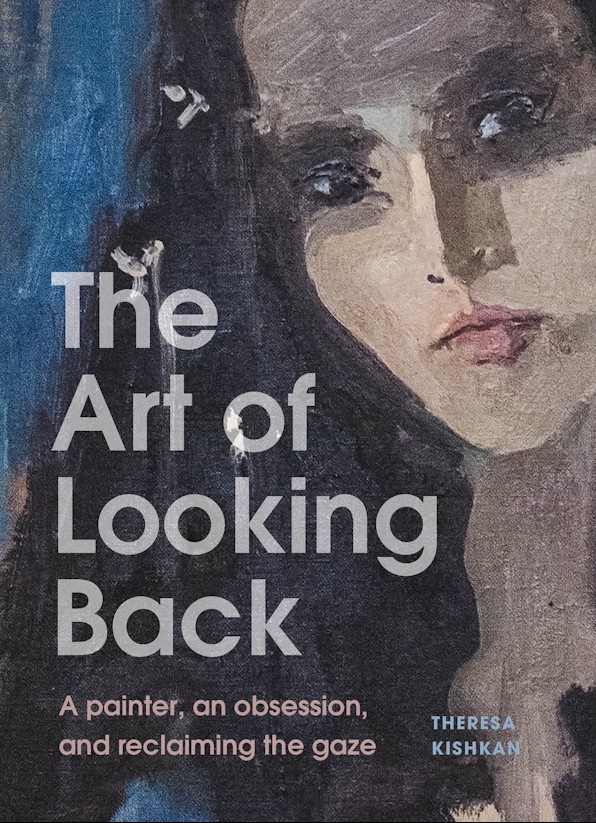
I’ve spent part of the week gathering images as my book progresses towards publication. (Jessica Sullivan and Naomi Macdougall at https://dsgn-dept.com/about designed a beautiful cover.) I had to search an old notebook for one in particular and then I had to think about an author shot and I had to think about the young woman at the heart of this story and the one in the notebook and the ones in the folder of photographs of me to choose from. And we are all the same.

4.

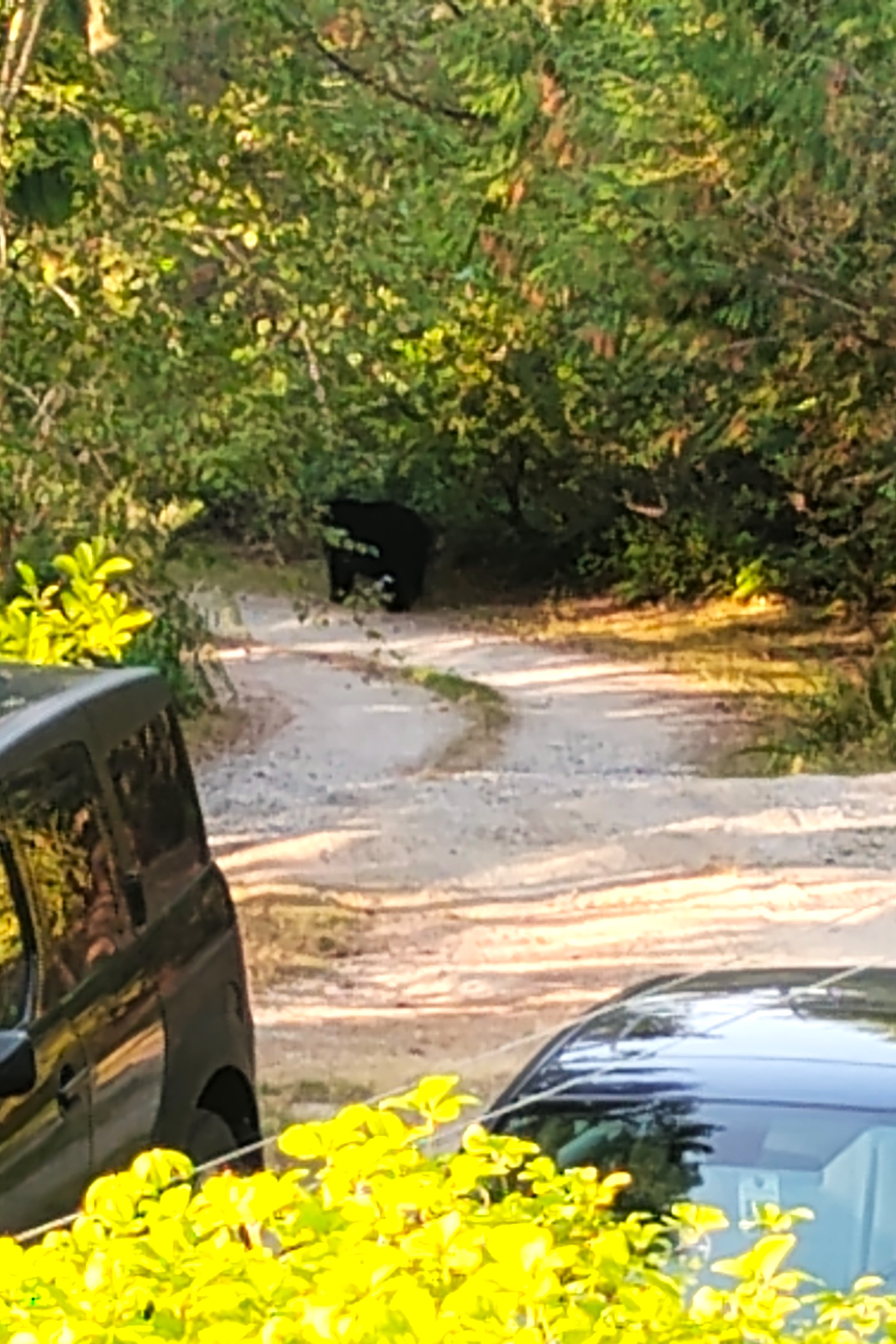
When the cat raced to hide behind the washing machine, I knew the bear was around. I heard it trying to climb a grapevine, then when I opened the door, I smelled its dark odour. From the upper deck, John saw it in the crabapple tree, but when I came up, it was ambling down the driveway.

5.

Yes, the bear is around.

“because it’s useful, edible, or beautiful” (Ursula K. Le Guin)

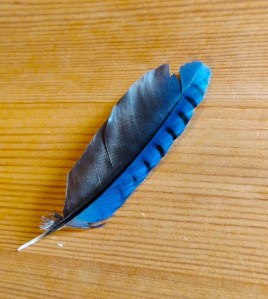
Blue feather

Listening: Over and over again, Sam Lee, Old Wow, and yesterday, over and over again, this song (“Sweet Sixteen”).

Sipping: This morning’s Black Mountain coffee, brought to me in bed, in my green cup.

Reading: Last night I finished Jeannette Winterson’s The Gap of Time: The Winter’s Tale Retold. I turned out the light and thought for ages about Perdita, the foundling, and how her story echoed (in a way) my mother’s origins. Foundlings left in the baby hatch, taken and raised, with love, or not, and then given the story of their beginnings. Perdita was alive to hear hers. My mother was not. But it’s a story I carry now, in my bag of necessary wonders.

Thinking: About our own bags of wonder.

If it is a human thing to do to put something you want, because it’s useful, edible, or beautiful, into a bag, or a basket, or a bit of rolled bark or leaf, or a net woven of your own hair, or what have you, and then take it home with you, home being another, larger kind of pouch or bag, a container for people, and then later on you take it out and eat it or share it or store it up for winter in a solider container or put it in the medicine bundle or the shrine or the museum, the holy place, the area that contains what is sacred, and then next day you probably do much the same again — if to do that is human, if that’s what it takes, then I am a human being after all. Fully, freely, gladly, for the first time.

Remembering: My mother in her blue suit, eager for my father’s homecoming. Her smile. The smell of her Avon deodorant.

For it’s hishaba for I’m your maAnd Lord knows where your daddy goesSo it’s all take care and you all be bewareOf the young men and the gloaming o.

Wishing: The old wishes, every one of them.

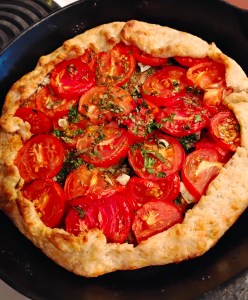
Eating: This tart for lunch yesterday (and there’s enough for today’s lunch too).

freeform pastry in a black skillet, filled with sliced tomatoesWatching: Rain falling beyond my study window.

Wearing: Dry clothes after a morning swim, in rain.

Loving: The sound of rain on our blue metal roof.

Hoping: The old wishes, every one of them.

Enjoying: The sight of a coyote pup, nearly grown, coming out of the woods to sniff around our house. In these moments, there is the ancient memory of wolves hanging around fires, eager for scraps. This pup, curious, its ears open for the sounds of our household, maybe even Sam Lee. 

The Ainu say that the deer, salmon, and bear like our music and
are fascinated by our languages. So we sing to the fish or the game,
speak words to them, say grace.

Appreciating: The rain, the music, a blue feather, a basket of tomatoes on the counter, the scent of dark coffee, the dish of pine cones in the entrance hall, calling cards of trees from the Nicola Valley, a side road near Lytton, oyster shells hanging by the front door, the Merton Beauty apples. “If it is a human thing to do to put something you want, because it’s useful, edible, or beautiful,into a bag, or a basket, or a bit of rolled bark or leaf, or a net woven of your own hair, or what have you, and then take it home with you, home being another, larger kind of pouch or bag, a container for people…”

Note: the passage by Ursula K. Le Guin is from “The Carrier Bag Theory of Fiction” (1986), the lines of Sam Lee are from his song, “Sweet Sixteen” (2019), and the lines on animals and music are from Gary Snyder’s “Tawny Grammar” (The Practice of the Wild).

redux: when I was young in the mountains

Note: I was wondering what I was doing 9 years ago, on the eve of grandson Henry’s birth. And it turns out I was babysitting his older cousin, the one he threw a football back and forth with for days this summer. They are such big guys now but every now and then one of them will come to me with a picture book we read when they were small(er) and I’m always glad when it’s this one.

_______________

John and I are babysitting our 11 month old grandson this evening while his parents have dinner out. (They are all with us for two weeks from their home in Ottawa.) I bathed Arthur and put him into his pyjamas, then John sat in the low chair in his room and read him a bedtime story. I chose one for them to read at random. When I Was Young in the Mountains, written by Cynthia Rylant and illustrated by Diane Goode.

younginthemountains

I’d forgotten this lovely story with its tender images and its lyrical text, built upon remembered moments and a refrain:

When I was young in the mountains,
Grandmother spread the table with hot
corn bread, pinto beans, and fried okra.

….

When I was young in the mountains,
we listened to frogs sing at dust and awoke
to cowbells outside our windows.

I tidied Arthur’s clothes and smoothed out his bed, listening to the two of them in the chair (a Victorian nursing chair that had been John’s grandmother’s), and thinking how right the story was for this particular night. No frogs, no cowbells, but a bear and her two cubs this morning, crossing the grass to the south of our house. A moon on the evenings when the rainclouds lift. A grandfather kissing the soft hair on a small child’s head.

When I Was Young in the Mountains is told in the past tense. As you read it, you enter a remembered world, a pastoral world of corn bread and swimming holes, of lamplight, well-water, a black cook-stove, a porch swing, and stars. And yet memory, the past tense that contains it, colours the present. It frames the bittersweet nostalgia of the narrator, who admits,

When I was young in the mountains,
I never wanted to go to the ocean, and I never
wanted to go to the desert. I never wanted
to go anywhere else in the world, for I was
in the mountains. And that was always enough.

My family moved every two years when I was a child. There were places I loved enough to never want to leave but we did leave. And I remembered those places all my life. A swimming hole in the creek behind our house on Matsqui Prairie, the dirt road to the lake beyond where we lived in Spryfield, near Halifax, the blue camas fields in Beacon Hill Park in Victoria. The past tense for me was fragmented, haunted. I was never young in the mountains but I understand the feelings of the child on the step on the last pages of this story, in her nightgown, reading, her grandmother’s plants beside her, thriving in their old kettles and tins. The safety and quiet of that haven carries the child into adulthood and it’s what I wish for my own grandchildren. I hope that they will remember this place in that way — the bears, the lake nearby, their grandfather’s laugh and his patience, and blueberry pancakes with maple syrup on summer mornings.

So many of the books I read to my children have disappeared, lent to other children, given away. I’m glad to have found this one, at random, on the shelves in the little room we’ve painted and equipped for visiting babies. None of them have enough hair yet for me to braid (“Grandmother sometimes shelled/beans and sometimes braided my hair.”) and we no longer have dogs (“The dogs/lay around us, and the stars sparkled in the sky.”) But the past tense is endlessly comforting, or it can be, accompanied by softly lit illustrations — a porch swing big enough for two and a grandfather sharpening pencils with his pocketknife, readying the imagination of a child who will write this story one day, shaping each detail so beautifully.

make

It’s tomato season. We’ve eaten panzanella salad every couple of suppers for weeks now (and I never get tired of it). We’ve had tomato sandwiches, Caprese salad, fresh tomato pizza, wide pappardelle noodles with slow-roasted Principe Borghese tomatoes and garlic and basil. (I could eat this weekly, maybe even more often, and so I’ve been making big pans of these to freeze for winter). Every day there’s a basket of tomatoes to pick and this morning I’ve just put two big pans of sliced Amish Paste and big beef heart tomatoes (from seed I bought in Porto the year before last) to make a sauce my friend the late Barbara Lambert taught me. Our vines are still heavy with green and ripening fruit. It always feels like a miracle: the tiniest of seeds pressed into pots of soil, kept warm by the woodstove, green sprouts emerging after a week or so, and then before you know it, baskets of heavy red fruit. The other morning when I was picking the day’s crop, a beautiful green tree frog leapt from the leaves: another miracle.

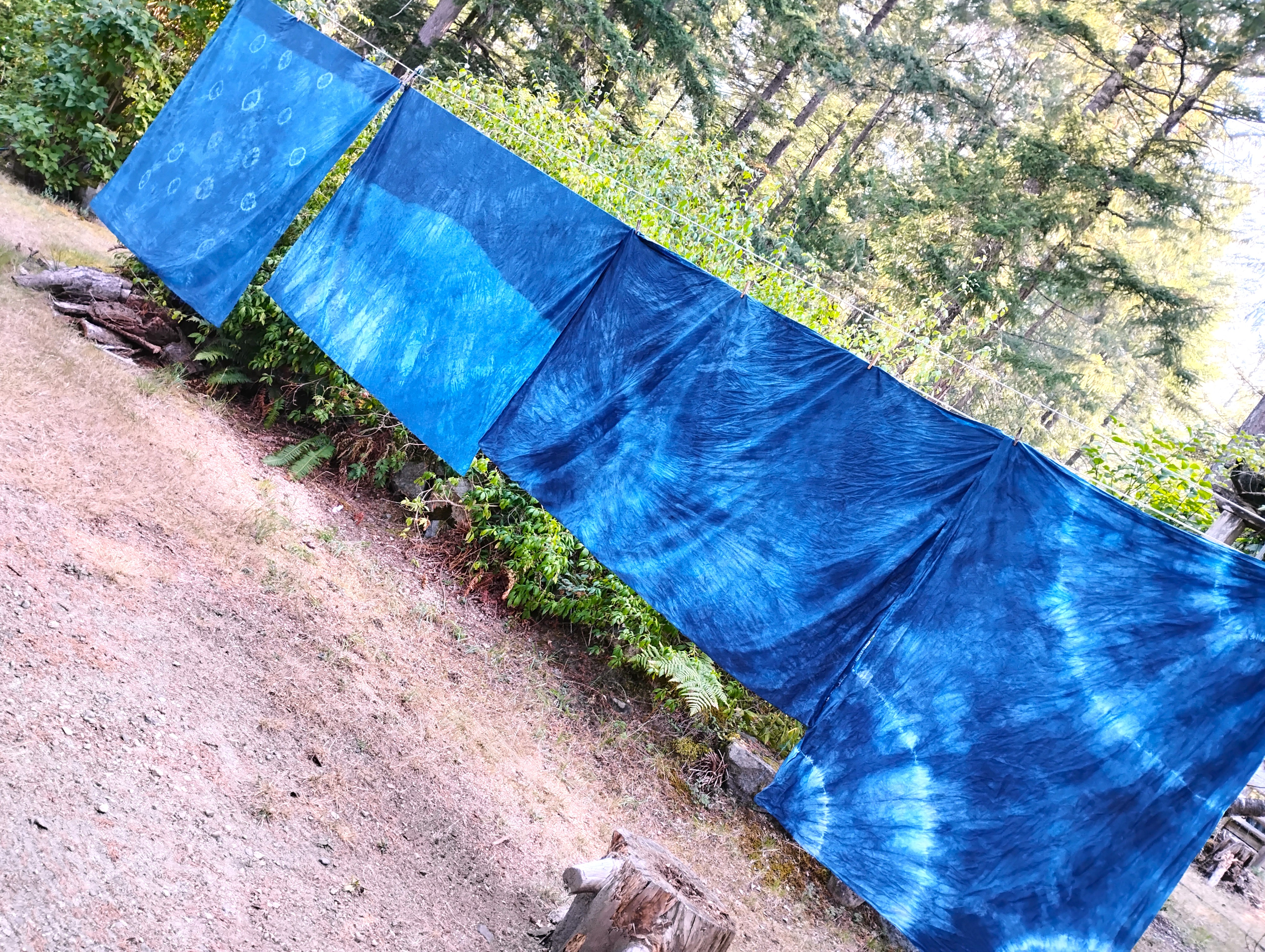
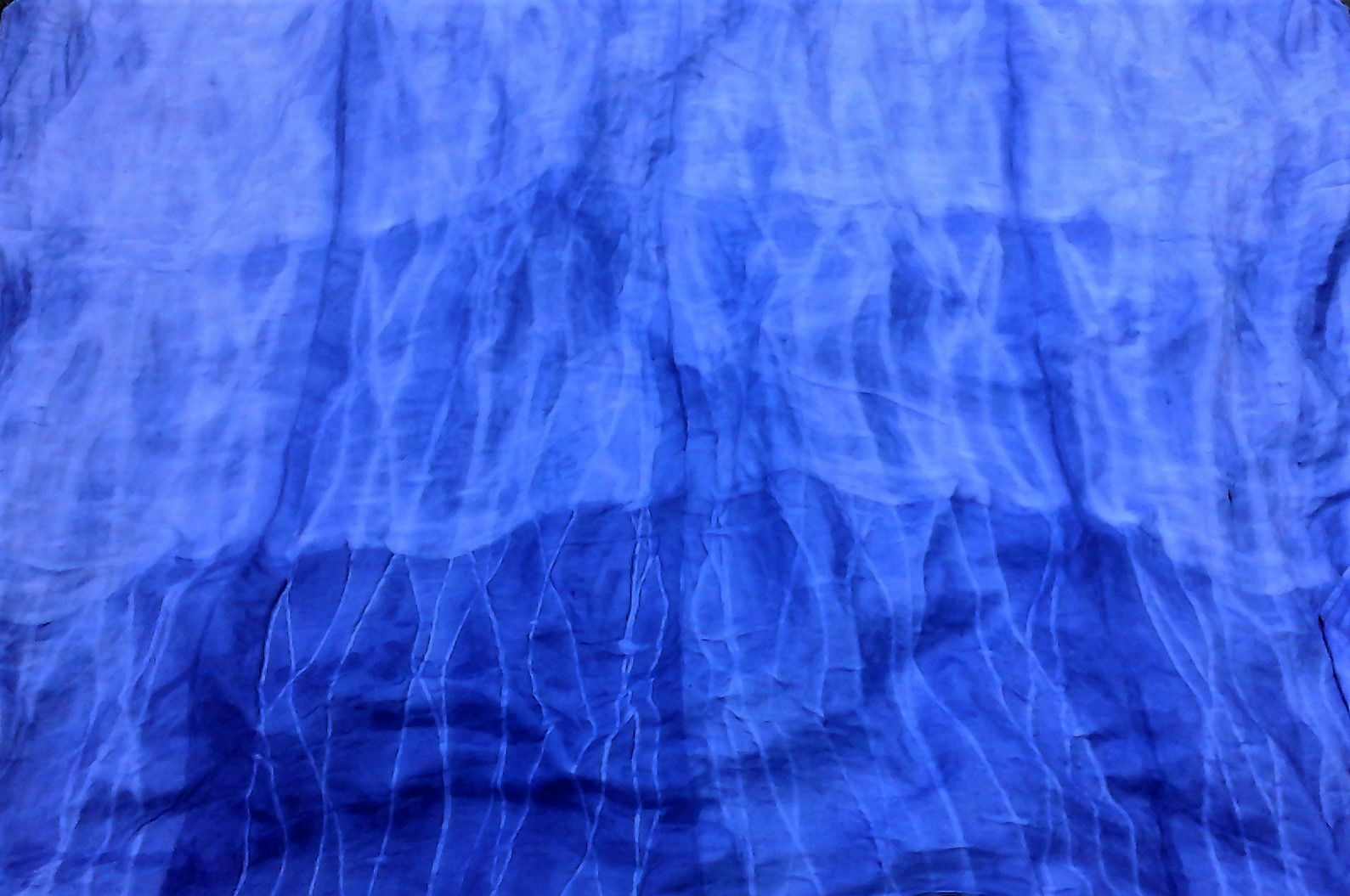
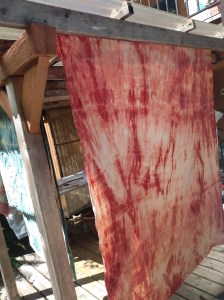
And another? Mixing indigo power with thiourea dioxide and calcium hydroxide, then immersing well-scoured lengths of cotton (including old sheets) for timed dips over the long hours of a summer afternoon, a day made more perfect by the blue inspiration of Steller’s jays. There are lots of opinions about what to do with the newly-dyed cloth — rinse immediately or let rest or wash immediately or, or, or — and what I do is let the cloth rest overnight, still tied with its twine and beach stones or else nothing (because I decided to dye some cloth this time without a resist design), then I untye the lengths the next morning and look at them before I rinse them.

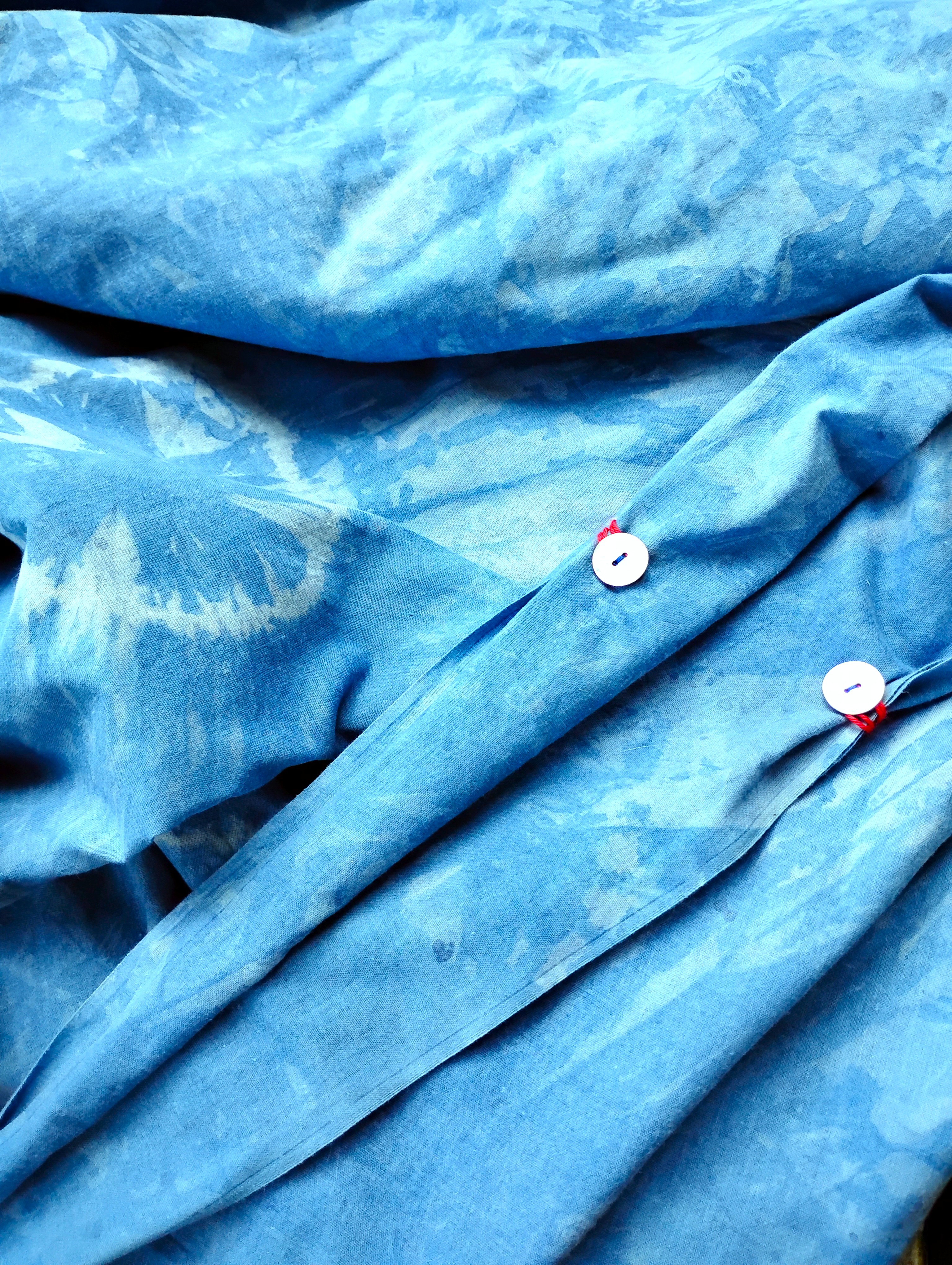
They lose some colour when they’re rinsed, even with vinegar added to the water to help set the dye, and then washed with a PH neutral soap. But they are always beautiful. This time I dyed some fabric I’d bought at the thrift store, 2 bundles of 2 yards each. (There was a 3rd but I dyed it with marigold over the weekend.) I wasn’t sure if it was cotton or a cotton-poly blend. All the books and websites tell you that polyester won’t take a natural dye but I had little to lose (the bundles cost almost nothing), maybe time, but I have time to spare, and anyway what if something wonderful happened? And it did. Those lengths look like marbled paper and I couldn’t love them more.

This photo doesn’t do the colour justice. It’s nicer. And already the lengths have been made into something as a gift for someone I love.

As I folded the fabric for wrapping and sending, I thought of the word “make” and its origins:

make(v.)

Old English macian “to give being to, give form or character to, bring into existence; construct, do, be the author of, produce; prepare, arrange, cause; behave, fare, transform,” from West Germanic *makōjanan “to fashion, fit” (source also of Old Saxon makon, Old Frisian makia “to build, make,” Middle Dutch and Dutch maken, Old High German mahhon “to construct, make,” German machen “to make”), from PIE root *mag- “to knead, fashion, fit.” If so, sense evolution perhaps is via prehistoric houses built of mud. It gradually replaced the main Old English word, gewyrcan (see work (v.)).

And what I loved most reading the Online Etymology Dictionary was learning this:

“match, mate, companion” (now archaic or dialectal), from Old English gemaca

Doing this work — making sauce of tomatoes I started in early March, from seeds I bought in a Portuguese market two Februaries ago, dyeing old sheets and thrift store cloth (of unknown fibres) with indigo powder on a bench near the garden, shadowed by Steller’s jays — felt strangely companionable, though I was alone (apart from those jays). My friend Barbara was near, the generations of people who’ve known the mysterious pleasure of dyeing with indigo were near, some with advice, some with a knowing smile. And the two people who will eat pappardelle noodles glossy with earthy red sauce, they’re waiting at the table, months from now, remembering summer.

quotidian, the first day of September

1. In the small hours, awake, the room suddenly illuminated with lightning. The white curtains, briefly gold.

2. Chickadees arrive in a cloud for breakfast. Two Steller’s jays, a towhee. I keep putting my bowl down, finding more seed. I have greeted the jays for more than 40 years and each morning I’m dazzled by their colour.

3. Cloudy yesterday. I was dyeing with marigold, trying to make sunlight.

4. At the lake this morning, the young man in black, making espresso on a little stove, offered me a cup. Not just now, I told him. I want to swim while there’s no one else. When I pushed out into deep water, a Steller’s jay called from the big cedar. Green lake, a tiny white feather on the surface where I made my first stroke.

5. I will mix the indigo starter in a big jar and when it’s ready, I’ll prepare a vat. I have lengths of cotton and linen. I have a stained tablecloth. And the white curtains? Maybe those too.

6. John is splitting wood for the winter’s fires. How soon September has arrived and how soon the cold will come. The woodstove is ready. There will be the long dark days, the snap of cedar as the kindling catches. I will swim as long as I can.

Again as an illustration of the colour of the atmosphere I will mention the smoke of old and dry wood, which, as it comes out of a chimney, appears to turn very blue, when seen between the eye and the dark distance. But as it rises, and comes between the eye and the bright atmosphere, it at once shows of an ashy grey colour; and this happens because it no longer has darkness beyond it, but this bright and luminous space. If the smoke is from young, green wood, it will not appear blue. (Leonardo da Vinci, from “Theory of Colours”, trans. Jean-Paul Richter)

river dreams

Today is overcast and cool, such a change from August’s heat. I heard a climate analyst talking on the radio a few weeks ago and she said we should remember this as the coolest summer of the rest of our lives. It hit hard. I already knew the hardiness zones in Canada have been updated. And as someone who has lived in the same place for more than 40 years, I’ve seen this shift in what’s reliable, what isn’t. As I look out my study window, I see a few more dead cedars in the woods. The old ones are surviving, with some distress during the droughts, but the young ones are dying.

I am dreaming of rivers, their waters, their meanings. In late October, we are travelling to Portugal so I can explore some of the paleolithic art in the Côa Valley. We’ll stay in Vila Nova de Foz Côa and visit the 4 sites (out of 90! But most aren’t accessible to the public) I’ve been reading about for the past year. If you visit this site regularly, you might know that I’ve been weighing and pondering the possibility of returning to university to do the degree I was planning as a very young woman: anthropology. I was sidetracked in my early years because the courses I took were taught by guys who weren’t very welcoming somehow and my English and Classics classrooms were the ones I felt most comfortable in. This year I have been dreaming about the road not taken or maybe the river not navigated, as so many of the places I’m interested in are located on rivers or in river valleys: the Côa, which is a tributary of the Douro; and the Vézère, which is a tributary of the Dordogne. So yes, I’ve weighed and pondered and I came to the conclusion that it’s too late for more formal education. I don’t want to leave home for extended periods and I don’t have the confidence that a classroom is the right place for me. At least not right now. I’m open to change! But I’ve been sourcing many of the textbooks I’d be studying and I’ve been reading monographs on specific areas, on timing, and I am quietly excited about this whole pursuit.

Oddly, it fits with other work I’ve been doing, though I would find it difficult to explain exactly how and why. I set up an informal dye space on an unused partly-covered deck earlier in summer.

I don’t begin a dye project with an end result in mind. I am interested most of all in the process, of immersing my own thinking in the dye pot as I place prepared fabric in rose madder or indigo or — tomorrow!– marigold. What will I learn? About colour, about the body of imagery and symbology I carry in my consciousness as surely as I carry memory, DNA, and even hope? Often what I find myself seeing in the results are rivers, grasses, the interior of abalone, though to be honest, would I have noticed that myself if my friend Amy hadn’t looked at 5 meters of indigo-dyed linen spread out on our guest bed and told me that was what I’d produced? I don’t know.

As the strands of planning come together (still in the early stages, though a flight is booked, an International Driving Permit ordered), I am dreaming of rivers, the Côa, the Ribeira de Piscos, the Douro, dreaming in indigo, rose madder, marigold. O Rio que me Leva, the river that takes me away.

redux: letter from a summer kitchen

Note: This was five summers ago. And I have apples to slice into pieces for pies, basil to make into pesto, tomatoes to slow-roast…This was before the Russians attacked Ukraine and it makes me sad to read about the peace of the country I visited in 2019.

_______________

peachy

As soon as I heard that Olia Hercules was publishing Summer Kitchens: Recipes and Reminiscences from Every Corner of Ukraine this spring, I asked our local bookseller to order me a copy. It arrived a few weeks ago but somehow I didn’t have time to open it and savour the recipes and the photographs.  But in the past three days, I’ve read the book cover to cover and although I have a few small quibbles—the notes for making uzvar, for example, have been cut short—I love this joyous testament to tradition and making the most of what one has at hand. To my delight, there’s a whole section titled “Summer kitchen memories”: Hercules appealed to Ukrainians from everywhere to send their experiences of this lovely phenomenon: a rustic building set apart from the main house, meant for preserving and social activity centered on food. These are small essays in themselves: “A secret attic and the foam from the jam pan”; “Homemade butter and dried apples”; and the gorgeous “Rhubarb buns and hailstorms”.

This time last year I was preparing for a trip to Ukraine with my husband and my daughter. We chose a company specializing in small cultural tours because honestly? I felt out of my comfort zone without any Ukrainian and unsure of whether I’d feel ok with renting a car and driving the rough roads in search of my grandfather’s village. I’ve never been on any kind of tour before but this one was stellar. There were just 7 of us and most of the time we were driven in a van by Roman, who was flexible and kind of unflappable. Our guide, Snizhana, was lovely and also unflappable. When 8 members of my grandfather’s family turned up at our hotel to meet me, she spent hours with us, helping us to make family trees to determine just how we were related. We made a video call to Forrest in Ottawa (also unflappable) to ask for some information I knew he had at his end. But what I really wanted to say here was that Roman drove us daily for 4 days up and down a steep road in the Carpathians to our hotel and we passed a couple of farms and there was a smell in the air, like wine-y fruit, like smoke, like summer becoming autumn, and one morning at breakfast, there was a jug of something called uzvar and it tasted like that smell. Earthy and smoky and I couldn’t get enough of it. The recipe is in Summer Kitchens.  A dried fruit infused drink made with pears or apples or cherries (or all three, with plums maybe), and in this book there’s even a recipe for how to dry the fruit (which would have been dried and smoked in the wood-fired masonry oven called a pich) in a warming oven, then smoke it on a barbecue with fruitwood chips. For the past day or two I’ve been wondering what to do with the 60 pounds of Merton Beauties John picked the other day, an apple with a spicy pear-ish edge to its flavour, and now? I’m going to dry some and make uzvar.

uzvar

I realize too that the farms on that steep road had summer kitchens. The families were sitting under trees at wooden tables and chimneys jutted from small buildings near the main house. We’d drive up or drive down and I’d press my face to the window by my seat, wanting to know everything about their lives because I felt that I might find myself there, another version of myself, the granddaughter of a man who stayed and married and who knew what to do with the bushels of pears and cucumbers. A woman knew how to make fresh cheese and horseradish horilka and who would take apples to the market to sell from a basket at her feet.

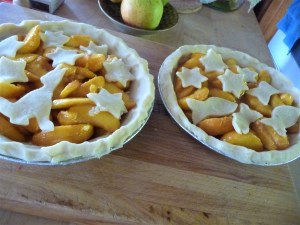
Today in my summer kitchen I made 3 peach pies (unbaked) for the freezer with some of the 20 pound case I got in Sechelt the other day, I sliced and froze 8 pounds more of the peaches to wait in ziplock bags for a winter dessert, and I made a double batch of pesto, also for the freezer. I don’t have a pich but I do have a maple worktable and lots of light and the otherworldly voice of Rhiannon Giddens to make the work go well.

On that road in Ukraine, the air held the smoke of fires preserving fruit for winter and this book holds that too. And so much more. Recipes for varenyky stuffed with berries or homemade cheese, for kvas and borsch (with duck and smoked pears), for sourdough breads brushed with garlic oil. And I’ll remember this man who stopped so we could stroke his gentle horse’s face.

P1140291

In an essay I wrote about traveling to Ukraine, I used brief passages from folk poems. This one spoke to me so deeply:

My dear mother, what will happen to me if I die in a foreign land?
Well, my dearest, you will be buried by other people.

But they would still be mine, wouldn’t they? The women in their summer kitchens, fermenting tomatoes in big jars, the children gathering windfalls, the dogs asleep in the dust.

I turned

I turned, my coffee in hand, and I saw the bougainvillea through the dining area windows. All summer they’ve been on the upper deck, the one where we had our coffee after swimming, where we sat in sunlight, talking about the day, books we were reading, our children, theirs. Last week I realized the season had turned and the sun was no longer there after the swim but later, watering, I soaked in the beauty of the bougainvilleas. There are 5. I brought 2 down to sit on tables where I can see them at every turn. Seeing them this morning, I think I might bring down the other 3. Windows filled with magenta, cerise!

On English Bay the other afternoon, I turned to see 2 of my grandsons talking to a young woman in the briefest of bikinis. She was helping them make a canal from their sand construction, using her heels to dig. In 10 years, in 15, their conversations will have changed. They will be 19, then 24, and 17, then 22. Will I still be sitting on the sand, drinking a glass of See Ya Later Ranch Brut (an early birthday gift to my daughter from her brother and his family), happy to be with my family again after a period of sadness? I turn from that thought.

The lines of a poem I have loved for decades come back to me:

Oh, I have made myself a tribe
out of my true affections,
and my tribe is scattered!
How shall the heart be reconciled
to its feast of losses?

The feast we ate that evening, the sweetness of the company, the sweetness of all the visits in July and August, one family, then another, overlapping for a few days, the sound of children’s voices, drinking coffee in the bougainvillea’s light: my heart, reconciled, though still a little bruised.

Yet I turn, I turn,
exulting somewhat,
with my will intact to go
wherever I need to go,
and every stone on the road
precious to me.

In July, my granddaughter in her pink layered birthday dress, her brother on the rocks below the Backeddy Pub, searching for shells, their cousins and aunt and uncle arriving in time for dinner their first night, the table laid with the summer plates, the old silver, wedding napkins our parents never used, John opening the best red wine, pancakes on the old iron griddle, turn, turn, English Bay and the boys talking to a beautiful girl, gulls waking me just at dawn, wheeling in the early light. Turn, turn, the wishing stones on Trail Bay, ice cream dripping over wrists, the long drive home.

no doubt the next chapter
in my book of transformations
is already written.
I am not done with my changes.

Note: as one reader has astutely observed, the lines are from Stanley Kunitz’s beautiful poem, “The Layers”