posts

gallimaufry

Remembering:

How it felt to finally see these two horses at Ribeira de Piscos in the Côa Valley last week. (Was it only last week?) This time last year we visited caves in the Vézère Valley and they were very dramatic, painted in ochres and charcoals. The engravings in the Côa sites, in Portugal, are engraved, either incised or finely pecked, in a different rock, schist rather than sandstone, and their beauty is subtle. These two horses, their faces superimposed on one another, are both delicate and powerful. They’ve lasted in place for more than 20,000 years. I am remembering that morning, the sound of birds, of bells across the river as a shepherd followed his flock along the water’s edge, and by the path, tiny bee orchids in bloom after rain.

Sipping:

We arrived home this morning after sleeping off a long flight in a motel near the airport where we’d left our car and after I unpacked the groceries and made a fuss of the cat, I boiled water for a pot of the coffee I love best: dark beans ground, water poured over them in the filter basked lined with a homemade cone of unbleached cotton, and then the resulting brew drunk from a green pottery mug. I am at my desk now, drinking the last of the first cup. And then I’ll have another.

Reading:

For my forthcoming book, The Art of Looking Back: A painter, an obsession, and reclaiming the gaze, I read a fascinating essay by Sigmund Freud, “A Disturbance of Memory on the Acropolis”, written in the form of a letter to his friend Romain Rolland as a gift for the latter’s 70th birthday in 1936. I discovered in it so much of my own experience as a young woman climbing the path to the Acropolis in 1976: like Freud, I carried a sense of disapproval on the part of my father (and my mother) for travelling so far from home, so far from family expectations (and never quite returning). And in London in late October, John and I visited the Freud Museum where I was surprised to find a copy of a book, Tracing Freud on the Acropolis, published to coincide with an exhibit at the Museum from July 2023 — January 2024, just as I was writing my own book. So yesterday, on the plane, I finished reading it and now will revisit Jacqueline Rose’s The Plague, which I read a few years ago and which meditates on death (via COVID-19 and the Ukrainian war), part of which was to be delivered as a lecture to commemorate Freud’s birth but was given instead to commemorate his death. These strands that find other strands! (Is it just me?)

Thinking:

Thinking, wondering, trying to remain open to what it means to travel to a valley to look at rock art in my 70s: is this a discovery of a road not taken or is it a detour or is it the end of the road? This remarkable panel of a single aurox in animated movement, or several companions, one above the other, feels like it might be a clue.

Eating:

In the archaeological museum at Vila Nova de Foz Côa, we ate 3 lunches in the restaurant that looked out at the most beautiful valley. We ate grilled sea bream, grilled sea bass (with green olives and rosemary), lamb with braised vegetables and smashed potatoes. One of us ate pork. A glass of the mineral-forward Douro wine was perfect with this food.

Appreciating:

What it was like to walk into the Alison Jacques Galley in London on a very rainy morning to look at the work of Sagarika Sundaram. Her pieces are layered hand-coloured pieces of felted wool, arranged in place (the floor of the gallery), and then opened or allowed to bloom by cutting into the layers. Some of them are huge and others are more modest. One was hanging from the ceiling of the gallery and it was like looking into a sky you might have dreamed of but never seen.

Another hung in the middle of the room so you could look at it from both sides and figuratively follow a thread into its brilliant body.

Watching:

Golden leaves falling from the wisteria vine climbing a post outside my study window. Rain falling. A few tendrils of smoke rising from our chimney.

Loving:

The scent of our cedar fire.
postcard from Kew Gardens

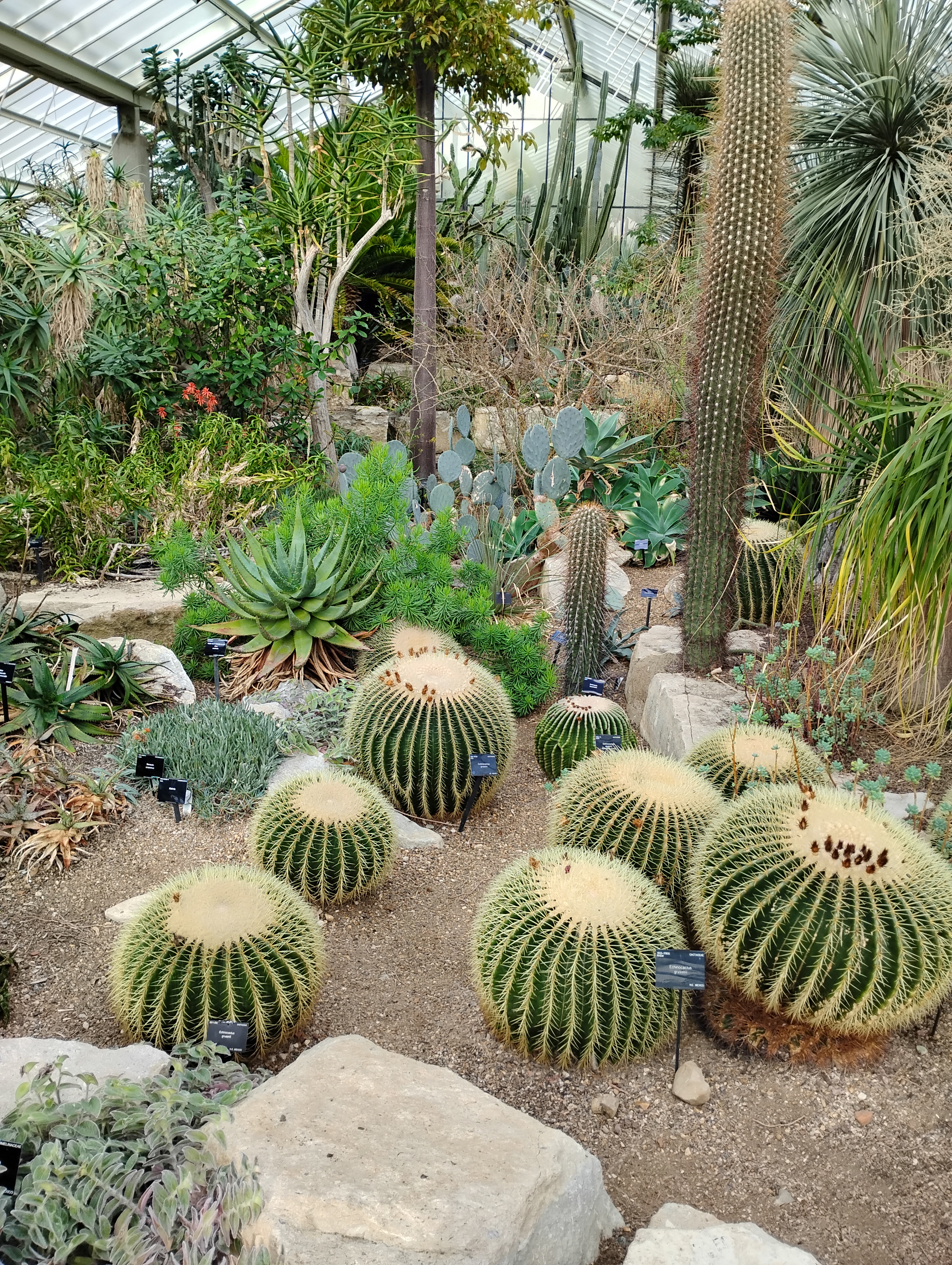
Yesterday we wandered through Kew Gardens, taking 3 or 4 hours to explore the Temperate House, the Princess of Wales Conservatory, the Treetop Walk, stopping to read the identification markers on the trees: Turner’s Oak, a huge Pinus contorta (ours!), chestnuts, English Oaks, Corsican pines,any of them filled with birds: magpies, Eurasian jays, and even brilliant green parakeets. I was last at Kew in 1976 and wonder if I am remembering things in a dreamy haze because I didn’t see the western red cedars I recall (and touched in honour of Emily Carr who’d also sought them out). This was a bus ride from where I lived in Wimbledon and I came on my days off, visiting the gardens by day and then buying cheap theatre tickets in the gods for the evenings. I once saw Glenda Jackson in the play Stevie, based on the life of the poet Stevie Smith (not waving but drowning). And today we begin the long journey home.

postcard, sky changing

We were walking back from an amble to the river, joining the crowds in sunlight, passing the ones drinking Pina coladas (I think?) from hollowed pineapples (who knew this was a thing?), tiny paper umbrellas decorating the rim, then returning to our lovely hotel so I could swim. The water isn’t warm but somehow that doesn’t matter. I was thinking of last night’s dinner, with fado, and feeling like I wasn’t really ready to leave. But tomorrow we’re going back to the UK, just for two nights in Richmond, with most of a day at Kew, where I last visited in 1976 when I lived in Wimbledon. Then home. The building with the blue tiles is across the road from us here in Porto, the scrap of sky above them. We’ll be returning to winter.

postcard from Porto, sun setting

We pulled off on a little shoulder of the N222 as we were heading to Porto, a final look back at the Vale do Côa, Spain in the distance. The beautiful Iberian magpies kept rising from the grassy edges of the road. Through the villages devoted to wine, vineyards planted on every hill above the Douro River, through olive groves, past tiny chapels perched on the very tops of mountains, round dovecotes, elegant quintas. We handed back the rental car and came downtown to the same hotel where we stayed last year and they gave us the same suite, the soft colours so welcoming, the feral cats sunning themselves on the sloping roof next door.

Tonight it’s dinner and fado. Wish you were here.

xxx

postcard from Pocinho

We’d thought we might take the Miradouro train from Pocinho to Pinhao today, our last day in Vila Nova de Foz Coa. It takes about an hour and we thought we would have lunch, then come back. But then John read that there were labour issues affecting rail service and it would be just our luck to find ourselves stranded in Pinhao, suitcases (and rental car) back in Foz Coa. So we drove out to Pocinho, on the high road, N102, with the mountains like beautiful textured quilts: vineyards turning red and gold, olive groves silvery green, almond orchards tawny. And we found the pretty little station with its huge iron scales for weighing…something. A man was checking to see if the newly- varnished bench was dry. Swallows swooped in the damp air. It was a train trip not taken, small regret riding back in the car with us to Foz Coa.

Note: I know there should be diacritics on these place names but my phone is too jumpy and temperamental for me to apply them.

postcard, Ribeira de Piscos

This is the Coa River, just near where Ribeira de Piscos enters it. Our guide was Antonio who knew the birds, the long histories of olive cultivation, almonds, who pointed out the shepherd on the other side of the river, the sound of bells ringing over the water. The entwined horses were beautiful on their warm rock, still affectionate after 20,000 years.

And when I asked if I could see the meanders, not usually part of the tour, he led me up a hill, over rough rock, to a brown piece of schist, the faint delicate lines etching water, one set meeting another. Turn and look, he said, and there below us, Ribeira de Piscos entering the Coa. Wish you were here too, 20,000 years earlier, or later, no matter. Horses in sunlight, the sound of bells, a narrow creek finding a river, tiny bee orchids in bloom everywhere after the rain.

postcard: Penascosa

This won’t look like much because honestly you have to learn to look at these images incised or pecked or abraded into rock something like 22,000 years ago on the banks of the Coa River. This one, horses and goats, has intrigued me for a year, since I first saw it in the Jean Clottes Cave Art book, a visual museum of rock art. This is rock 6 at Penascosa. Reader, I cried. The perfect curve of the horse’s rump, its lovely face. We had the best guide, Barbara, and one fellow explorer, Maria (from Belgium), for two tours, Canada do Inferno and Penascosa. Rain was sporadic; lightning too. Tomorrow we go on a 3 hour adventure to a 3rd site.

Reader, have I waited too long? When I saw the current work site where archaeologists are looking for more examples of incised portable art, I wanted nothing more than to drop everything to live near this river and feel the gaze of the horses, smell the wild lavender, hear the wild distant thunder. Wish you were here.

xxx

postcard, beneath churchbells

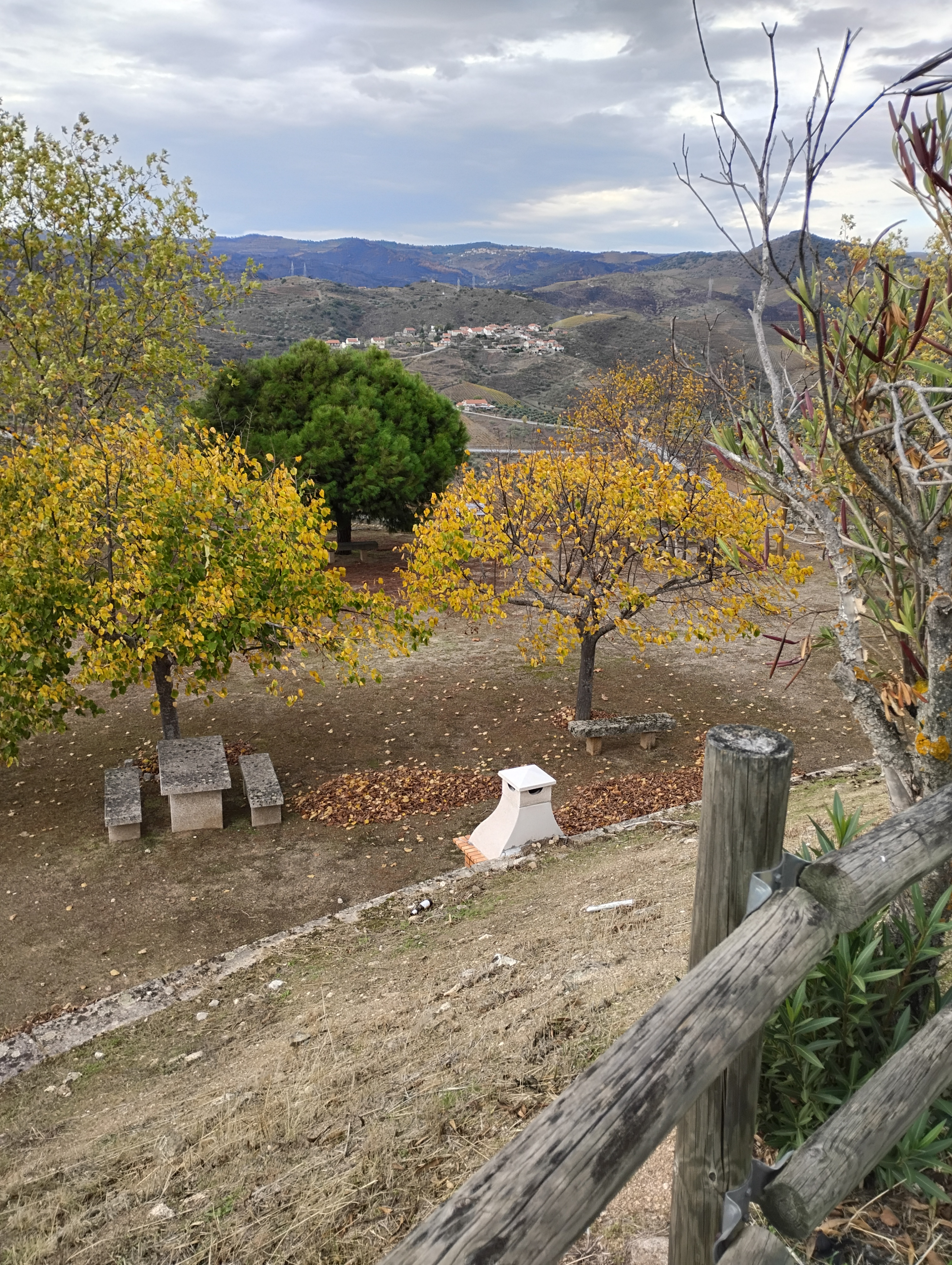
We’d hoped to drive to Faia Brava to walk ( and hopefully encounter wild horses) but dear recipient of this postcard, the world has changed. No one navigates by maps any longer and we declined GPS in our rental car (because we don’t know how to use it). Any maps we’ve found are profoundly useless. Nothing to scale, roads not shown. So instead we found ourselves on a little winding road to Chãs. Up, and up, and up: past a barn built of schist, its back wall the hill itself, past wild fig and changing vines, until we came to a little miradouro overlooking a wide beautiful plain surrounded by hills crowned with little villages. Above us, the bells of the Chãs church, or one anyway of the two in the village, rang for 3 pm. And it was time to return.

xxx

postcard from Vila Nova de Foz Coa

This is the view from the museum in Foz Coa where we are spending a week in a landscape so breathtakingly beautiful that I keep wiping tears from my eyes. I have been reading about this area for a year. Tomorrow we will visit the Paleolithic engravings at Penascosa and this afternoon we’ll drive to Mazouca to see the single horse engraving. And oh the wines! They taste of where we are — the air, the schist, the olive trees shimmering in the light. When John went out for bread this morning, a golden dog was sleeping on the cobbles and old men talked at a table over early glasses of Port with their coffee. Wish you were here. xxx