a publishing history, with asides (third instalment)

21st century, second decade

Sandcut Beach

My parents died at the beginning of the second decade of the new century, a year apart to the day. Several close friends died. My sons married their sweethearts. (My daughter married hers a few weeks ago!) Every day held sorrow and joy. And also a sense of possibilities for my long-held interest in my family’s history. After my father’s death, I took home the small hoard of papers and photographs he’d kept to himself. I don’t know exactly why he was reluctant to share the materials, or to pursue answers to questions–the ones I had and surely ones he had too? And a year later, after my mother’s death, I felt the uneasy sense that I was now the family matriarch, the one responsible for keeping the lines of kinship clear. They were not clear. There were half-stories, careless genealogies. In retrospect, I see that much of the research and writing I did during this decade was in service to these histories.

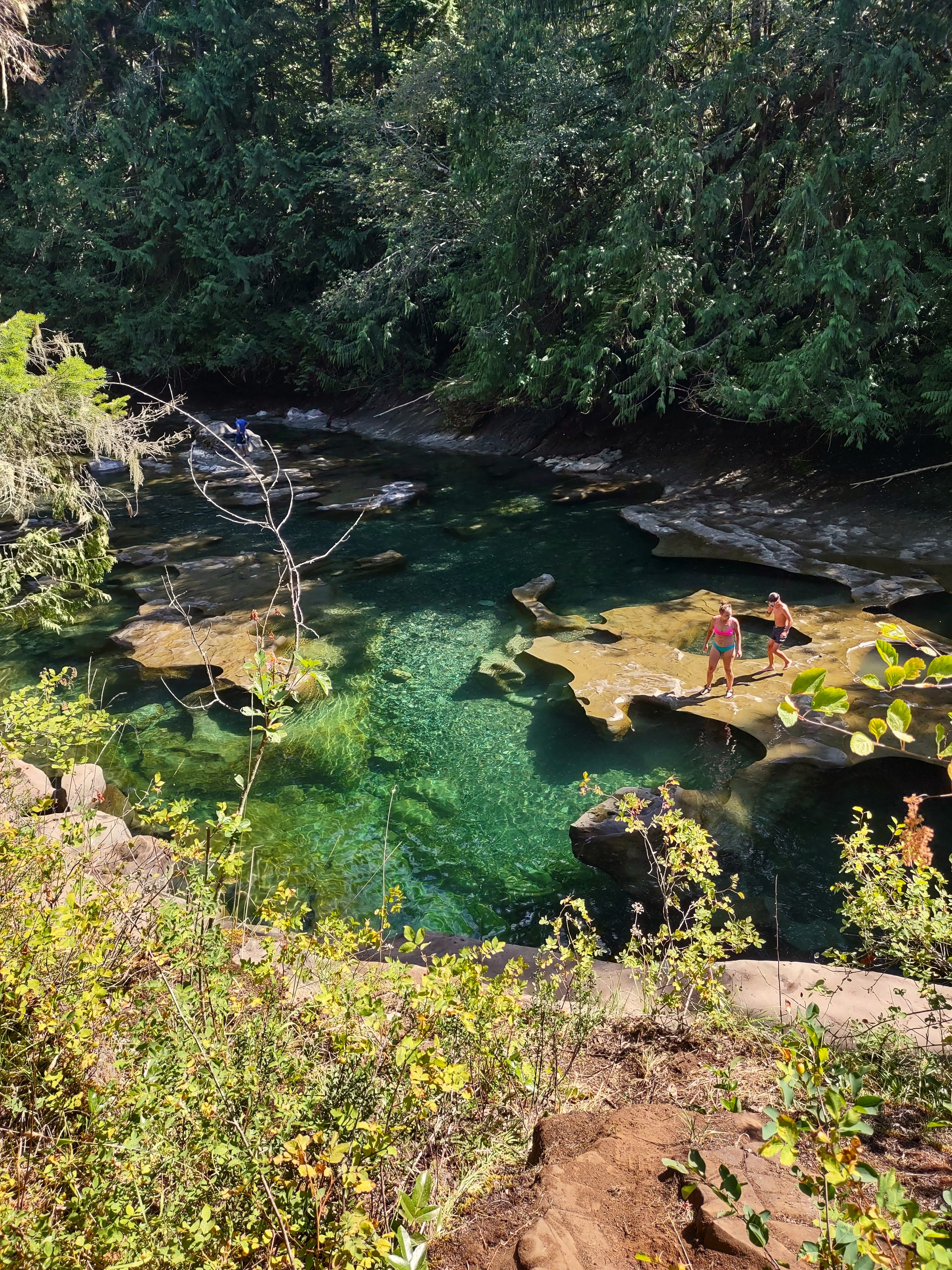
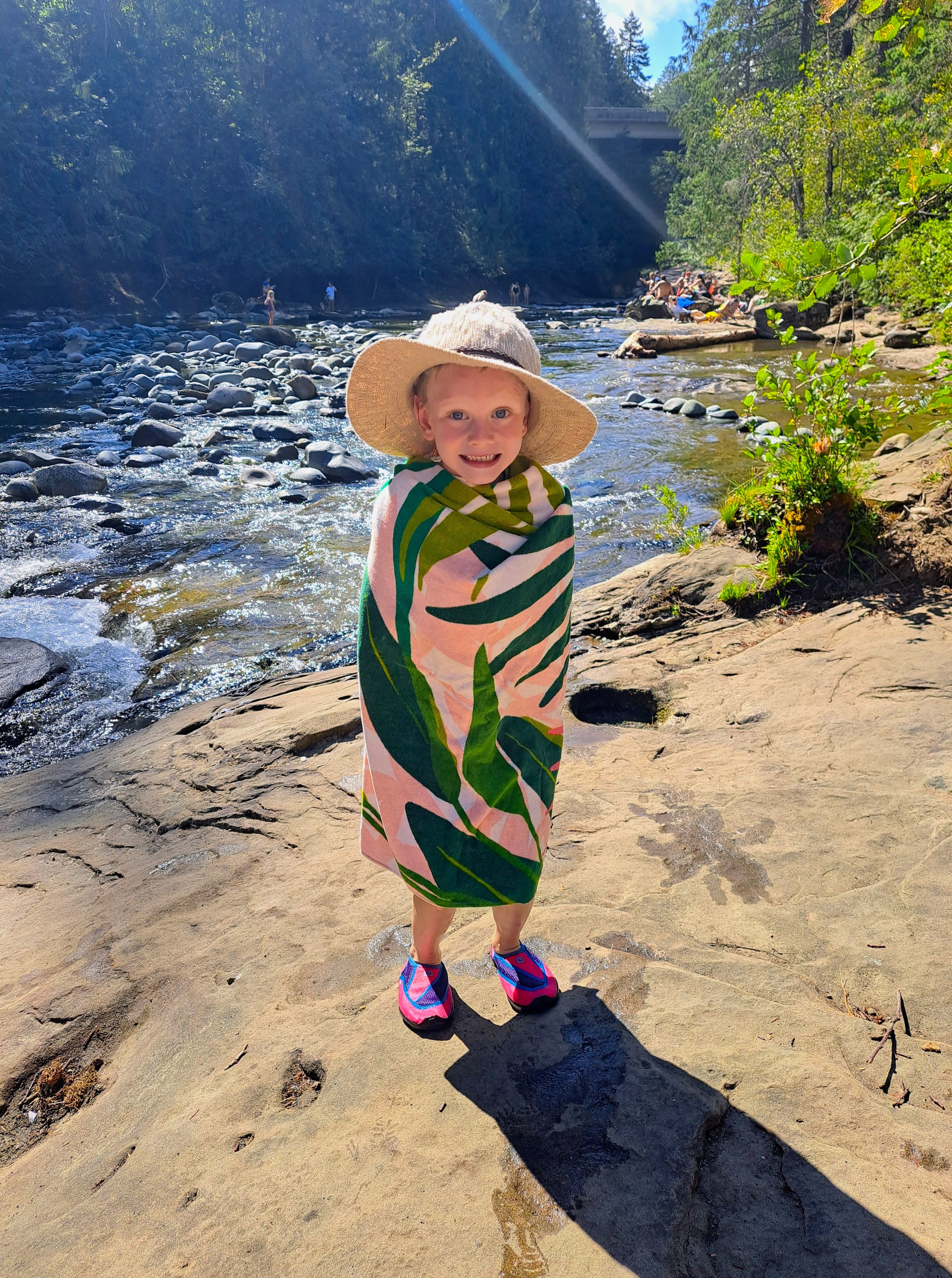
I’ve always loved the literary novella. Without ever really intending to, I’ve built up a nice collection and have read many more, via library or generous friends. Inishbream was a sort of accidental novella, beginning as it did as a linked group of prose poems, eventually drawn out and given a structure. I loved the possibilities of the form, how it could hold so much in such a hermetic shape. A year or two after The Age of Water Lilies was published, I was invited to a book club to talk with members who’d just read it. I always enjoy these occasions. During our time together, one woman asked what happened to Grace after the novel ended. Good question. Grace was born to a single mother in the spring of 1915. She is sort of tangential to the narrative. But the more I thought about her, the more I wondered too. I began to write Winter Wren to find out. I think I knew from the beginning that the book would be a novella. I put Grace in a cabin I’d always thought I’d like to live in, a cabin I first saw as a teenager, on a beach west of Sooke, B.C. (It’s the one above the waterfall in the photograph at the beginning of this post.) She was in her late 50s, an artist trying to paint the view at dusk. I wanted to write about the 1970s—the novella takes place in 1974, an interesting time for ceramics in B.C. (Grace’s love interest is a potter in the tradition of those who studied with Bernard Leach in Cornwall and then returned to Canada), for museums where the salvage paradigm was part of the ethos, and perhaps the last possible time for Grace to meet one of the late 19th c-early 20th c artifact collectors.

winter wren

But you know already what I’m going to say: I sent Winter Wren to dozens of publishers and all of them rejected it. To make a long story short, my dear friend Anik See was visiting enroute from Dawson City to the Netherlands and we shared similar stories about novellas we’d written. We decided to begin a micropress to showcase the form and we decided to begin with mine. Our rationale was this: if our endeavour didn’t work, then I would be disappointed, sure, but at least it would only be me and not someone else. I could shake it off, poof, and move on. (Ha!) Anik designed the book, I photographed a pottery dish with a length of scouring rush (it figures in the book), and we found a really good printer in Victoria. And you know, we sold our first print run of 250 copies within weeks and we reprinted. I still get orders for it. We went on to publish 4 more novellas and we are very proud of Fish Gotta Swim Editions. Our latest is Anik’s Cabin Fever.

I’ve been to the small Vancouver Island beach near Jordan River where Theresa Kishkan’s novella Winter Wren (Fish Gotta Swim Editions) is set; I’ve seen the waterfall that tumbles over sandstone onto the shingle just below, and the solitary cabin facing south and west, surrounded by salal. Winter Wren tells one possible story from the many that cabin could tell. (Michael Hayward, Geist)

After I finished writing Winter Wren, I wrote another novella, Patrin, and it was published (beautifully) by Mona Fertig’s Mother Tongue Publishing in 2015 and then in French by Marchand de Feuilles in 2018. I also wrote a long essay, “Euclid’s Orchard”, about quilting, mathematics, coyote music, apple trees, and love; and when Mona showed interest in publishing a collection of my essays, I gathered together a group. Eulid’s Orchard & Other Essays was published in 2017 and was shortlisted for the Hubert Evans Award.

Each image is a perfect crystallization of a detail, gesturing toward a truth much larger than the tiny pinpoint of its composition. Near Victoria, she recounts an exquisite memory of “an abandoned house completely knitted into place by honeysuckle and roses” (p. 101). Near Drumheller, she sings the prairie: “turn, turn, bend the song to the roadside plants … free verse composed of craneflies, dragonflies, bluebottles, broad-bodies leaf beetles, greasewood and cocklebur” (p. 61). And near her home, she concludes with the cries of coyotes: “lilting joyous youngsters unaware that a life is anything other than the moment in the moonlight, fresh meat in their stomachs, the old trees with a few apples and pears too small and green for any living things to be interested in this early in the season” (p. 155). (Catriona Sandilands, The British Columbia Review)

An aside: Mona Fertig and her Mother Tongue Publishing enterprise deserve gratitude from writers everywhere for the beauty of the books and the huge effort Mona put into designing them, editing them, bringing them into the world with sparkling wine and flowers, arranging public events for the writers, and being the kind of publisher writers dream of. I’d have published with her forever and was sad when she announced her retirement but also glad for her because she’s been able to return to her own writing projects. She did everything that bigger publishers did and she did it with joy. (She’s the one on the left, with the big smile.)

at-the-book-prizes

Novellas, novellas. I wrote The Weight of the Heart as a way to lament the gaps in my own education in the 1970s when the instructor of my Canadian literature course told me not to bother writing about Sheila Watson and Ethel Wilson, saying they were minor, and the former was barely coherent. I wanted to celebrate these two literary cartographers of our province and to highlight the importance of their work. I also wanted to spend time, real time and imaginatively, in the Thompson Canyon and the dry Interior of B.C. Palimpsest Press published The Weight of the Heart in the spring of 2020, just as most publishers and some writers were required to pivot to a virtual presence because of the pandemic. I wish I’d been better at this, though we still had such a slow internet connection—we live in a rural area– that even if I had been able to Zoom more effectively, our bandwidth wouldn’t have allowed me to participate much. (We were able to upgrade a bit later.)

The Weight of the Heart also finds in Wilson’s and Watson’s writing an experimental style and a mode of consolation. Like Wilson’s independent protagonists, the narrator discovers her autonomy and grit in the landscape she travels. Watson’s spectral figures and interest in sacred rituals resound in the symbolic scenes of almost drowning in which the narrator is saved by her brother’s mysterious presence and in Kishkan’s invocation of Egyptian burial rites as a refrain throughout. Most obviously, the double hook of Watson’s title recurs in the dualities throughout the novel—in the two rivers, in twin foals (the colt unfortunately lost in birth) by a mare named Angel, and most clearly in the two siblings who are bound together in a landscape where life and death regularly meet. So, Kishkan and her narrator know where to look in Canadian fiction for a view of the British Columbian landscape that reveals these striking oppositions and their consoling unions. A unique and compelling creation in its own right, Kishkan’s poetic exploration of grief lives up to its literary precursors. (Kait Pinder, the Malahat Review)

I wrote another novella in this decade, begun perhaps in the middle, put aside, but finished in 2020, during the long lonely weeks of the pandemic when I was missing my family and wondering if we would ever get together again for our summer meals, swims, and talks late into the night by a campfire. I used Virginia Woolf’s Mrs. Dalloway as a template, following the main character through a day of preparations for a party. There are shadows and owl voices in the woods and an unexpected guest coming up the driveway at dusk, carrying a knife. I tried to find ways to present the material innovatively, with sections of call and response, lists, and the music of an oud. I called it The Occasions. I don’t know if it will ever be published.

Another aside: I am lucky in life and love if not in publishing. And I wonder how many writers have a husband who is also a letterpress printer and who offers to make keepsakes to celebrate new books? For the past ten years or so, John has printed beautiful objects, some of them embellished by me, to give away at book launches and to provide local book stores with so they can tuck a keepsake into the books of mine that they sell. I have a few remaining of some of these and if you want to order a book from me, I can include one for you.

keepsakes remaining

At the beginning of this instalment, I wrote that I was trying to untangle the knots of family history and genealogy. Some of this work resulted in essays in Euclid’s Orchard but I wasn’t finished and kept on writing. I’d also had a health issue in 2016 that resulted in many tests, half-diagnoses, fearful assessments (though it all worked out well), and I also wrote about those things against the backdrop of all I loved: my family, the rivers of this province, textile work (which is always a way of meditating for me, sewing myself in and out of mysteries, riddles), the countries my grandparents left for new lives in Canada, and more. These became Blue Portugal & Other Essays, published with care and generosity by the University of Alberta Press in 2022. It received SUCH good reviews.

In Blue Portugal the essays’ themes are allowed to slip their boundaries; a topic addressed in one essay recurs in later essays, a recognition, perhaps, that thoughts and interests develop over time, shifting slightly as they are put in the company of other thoughts, are seen from different perspectives. The essays in Blue Portugal seem to talk to each other; they interlace in interesting and thought-provoking ways. The book is a fine example of the personal essay at its best. (Michael Hayward, The British Columbia Review)

It was a book that others noticed, gifted to friends, and reading it now, I am sort of surprised that I was led into some of the essays so mysteriously. A voice in the night, murmuring, The river door. Whose voice? I only know I took it to heart.

To those of us who’ve been following Theresa Kishkan on her blog for many years, the preoccupations of her latest book, the collection Blue Portugal & Other Essays, will be familiar, the quilts, the homesteads, the memories, the blue. But it’s the stunning craftsmanship of the book, the fascinating threads that weave the pieces together and also recur throughout the text, that make this book such a pleasure to discover. How quilting squares are analogous to the rectangles from which, one by one, Kishkan and her husband literally constructed their home on BC’s Sechelt Peninsula, and the blueprints, and the blues of dye, and of veins, and of rivers, and of how one thing turns into another—how? How does a body get old? How do children grow? How does a family tree sprout so many new branches? And from where did it all begin, Kishkan going back to seek her parents’ nebulous roots in the Czech Republic and Ukraine, in a 1917 map of lots in Drumheller, AB, in everything that was lost in the Spanish Flu, and how we’re connected to everything our ancestors lived through. (Kerry Clare, picklemethis.com)

And now? Now? 4 years into the 3rd decade of the century, I’ve completed another collection of essays. The centrepiece is a long postmortem and reassessment of a relationship I had with a painter when I was 23 years old. My walls are hung with some of his paintings, portraits of me among them, and I attempt to reclaim the gaze by entering into a daily conversation with one particular portrait hung in a stairwell; she is one of the first things I see each morning as I come down to the kitchen. There are other essays in the collection that meditate on war, climate change, injury and recovery, swimming and Herakleitos, and the nature of love. I’ve begun the long process of trying to find a publisher (my last publisher wasn’t interested, feeling perhaps that the collection is too personal and potentially risky in terms of sexual politics). As I write, it’s been rejected by 4 publishers and is currently awaiting decisions by 6 more. I’m also about halfway through writing a novel set in a small fishing village called Easthope and in the city of Lviv, in western Ukraine. I began the novel 4 years ago, just home from a trip to Ukraine, and set it aside to complete editorial work on Blue Portugal. And then the Russians invaded Ukraine and I couldn’t imagine ever writing about Lviv. But I decided that I’d stay with my original intention and setting— 2015—and write to set down what I love about both places.

And now in a hurry just
pack, always, each day,
and go breathless, go to Lvov,
after all it exists, quiet and pure as
as a peach. It is everywhere.

–Adam Zagajewski, trans. Renata Gorezynski. The poet used a variant for his native city which has known many administrations since it was first established in the 5th century and is currently known as Lviv

It may seem that I am a bit cranky about publishing in the 21st century but I have to say that it’s always the end point in writing for me. I began to write with the sense that the process was complete when the piece found a place in the larger world. I don’t begin a work with any idea of what might happen when I’ve finished, though. Not yet. I live in the language, the world of the writing, and when I come up for air, it’s then that I realize that I have no idea if the work will ever find a readership. I am too many things that are not what the current world wants or needs. Who wants to read about a fishing village or a party under fairy lights in a garden on the edge of the world or eye injury or indigo dye or the musings of an aging grandmother? A woman married for 45 years. I know some people do but maybe not enough of them. Enough of you, I mean. But I have some years left and those will find me at my desk, finding a way to map out the terrain I dream about, yearn for, to find ways to knit together strands of music, roots of family trees, and real trees too, embellished with salmon bones, the beautiful holdfasts of bull kelp and bladderwrack (the tired images scorned by A.F. Moritz all those years ago). There’s a little quote from the writing of the early naturalist and advocate for wilderness, John Muir: “When we try to pick out anything by itself, we find it hitched to everything else in the Universe.” I keep this in my mind and heart as a mantra. I don’t know how this might be worked into a synopsis or query letter or proposal but it keeps me anchored, heldfast, to what I want to do in my life. Everything else is a bonus.

holdfast

a publishing history, with asides (second instalment)

A new century, the first decade

horses leading me into novel

When I’d finished writing Sisters of Grass, I didn’t know quite what to do. The publisher of Red Laredo Boots felt it was between readerships—teen and adult. I sent to a couple of the bigger publishing houses and had quick rejections, one editor telling me that I was simply not ready for Harper Collins yet. Sometimes, looking for something else, I find an old notebook with lists I’d made of publishers sent to and their response. 20 rejections. Or 25. Some silences, though fewer of those in the beginning than now. The current fashion seems to be to tell writers that if they don’t hear within 3 months, or 6, to consider the manuscript has been rejected. This seems like such an abrogation of common courtesy. An email takes a few minutes. Surely we deserve at least this? I thought I’d try to find a literary agent who might be able to represent me because I wasn’t– I’m still not—a very good advocate for my own work. Several rejected me outright but one wondered if she was right in assuming that my name was First Nations, in which case she thought she could do something with my book. I didn’t pursue that. I packaged up the manuscript and sent it to several smaller publishers. I remember receiving an email from Laurel Boone, who was then fiction editor at Goose Lane Editions, telling me that there were many things she liked about the novel but that she felt there were missed opportunities with the two narrative perspectives, and if I agreed with her and made some revisions, she would be happy to look at the manuscript again. Sometimes an editor’s comments make no sense but hers struck a chord and I opened a new file, inspired again by Jack Hodgins, and retyped, added a formal dimension to both separate and connect the two narratives. When I’d finished, I sent Laurel the manuscript and she immediately accepted it with such enthusiasm that I floated through the next few days. Working with her and the team at Goose Lane was wonderful. I loved Julie Scriver’s cover design. And when Susanne Alexander phoned to say that they would be interested in another book, I told her about Inishbream. Although of course it had been published the year before, the print run was very small and all copies were quickly sold. At that time, Goose Lane published novellas in a small format ideally suited to the form and after discussion with the Barbarian Press, Inishbream was accepted, along with some of John DePol’s images for the cover and frontispiece.

Kishkan’s prose is clearly that of a poet, but it’s restrained in service to the narrative – rich and evocative, but never overwrought. Sisters of Grass is beautifully understated, with a quiet grace that succeeds in transforming the regional to the universal, filling the reader with a sense of the mysteries of the world, and humanity, that can never fully be resolved. (Robert Wiersema, Quill and Quire)

Interesting and unexpected things happened, maybe the sweetest being the man who owned the bookstore in Merritt telling me (after my children held up my book in the store and told him I’d written it) that people all over the Nicola Valley were impressed that I’d got the lineages of the horses right! I was invited to several festivals after Sisters of Grass and Inishbream were published. I remember sitting at the book table at the Vancouver Festival of Writers and having a BC publisher introduce himself. He wondered if I might be interested in publishing a collection of essays with his press. I didn’t think I had enough essays but he followed up and I realized I did. I was also finishing another novel, A Man In A Distant Field, which I’d begun after a conversation with two men in my community, one a fisherman my own age and one much older. The older man was describing what it had been like to come up to Pender Harbour as a child, in a storm, on a boat carrying seed oysters, and how his father had tied him to the gunwales so he wouldn’t wash away. I felt an intense shimmer, that’s the only word I can think of, as the story settled into my imagination. A few nights before the conversation I’d dreamed of a man curled up in the bottom of a Columbia gillnetter, the craft drifting to rest on a shore, and the two strands came together in my consciousness, turning and twining, and I wrote myself into a story echoing the middle books of the Odyssey, a poem I’ve loved since I was an undergraduate, 50 years ago. I thought I’d try again to find an agent. I wondered if I might be doing my books a disservice by not pursuing possibilities that arose: a film query, foreign sales. I did enter into a relationship with a woman who read my new manuscript, signed me, and then kept telling me the book wasn’t quite ready to send around. After a year of this, without any clear direction, she told me she’d had a brainwave: I could rewrite my novel as a sort of modern retelling of the Odyssey! I gently responded that the ancient and beautiful poem already anchored much of my narrative, the relationships subtle and implied, and I wasn’t interested in an obvious scene-for-scene equivalency. And I realized that as much as I liked her, she wasn’t going to do anything for me that I couldn’t do myself.

That book found a publisher, Dundurn, and came out in 2004, receiving a nomination for the Ethel Wilson Prize. It was also a book that inspired two generous readers to pursue possible film interest on my behalf. Nothing came of it but I was grateful for their efforts. And who knows, the novel still exists and maybe it would make a good film. I only wish Daniel Day Lewis was still considering roles.

Kishkan carries all this off masterfully in a scant 300 pages by combining the crafts of the poet and the screenwriter. There isn’t a moment in this novel when you can’t “see” something intensely, whether it’s the shining black dorsals of a pod of killer whales shadowing a cedar canoe or the wildflowers growing around a secret “Mass stone” where Irish Catholics were driven to take the sacraments in the wilds. The cadences of Irish speech, not only in the dialogue but subtly woven into the narrative, maintain the continuity of Declan O’Malley’s mood, as well as a sense of the period. Kishkan also uses a technique from classical Greek drama. A powerful sense of horrific violence informs the story, but the violent events all occur “offstage,” recounted in dialogue or as memory flashbacks. The only one that forms part of the action is the aftermath of a beating. (John Moore in the Vancouver Sun)

Oh, and that publisher who asked for the essay collection? I put one together, he accepted it, I signed a contract, received a small advance, his designer made a beautiful cover using a friend’s photograph, he advertised it in the catalogue as Forthcoming; as I waited for the edited copy, his publicist set up a book launch, and two weeks before it was to happen, after invitations had been sent out but I still hadn’t had edited copy or proofs, I read the writing on the wall, as they say, and realized the book wasn’t going to come out. My emails went unanswered. I waited until the next catalogue came out with my book listed as Recently Published and with some advice from a lawyer friend, I sent a registered letter cancelling our contract. It was a time when small publishers were experiencing difficulty and I was not unsympathetic but I also didn’t want my name to be associated with shady practises. I remember unexpectedly encountering one of the Literary Press Group sales representatives in a book store and his first words were, “Everyone is asking what happened!”

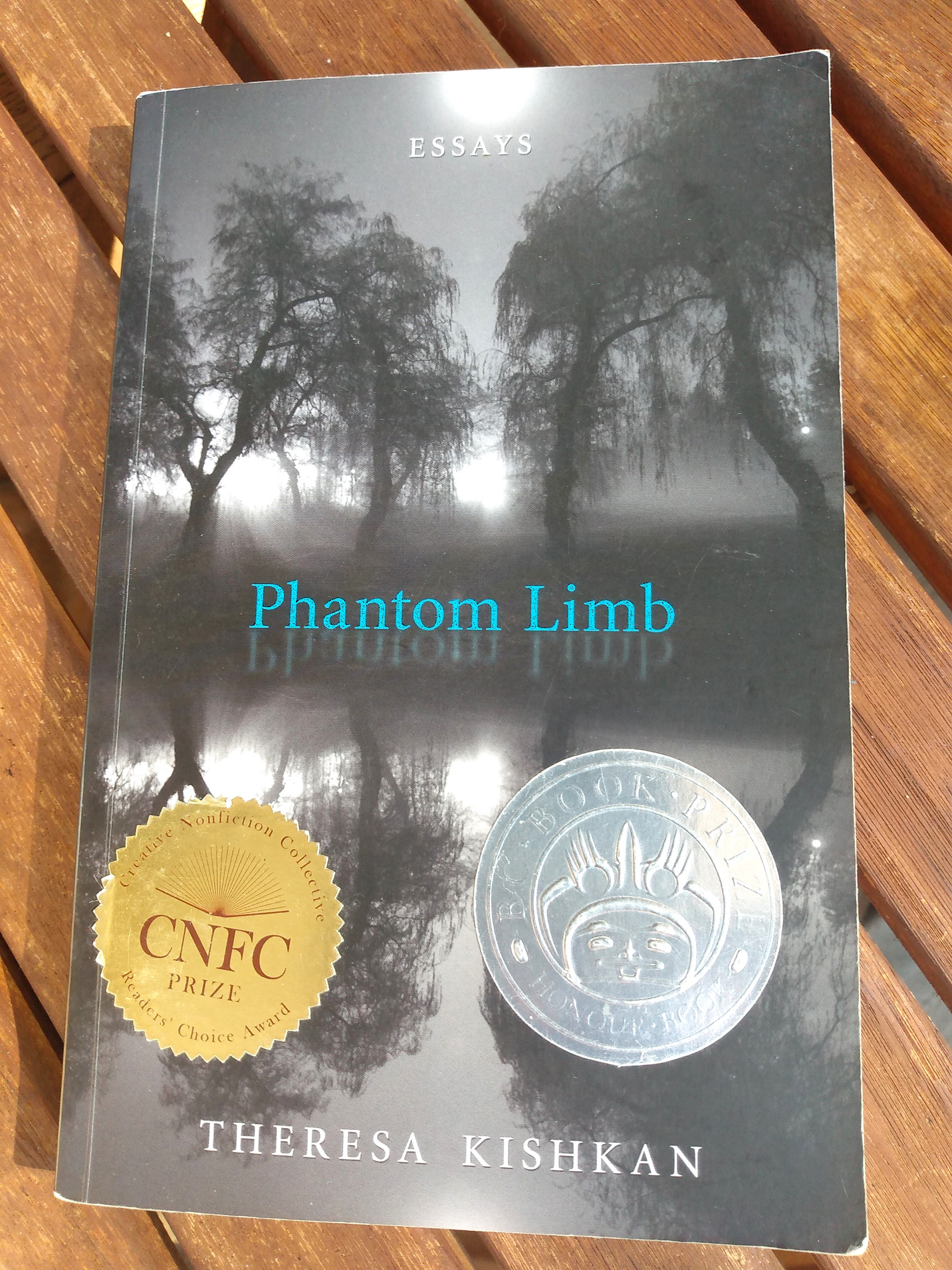
phantom limb

That book, Phantom Limb, found another publisher, Thistledown Press, and my friend let us use another of her photographs. Apart from a small tussle with the editor over my use of the c word – I finally agreed to replace it with “vulva”, a compromise for both of us—the editing was intense and respectful. The book was shortlisted for the Hubert Evans Award for Nonfiction in 2008 and received the Creative Nonfiction Collective’s inaugural Readers’ Choice Award.

Who knows where a book comes from in a writer’s hoard of memory and possible investigations. When I was spending a fair bit of time with aging parents, talking about a beloved family home near the Ross Bay Cemetery, I realized, so late, too late, that the elderly neighbours my mother befriended and offered her children to for errands, well, I realized that a couple of them were Great War widows. The photographs on their mantle-pieces, the quiet beyond quiet in their tidy homes—they represented a legacy I couldn’t have understood at the age of 6 but in around 2005, I began to try. I also realized that a man who used to come out from his long driveway with his spinster daughter, he with a shooting stick, and her with a strange crocheted hat—this was in the neighbourhood my father retired to, in Royal Oak, then still quite rural—and asked me to stop with my horse so the man could stroke his neck, were both notes in the history I was trying to examine in the novel I’d begun. He was Bert Footner, the architect of many of Walhachin’s colonial bungalows, and the daughter was Mollie, born and raised in Walhachin, a place central to my book. I wish I’d known then about Walhachin, though I could have known if I’d paid more attention to my father’s frequent discourses on family trips. Children, he’d say as we drove the Trans-Canada Highway between Cache Creek and Kamloops on our way to his family in Edmonton, there’s the remnants of Walhachin! He pointed vaguely to what looked like a few houses above the Thompson River, some remnants of wooden irrigation flumes, and it wasn’t until I was an adult, driving the same highway with my own children, that it occurred to me to turn off onto the gravel road and see what was left. The book I was writing became The Age of Water Lilies and again, it had a long road itself to publication. Those lists again! 24 rejections for this one. The Age of Water Lilies was published in 2009 by Brindle & Glass. One of the nicest things that happened was that I was invited to be part of International Women’s Day celebrations in the Soldiers Memorial Hall in Walhachin and slept in the old post-office, really a shed used as guest quarters by the woman who’d invited me. Her grandparents had been part of the second wave of settlers to the community, the ones who came during hard times in the 1930s. There was no electricity or plumbing in the little shed, and I got up in the night to pee under a star-filled sky while coyotes sang quite near. I remember that Gordon Parke of the Upper Hat Creek Valley, whose family had ranched in the Valley, as well as on the lower Bonaparte River, came to my reading and he told me I got the details right. I carried his durable praise for months.

water lilies

The title of this series of histories promises asides and here’s one: I always sent new manuscripts to previous publishers. Sometimes there was a contractual requirement to do this but it also felt like a courtesy. So if you’re wondering why I didn’t simply stick with one publisher, it’s because none of them wanted to stick with me. Maybe they had expectations that my books (or me) didn’t rise to. I don’t think I’m a diva. I enter the editing process respectfully and I meet deadlines. I do my part. I know that Sisters of Grass sold very well, had excellent reviews, and I still receive royalties. But Laurel Boone retired and the new fiction editor had other writers she wanted to work with. I have to admit that I wish for a publisher who would stay with me but as I approach 70, I think it’s unlikely it will happen.

In the first decade of the 21st century, I published 4 books and I wrote another, Mnemonic: A Book of Trees, which came out in 2011. That one is a kind of hinge in my writing life and in the way I see some changes in publishing. I received a phone call from an editor mid-decade. She wondered if there was a book I was interested in writing because she professed to love my work and wanted to guide something of mine through the channels of the company she worked for. I told her I had some ideas for a memoir and we talked at length about it. She suggested I send her a proposal which she would share with the publisher. I thought at length and submitted something. Next I received a call from the publisher, suggesting we meet for lunch. This was in Vancouver. He was very kind and had some ideas for improving my proposal, requiring it to tick a bunch of boxes. He sent me samples of killer proposals, some he’d been able to snap up and publish, others he couldn’t (because others were interested too and offered more money). I remember I came back from the lunch and talked to John about the whole thing. I remember he listened and then he asked, Is this something you actually want to do? It was a proposal, after all, not creative work. I thought and thought about it. No, I didn’t want to “make” a book with constant guidance and editorial shaping as we went along. Because that’s in truth what was being suggested and offered. My writing, their market sense. I need to say that I understand that and I read books all the time that are “made” that way and I enjoy many of them. There’s a logic for certain books: cookbooks, field guides, how-to books, scholarly studies, and so on. I know publishers need to be financially secure and many writers need to write books that are carefully adapted to markets and trends. But it’s not my modus operandi. I wonder when this became the model for the writer-publisher relationship? I see advertisements for courses that teach a writer how to write a synopsis, a proposal, a query letter. On social media, people post updates on the progress they are making with the description of their book. About 5 years ago I was finishing a collection of essays (more on this in the 3rd instalment) and I thought I’d try, once again, to interest an agent in the book. One had been circling me a little on social media and had said some nice things about my work. I sent that person a detailed description of the manuscript, knowing that they had already read one of the essays, published in Brick– a fulsome comment had been made. A response came the next day, suggesting that I visit the area of the agency’s website describing how to submit a proposal. I admit to being somewhat blindsided because I thought this was something that could be discussed over the phone or via email if the agent was interested in the description and other information I’d provided. Did I really need a proposal for a book that was already written? But the new gates, the new gatekeepers! Some of us who came of age as writers in the last century can’t find our way through.

I thought and thought about what and how I wanted to write about my life and as I began essays that I knew would accumulate and talk to one another and share common nodes, I realized I was writing a kind of literary arboretum. (In another life I’d have been a botanist.) I’d grown up among trees, influenced by them, shaded by them, given sustenance figurative and literally by them, and so I followed the trail leading into forests, orchards, lumber yards (an important part of the section about building a house with John), mythologies, and family relationships. I thought about the architecture of memory, of love, and when I was finished, I had Mnemonic: A Book of Trees, a book-length grove of connected essays. I offered it first to the publisher who’d taken me to lunch. He said nice things but ultimately it wasn’t for him. And then I began sending it out. Many of the individual essays had been published, one of them won the New Quarterly’s Edna Staebler Personal Essay Contest, one of them appeared in a journal in the Czech Republic focused on the work of scholars and others (I am definitely one of the others) who participated in a conference in Brno in 2010. As the year turned into the next one, the manuscript was taken by Goose Lane Editions and published in early fall of 2011.

The essay reaches its fullest flower in mature hands. Kishkan’s are practiced and confident, and her prose, while fresh and smooth, also accommodates the knottiness of genuine thought. Mnemonic may seem an easy read, but it richly rewards revisiting. If this book were a tree, it would have deep and thirsty roots; broad and elegant branches; its leaves would always be tipping toward the light; and its fruit would be tangy and sweet. (Susan Olding, The Malahat Review)

The next spring John and I were back in the CR, teaching a course in Brno and giving readings around the country. On our final night in Brno, he received an email from his publisher to tell him that his latest poetry book, crawlspace, had just been shortlisted for the Dorothy Livesay Prize (which it subsequently won). We celebrated that evening with friends over a delicious Czech dinner. Ok, I admit I was a little disappointed not to have received a similar message about Mnemonic but when we arrived in London the next afternoon, there was an email waiting from Goose Lane to say my book my shortlisted for the Hubert Evans Award. I remember we toasted our luck in a Greek restaurant in Bloomsbury where we were staying. And no, I didn’t win that one, though a book about trees did win, published by the man who’d taken me to lunch.

mnemonic

to be continued…

a publishing history, with asides

the 1970s, 1980s, 1990s

Now that I am approaching 70, I am going to take some time to set down details, histories, if for no other reason than to leave a record. One of these histories, one that I find myself increasingly interested in, is my own publishing history. Such as it is. It’s a tale that spans two centuries. Two, no, three technologies. And it recognizes some shifts in both the writing life and the publishing industry. Some of them are ones I can adapt to and embrace. Some of them feel alienating. I joke that I’m aging out of the system but maybe it’s actually the truth.

I began to write in a serious and committed way when I was 20, although I can’t really remember a time when I didn’t try to puzzle my way through things in my life with words. When I was around 10, I remember feeling such an intense drive to record how I felt on the long summer days in the neighbourhood my family lived in near the Gorge in Victoria. I’d walk or ride my bike to the public dock at Gorge Narrows near the foot of Tillicum Road, I’d explore Colquitz Creek, and on Saturdays I’d take 2 buses to the Victoria Riding Academy on Cedar Hill X Road to spend the day. An hour of that day was a riding lesson but I also cleaned stalls, swept the barn, helped to feed the horses whose faces I loved, whose flanks I brushed, whose feet I cleaned with a hoof pick. I wanted to write about this and made paragraph after paragraph on lined paper left over from the school term and then stopped, because I realized I didn’t have an idea of how to shape my feelings into something coherent. I don’t believe I ever really stopped trying, though, and by the time I was 19 or 20, I’d figured out, by reading, something about form. When I was in grade 11, a supportive teacher loaned me books to read. You’ll like this, he promised, handing me Seamus Heaney’s Death of a Naturalist or Virginia Woolf’s Mrs. Dalloway. I don’t think I noticed that one book was poetry and the other prose. Under my teacher’s guidance, I wrote constantly and without my knowing, he submitted one of my poems to a national student anthology. It was accepted and eventually (though much delayed; keep this in mind because it’s a common note in my publishing history) the anthology came out. I remember my teacher coming to my home and telling me and my baffled parents that my poem had been cited by the judges as one of their favourites. The judges? I don’t remember all of them but Leonard Cohen was one.

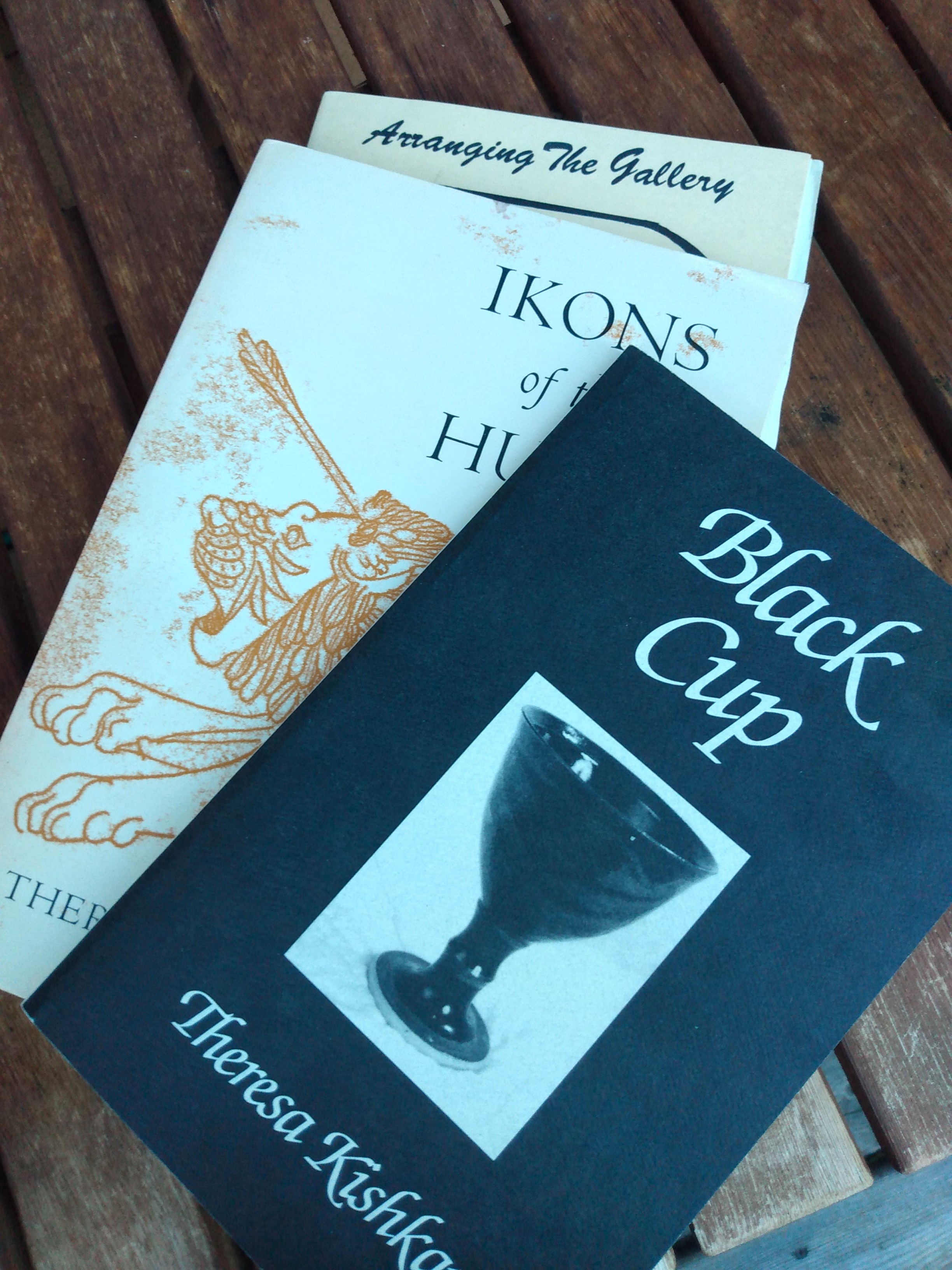
I took some writing courses during my university years. I can’t say that the classes themselves were particularly useful–then, as now, I resisted the idea that sharing my drafts with others was necessary; I felt my writing process was a private one and I’d figure things out for myself–but I did have some good instructors who became mentors and friends. One of them, Charles Lillard, suggested to me that I probably had enough poems for a chapbook and why didn’t I send a manuscript to Fred Cogswell at Fiddlehead Poetry Books. I did, in the spring of 1976, when I was 21 years old, and he wrote back within a couple of weeks to say he liked the poems and would publish the book that same year. There wasn’t a contract. There was no editing. And when Arranging the Gallery came out as Fiddlehead Poetry Book 197, I was mortified by the cover design and I also realized that somehow a whole poem had been muddled in the typesetting (I hadn’t received proofs either!). Fred was apologetic and arranged for a page to be reprinted with a gummed edge and he undertook to send the new pages to those who’d ordered copies. There were a few reviews, mostly positive. On the one hand, it didn’t seem all that difficult to publish a small book. On the other, I didn’t know enough to own the parts of the process I could have been involved with. One of these artless states of being would come to haunt me when I published my second book.

A year later, Robin Skelton, who was the poetry editor at Sono Nis Press after Dick Morriss took it over from J. Michael Yates, asked for a manuscript. I gathered together what I had, including some of the poems from Arranging the Gallery (which had sort of sunk like a stone), and Robin and I organized the sections over glasses of Jameson whiskey in his wonderful study with its tiled fireplace and big chairs. Ikons of the Hunt was the title we agreed on and Sylvia Skelton helped with the copy-editing. I was going away for a year, to Ireland, but I was assured the page proofs could be mailed to me there. Robin had an idea for a cover (after I resisted his suggestion of a nude drawing me of myself), a solarized detail from an Assyrian wall panel. He would write the cover copy.

I remember reading the proofs by daylight and candlelight at the table in the cottage I lived in on a small island off the Connemara coast, returning them, and some months later, in early fall of 1978, receiving a few copies by mail. I sent one to Seamus Heaney, who’d generously given me permission to use some lines of his as an epigram, and I gave one to the fisherman I’d fallen in love with. What he made of it is still a mystery to me.

poetry books

I returned to Canada from Ireland, intending to stay for only a short period. I’d written prose sketches of my life on the island and a friend invited me to her writing group to read some of them. There were so many questions about the island and what the prose sketches left out that I simply began to fill in the gaps and that became a novella, Inishbream. More on that in a moment. My poetry book was reviewed well, apart from one really terrible one in Books in Canada, written by A.F. Moritz. I remember that I picked up a copy of the magazine at a shop on lower Fort Street and began to read it on my bus ride home. One paragraph in, I was horrified. I wanted to hide. My face was on fire. I imagined every person on the bus could tell my book was pathetic and they were all were looking away, simply to be kind.

Kishkan’s lkons of the Hunt should be
judged by the shameless puffery of the
publisher’s blurb on the cover. She pre-
sents, we are told, “a universe dominated
by age-old dreams and passions.” In the
book we find the stock-in-trade of today’s
most boring and ubiquitous magazine verse:
a flat voice, facile myth-making. a lot of
moons and stones and bones and sea weed
and dream-fish, an easy emphasis on death,
cold, moisture, womb, mot [sic], and silence.
Kishkan supposedly reveals “an ex-
traordinary range of themes and styles.”
The book is depressingly unvaried, with
scarcely ever a change in tone, vocabulary
or any other aspect of style. There may be
several themes, but all are reduced to
monotonous vague keening. a sad-eyed
gaze, and a soft romanticism. What of the
“impressive variety of forms, from short-
lined lyrics to prose poems”? She has
several ways of arranging poems on the
page, but the differences are wholly superficial.
These poems are fundamentally identical in phrasing,
cadence, diction, and mood.

The review got worse (Books in Canada, January, 1979) but thankfully Ikons of the Hunt led my husband John Pass to me. In Victoria for a poetry reading at Open Space, he saw my photograph on the book and suggested to a mutual friend that I be invited to dinner before the reading. The rest is history, our history. Instead of returning to Ireland for good, I went for a short time to tell my fisherman that I wouldn’t be sharing the stone house he was thinking of restoring and John joined me for some travels in Ireland, Wales, England, and Paris. Over our first winter together, I took the sketches I’d written and gave them a structure. I sent the result, Inishbream, to Sono Nis but the feeling there was that I was a poet and this wasn’t poetry so they wouldn’t publish it. I tried many other publishers but no one liked it enough to take it on. In the meantime I was writing poems, slowly, because my ego had taken a bit of a beating, and eventually there were enough for a book. Sono Nis declined that manuscript too but another publisher accepted it immediately with an excited phone call to say he’d had it added to his forthcoming list after clearing the funding with the Canada Council. I never heard from him again. I’d had a baby and when John and I went out to print a birth announcement at the Barbarian Press, making an overnight of it, Crispin Elsted read Inishbream and said he would love to publish it as a private press book, illustrated with wood engravings. It wouldn’t happen just yet because the artist he had in mind for the engravings was busy but if I could be patient, he promised a beautiful treatment for my story.

I was patient for 18 years. Reader, I cannot say I always believed that Inishbream would finally see the light of day. In fact John says that the novella lurked in our house like a dark sister and I know he’s right. I had another baby and then another and somehow I lost most of my confidence in my work as a writer. That third collection of poems shape-shifted as I slowly added to it, poems about motherhood, about regret, about love. It became Black Cup and eventually Robin Skelton, now editing for Beach Holme Press, accepted it. I asked that we request cover matter from other writers, and I chose the image for the cover, though the photographer who took the shot somehow lost his focus. Remembering A.F. Moritz’s observation that, “A few years ago the world’s Kishkans were regaling us with ‘nacreous’, ‘alabaster’, and ‘diaphane’ “, I rigorously avoided such terms! In those years, I was still typing my manuscripts from handwritten drafts and I kept thinking of Inishbream, typed on yellow paper, and some nights it felt hopeless. Maybe those were the nights I had no sleep because of sick children but I recall my yearning for not only the world that inspired the novella but also a writing world that somehow included me. To be sure, there were good things that came out of the blue: a composer writing to ask for permission to set some of my poems to music, a composition that received its premiere at the Scotia Festival in 1987, sung beautifully by Rosemarie Landry. Letters from readers. A few wonderful invitations.

But I no longer had access to the lively spirit that allowed me to write poetry. There is no way to explain this but I knew it was gone. Then one summer, on a family camping trip to the Nicola Valley, I was filled with such urgency to write down every detail, to describe every moment, and to record the names and dates of those buried in the little corral of graves beside the Murray Church. This became a lyric essay, “Morning Glory”, and the experience of writing it was new and rich. I wanted to continue exploring the possibilities of the form and found myself writing constantly. The essays became Red Laredo Boots and after many rejections elsewhere, New Star Books took the manuscript, or more specifically, Terry Glavin found a place for it in his Transmontanus series.

rlb

At the very end of the 1990s, proof pages began to arrive by fax from the Barbarian Press, with the fervent hope that I could attend to them immediately as the press was inked* and ready. I’d seen some of the drawings for the engravings because the artist, John DePol, wrote to ask me about certain details. His was a clear and beautiful style, moody skies, a scene in a bar that reminded me of Jack B. Yeats. Over the 18 years that passed between Crispin reading the original Inishbream manuscript and its publication, I’d made a few changes, most of them as I transferred the text from paper to word processor, taking Jack Hodgins’s advice to think of revision as “re-visioning”. He recommended opening a new file and starting afresh, using the old manuscript as a template. I’d typed and changed, only a little, and sometimes Crispin would phone to make a case for the yellow manuscript version. And he was always right. The original was somehow true to the young woman who wrote the sketches in a notebook on a rocky island off Ireland’s west coast. I went to the Barbarian Press for a weekend to watch the binding of the Deluxe edition—the book was published in 3 states, the first quarter-bound with green Japanese silk, with covers created by John DePol; the second quarter-bound in dark green leather, with a folio of 10 proofs of wood engravings, a slipcover holding both; and a Design edition, bound by Hélène Francoeur in goat and fish leathers, housed in clamshell box with driftwood and brass elements, and including a folio of all 21 engravings. It’s an astonishingly beautiful book in these treatments and I have to say every hour of those 18 years was worth the wait.

a little stack of inishbreams

By the end of the decade, I’d written a handful of new essays, I’d published several chapbooks, one of which, Morning Glory, won the bpNichol Chapbook Award, but what truly absorbed my time and imagination was a novel, begun – as was Inishbream— as a poem, a long poem about horses, occasioned by an autumn encounter with a small herd on the Pennask Lake Road. But I began to develop another strand of narrative, one wholly fictional, and it was as though I was living two lives, one set in 1906 and one in the current moment. If it had been difficult to find a publisher for my 3rd poetry collection and for Red Laredo Boots, I was about to learn about true rejection and a certain resilient patience.

*just to clarify that the book was handset and printed letterpress, one page spread at a time, so time was of the essence. You can read a bit more about this here: http://barbarianpress.com/archives/inishbream.html

To be continued…

“at the edge of heaven” (Du Fu, via David Hinton)

moon

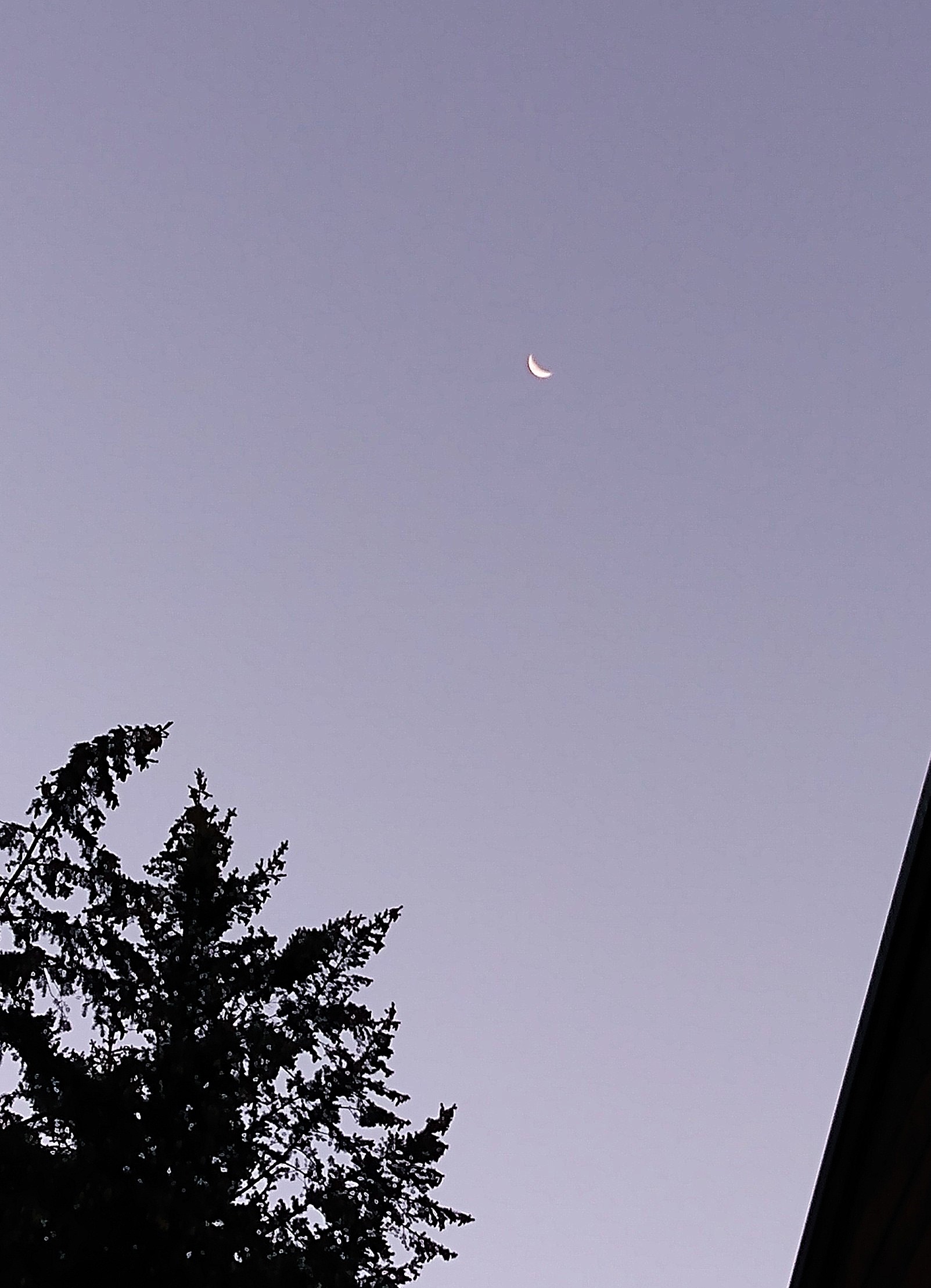
John was just leaving to meet a delivery from the first ferry from Saltery Bay at the bottom of our driveway and he called to me, There’s a beautiful little moon you should see. A tiny wine glass, tipped on its side. I thought of Du Fu (in David Hinton’s beautiful translation):

A sliver of moon lulls through clear night.
Half abandoned to sleep, lampwicks char.

Deer wander, uneasy among howling peaks,
and forests of falling leaves startle cicadas.

It was early enough for me to return to my pillow before my swim, half an hour later this morning because the thermometer read 8°. When we went down to the lake, the surface was mist, the sun not yet over the mountain, and that moon had travelled west.  In the water I almost forgot it was cold. Almost.

                              Here,
at the edge of heaven, I inhabit my absence.

Everywhere in our house there are stacks of books the grandchildren brought out to read themselves or for me to read to them. On my bedside table, The Seven Silly Eaters, The Elephant’s Child, Over In the Meadow, Twice Mice, and our old favourite, When I Was Young in the Mountains. I am growing old beneath our mountain where the moon appeared this morning like an apprehension of autumn, nearly 70 in a house filled with books and a fire burning and the lamps ready. Yesterday a bear broke the volunteer apple tree by the sliding doors, the one I thought of as a miracle, growing in rock, blossoming against all the odds. I could hear the traffic off the first ferry, my husband waiting for the delivery, and the cat curled up against me. This spring and summer I briefly forgot I lived at the edge of heaven.

“And what remained?”

mist on the inlet

I’m in Easthope again, imagining paintings in a little hidden room.

When Tessa found the little door behind the stack of canvases, only visible when the last canvas had been moved and she saw that the soft edges of a painted tree held a brass toggle, she wondered about opening it. She’d heard mice in the walls a few times and possibly—probably—she’d find their droppings, maybe chewed wires, maybe worse. But she couldn’t resist. Tentatively she pulled the toggle.
What she smelled first was turps. Wood. Peering in, she let her eyes adjust to the dimness. A small skylight overhead, one she’d never noticed because it was on the steep eastern slope of the roof, provided a little light to what was a very small storage space, tucked under the gable. It was lined with clean plywood. And it was hung with paintings, three rows of them. She stepped through the door.
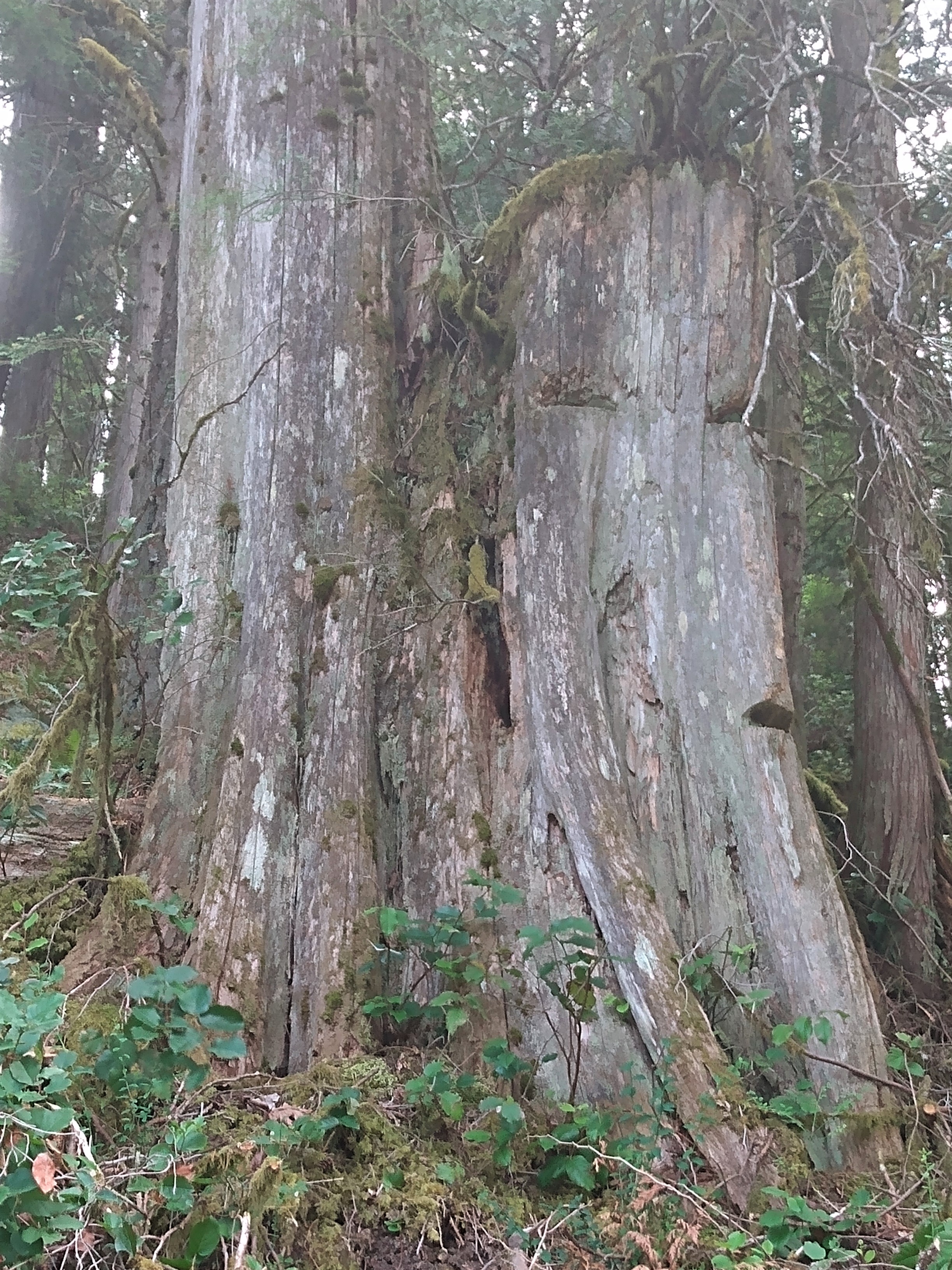
Each painting—and there were, what, 25, no, 27 of them—was of a stump. A huge stump, almost filling the canvas; its wood runnelled and lichened and sometimes green with moss. Tiny plants grew up from the flaring bases. Most of the stumps were notched with horizontal cuts, some barely visible under the lichens, carefully detailed. Against one stump, a long board with a metal tip. Against another, a long crosscut saw, rusted, with worn wooden handles. Trees—hemlock, whippy cedars, even a supple maple—sprouted from some of the stumps and around them, the newer growth, long green boughs, tall sword ferns, delicate huckleberry. She knew she’d seen some of the stumps alongside the Easthope Road. She and Marsh had even stopped once to take a photograph of one beauty. On each canvas, the lower left corner, a small jewel-like image of a tree. Tessa figured Richard had imagined each stump back to its original majesty, establishing the species from its bark or odour or any characteristic he could determine from what remained. She knew she’d seen some of the stumps alongside the Easthope Road.
And what remained? A sturdy ghost, a presence in the green woods, a reminder of what the forest had looked like before the huge trees had been felled, with considerable skill and effort, and hauled away to become houses, factories (Marsh had bought some Douglas fir beams reclaimed from a factory in Gastown to shore up the floor on the netshed), schools, windows. Together, a gallery of ghosts, hidden away, lit by their own grey quiet light. She found a light switch just to the left of the door. With more light, she could see something else, something extraordinary. Just visible through the boughs surrounding the stumps, silvery stars. No, silvery constellations. Actual constellations, because she recognized Ursa Major, Orion, the Pleiades. She called Marsh to see. This house, she told him, is full of the past, but somehow it’s alive too. Look, Marsh, look. There are even stars in these. How did he do that? I thought I’d seen every room but now there’s this one, these canvases, 27 of them. Truly beautiful work. What else will we find? I don’t even want to think about it.

old ghost

lines on an August morning

shadowy lake

This morning, swimming, I saw a trout leap straight up for flies. It passed through cloud. It disappeared into sky.

This morning, just ahead of me as I swam towards the cedars, the sky was seamless with the water.

This morning, swimming, I tried to remember a musician’s name. One I’ve listened to for years. In the middle of a backstroke: Stephen Fearing.

A love like waterBigger than the blue skyBigger than the sky

This morning the water was cool. A Steller’s jay flew from one cedar to another. Not the same jay I fed earlier on the front deck. Not that one.

This morning I thought how late it was in the season. How late. On this day in 1609, Galileo Galilei demonstrated his first telescope to Venetian lawmakers. On this day last week, our grandchildren joined us at the lake.

This morning, leaving the lake, I saw a single maple samara floating on the surface.

Note: the lines of song are from Stephen Fearing’s “Love Like Water”

redux: a summer song

stray apples

They are coming to an end, the long summer days. Already you can see that the light has changed; it’s more honeyed. This morning we swam amid the repeated dives of a kingfisher, its rattle coming from a cedar bough, then the rocks further along the lake shore. Small dragonflies were darting across the surface of the lake, blue and blue and blue.

Yesterday I made the pies I planned to, three large ones using the Merton Beauty apples and some blueberries, and those went into the freezer for winter dinners. With the last of the apples, I made a galette, adding some of the blackberries we picked the other day. Not the Himalayans but the cutleaf evergreen berries, Rubus laciniatus, that ripen a little later here. They’re spicier somehow, and firmer. We had that galette last night, with enough left for dessert tonight. It tasted of autumn, not summer. Summer is peaches and cherries and green gooseberries and golden plums. This galette was rich and dark, flavoured with candied ginger.

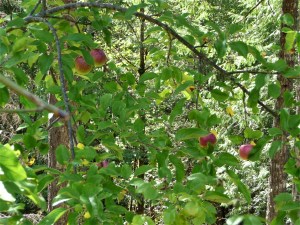
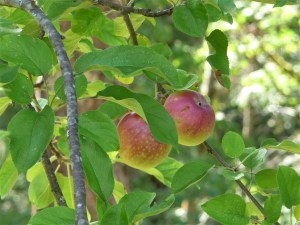
A bear wandered out from under the crabapple tree yesterday morning and when it heard our voices, it loped away down the driveway. It will be back, I know, and it’s welcome to the crabs. They’re too high for us to pick. Later in the day, a deer was standing in the cool flag iris leaves under the crab, grateful for its shade.

The long summer days. The star-filled nights. The mornings I woke to a house filled with my family, the voices of my grandchildren in the kitchen as their parents made coffee, and then the sound of small feet on the stairs as they came up to join me in my bed. There’s a still a stack of their books on my bedside table: The Gruffalo, Anna’s Secret Friend, Long Ago in the Mountains, The Amazing Bone. We read those stories over and over.

I made a large batch of pesto this afternoon, some for the freezer (those winter dinners…) and some for tonight’s supper. I was humming “September Song” as I peeled the garlic, brought in from the strings where it dried in the woodshed, stripped the basil from its stems.

But the days grow short when you reach September
When the autumn weather turns the leaves to flame
One hasn’t got time for the waiting game

It’s dark earlier these evenings. I was reading in bed last night and was surprised to see that it was only 8:00 and I needed to turn my lamp on. When you are in the middle of those long summer days, you can’t imagine them being over. When you are surrounded by the voices of your grandchildren, you can’t imagine the quiet after they leave.

Oh, the days dwindle down to a precious few
September, November
And these few precious days I’ll spend with you
These precious days I’ll spend with you

apples on the stray

“It is not down on any map; true places never are.”

For ages I’ve felt kind of indifferent about my work. Indifferent about doing much with it. In some ways I feel that my time has passed. I’ve published 16 books–poetry, essays, novels, novellas–and when I look at the little stack of them in my study, I’m very glad to have written them, to have found interested publishers and even better, interested readers. (Yesterday a woman came up to me in Sechelt to tell me she was reading Euclid’s Orchard and that she was loving it.) But the publishing possibilities have dwindled. I’ve been busy with other stuff lately and haven’t thought too deeply about what might be next. But this morning, swimming in the quiet lake with very soft drizzle misting the surface (and me), I decided I’d return to the novel I’d put away for months. I actually thought about it the other night, briefly, when we were sitting at our table on the deck of the Backeddy Pub in Egmont. I’ve always loved that boat, I told my grandchildren, pointing to the wooden cruiser back in its usual place. (For a time, it was gone and I thought maybe the restoration work had finished and the owner had headed off to far waters but judging from the tarp, maybe that’s not true.)

easthope

The novel I put aside is set in a village very like Egmont. They share a community hall, a museum, adjacency to the Skookumchuck rapids, and even a pub. But one of them is an actual place and one of them, well, remember what Melville wrote? “It is not down on any map; true places never are.” The other night, and this morning, swimming, I realized that I need to keep writing about Easthope, the village that isn’t on any map. I’ve spent 30,000 words lovingly creating a world, with characters, history, food, paintings, and it would be silly to simply leave it incomplete. The world is difficult right now, in so many ways. Last night I watched a little of the DNC stuff, including Michelle Obama’s speech, and I thought that her call for us to do something was so timely. What can we do? We can stand up for justice, we can care for one another, we can hold each other up against the tides of anger and violence, and we can record the lives of people living in remote villages, even ones that are not down on any maps.

The boat I showed my grandchildren inspired a boat in my novel. It’s not the same boat but it occupies the same place at the dock and I’ve given it, and its owner, a life I might almost have lived, in different circumstances.

Today is damp and cool, drizzle glazing the green grapes on the vines, and I’ve spent an hour in Easthope, listening to someone tinker with an engine, ravens klooking in the cedars near the Skookumchuck trailhead.

Marsh walked across to the bar and waited while his glass was refilled. One of the young men who worked in the marina came in with an armload of logs and stacked them by the fireplace. Outside, gulls swooped down to exposed starfish as the tide receded. So much was happening in the world. So much to be angry about, to fear, to obsess about during the daylight hours, scrolling through a news feed or listening to the news at 6. But here, on the edge of the peninsula, the mountains beyond soft with fog, you could forget that world and live deeply in this one. Two men struggled with a tote on the dock, trying to lift it onto the deck of a small sailboat. A woman sat on the deck of a converted wooden troller, reading – Tessa met her once in the store and learned she lived on the boat with her dog, in summers following the route that Capi Blanchet described so beautifully about in The Curve of Time, a book Tessa read her first month in Easthope because Richard left a copy in the room she now slept in, and loved. Susan said she’d tried a couple of ways of living, with men, and women, and this was the one that suited her best. She cooked in a few camps when she needed money and she knew how to take her boat’s engine apart and put it back together. A few wooden crates lined the prow, spilling over with herbs. She was wearing bright red gumboots and her dog was stretched across her feet.

a handful of memories

potholes

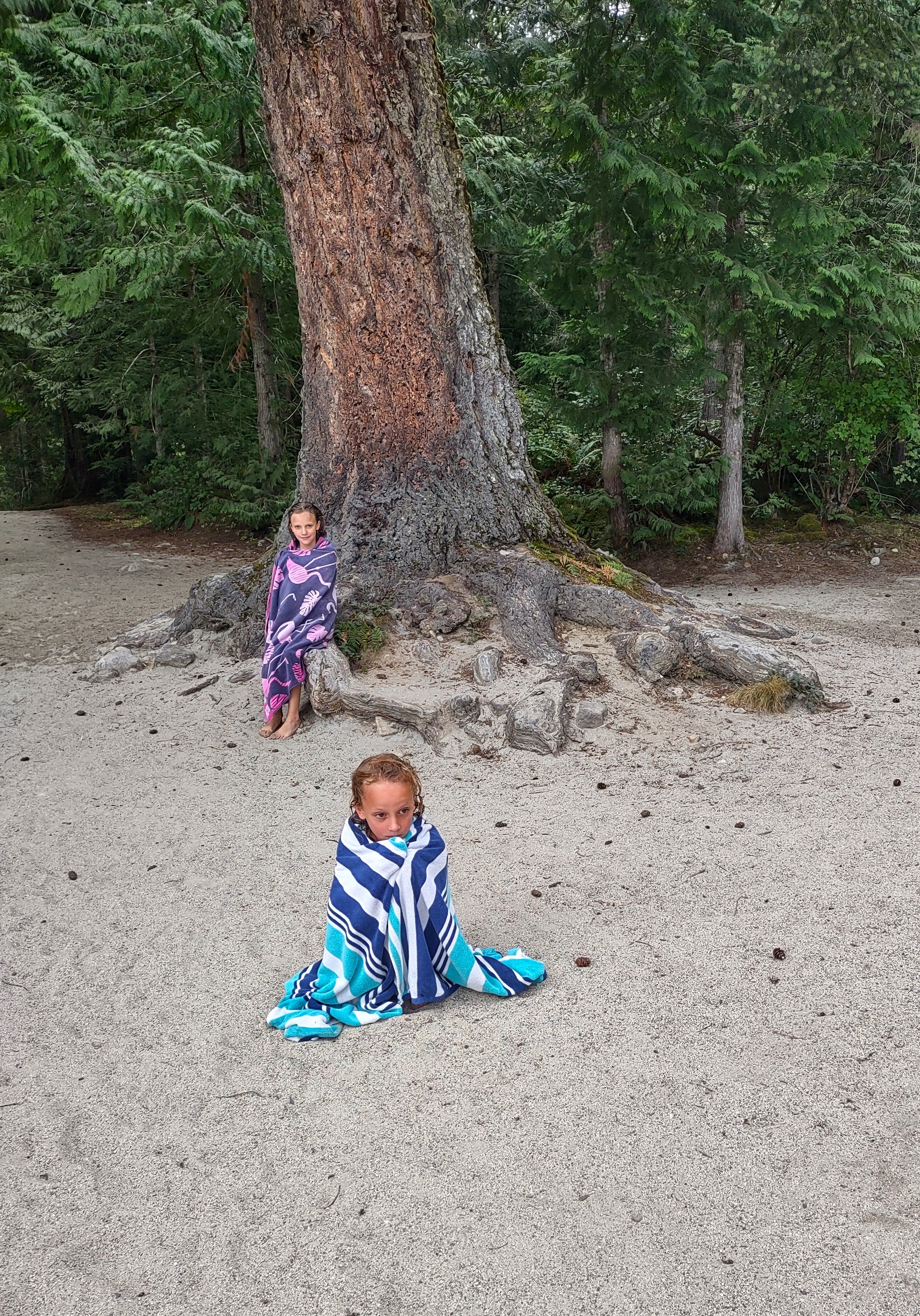
It’s cool this morning, the last day of family visits. Yesterday we had company on our swim, though after the two grandchildren got out of the water, they needed to be wrapped in big towels to warm up.

under the fir

It’s been a busy few weeks. Our Ottawa family came and then we all went to Victoria for Angie and Karna’s wedding, about as sweet as a wedding could be. In Victoria we met up with our Edmonton family and after the wedding we all went to a beach resort near Campbell River for a few days. It was good to get to know Karna’s parents and to explore, to swim in the Oyster River potholes, to talk into the night. I’d like to say we found one another again after an unsettled period. On our final night, the two girls, newly 10, performed a play they’d created, one of them dressed in a gown the colour of starlight, the other in midnight blue. We sat on the grass and applauded while the younger brothers all giggled and jostled behind a big tree.

Once home, we read the old stories, some of them recently rediscovered by the Ottawa cousins, we swam, we ate the ritual prime rib with Yorkshire pudding with tattooed potatoes, and tonight, the final night, we are going to the Backeddy for tacos. We were there a week and a half ago, making the corny joke as we walked up the stairs, “You’re back, Eddy!” (E. is one of the Ottawa grandsons.)

Today I helped the two Edmonton grandchildren make cotton bags–I guided the fabric and they used the foot pedal for the sewing machine. What will they hold? Library books? Soccer shoes? A handful of memories of Miracle Beach (Grandad called it Lyrical Beach), of blue herons on every shore leading to Campbell River, of green water in Oyster River, of emotional discussions on small porches before joining the others on the grass? It’s something I can do. Sew, note the herons, gather shells, weep in the arms of my children. And more.

wrappedamigos

redux: a set of quotidian lines

Note: this was four years ago. The lines here–clothesline, textual (poems, sentences), genetic (son and his young family), tomatoes climbing their strings–continue.

1. On our clothesline, the linen bedcover sent to John’s mother from her mother after his family had emigrated to Canada from England in 1953. The bedcover is exactly the right weight for these warm August evenings. I don’t believe his grandmother made the cloth. It’s very large, hemstitched, and is banded with soft pink. But she did embroider the wreath of roses in its centre. When I met her in 1979, she was blind and quite blunt. She prided herself on her Yorkshire roots and I knew she didn’t much like me. To be fair? I didn’t much like her. Speaking bluntly meant she offered opinions on everything and it didn’t make for interesting conversation. But in the years since she died, I’ve grown to respect her. We have many of her tablecloths, each more beautiful than the last, and I understand something of how she tried to keep the lines of family communication open between England and Canada in the days before easy telephone calls and emails. She was not only alone but lonely. She’d moved from her home in Sheffield after her husband died to the Suffolk town of Felixstowe, which was where I met her when John and I visited her for a few days before a trip to Paris. She’d work for months stitching the cloths she’d send as gifts, the one vivid with spring and early summer flowers—daffodils, primula, poppies, violets; and the cream linen one with brown fanciful designs done in the most elegant stitches. There was the one that never arrived, the one she worked on for a whole year, her own design, picking up elements of the family’s blue willow china, packing it for Christmas and mailing it in plenty of time. Each time she wrote a letter to her daughter, she asked if it had arrived yet and it never did. I can only imagine it on the table of someone who received it by chance or error and I hope they love it as much as I would have. We have that china now and I can only imagine our plates on her blue cloth, pagodas and birds and lovers on a bridge between one time and another.

linen roses

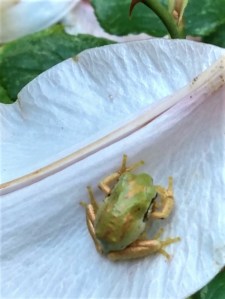
2. From a clump of dots inside jelly, turning to commas, then tadpoles, every year the emergence of Pseudacris regilla delights me. Many years the frogs lay their eggs in a claw-footed bathtub I keep as a little pond by the compost. This year I didn’t see any eggs among the flag irises, the marsh marigolds, scouring rush, and sedges growing in pots in the tub. We always have tree frogs around so I know they must be breeding nearby but when my grandsons were here from Ottawa, we saw 2, then 3, then 6 tiny frogs on leaves on the small deck by the front door. They are like jewels, the green of Oriental jade, inscribed with lines of bronze and gold, their bellies opal pink. This is the first year we’ve noticed them deep in the throats of the lilies growing in pots on the front deck and even when the flowers finish, the frogs like to perch on the fallen petals. Maybe the lilies attract tiny insects. Maybe the frogs are just suckers for the rich perfume of the Casablanca lilies. I made a little video of the frog doing exercises that looked suspiciously like yoga but for some reason I can’t embed it here. But imagine this one (the size of an almond) stretching first one leg, then another, and lifting its face up to the sky.

yoga

3. Strings holding tomato vines ripening in the sun, water from last night’s thunder storm falling in fast streams down the blue roof and into the water barrels, the lightning I saw at midnight, stitching sky to trees, and the six syllables of the great horned owl’s call in the small hours, the last one a grace note, stretching out and out and out until I was asleep again.

4. A hundred and two years ago my grandmother did her laundry in a shack on the south side of the Red Deer River. She had just given birth to a baby who would be dead by the following spring. In two months her husband and brother would also be dead. When I hang out the cloth made by my husband’s grandmother and when I bring it in later today to smooth over my bed, I will think of her washing her family’s clothes in water lugged up from the river, her  8 remaining children helping, or not, and how what we do is part of a long continuing line. We push the door open with our hip, balancing the basket on the other hip, and we do what we can to keep things clean, to make use of sunlight and wind, and to love each other as much as we can.

There were doors, small openings. The slag heaps where people brought home enough coal to heat their shacks. Coal seams ran under some of the houses and people could hear the picks below ground as they hung out laundry, fed their chickens. A door opens, someone is sweeping an earth floor, sweeping the crumbs out to the chickens, unpegging the sheets and diapers from the line. A few mended shirts are draped over bushes, their empty sleeves spread wide.