the spiral’s curve

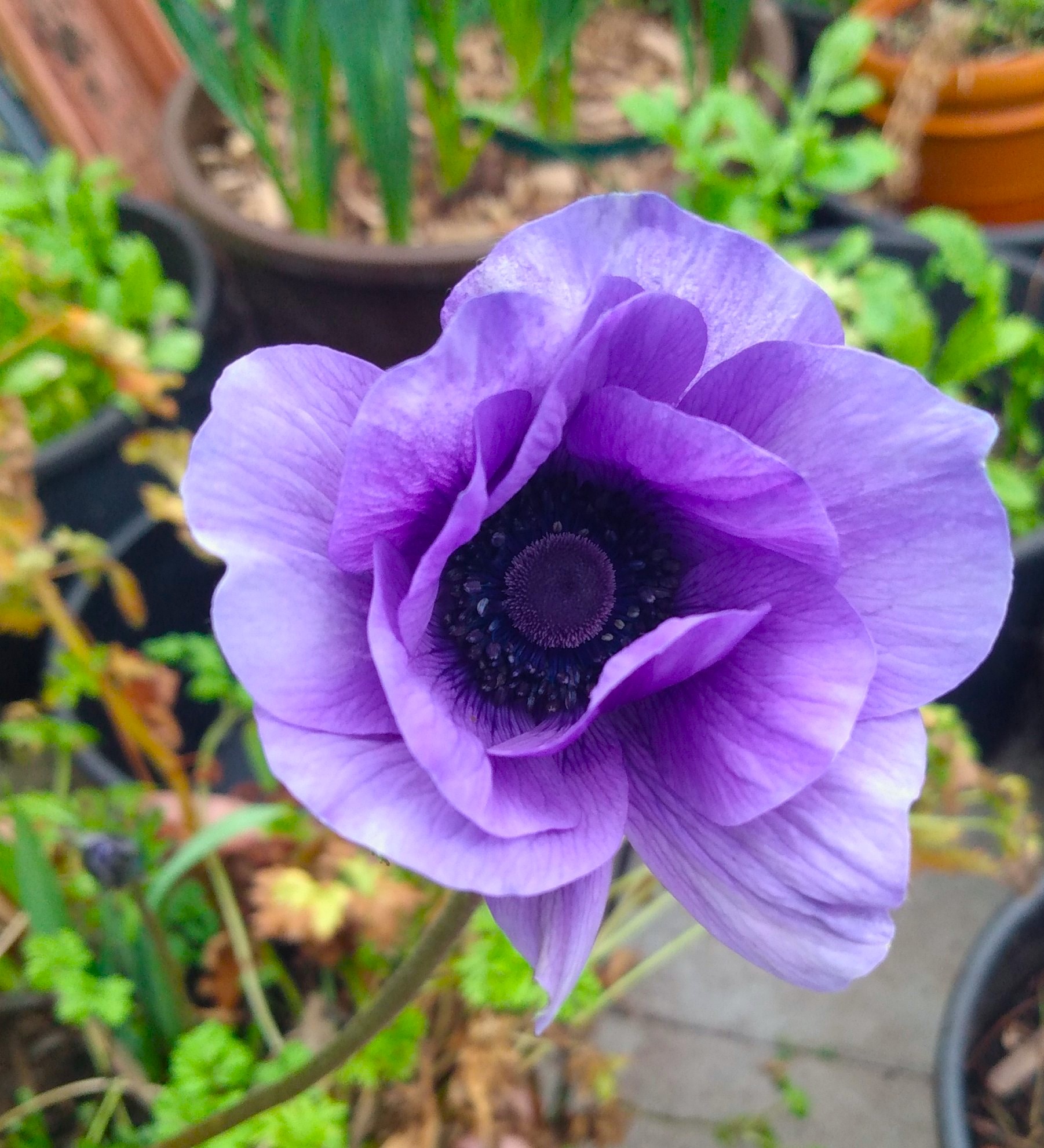
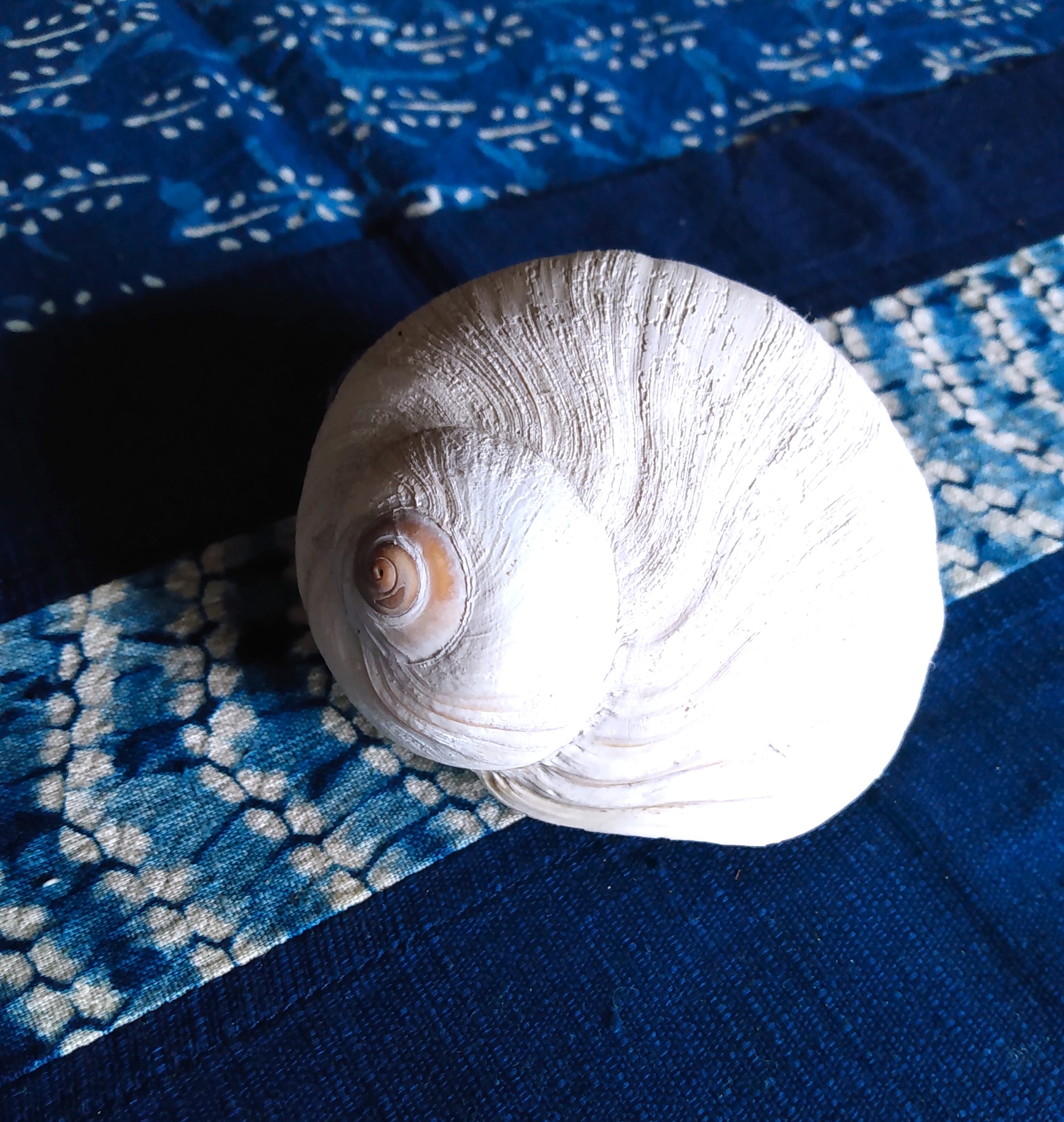
On the table, a moon snail, its centre point the anchor of the spiral that turns, turns. The year is turning. In the early hours of yesterday, spring arrived, though later in the day, it rained, the wind raged in our woods, and when we ate lunch at the ocean-front restaurant with our friend, the sky-scape was dark and dramatic. But in the greenhouse, the daffodils bloom, a few purple anemones among them.

(Turn, turn.)

Near the library, a Ribes sanguineum, its drooping flower clusters about to open. Ours will be a few days later. This is the moment when the Rufous hummingbirds return. The overwintering Anna’s, larger, accustomed to this territory, won’t want to share the feeders. A flash of bright pink as the male Anna’s darts in, and soon the cinnamon Rufous males with their bright red throats will challenge them.

(Turn, turn.)

Yesterday, in the shop where I’ve bought clothing for decades, I was trying on a summer dress and had to sit down, cover my eyes with my hands, weeping on the wooden bench. It was Van Morrison, singing “Into the Mystic”:

When that fog horn blows
You know I will be coming home
Yeah, when that fog horn whistle blows
I gotta hear it
I don’t have to fear it

We had been talking about death that morning, my friend and I. She’d shared a dream about a graveyard, in which she told someone she was only reading the past. I understood it. She is losing her sight. Some nights I lie in bed and hear the foghorn somewhere beyond Agamemnon Channel and I wonder what it means. In a dream I would understand. The dress I was trying on was black.

(Turn, turn.)

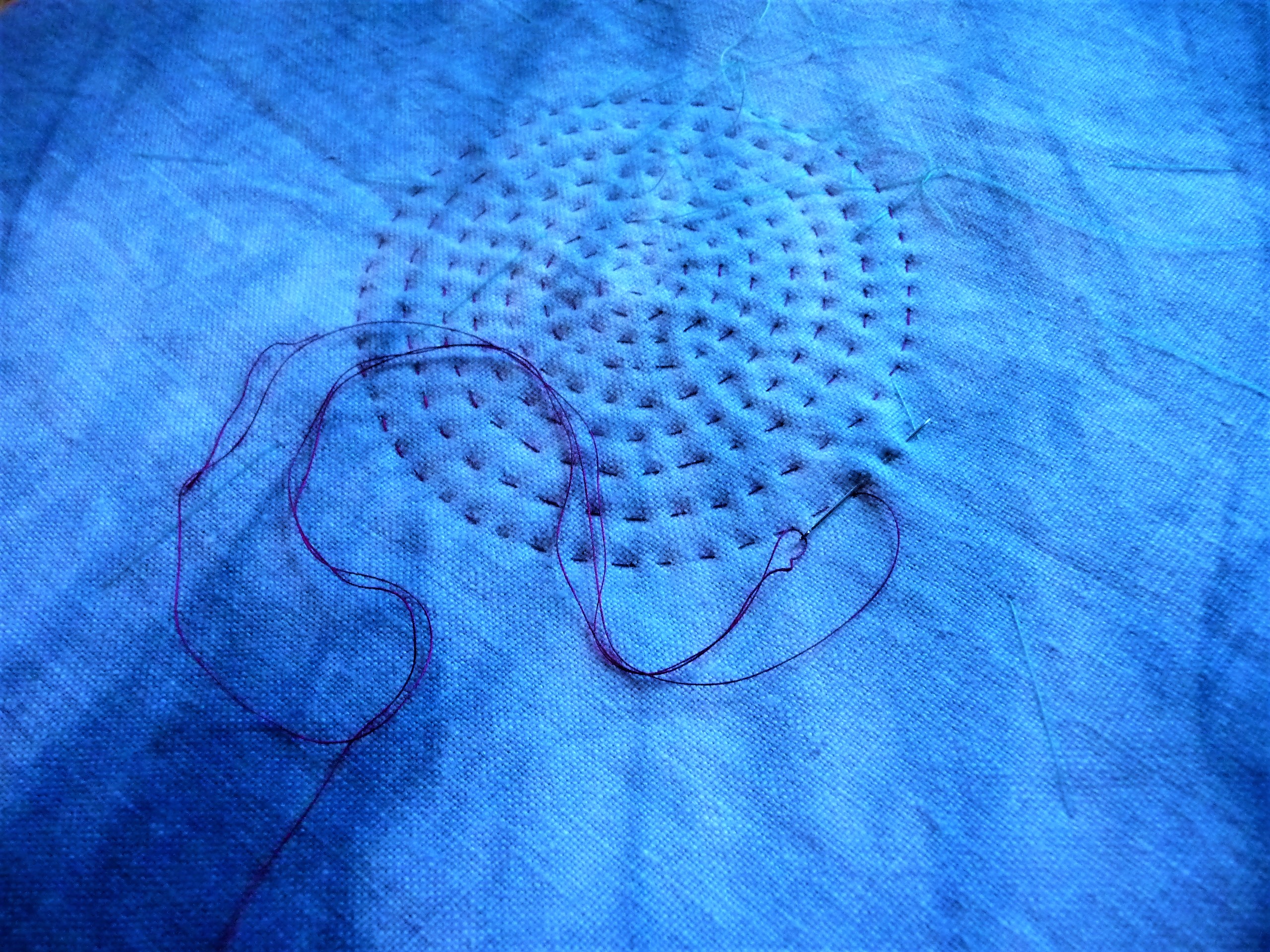
The years are spirals, taking us into the mystic. My friend talked at length about DNA and I thought of how the molecules form spiral staircases. I thought of water spiralling down a drain. Weather patterns (the storm clouds over Trail Bay as we sat in the warm room watching), galaxies, the spirals already present, in theory, in the sunflower seeds I haven’t yet planted, the stitched patterns in the quilts I have made for 40 years.

(Turn, turn.)

We were born before the wind, he sang in the shop as I smoothed a black dress over my shoulders and wondered.

the inner layer of abalone

1. My friend said this length of linen, ecru, wrapped with hemp string, dyed with indigo, reminds her of the inner layer of abalone. Yesterday I took the fabric out of a trunk to look at it and wonder. Wonder, as in: what will I do with 5 meters of linen rippled and marbled as abalone, or water holding the light. I have no idea.

2. Swimming this morning, I thought of the linen, thought of shells, abalone shells, the pores of their outer edges. The one found on a wild beach, the one hanging from a string on the deck.

3. First thing, before the swim, before any kind of thinking, a link arrived for an essay: https://www.thetemzreview.com/kishkan.html Reading it, I am surprised to find string, swimming, a shell, watery light.

On the shelf in my bedroom, the tiny oyster shell I sometimes wear on my ankle in summer, a strand of 3-ply thread holding it in place. The shell and I both long for warm weather, the wild water of the lake I love.

4. What will I do with 5 meters? I wish I could hang the linen from the crown of a Douglas fir and let it flutter in the wind. Maybe curtains. Maybe a summer tent, light coming through the ripples of indigo.

5. In the kitchen, a big jar of shells, tiny lights on copper wire strung through them. Shells from Mexico, Tofino, Oyster Bay, Sechelt. Thick rope to hang the jar from a hook outside.

6. In the small hours I got up to pee and returning to my bed, I saw that moonlight had settled on my pillow, waiting for me. If I’d drawn the curtains before going to sleep, it never would have found me.

    what remembers us?

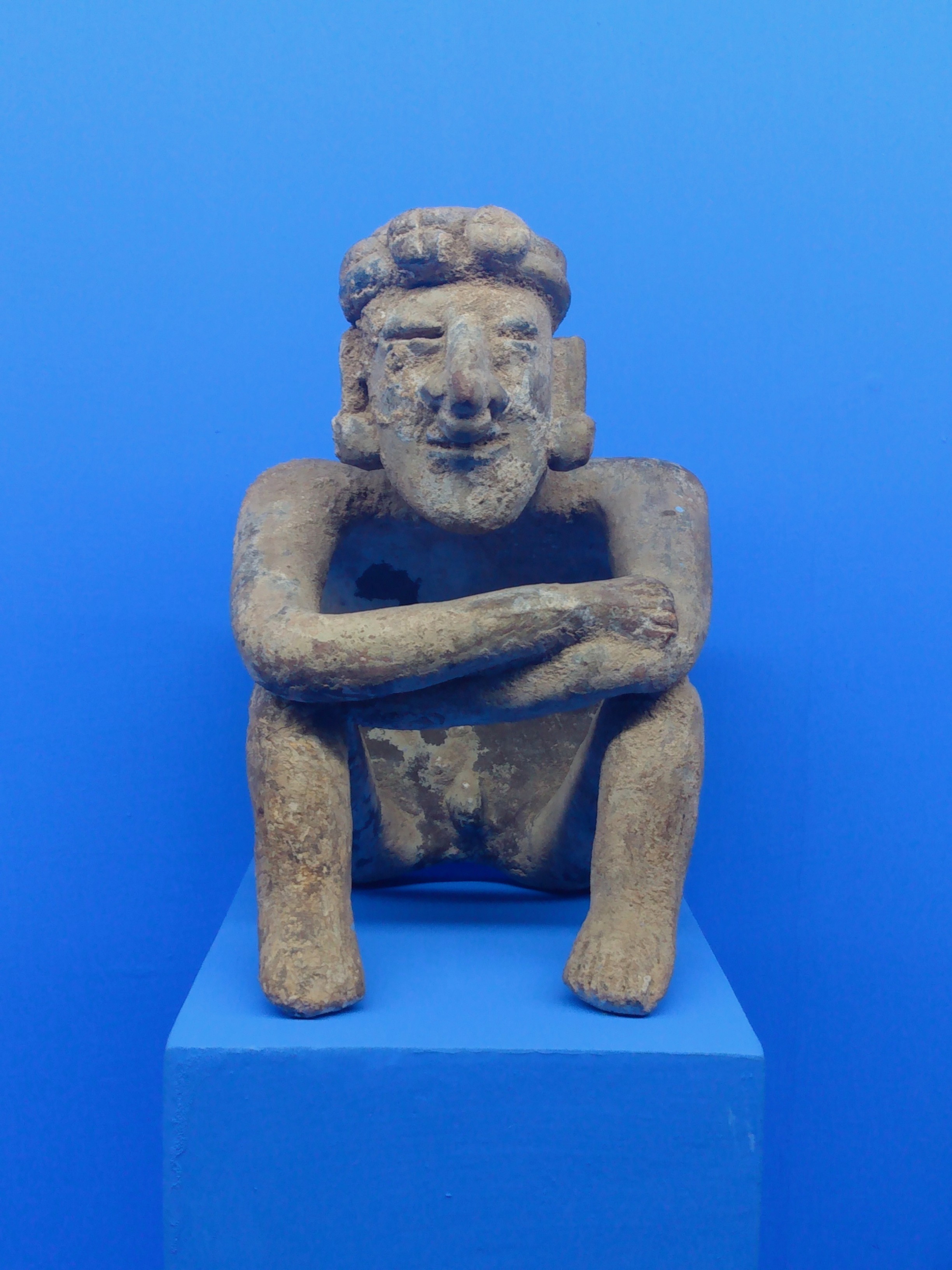
    In Oaxaca a few weeks ago, we spent a morning at the museum holding the Pre-Columbian (or Pre-Hispanic; I’m not sure which term is more accurate) collection of Rubino Tamayo, a Zapotec painter from Oaxaca. Each gallery was wondrous. I spent a few minutes looking at this deity of death from Veracruz, the hands held as though advising an alert and measured response. I’ve read a little about Mesoamerican attitudes to death, concentrating on the belief that life and death exist as a duality, reflecting cycles of drought and rain, dormancy and growth, darkness and light. In the time we are living, it’s worth remembering that things pass, regeneration is possible, and that some nights when you are unable to sleep, you look out at a full moon holding the earth’s shadow.

    In the museum that morning, I remembered a book I’d read more than 30 years ago, Evan Connell’s The Connoisseur, recommended to me by the late Charles Lillard. We’d been talking about objects, how sometimes one will capture your heart and imagination, and when I read The Connoisseur, I understood why he’d thought I’d enjoy it. An insurance executive finds a small Jaina figure–he calls it the Magistrate–in a shop in Taos. He doesn’t know why he’s attracted to it but he buys it for $30, assured by the shop owner that it’s authentic. This object leads to an obsession with Pre-Columbian figures and the reader follows him as he tries to learn more, to justify his obsession, and, well, I won’t give away the ending. I won’t give away the ending because John and I are reading the book now, out loud to each other, by our fire, and some days when we are just having a cup of coffee, one of us will ask, Want to read just a few more pages? And those few turn to more. It’s not a novel of action or even really of plot, unless you call the development of an unexpected obsession to be a plot. I have to say I do. Each encounter between the protagonist and someone he’s consulting about authenticity enthralls me. While I’m reading, or listening to John read, I’m thinking about the figures in Museo Rufino Tamayo, the ones shaped in clay, baked, painted, and how they have their own immortality in cases painted blue or pink or violet.

    The other day I was outside and I walked up to the copper beech tree we planted in memory of my parents. Around its base the daffodils I planted with my granddaughter 7 years ago are coming up; some are even in bud. Two layers of family and memory and the anticipation of a third because I want some of my ashes to be strewn around the tree’s base where I sprinkled a little of my parents’ remains.

    We were the torch that split the lightning bolt
    and the dream our grandparents told.

    What remembers us? The tree remembers something of my parents, nourished by ash and bone. The daffodils? Maybe the day K. dug little holes with a trowel and inserted the bulbs root-side down, scraping soil over them with a garden fork. We patted them in place. It was raining. I don’t imagine she remembers that day but I do. I remember my parents sitting outside, talking quietly, as I did chores around them. I remember seeing them long after they’d died, even catching their scent as I climbed the stairs to the upper deck where the chairs they left us were waiting for John and me to stop our work for coffee.

    When I looked again out the dark window the other night, the moon had left the earth’s shadow behind. It was deep red in a black sky, something to be remembered by a woman sitting at her desk in the small hours, thinking about dualities, a room of figures behind glass, gazing out, pensive or startled or balancing in place.

    Now we are ashes
    beneath the kettle of the world.

    Note: the lines of poetry are Natalia Toledo’s. I was lucky enough to see her show at the Museo Textil di Oaxaca in February.

    redux: a mythos, squared

    Note: this was 4 years ago, beginning the work of making a greenhouse.

    base

    I haven’t thought a lot about the word “mythos” lately. Why would I? We are living through a time that we have a word for, “pandemic”, but what it’s doing to our sense of safety, of community, of connection to those we love, well, that will have to be figured out in some meaningful way.

    But yesterday and today we were working (slowly) on the greenhouse we are making, late in our lives, with the hope that we will be able to overwinter some of the tender plants that currently fill the pretty sunroom we built 30 years ago off our bedroom and where we will be able to extend the already generous growing season here on the west coast. In a way it’s too late. But in another way it’s a project we can work at and hang onto the scrap of hope that I feel when I think of it completed on the little rise of moss behind our house. For most of the first year of this pandemic, I’ve been able to sustain a sense of optimism about how the virus will be contained, understood, and that we will all be vaccinated, given new courage to enter the world that’s been beyond us for months, the world where we eat with people, embrace our friends and family members, travel to see places and people, visit the houses of those we are connected to. During the period of intense activity devoted to John’s recovery from bilateral hip replacement surgery and the injury sustained during that process, I didn’t have time to think too deeply about the future because the present took every ounce of energy I had. Now it seems impossible to me that I actually felt energetic because I’ve lost that source of optimism that nourished the daily work. Maybe I haven’t truly lost it but it’s very hard to locate these days.

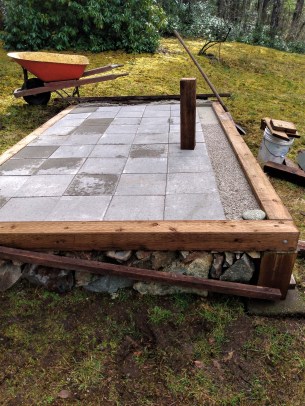
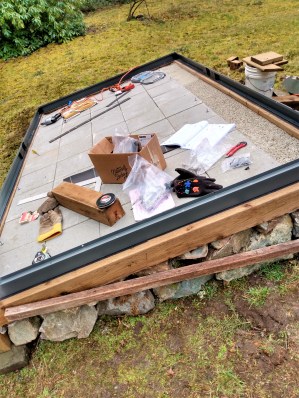
    But mythos? As I was getting bolts and washers ready for John to secure into the metal base of the greenhouse to fasten it to the wood frame we constructed, I saw the instructions for the kit we are using. We ordered our greenhouse from Palram and the one that suited us best was the Mythos. I’d forgotten it was called that. It’s simple, a 6 foot by 10 foot structure, with twin walls, UV protected. We made a floor of concrete pavers set into sand and there’s a border on two sides which we’ll cobble with beach stones. So it’s the Mythos, rising from the base, slowly, because we’re no longer young, and just maybe I felt a little rush of hope as John put in the first bolt and we held a measuring tape to both diagonals to make sure the structure will be square.

    μῦθος, mythos: A story or set of stories relevant to or having a significant truth or meaning for a particular culture, religion, society, or other group. A tale, story, or narrative, usually verbally transmitted, or otherwise recorded into the written form from an alleged secondary source.

    Our story is an old one. We wanted to make a home for ourselves. We raised our children. We wrote our books. We grew apples and kale and small French fingerling potatoes, their creamy flesh veined with pink. We had three dogs, now none. 30 years ago, even 20, when there was still time for it to make a difference, we’d have built a greenhouse ourselves, with wood and old windows. Maybe mixed cement in the red wheelbarrow you can see in the top photograph–it was used for mixing all the concrete for the footings of our house– and made a solid foundation. Now we are following the instructions to build a Mythos from a kit, opening the little bags of bolts and attachments, squaring the corners because we know how to do that.

    I have three olive trees in pots waiting for the greenhouse to be ready. One of them is an Arbequina I bought last year and two are unknowns, tags lost on the half-price table where I found them in a local store. Symbols of peace and friendship, sacred to Athena, they are long-lived, even mythic. Remember George Seferis’s beautiful “Mythistorema”?

    The olive trees with the wrinkles of our fathers

    the rocks with the wisdom of our fathers

    and our brother’s blood alive on the earth

    were a vital joy, a rich pattern

    for the souls who knew their prayer.

    Let them be that. Let them grow as we age, let them ask us to say a prayer for the millions dead, widowed, orphaned, and let the Mythos shelter them on cold winter nights. Let the bolts we are sinking hold, let the moss repair itself, let the tree frogs find the olive trees, the snakes discover the warm of sunlight on concrete pavers, and let us all feel the beginnings of hope again.

    mythos squared

    our daily bread

    When I was growing up, my mum made our bread. We were a family of 6 and lunches were always sandwiches so she made, what, about 10 loaves a week. She had big metal bowl for the dough and BakeRite Tinware pans for the loaves. (I have some of the latter still. I use them for banana bread or pound cake.) I loved coming home from school on a bread day to a house smelling of those loaves. They’d be lined up on the counter, cooling, and I don’t think she ever let us have slices as an after-school snack. That would have upset her system, her accounting.

    Did I ever tell her how much I appreciated her bread? I don’t think I did. To be honest, I didn’t appreciate it. Not then. Our lunch sandwiches were door-stoppers, the slices uneven, and I remember I wished we could have Wonder Bread like the other kids. Neat packages of cheese or egg salad or tuna. Once I was invited to go with a friend and her parents on their boat for a weekend, maybe this was grade 6, and my mum sent me with a loaf of bread and a jar of homemade jam. I was embarrassed by this gift, or at least I was until my friend’s parents went into raptures about how good the bread was, how good the jam. We sat on some logs on the shore of Tent Island where we were anchored overnight and we, though mostly they, ate the whole loaf. It wasn’t lunch or dinner. They couldn’t eat those slices fast enough. Did I tell my mum? Probably not.

    When my children were young, I baked most of our bread. I was home most of the time, when I wasn’t doing the errands related to family life, so bread-making fit into the rhythm of that life. I used different methods. Sometimes I made yeast bread, setting it in the morning, letting it rise, then baking it in the afternoon. I was happy to cut slices for afternoon snacks (though it seems this is not what was remembered of those years). Sometimes I made cinnamon buns too, with the same dough. When I bought Carol Field’s The Italian Baker, I often made a biga, or starter, using yeast, flour, and water, letting it sit, then incorporating it into dough that produced gorgeous rustic loaves. Later, the wonderful Bev Shaw, who owned Talewind Books in Sechelt, and who died far too soon, gave me some of her sourdough starter and I made sourdough bread. I made it for years but then I forgot to freeze it when we went away for 5 weeks one winter and the starter died. I could have asked Bev for more and I know she would have gladly given it but I’d stopped baking bread regularly. My children had all left home and it was somehow just easier to buy bread.

    During the pandemic, I began to bake it again. It gave a comforting kind of structure to the long lonely days. And honestly, is there anything more comforting than a slice of warm bread spread with butter? I can’t think of one. I wasn’t making sourdough exactly but something more like the famous Jim Lahey loaves, using a tiny bit of yeast and a long overnight rise, with no kneading. Those loaves were a kind of magic and magic was what we needed.

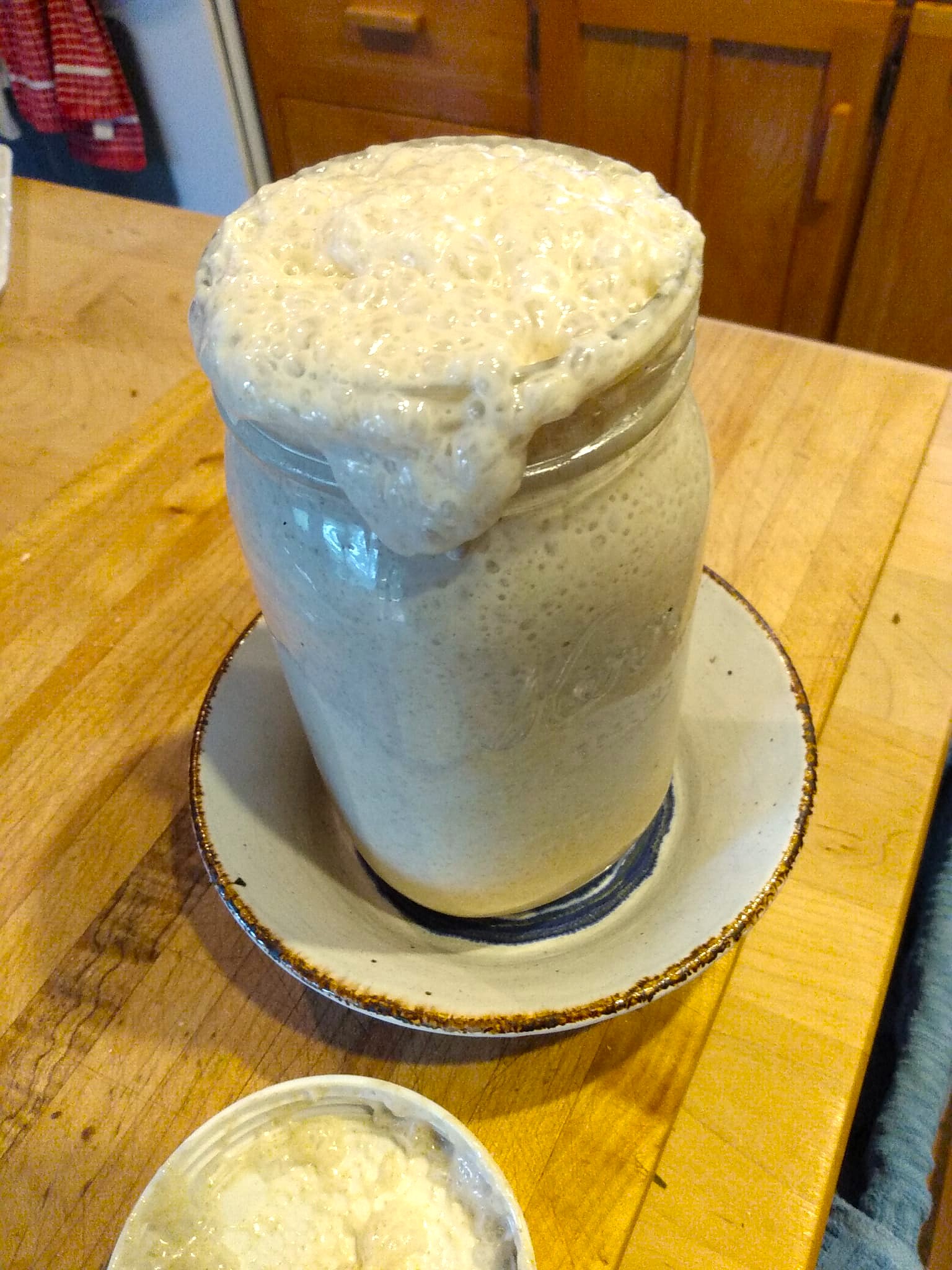
    In January I decided to make sourdough starter again. I thought our kitchen must be teeming with wild yeast and it would be simple and I was right. My starter took 6 or 7 days. I didn’t weigh the flour and water, I didn’t use a thermometer or any of the fancy equipment required in many of the recipes. I used unbleached white flour and some dark rye. Tap water (we have a well and our water is delicious). It did what it was supposed to do and now I have a quart jar of the most beautiful starter. I call her Artemis.

    When we went to Oaxaca for a little more than 2 weeks, she survived just fine. I’ve used her for chocolate cake (it was so good), our weekly pizza dough, and a weekly loaf of bread. The photograph at the top of the page is this week’s. I thought, cutting into it for a trial slice, that bread doesn’t have to be any better than this. Sometimes I put pumpkin seeds in. Once I made it with rosemary and walnuts. I use rye flour, unbleached white, whole wheat. Sometimes I put flax seeds in. Some mornings I come downstairs to the most wonderful smell of toasting sourdough and I think, Why haven’t I been doing this all along? Why did I ever buy bread? Well, there were reasons. And now there’s no reason not to bake bread. I wish I’d known when I was a child what I know now, about the work that goes into bread, the love, the intention, and I wish I’d thanked my mother. I wish I told her that I was glad to open my lunchbox and find her sandwiches inside, wrapped in waxed paper, a few homemade cookies wrapped separately, an apple, and I wish I’d hugged her for her reliable and practical love.

    Monday, a single sentence

    Last night, walking out to the car after dinner at the Backeddy Pub, after chowder and a little jam-jar of white chocolate cheesecake dripping with caramel, after two glasses of Grey Monk Pinot Gris, I looked back, past the plainbuilt pub on its stilty legs, deck over the high tide line, past the boats in the quiet water, past the cormorant perched on a piling beyond the dock, to see snow dusting the low mountains on the other side of the inlet, high peaks beyond, and thought of the earth waking after winter to the cold surprise of new snow, bears pausing by their warm dens, wondering, wondering, elk stopped in their tracks by a sound deep in the woods, and the prospect of a few lights blooming in the windows along Maple Road as we drove home.

    it never grows old

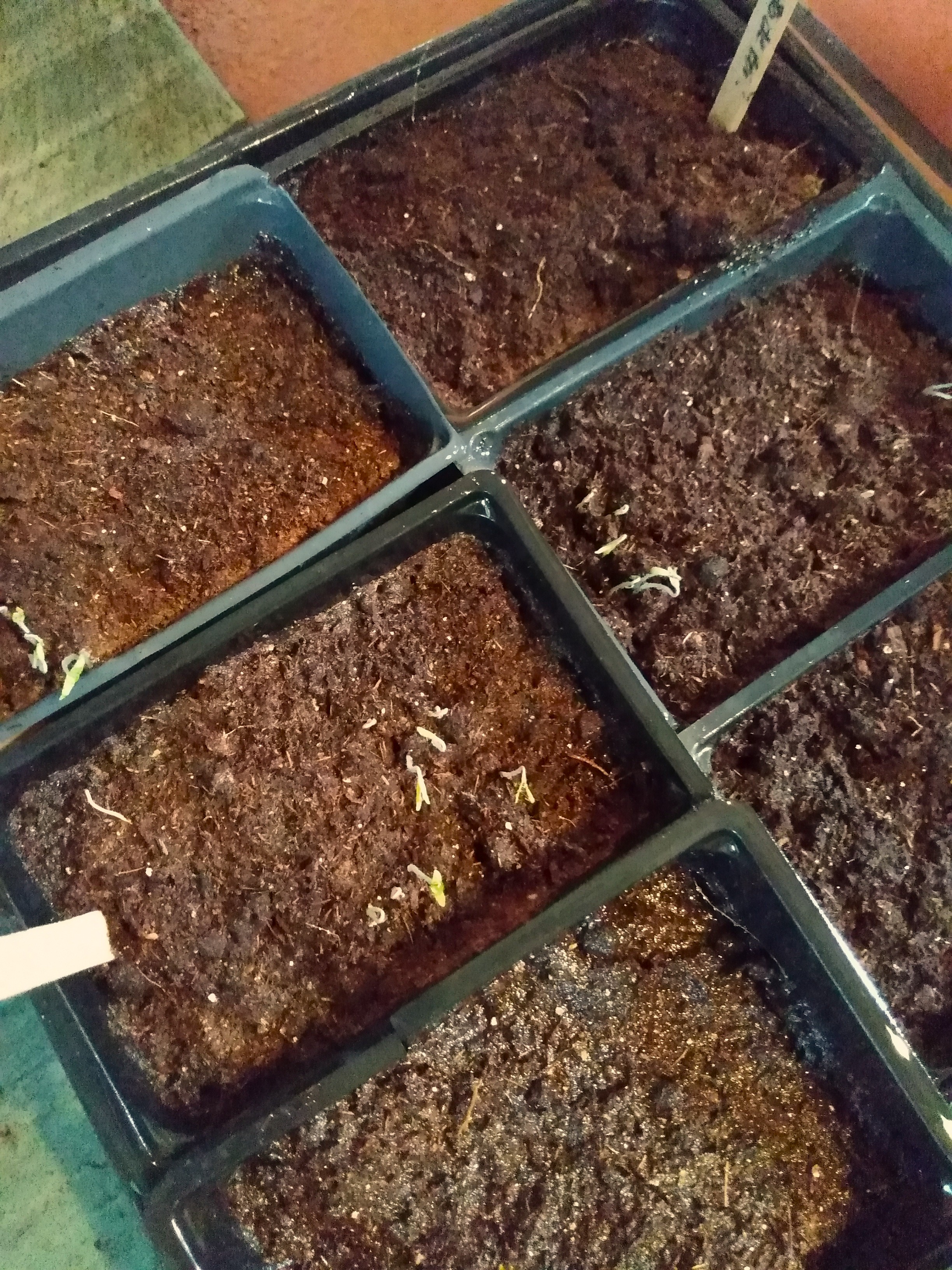
    It doesn’t grow old. Filling the little trays with soil, scattering a few tomato seeds over, topping with a bit more soil. Keeping them damp and warm by the woodstove. And a week later: tiny sprouts. First I planted Coração de Boi, the last of a package I bought this time last year in the Bolhão market in Porto; those are ones that are just pushing up out of the soil. A few days later, I planted Principe Borghese and Amish Paste after finding some leftover from last year. Next time I’m at the seed library in Sechelt, I’ll check to see if there’s a slicing tomato too. The seeds are so tiny! And within them, such potential. There will be the mornings when the bees hover over the blossoms, particularly Bombus vosnesenskii, the yellow-face bumble bees, the ones that remind me ancient Greek helmets, and then there will be the mornings when I pick a colander of ripe fruit smelling of every summer we’ve ever had. When I slice a few and drizzle them with the best oil (Frantoia, from Sicily) and scatter some basil over, with some flaky salt. I could eat this every day (and often I do, for weeks). It doesn’t grow old.

    Another thing that doesn’t grow old? An editor writing to say, yes, we will take this essay! The essay in question? “On Swimming and the Origins of String”. It will be appear in the next issue of the Temz Review. I’ll link to it once it’s up.

    And another thing? Hearing that one of my books is being read by a class. In this case, it’s The Weight of the Heart, along with its companion texts, Ethel Wilson’s Swamp Angel and Sheila Watson’s The Double Hook. If you’ve read my novella, you’ll know that its protagonist is a young woman writing a thesis that she thinks of as a feminist cartography of B.C. She’s doing the work I might have done at her age if I’d known I could. Could insist on the importance of those books, could find an advisor who would support the work, Now that I’m 70, I have some, well, regrets I guess, that I didn’t pursue a more scholarly route through my earlier years. Last Sunday when I saw one of my sons in Vancouver for dinner, I told him I’d been considering applying to graduate school but wasn’t entirely willing to relocate for the coursework, he said it was too bad I hadn’t done it in 2020 when classes went online. (I remember him having to teach his math classes online and I know that it wasn’t easy.) Maybe it’s too late. But the books stack up on my desk and by my bed and I can at least do the reading.

    So I’ll grow tomatoes and watch the bees and remember what it was like to walk up the path to Font-de-Gaume, noting the ferns, the dried seedpods of orchids, blue campanula, ivy-leaved toadflax, what it was like to meet the reindeer licking the forehead or antler of a female, and wonder, wonder, what else I could have made of this.

    redux: isolate

    Note: this was posted five years ago. Remember what it was like to know that the world no longer felt the same? That our perceptions of safety had shifted? Remember?

    garlic

    The house is quiet. For the past week I’ve listened to the news almost constantly, feeling a little pulse of anxiety or fear each time there were updates of Covid-19 cases, both on the west coast where I live or in any of the cities where loved ones live. Entire countries are locked down. I know the world has experienced pandemics in the past and I have no doubt they were just as frightening and serious. (On my desk, I have copies of death certificates for my relatives who died in 1918 in the Spanish flu epidemic…) Somehow our immediate access to news, to events as they unfold, makes us, or me at least, feel that this one is worse. It certainly occupies a huge space in the collective consciousness.

    A younger friend called earlier today to ask if we needed him to buy groceries for us. He wasn’t sure how isolated we were, or wanted to be. I thanked him, his kindness very welcome, but said we were fine. I think we are. We live about 15 minutes from a village with two grocery stores and a pharmacy; there’s a health centre a few minutes from the village. 45 minutes away is a larger town, though just last week we laughed as we drove into it because we noticed a sign (a new one?) indicating “City Center”. The population is about 10,000. There’s a hospital, a couple of grocery stores, a book store, several pharmacies, a few places to eat, a library, and other small-town services. Many of these are along one street and I guess that was where you’d end up if you followed the sign to the City Center. We tend to go to the larger town once a week and our nearby village a couple of times a week. So far it’s seemed safe. No one we know has become sick. The local pool is still open and just this morning we swam, though we were the only ones there. This is not uncommon on a Saturday morning, though. When our family in Ottawa called today, they said that pools, libraries, and museums are all shut down or about to be; schools and daycares too. They said they were wishing they could come to B.C. for a couple of weeks, and wouldn’t that be nice? The little boys could come swimming with us and their dad could help with firewood.

    What does it mean to isolate yourself, to enter into a state or place of isolation? The Oxford definitions are interesting.

    (Mass noun) The process or fact of isolating or being isolated.
    (As a modifier) Denoting a hospital or ward for patients with contagious or infectious diseases.
    (Count noun) An instance of isolating something, especially a compound or microorganism.

    Elsewhere, I found this etymological information about the word:

    “standing detached from others of its kind,” 1740, a rendering into English of French isolé “isolated” (17c.), from Italian isolato, from Latin insulatus “made into an island,” from insula “island” (see isle (n.)). English at first used the French word (isole, also isole’d, c. 1750), then after isolate (v.) became an English word, isolated became its past participle.

    Sometimes I tell people we live in an isolated area. We do. We have no immediate neighbours. We see no other houses from our house. We have 8.5 acres and we live on a cleared area on one part of that acreage, surrounded by deep woods. Mostly I don’t feel isolated. I’d say, rather, that I feel private. When I work in the garden in good weather, I have the windows and doors open (though screened) so that I can hear music coming from the house. It can be as loud as I want it to be. I like the pure darkness at night.

    But to have to isolate ourselves? That’s another thing. We would be fine for quite a long period because I have a good larder—the freezer is full to the brim with berries, fish, meat, soups, broths, boxes of filo pastry, still a couple of pies from the fall, and the shelves in the porch that serves as our pantry are laden with jams, jellies, chutney, salsa, and various other preserves. We have lots of dried beans and rice and lentils. Big bags of flour and other grains. A good quantity of wine. In the garden earlier, I was looking to see what could be planted and where and I rescued a couple of red cabbages that were gnawed on by deer last fall when a bear broke the garden fence. I’d left the cabbages and forgot about them but they recovered quite nicely, though they’re misshapen. (Tomorrow I’ll cook them with apples and some red-wine vinegar.) There’s kale, tiny shoots of miners lettuce, perennial greens like chicory, buck’s horn plantain, dandelions. The chives are up. There’s parsley, other herbs, and the garlic is looking quite robust as it bursts forth from under its mulch of leaves. I planted lettuce and arugula in one of the boxes John built a few years ago. They’re like cold frames, I guess, but with old sliding windows on the south-facing sides, plexiglass panels to put on top when it’s cold, and chicken wire on the other three sides, to keep deer out. (The boxes aren’t in the fenced vegetable garden.) The peas I planted inside are nearly ready to go into their bed and tomato seedlings are coming along.

    What I have, and what John has, is work to do. Our own writing, the garden, various repairs. We can go long periods without seeing people and it doesn’t feel strange. Unless it’s mandated. Unless we’re forced to stay home because nowhere is safe.

    Tonight we’ll go out to Egmont to have supper at the Backeddy Pub because it’s still open and who knows what will happen next week. Sometimes we see whales from the window there. There’s a woodstove, like at home. I hope that everyone who is sick with this virus recovers, I hope that our health care systems withstand the stresses, I hope that those who are alone have enough to read, enough to eat, and that we all find ways to care for each other.

    zuihitsu for early March

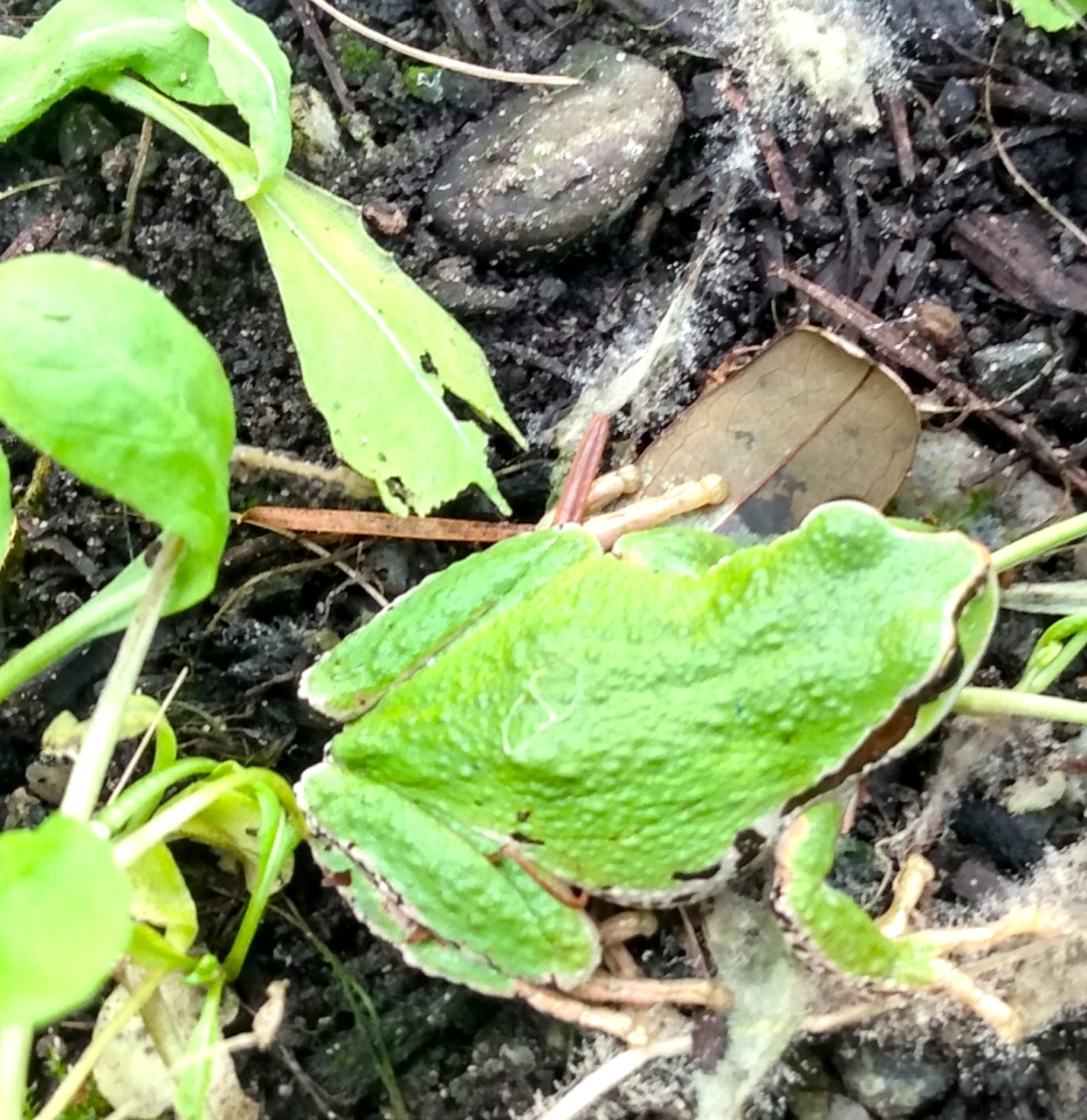
    Today, soft rain. The book I finished last night was damp with sea air, every page strewn with kelp, bladderwrack. Once, when I woke to let the cat out, I heard a coyote singing so far away it was almost an echo. Nothing interrupted. Let me be so attentive. Let me put my head down on the pillow and complete the song. The other day I almost walked by the small green body huddled below the cherry tree. Almost. But something made me turn and lift the tiny tree frog, cupping my hands together to make a basket. The cherry will not bloom for weeks.

    In the greenhouse, the St. Brigid anemones are coming into flower. One of them opened as I settled the frog in a pot of last year’s salad greens.

    Let me be so attentive that I see each bud, each bloom, each tiny frog in the brown winter grass. At dinner the other night, under a lamp of circling planets, my son leaned forward and there were silver strands in his dark hair.

    a snapped thread

    from-the-hutsul-wedding

    In 2019, I visited Ukraine. I was in search of something, not just any relations who might remain in my grandfather’s village, though I found some, a moment I will never forget (though to be accurate, they found me, they drove a considerable distance to spend time with me, and I think about that all the time), and in some ways it was as though a snapped thread was mended.

    I have watched from this great distance as the country my grandfather left has been attacked, its population brutalized, terrorized, and I have done what I was able to. I’ve sent money to a number of organizations providing support, I’ve sent money to a local group housing and supporting Ukrainians who’ve chose to settle on the Coast (and I offered our home for temporary shelter, though it was decided we were too far away from services…). Maybe there’s more that I can do. I’m open to any suggestions.

    But what I won’t do any longer is stay quiet about the repugnant President and Vice-President of the United States of America. What happened yesterday in the Oval Office as those two men, and others supporting them, gaslit and insulted Volodymyr Zelenskyy was beyond appalling. It was ugly, repugnant, and beyond any kind of acceptable behaviour. Ukraine’s President has more courage in his left elbow than the American President will ever demonstrate. Ditto for JD Vance. They are bullies of the worst sort and maybe the worst thing is no one is stopping them. They are ugly Americans. I don’t understand how they were elected and for ages I’ve thought, Oh, it’s not really my business, but of course it’s my business. It’s yours. It’s ours. I want my country to do more for Ukraine. There’s been too much soft-step shuffling about weapons, membership in various organizations of European states, treaty organizations, and so on. It’s time our government did everything possible to allow Ukraine to defend itself (and us, because this is about all of us, and if you think Russia will stop at Ukraine, I’ve got a bridge I can sell you…) and it’s time that we turn away from the ghastly show south of the border and have nothing more to do with that economy. I won’t knowingly buy American goods until the administration changes, I won’t travel to the US, I won’t, I won’t, I won’t. I am angry almost beyond words but words are what I have.

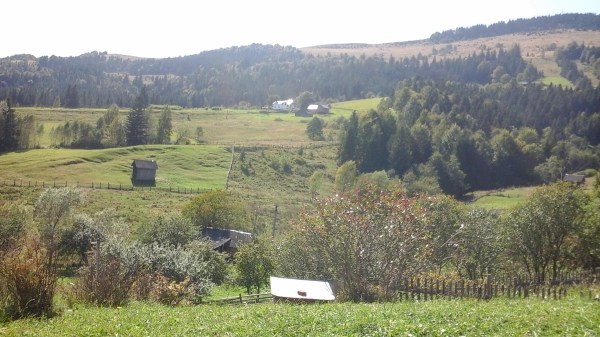
    In 2019, we attended an event in Bukovets, a feast representing a Hutsul wedding, though the celebrants were volunteers, some of them members of the group I was travelling with. It was one of the most joyous afternoons of my life. And in the middle of it, the woman who was guiding us and translating for us came to me to say she’d just had a phone call to say that living relatives of my grandfather had been found and they would meet me later at our hotel. The photograph above was taken from the table where I was sitting, looking down into a soft valley, and at that moment, I was part of the trees and grass, I was among my people, and what happened in Washington yesterday happened to them and to me. They deserve more. We all do.

    We arrive to the wedding in a van holding twenty people. The villagers greet us with horilka made with golden root or mountain ginseng, sweet rolls, little toasts spread with salo. A wedding bower is set up on grass between two houses, with two long tables framing the area. Below us, the green lawn slopes away to the most beautiful valley, a cow here, soft trees there, a hut, the sound of geese and ducks in a pond below us. The bride’s hair is braided with ribbons and coins, she is dressed in a smock intricately embroidered with poppies and roses, and aproned front and back, her waist bound with a long sash. Her groom is just as splendid. While her headdress is being arranged, women sing. More horilka is distributed to guests.

    A few hours later we are eating a feast at the long tables. Platters of meat and cheese, cabbage salad, fresh bread, pale yellow butter, cucumbers flecked with dill, bowls of borscht, peppers stuffed with rice and onions, varenyky, bowls of rich smetana, dishes of pork in rich gravy over creamy potatoes, doughnuts light as air. Toast after toast to the couple (who are only pretending to be married so that we can witness the rituals), the guests whom we number ourselves among, the people of the village, young and old. We dance the old dances, whirling in the warm air, and laughing so hard that you can’t tell who speaks Ukrainian, who doesn’t. It all sounds like happiness.

    When it was time to leave, our host, the young schoolteacher who lives in one of the houses framing the location, told us (partly in English, partly in animated Ukrainian translated by our guide) to remember that this was our land, that we must return, that we should bring our children, and our grandchildren. Your land, he emphasized. You are welcome here.

    Note: the passage of prose is from my essay, “Museum of the Multitude Village”, included in my book, Blue Portugal and Other Essays.