consider the lilies

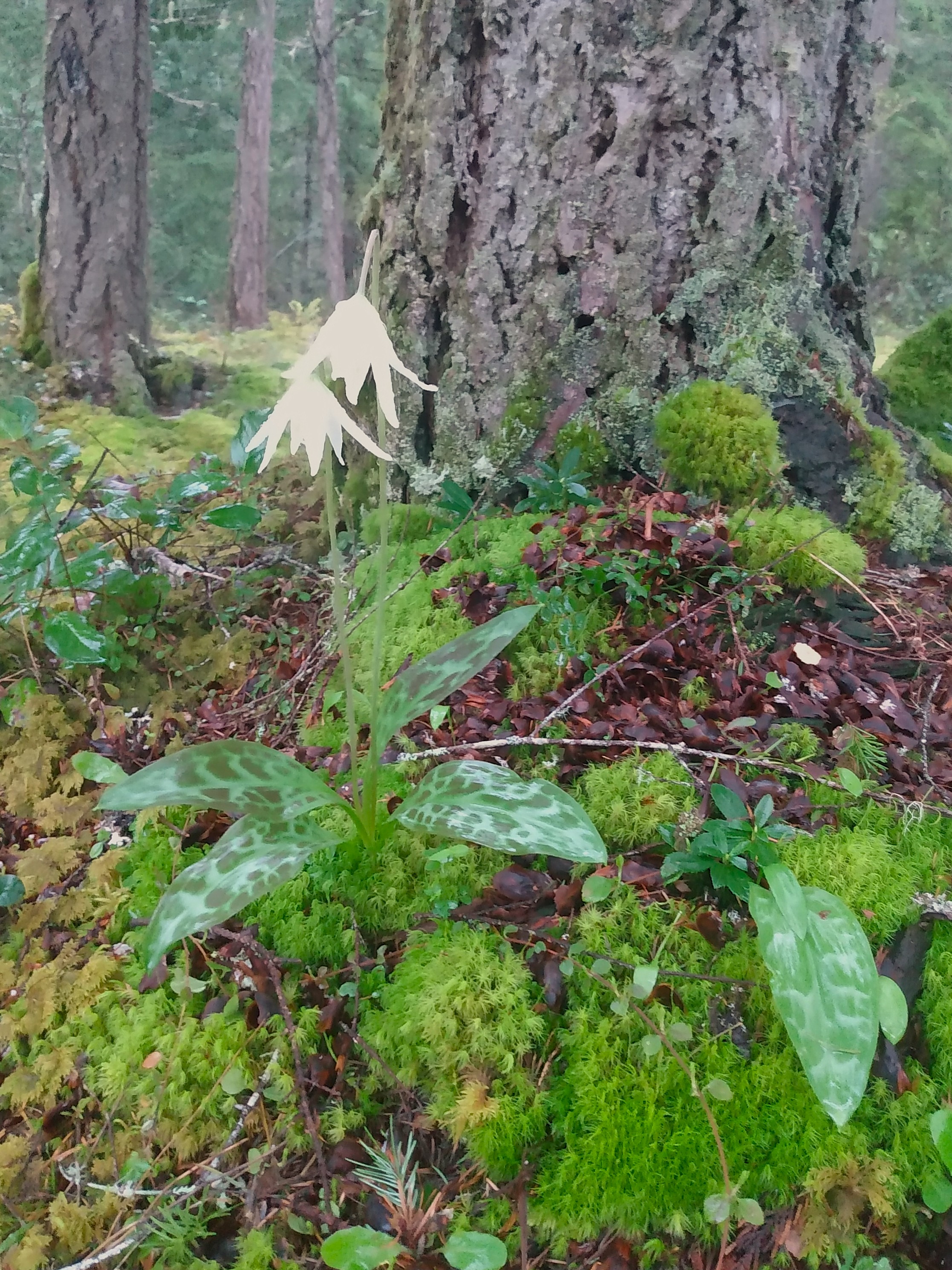
When I woke in the night, there was moonlight filtered through wispy clouds. My first thought was the lilies I’d found blooming under a Douglas fir we call the lyrical fir because of the way its branches spread like lines of poetry.

Amid the gray trunks of ancient trees we found
the gay woodland lilies nodding on their stems,
frail and fair, so delicately balanced the air
held or moved them as it stood or moved.

I imagined the lilies holding the moon’s light like crucibles. I didn’t go out. I returned to bed and thought about the things I’ve stopped noticing. These lilies are not wild, though you aren’t wrong if you’re thinking they’re our native Erythronium oregonum, or fawn lily. They’re a cultivar, though I’ve forgotten which one. I’ve never found the wild fawn lilies on our land but they do grow nearby, at Francis Point and Smuggler’s Cove. The pink form, E. revolutum, grows in abundance at the Oyster River estuary near Campbell River on Vancouver Island and every time we’ve been in the area this time of year we’ve stopped to walk the estuary trail to take photographs. There are masses of them, and lots of trilliums too.
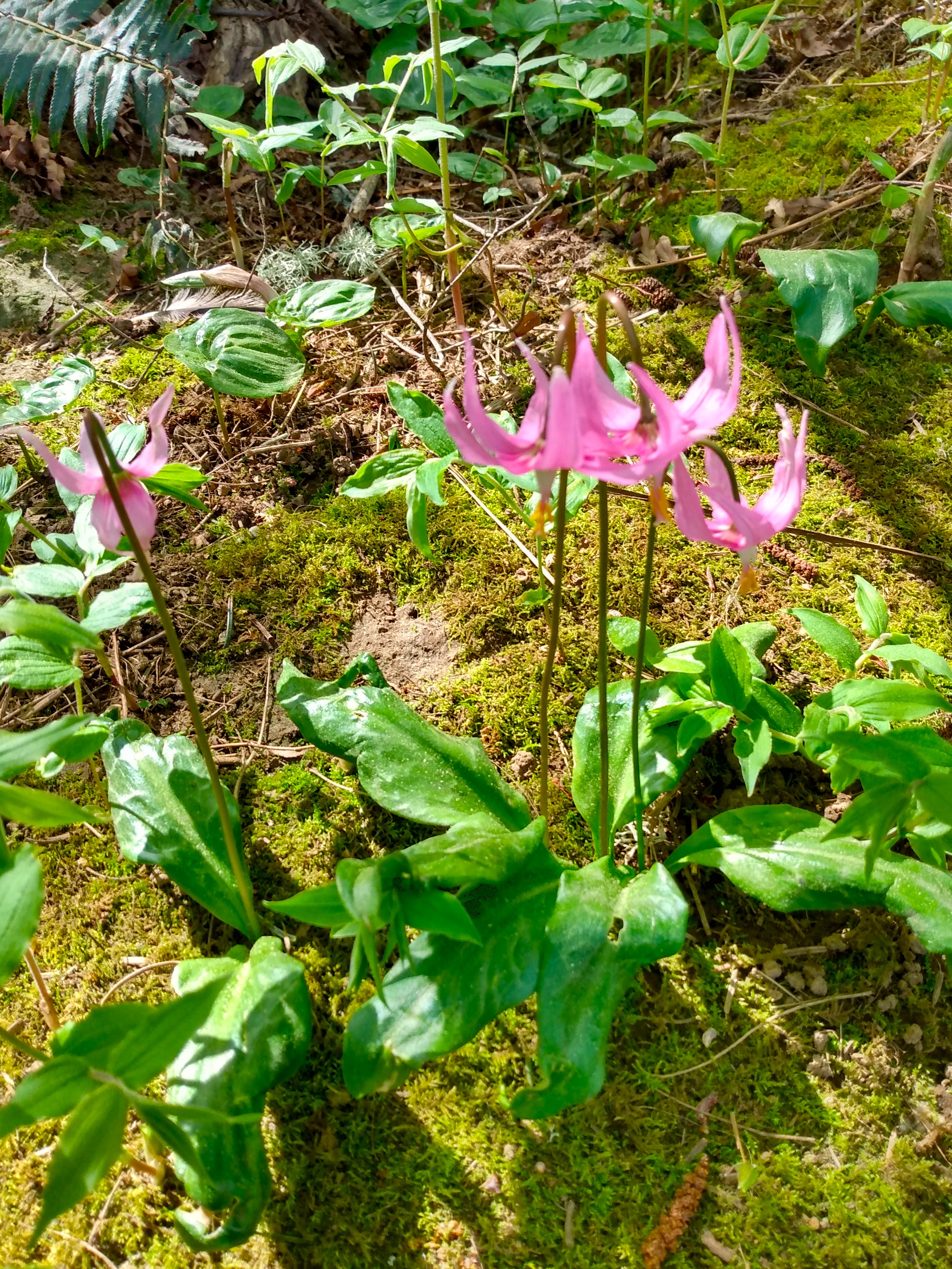
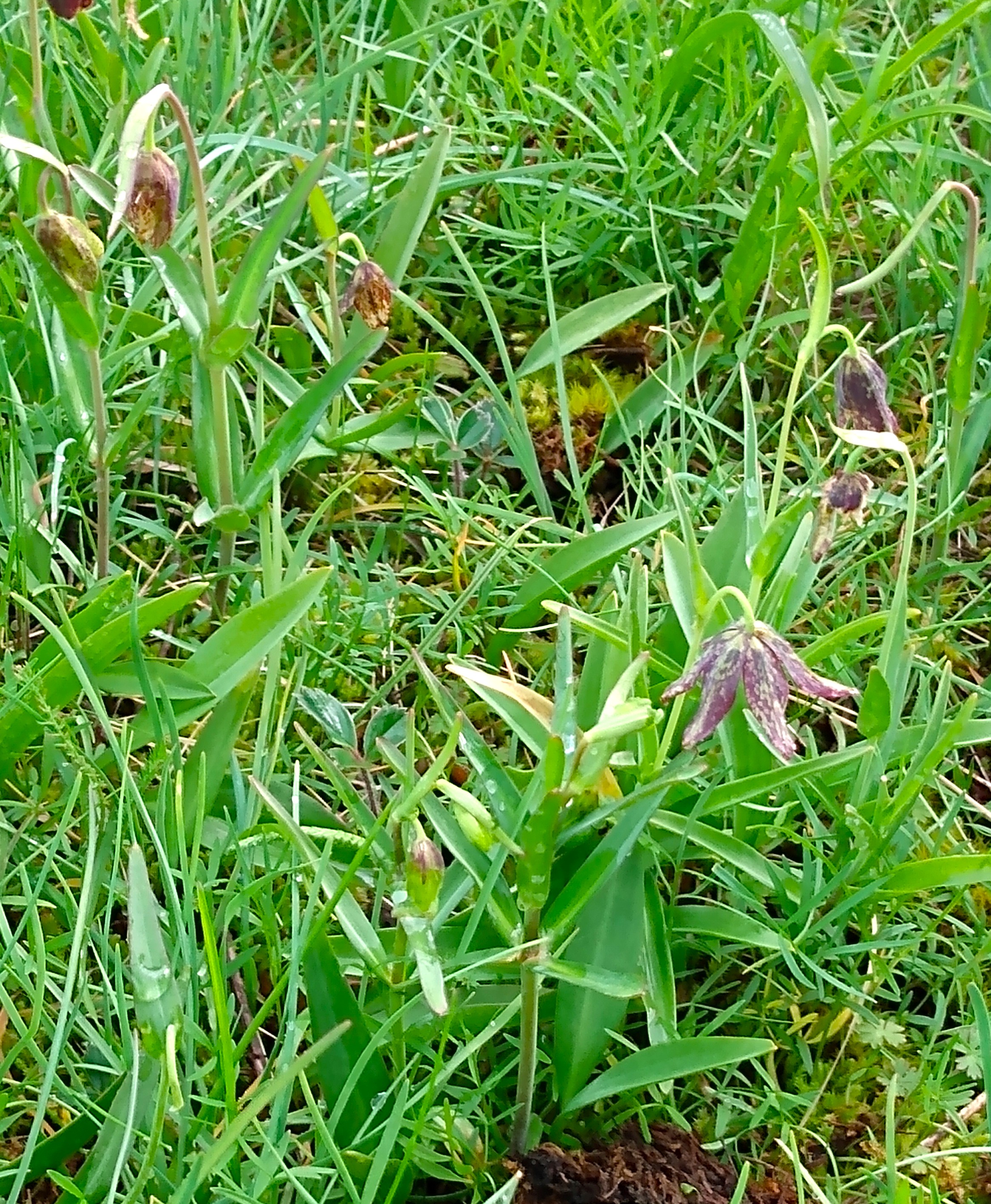
I saw these pink lilies as we drove to Campbell River to begin a week’s adventure exploring the Discovery Islands. It was mid-April, 2024. On our last day, we stopped at a little island that was covered with chocolate lilies (Fritillaria affinis), death camas (Zigadenus venenosus), and nodding onions (Allium cernuum), all of them in bloom and bees hovering over them as we stepped carefully through the grass.
I didn’t know it, not yet, but that was the last week of what I think of now as Before. I am living in After, though maybe there’s hope again with the return of the lilies under our lyrical fir.

Consider the lilies. They are such quiet beauties. In the night, I should have gone out to look at them in moonlight. I have been so unhappy for the past year, sleepless too many nights, with the shadows of my mistakes hovering in my consciousness, and now I want to simply consider the lilies.

Note: the lines of poetry are Wendell Berry’s, from his poem “The Lilies”

How does meaning find us?

For months I have been trying to understand a complicated tangle of events. Something happened in my life. It was my fault and I didn’t handle it well. But I also didn’t anticipate the consequences, how there was so much going on under the surface of an apparently normal situation. Under the surface, there was misunderstanding, pain, accumulated hurts and grievances, broken connections, strands of hostility (mine, theirs). I initiated the events. I own that. It was my fault. For months I have been trying to understand how I could have been oblivious to the currents and turbulence. (A small voice tells me that I must have known, when I did what I did, that nothing would be the same after. I must have known.)

So much of my thinking happens in the night or else while I am swimming. I have been thinking about this situation for nearly a year. It hasn’t been easy. Some mornings I am grateful to be in the pool because no one can tell I’m crying. As I push my body through the water, I try to release the difficult knots in the tangle, the ones I can’t untie. It’s hard, awkward. Some of the knots go back decades. And if I untie them all, untangle them all, what will I be left with? I am trying to find out.

One thing I’ve unravelled is a series of old hopes and expectations. I’ve written here of the trip we took to France in the fall so I could visit some of the paleolithic caves I first learned about 50 years ago. I even wrote about them then. When I was planning my university courses for my first year, I was drawn to anthropology. I met with an academic advisor who helped me with choices. I remember I took anthropology, sociology, and a linguistics course appropriate for anthropology majors. I also took English and Classical Literature in that first year and in the way that these things work, I ended up leaving the anthropology dream behind. I found my English and Classics professors more encouraging. Am I wrong in remembering that the anthropology guys were real bros in those years? They’d talk about their field work–the linguistics prof went to eastern Washington every weekend to work on a Spokane dictionary — and it didn’t seem that there were many women included in this group. It didn’t feel welcoming, not in the way Peter Smith made a generous place for young students interested in Greek tragedy or epic poetry. Or Rosemary Sullivan opened the possibilities of literary scholarship.

Swimming, I’ve been remembering how dazzled I was to enter the cave opening in the photo at the beginning of this post. How I forgot that I can be claustrophobic as I slithered sideways through a narrow passage that led to the images I’d seen as a 19 year old. How I was glad for the dim light our guide shone on the walls of the cave because no one could see I was crying (again). Over the week we were in the Dordogne, we visited 3 cave sites and would have gone to more if the rental car I’d arranged had actually worked out. I was relieved that John also loved these places (he took that photograph of the opening at Grotte de Font-de-Gaume) and is willing to return. There are places I want to visit in Spain too. And Portugal. I want to know more about the stylistic variations, the pigments, the meaning(s).

Swimming, I’ve been trying to find a way to understand the past year. I’ve learned I’m not the person I thought I was, haven’t exactly lived the life I thought I’d made for myself and others. So much feels sad and broken. I don’t know if I have enough time and intelligence to return to that path abandoned in my first year of university, the one that would give me a foundation for understanding the deep history of paleolithic art, but I think I’m going to try. I’ve identified a couple of online programs I can register for and I’ve already begun the reading. Maybe I don’t have the focus but then again, maybe I do. That path continued. I was the one who stepped off it. I found it again inside Font-de-Gaume and maybe I’ll find it elsewhere too.

Some mornings my swim feels sort of aimless. Back and forth, 3 strokes, 6 km. a week. But this morning I felt like I was finding something out, that meaning was finding me. Not the meaning I’ve been living with because somehow I have messed that up. Caused damage to people I love. I am trying to repair that but I have to live with my grief that I wasn’t good enough.

A poem I loved in those old days was John Berryman’s “Dream Song 30”, these lines in particular.

& I took up a pencil;
like this I’m longing with. One sign
would snow me back, back.
is there anyone in the audience who has lived in vain?

I don’t want to have lived in vain. I want to know things and I want to do things and yes, I am longing in this language I know and use but am willing to try something old and new. Or both. Is it too late? I hope not. How does meaning find us? In the dark, in the water, listening now to rain on a metal roof while a small fire burns in the woodstove nearby.

redux: “the future had slipped into the present” (Jessie Greengrass)

Note: anxious for some hope this morning. This was first posted 3 years ago.

thompson

As I write this on a rainy Monday morning, I am listening to “Become River” by the extraordinary composer John Luther Adams. I’ve written about him before. His composition “Become Ocean” is one of my favourite pieces of music, holding within it both the beauty and power of the world’s oceans but also the dark presence of the climate emergency. Alex Ross, who writes about music for the New Yorker, says this about “Become Ocean”:

The title comes from lines that John Cage wrote in tribute to the music of his colleague Lou Harrison: “Listening to it we become ocean.” There are also environmental implications, as Adams indicates in a brief, bleak note in the score: “Life on this earth first emerged from the sea. As the polar ice melts and sea level rises, we humans find ourselves facing the prospect that once again we may quite literally become ocean.” A onetime conservation activist who moved to Alaska in the nineteen-seventies, Adams has witnessed the effects of climate change at close range, and his music often reflects what he has seen. The 2007 orchestral work “Dark Waves,” among others, evokes mighty, natural processes through the accumulation of gradually shifting patterns. “Become Ocean” is his most ambitious effort in this vein: its three huge crescendos, evenly spaced over the three-quarter-hour span, suggest a tidal surge washing over all barriers.

These days I am flooded with fear about the future, what it holds for us as a species but more importantly (because we are only one of the estimated 8.7 million species that call the earth home), for our planet. It might go on. Will we? Do we deserve to? These are things I think about in the night when I can’t sleep. Yesterday I did what I always do this time of year: I planted seeds and transplanted hardy seedlings (begun a month ago, or two) into the garden. Purple sprouting broccoli, volunteers of perennial arugula, some cauliflower. I planted the peas out earlier in the week. I tidied the greenhouse and wondered how on earth to prune the little olive trees, where to plant the hardy pomegranate. Twenty years ago I would not have been thinking about olives or pomegranates but our climate has changed. Who can forget the heat dome last year, the one that claimed the lives of 600 people in British Columbia? Or the weather system known as an atmospheric river that caused extreme flooding, landslides, entire highway systems collapsed, loss of prime agricultural land in the Fraser Valley (along with huge numbers of farm animals who drowned in barns or flooded fields). The king tides. Or the fires: 8,700 square kilometers burned, driving people from their homes. The town of Lytton, at the confluence of the Fraser and Thompson Rivers, was completely destroyed. Imagine that for a moment. A vital community, one with a long history, Indigenous, settler, Chinese, the setting of Ethel Wilson’s gorgeous Hetty Dorval (and my own novella, The Weight of the Heart), burned to ash.

Over the past few days I read a compelling novel, The High House, by Jessie Greengrass. A small group of people in an isolated house on the edge of England are learning how to survive the unthinkable: the loss of a nearby village due to extreme flooding, with the ripples of climate events moving out into the larger world. These people are resourceful, in part because someone has made preparations for them, and in part because one of them has memory of previous floods, knows how to grow food to supplement what’s been hoarded for them, and provides practical advice and durable wisdom. One of the characters muses that floods had always happened elsewhere, far away, and one could feel sympathy but a kind of illusory confidence that surely it couldn’t come to that on one’s own doorstep.

The whole complicated system of modernity that had held us up, away from the earth, was crumbling, and we were becoming again what we had used to be: cold, and frightened of the weather, and frightened of the dark. Somehow, while we had all been busy, while we had been doing those small things that added up to living, the future had slipped into the present—and despite the fact that we had known that it would come, the overwhelming feeling, now that it was here, was of surprise…

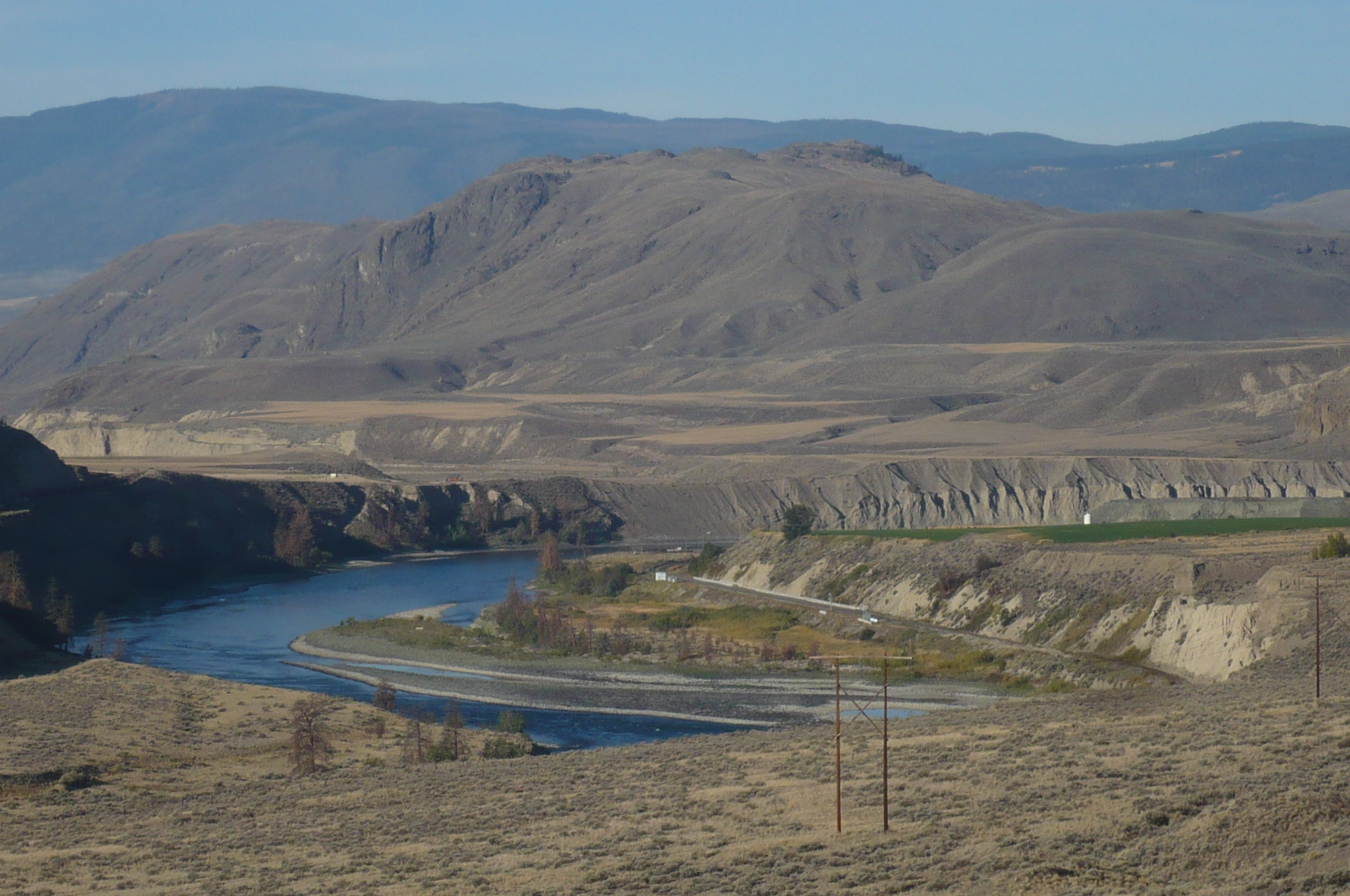
The glaciers are melting, the rivers rising, already a fire in northwestern B.C. has closed a major highway, and what can we do but plant seeds and hope for the best? Try our best? We are waiting for the installation of a heat pump here, in part for its energy efficiency and in part to cope with the high temperatures that we are told to expect again this summer. Reading and thinking into the small hours of the night does no one any good and I can’t recommend it but in daylight, I can recommend the transporting beauty of John Luther Adams, his oceans and rivers and deserts transposed to violins, percussion, harps. Sit in a quiet room and listen. Let your heart slow to the watery sonorities of oceans and rivers, the distant thunder and bells and the dry vibrations of heatwaves. These are stories we might need when the future slips into the present. Listening, I am remembering the Thompson River as it winds below Walhachin, the air redolent with sage and dry earth, a few low junipers, their bark peeling away. Listening in my own high house, rain on the roof, Steller’s jays churring for their breakfast, accompanying John Luther Adams on a winter walk.

If you hear the Mississippi in Become River, I wouldn’t disabuse you of that notion. I’ve been a lifelong river rat; And the river I know best is the great Tanana river in central Alaska that feeds into the mighty Yukon. 
But from time to time, people will ask me, which ocean, which desert, which river, and my answer is always the same. 
Your ocean, your river, your desert. What I hope the music does is invite you into this beautiful, enveloping place, and for you have to your own journey, your own experience, your own float down the river, rather than me telling you a story about mine. 

early April (zuihitsu)

1.I was standing by the kitchen window, looking out at the woodshed. I wasn’t thinking. I was drinking coffee out my green mug. First an Anna’s hummingbird (female) to the feeder just beyond the glass, then a rufous (female), the first I’ve seen this year, tiny, hungry after its long flight from Mexico. Yesterday there were bees in the daffodils. When the poet wrote, “what I want is less clear to me/now than it was then“, I wanted to say, yes.

        2. They come for days, weeks, then there’s absence–blue emptiness. Yesterday at lunch, one, then two, calling for seeds. Did they know I was planning an indigo vat?

        3. I wasn’t thinking. I reached down to move a pot of newly sprouted argula and the bee grazed my hand.

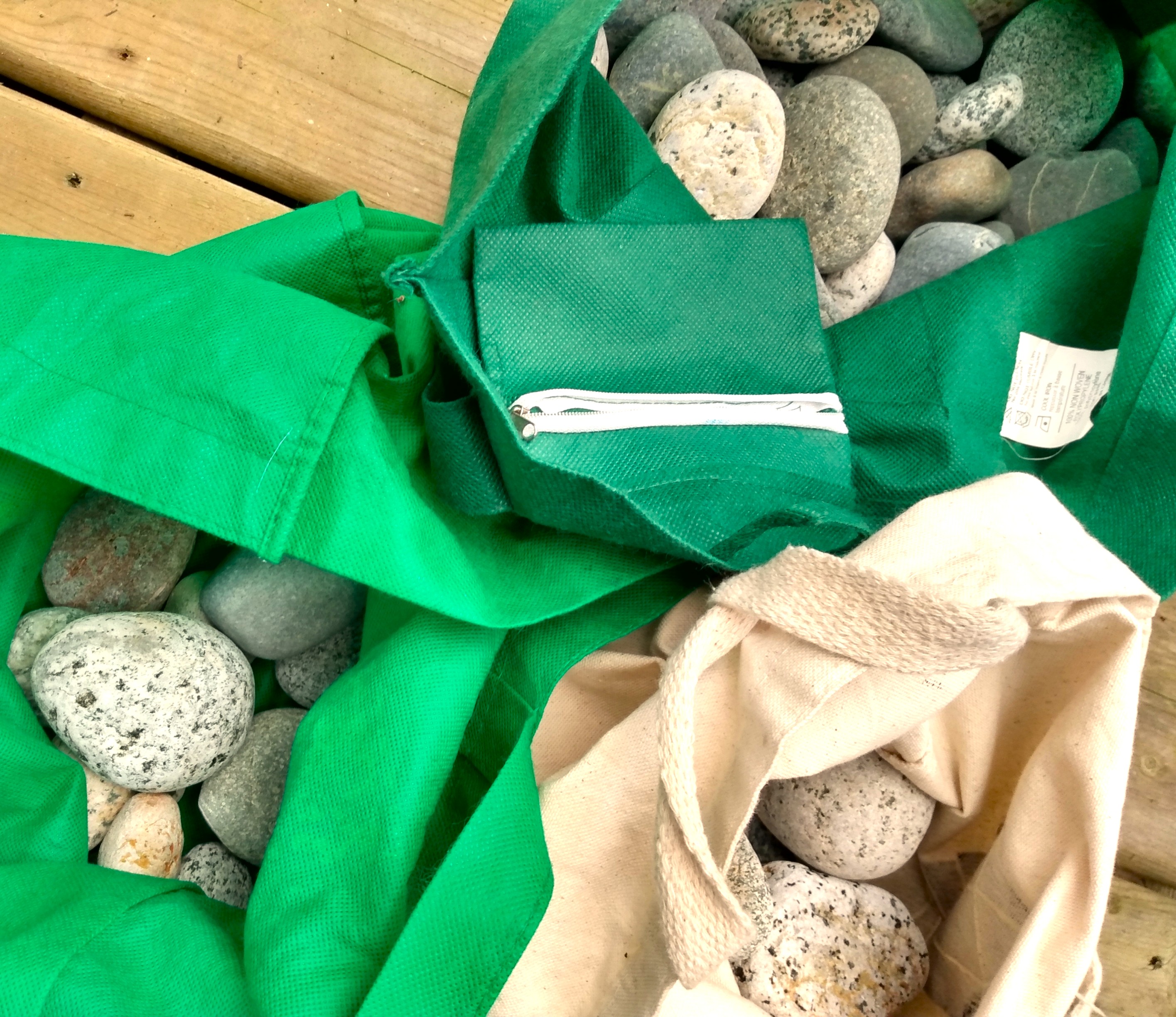
        4. The pots of salad greens are on the upper deck. The olives have bright new growth. I am slowly sweeping the greenhouse floor. Nearby, 3 bags of beach stones wait to be placed along the long edge of the greenhouse–a shoreline, river’s edge.

        5. She wrote, “to forgive myself as others/have forgiven me,” and oh, I want to say, yes, yes. (But have they?)

        Note: the lines of poetry are C.D. Wright’s, from “Against the Encroaching Grays”, published in The New Yorker, March 24, 2025.

        redux: you are here

        Note: this was 4 years ago.

        you are here

        1.

        Look, he said, showing you his phone. This is where we were 5 years ago today. Five years ago today we were in Edmonton, our granddaughter was not yet 2, her brother unborn, one cousin living in Ottawa and a second cousin years in the future. You were here. She was wearing a pink tutu and an flame-coloured parka and the hat you made her when she was born. Last night she asked for The Seven Silly Eaters and you read that to her and her brother, along with a Curious George, and you sat on the deck with the books while the tiny screen on your phone shared their faces, the little toys and toothbrushes and strawberry-flavoured toothpaste the dentist had given them after their check-up. They showed you their teeth. You showed them the herbs you’d repotted, the iron frog in one of the pots, the clay robin in another. You are here. Just for the moment you are here.

        2.

        Your friend tells you she has tomato plants for you so you stop by after your swim. She is there, her husband too, and another friend. You haven’t seen them for months. They are just up the road but it hasn’t seemed safe to see them though now that better weather is here, you think that might change. There are 16 plants, 9 different cultivars, and you find a place for them in your new greenhouse. When it’s time to plant them out, you will remember your friend at her greenhouse door, handing her husband the box to put in your car. You are here, you are in a familiar place, the scent of tomato plants green and heady, and maybe by summer you will eat together again, sit under the stars, share the goodness of your gardens.

        3.

        When you wake in the night, you are in a panic. Yesterday’s infection numbers were too high, you couldn’t sleep, and then you could, but when you woke at 3 a.m. you couldn’t stop your heart from racing. So you turned on your reading light while you husband dreamed next to you, you picked up your book, Gabriel Byrne’s stunning Walking with Ghosts, and you read for two hours while the only sound in the house was you turning pages. Turn the page. You are more than half-way through the story. You are here.

        4.

        You are home. Your husband has just put another log on the fire against April’s capricious cold. There is new snow high on the mountain. You are safe here where no one comes. Coffee in the pot, ginger cookies in the old pottery crock. And Sam Lee singing:

        Oh starlight, oh starlight
        I’m walking through the starlight
        Lay this body down
        I see moonlight
        I’m walking through the moonlight
        Lay this body down*

        You are here. A little stack of books for when the children call for a story. The scent of daffodils. Walking with Ghosts half-finished. Too much has happened. You are here.

        *”Lay This Body Down“, from Old Wow.

        “the earth would be fortunate if we left our only mark in stone”

        This morning, at the pool, John said, Soon you’ll be swimming in the lake! Another month? And my heart beat a little more quickly. I’ve been thinking of those lake swims lately, the water like silk over the shoulders, the company of dragonflies, birds, cutthroat trout. Early yesterday I was sorting out some files on my computer and saw an essay I haven’t yet been able to publish. One journal felt it was too long, another “not engaged enough with its subject”, etc. It began as a meditation on the kingfishers I see on many summer mornings and then it gathered a few other things into its basket of meaning. Here’s a section:

        10,000 years ago, or 8,000 years, or more, or less, swimmers plunged into a river or a lake in a valley now long become desert. Their bodies arched, as mine arches when I swim each morning in Ruby Lake. Someone painted them onto rock, the joy of their swim beautifully captured, someone who watched them carefully, maybe lovingly. One of them is diving or plunging, another drifts. They are buoyant in red granite, swimming over time in a river no longer in existence. Rainfall patterns changed (it hasn’t rained here significantly for 4 months), people migrated south (California is burning, flooding), vegetation changed due to shifts in solar insolaration, and what was once a verdant swimming hole became a barren desert, what’s now the Egyptian Sahara, near the Libyan border. I am buoyant in green water in a forest where the iconic trees, Western Red Cedars, are dying. (We are dying, Egypt, dying.) The swimmers at Wadi Sura stroke through time to where I am trying to write about the deep joy of my own swim, when I am in the water, looking up the sky, listening to loons, the soft swoop of swallows as they feed on mayflies or mosquitoes, the joy of the swim, and the sadness I feel at the changing climate of our planet.

        During his desert explorations in 1933, the Hungarian cartographer László Almásy found the cave of the swimmers, in the company of cartographers. His association with the cave is commemorated in Michael Ondaatje’s novel, The English Patient. In his own booki about the Sahara, Almásy proposes a theory of climatic shift in the desert, from temperate to xeric; his ideas were not supported by his editor. And yet. Yet. The swimmers in the cave at Wadi Sura move through time, from the water of their genesis to the sere sandstone of today’s Gilf Kebir plateau, one of the driest places on the planet.

        On the mornings when smoke haze softens the distant mountains, deadens the air, makes breathing more difficult, when the temperatures break records day after day so that I am already looking ahead to winter, I think of those swimmers in their beautiful moment, intact on a cave wall, the source of water, a river, a lake, long gone. On the news, water levels historically low in the South Thompson River, Cowichan River, Sooke River, Similkameen, Nicola, Coldwater. July, 2023 was the hottest month ever recorded on the planet. I remember driving up a dry roadbed to the McAbee site in what’s one of the driest areas in British Columbia, dry, dry, tiny junipers and sage on the hill, rattlesnakes in the rock mounds, and seeing the evidence of lush forests, deep water, taxa including chordata —Eohiodon rosei, the mooneye fish, eosalmo or fossil trout (related to Eosalmo driftwoodensii, the tiny proto-salmon)–, arthropoda (true flies, earwigs, wasps, bees, mayflies, dragonflies, moths), plantae (ferns, horsetails, rhododendrons, willows, ginkgo, pines and dawn redwoods, oaks and grapevines), and realizing that our time (their time) happens in a blink of an eye, though hurricanes rage, wildfires turn a landscape to smoke and ash, and the earth would be fortunate if we left our only mark in stone.

        Note: the images are from the Cave of Swimmers at Wadi Sura. I found them online, unattributed.

        quotidian lines

        Listening: I’m listening for the first Swainson’s thrushes, the ones I hear every spring just to the south of my bedroom window, the ones I’ve only seen once, by chance, on the moss, russet-backed, speckled breast, but their song is a mnemonic for spring, for spring mornings, sometimes entwined with the salmonberry song of the robins, the rougher western tanager, the single long whistle of the varied thrush.

        Sipping: the other night at bedtime I asked for a small measure of Islay malt and I sipped it while re-reading Louise Erdrich’s Shadow Tag, a book I remembered for its fascinating portrayal of a marriage, an obsession, a painter-model relationship, a family. And yes, Reader, it was just as good the second time around.

        Reading: see above. And also several library books about natural dyes, a couple of long articles on parietal art from the Gravettian culture (still musing about formal study), and too much news.

        Thinking: while I’ve been swimming for the past couple of weeks, 5 mornings a week, I’ve been thinking about how the world has become such a chaotic place, beyond how I remember it to be. Is this because of the immediacy of our news sources, the omnipresence of social media, or is it because the norms of behaviour have changed, maybe irrevocably? Political discourse, for example. Our expectations of world leaders, that they behave in a civil manner towards others, that they treat their citizens and their peers with courtesy: is what we see now the new normal? Another example of why I’m glad we don’t live forever. I couldn’t bear it.

        Remembering: I wonder if the obverse side of remembering is anticipation because I am looking forward to swimming in the lake again, of leaving my towels on one of the picnic tables, remembering how it feels to be stepping out of my flip-flops, and entering the clear water, pushing out from the green shallows into deep dark water. I want that sense of communion, clouds overhead, or the sun coming up over Mount Hallowell, the loons calling, trout rising for mayflies, dragonflies hovering so close I can see the fretwork of their wings, the long stitches of swallows.

        Wishing: that I took some of the paths that veered off the main one that brought me here, to 70, followed them, learned their own topographies, maybe returning, maybe not.

        Eating: last night I made a salad we ate several times at Cafe Boulenc, in Oaxaca, using croutons of sourdough bread baked with a drizzle of olive oil, chopped tomatoes, fresh basil (from the greenhouse), thin tangles of red onion, green olives, a handful of arugula, tossed in a bowl with more olive oil and a splash of red wine vinegar. Flaky salt and a few grindings of pepper. We had it with saffron and dried chanterelle risotto.

        Finishing: I wish I could say I am finishing the pink and purple quilt I am making for my granddaughter, based on a bar graph she sent to me to let me know what colours she wanted (and Please, she said, no crazy designs), I wish I could say I was nearly finished. But I’m not. Not yet.

        Watching: I’ve been watching for salmonberry blossoms as we drive back from the pool and this morning there were so many! I’ve been watching for bears and last week I saw my first one of the season. I’ve been watching for rufous hummingbirds but none yet, or at least not here.

        Wearing: baggy jeans, a big red turtleneck I bought at the thrift store about 8 years ago (handknit by someone, not me), Chanel 19.

        Loving: the chickadees gathered in the wisteria this morning, calling for seeds.

        Hoping: the same old hopes and dreams.

        Enjoying: pricking out the tomato seedlings into bigger pots and easing their roots into soil. Planting salad greens in big tubs in the greenhouse to move up to the deck in a few weeks.

        Appreciating: the foresight of the person who came out one night about two weeks ago and hung a Canadian flag at the top of the Sakinaw hill and the fact that no one has vandalized it.

        colour dreams

        The other night I dreamed I was revising a novella. It was printed as a booklet, on peacock blue paper, and as I turned the pages to figure out what needed work, the narrative came to life (somehow), the action and characters coming off the page to let me see the gaps, the clunky parts, and the overwritten passages. What I loved best was the colour, the most vivid blue.

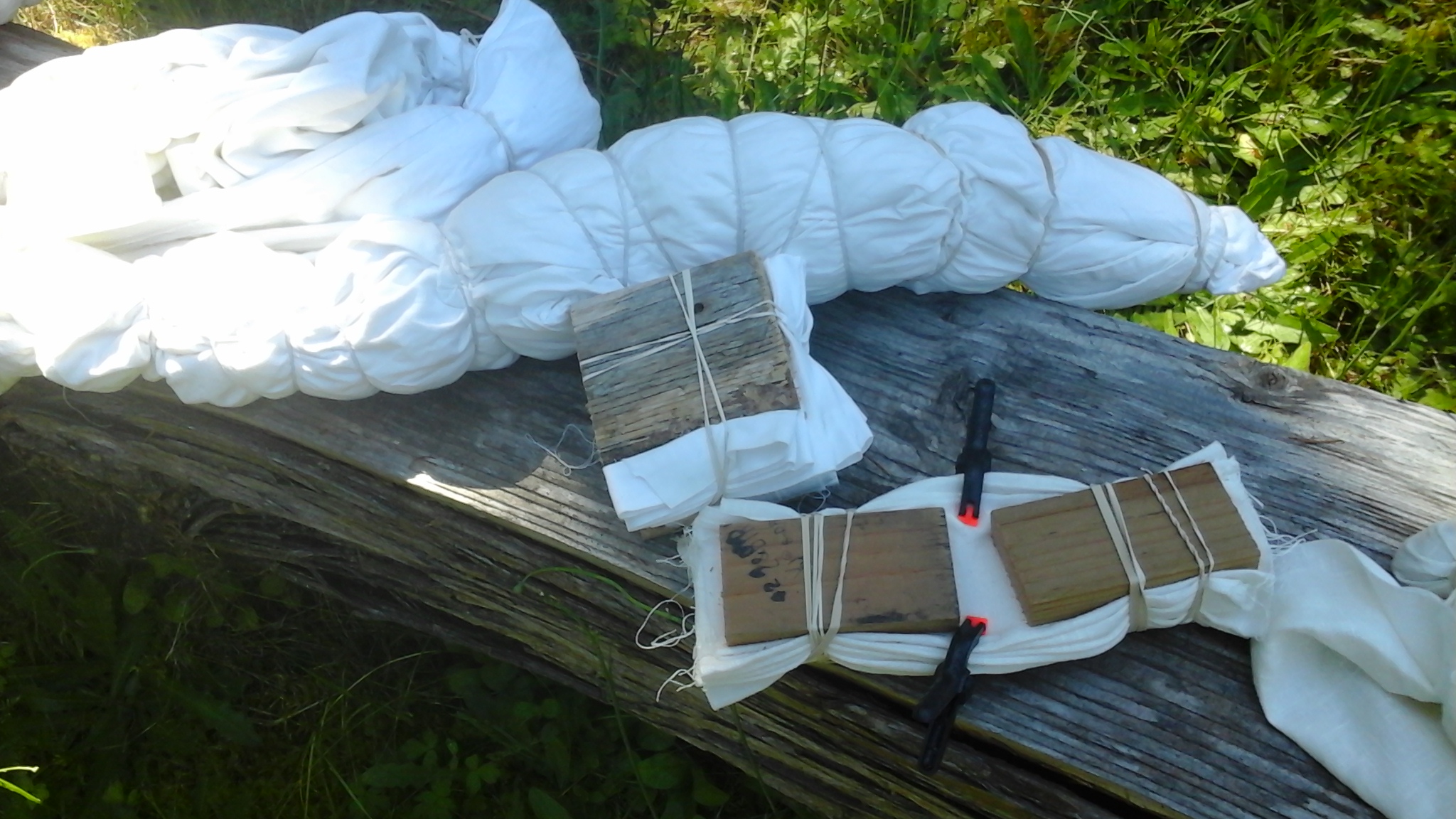
        If it ever stops raining, I’m going to begin planning my outdoor dye workshop. We have a deck off our utility room with PVC panels over part of it. Our hot tub was there for years (bought with some of the money from John’s Governor General’s award in 2006). It was one of the soft tubs, one we could move around if we needed to (when it was emptied of water), and it was wonderful. Then then it stopped working. We had it repaired. And then it stopped again and couldn’t be repaired. So it’s gone. But the deck remains. When I’ve done indigo dye work in the past, I’ve used a long cedar bench out by my vegetable garden:

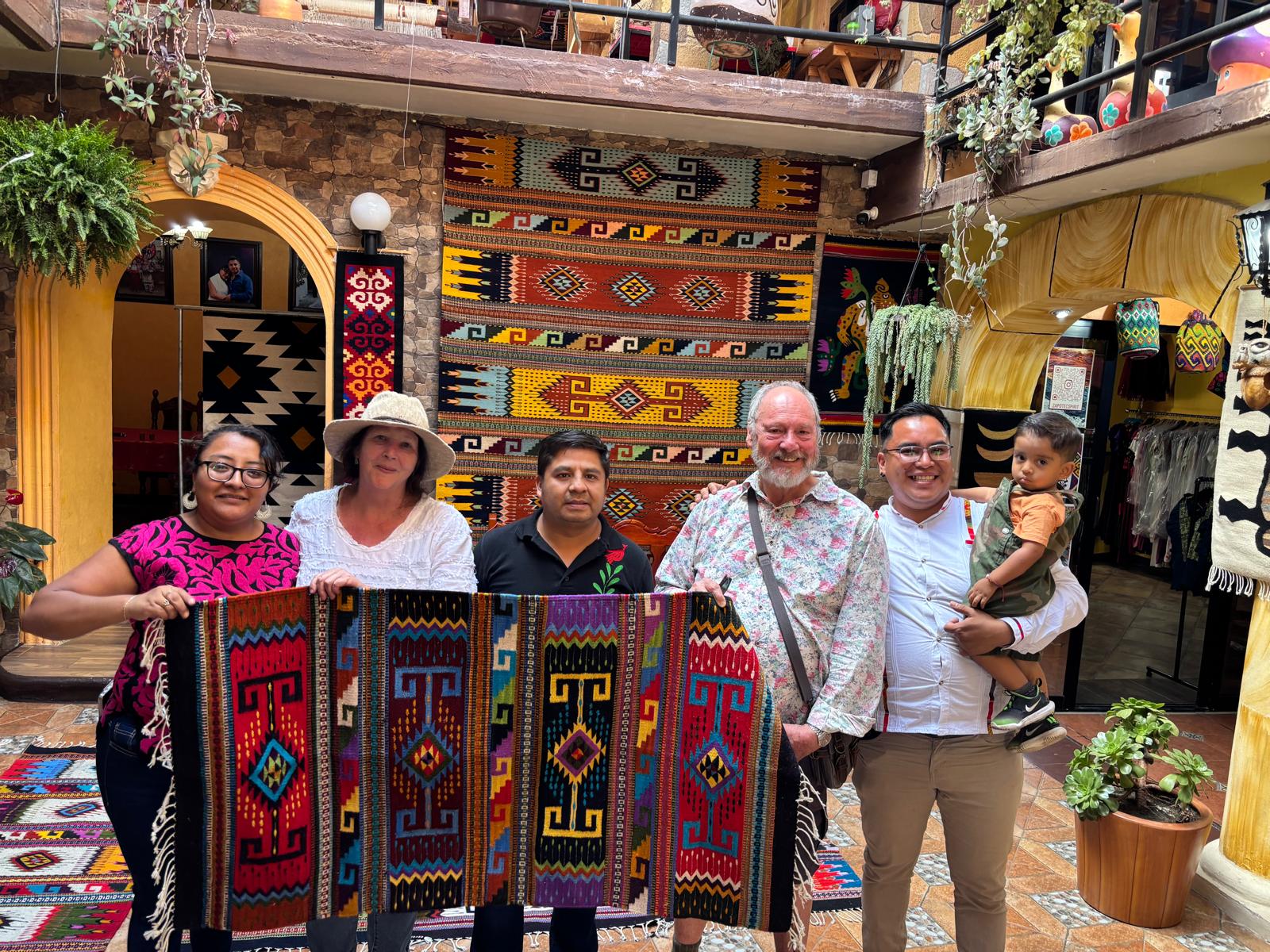
        It’s fine if I’m just using one vat and there’s the added bonus of being able to spread cloth out on the grass. But when we were in Oaxaca, we went to Teotitlán del Valle to spend an afternoon in the studio of Oscar Perez. He showed us every step of the process, from carding raw wool to spinning it to dyeing it and then weaving it. His work is superb. We bought this carpet:

        I was particularly taken by the dyes he was using. Indigo, yes, and some others I was familiar with, though I’ve never used them. Maybe I always felt a little intimidated by the science of dye work, trying to understand the chemistry. But honestly? Watching Oscar sprinkle some cochineal bugs on my palm, crushing them to a carmine paste, adding a little lemon juice, which turned the paste orangey-red, then adding some soda, which turned the paste royal purple, I thought, I can do this. Not well, perhaps, and maybe I’ll make a mess. But I am drawn to the work and will spend the nicer weather making my workshop and then seeing what happens.

        I ordered a bunch of natural dyes — I already have indigo and woad — and they arrived a week or two ago. Pomegranate, rose madder, marigold, and a little tub of cochineal:

        (The bugs live on nopal cactus. Oscar brushed the insects off a nopal paddle onto my palm.)

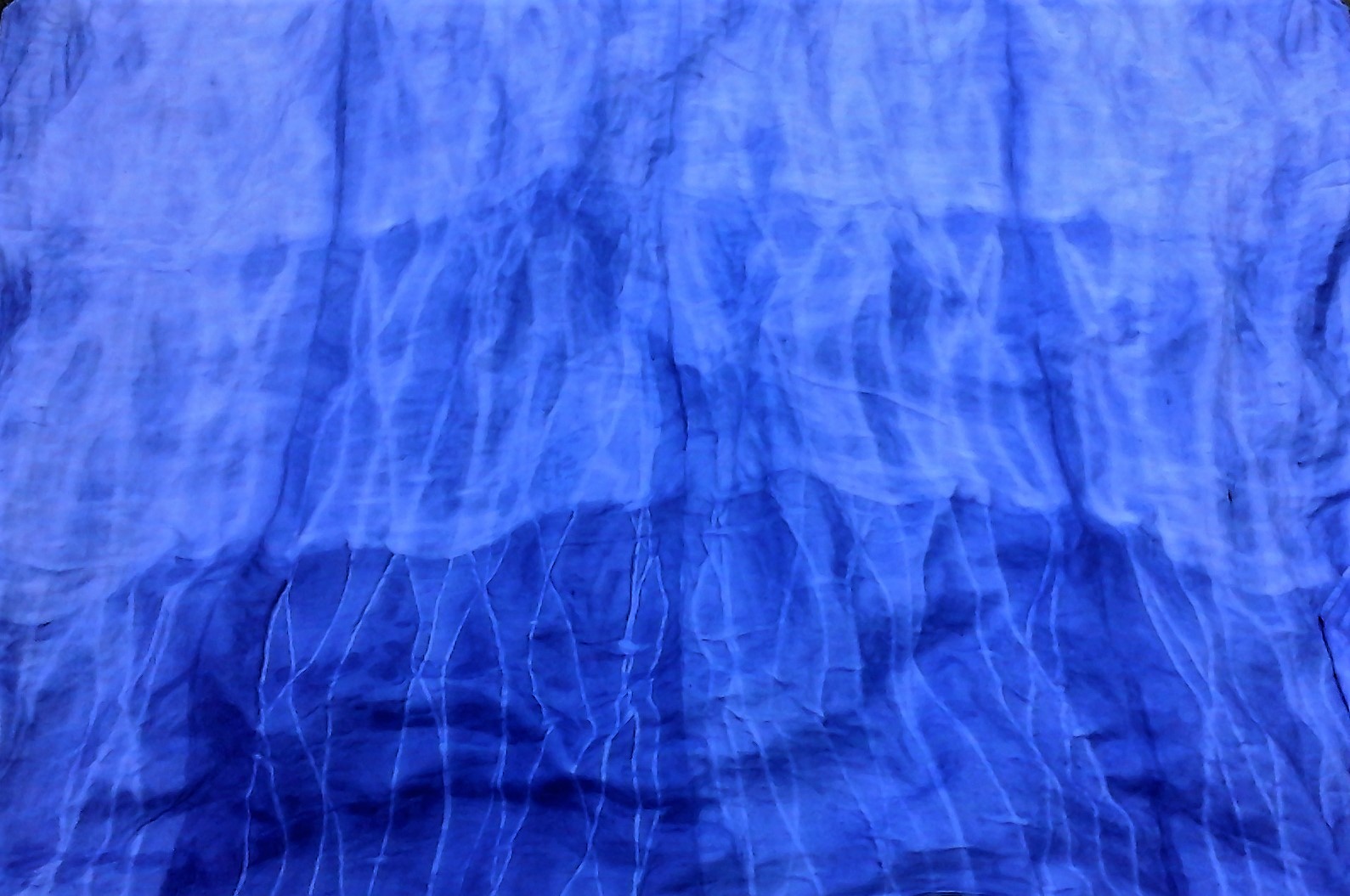
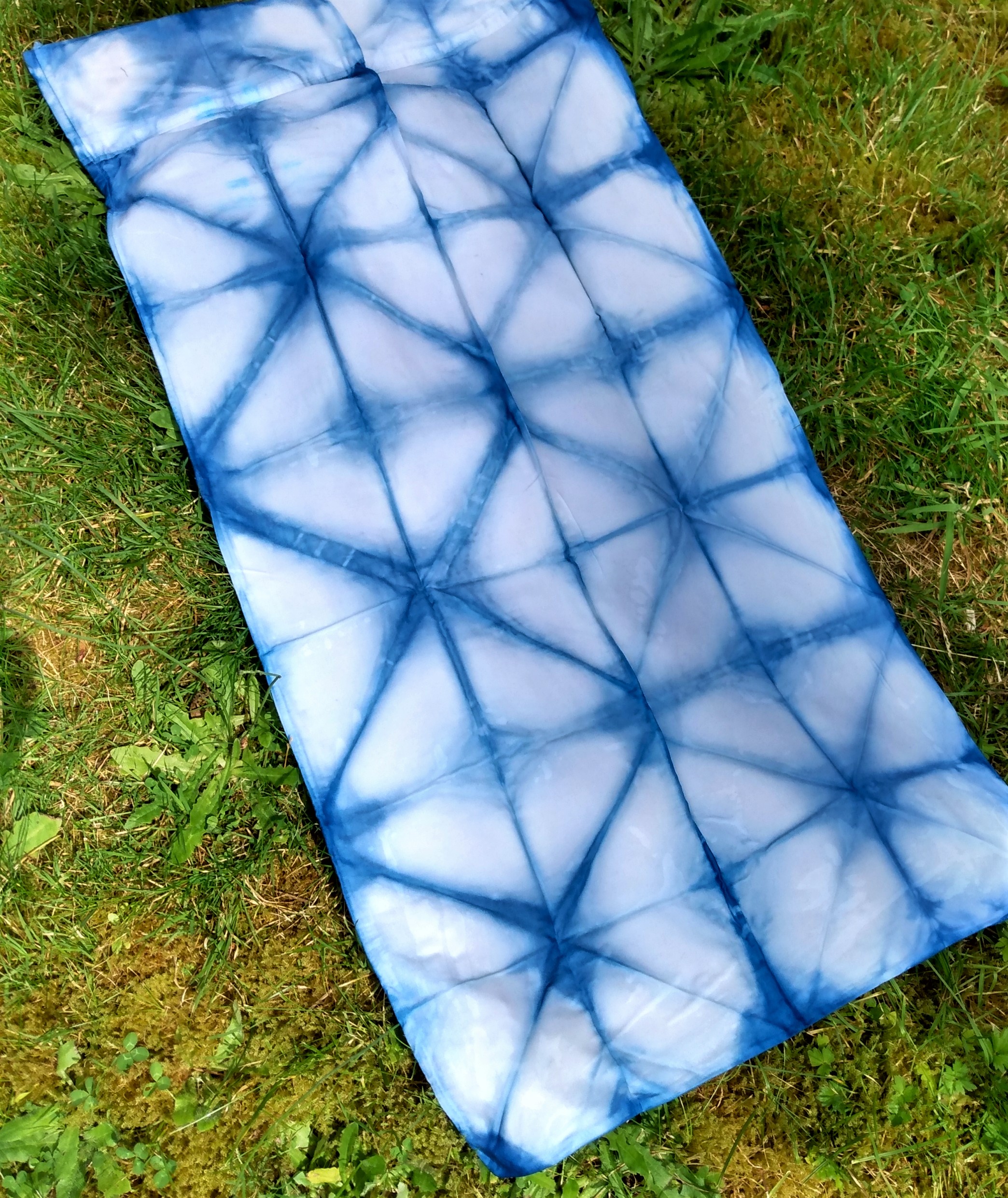
        After a winter storm, some long branches of a tall mahonia in our garden broke, and I’m saving the leaves and bark for a dye vat. I’ll collect some rock lichens too. John’s said he’ll make me some long benches and I’ll work out racks. I’m keeping my eye open for a big pot at the thrift store and I’m saving the 2 litre jars olives come in. One I’ll partly fill with old nuts and bolts and other worn-out hardware, for iron mordant. Maybe I’ll save pee for another. On our dining table, there’s a block printed Indian cloth, deep blue, though probably dyed with an aniline dye. And down the centre of the table, over the cloth, is a runner a friend gave me. She bought it in Japan. It’s indigo-dyed, outer lengths of linen with a shibori-dyed panel within. It’s beautiful enough to stop me in my tracks when I come into the kitchen. Linen takes dye so well and I have some lengths in my fabric trunk. I’m trying to source some more, and some silk. Rose madder scarves, with indigo borders? A marigold duvet cover? And something special, silk or linen, for cochineal. Just thinking about this sends my heart-rate up. I can’t wait.

        The novella I was revising in my dream came to life, each section enacting the story on the peacock-blue pages, so I could see what was there and what was missing. Maybe it’s a correlative for dye work. What’s there, what’s missing.

        redux: how to make a log cabin quilt while sheltering in place

        Note: this was written five years ago. Do you remember our lives then, as COVID-19 spread around the globe and no one knew quite what to expect?

        _____________________________________

        for a

        Sheltering in place is easier when the sun is shining. We spent the fine days outside, working in the garden, burning the piles of old branches and raked cones, etc. It wasn’t until the evening that I’d feel the spiral of anxiety taking me to its centre. What if, what if, what if.

        And now it’s raining. I am working on a memoir with John, or at least I’m writing my part and he’s writing his; later we’ll figure out how to seam them together. There are a number of ways we could do it and we’ll have to decide later what we want to do, how we want the perspectives to work together, to diverge, to return, to echo. But sometimes I feel too distracted to work with ideas and memories. I want to do hand work.

        In the meantime, there’s quilting. My friend A. helped me with the text design for my little chapbook made in honour of my 65th birthday. We were doing this back and forth, as she lives in the Netherlands. She was so helpful and so responsive that I asked her what colours she would choose for a textile. This is what she replied:

        Colours…are you asking what I think you’re asking? Regardless, I’m a fan of deep reds (not burgundy, but redder, earthier) and what W. refers to as ‘non-colour’ greens. Olive, forest, greens that blend in. Dark blues too. Is that boring?

        No, not boring at all. (And yes, I was asking what she thought I was asking.) Not boring, but a challenge. I have a trunk with fabric collected over the years, some of it remnants from other projects and some of it scraps hoarded for the right quilt. For years I made blue and yellow quilts and if I’m honest, those are still the colours I love best. And stars. I made several Variable Star quilts and then decided to do something else. So I made a plan and began to cut and (I’m not joking) the blocks turned into Variable Stars. It was as though my hands were guided in a direction I had no control over.

        I’ve been thinking about what kind of design would work best for this quilt of non-colour greens and blues. And that red, not burgundy. I always have lots of blue but did I have the right blue? I hope so. I found a stash of scraps from Maiwa on Granville Island. I’d gone to buy indigo powder for a dyeing project and there was a bin of linen with bags alongside and a sign saying you could fill a bag for $10. A big bag, good quality linen, with several shades of what I’m hoping is non-colour green.

        So writing a book about building a house and wondering what kind of quilt to make. Then it came to me. A log-cabin quilt. I’ve made three and I love the process of building the blocks, log-strip by log strip. It’s a pattern that is generally associated with post-Civil War American quilt-making but some textile scholars believe that the inspiration reaches back to the ancient Egyptians. When tombs were opened in the early 19th century, archaeologists were surprised to find mummified animals, companions to the dead, wrapped in intricately woven or pieced strips of linen. There are several ways of arranging the strips in log-cabin quilts so that resulting pattern might be a Barn Raising, Sunshine and Shadows, Courthouse Steps, or Straight Furrows. I made mine into what I think of as Gods Eyes, mostly because my skills are so careless that my blocks never come together nicely.  Here’s a section from a quilt I made 20 years ago for my parents’ 50th wedding anniversary; it’s now on my bed.

        50th anniversary

        The red square in the centre of each block represents the hearth at the heart of the cabin, though there are versions with yellow squares for lighted windows, and black squares on quilts used as coded guides on the Underground Railroad. I’m using little scraps of duppioni silk for A’s quilt. More than 40 years ago I attended a quilt show at Kilkenny Castle in Ireland and saw beautiful examples of patchwork made with the most luxurious fabrics. But I lost my heart to the rough log cabin quilts, worked by poor women, made from flour sacks and remnants of work clothing. They were lopsided, with loose stitches and mismatched strips echoing examples their makers had seen in the big houses where they might have taken a chicken to sell or scrubbed floors for a few pence.

        You build log by log, strip by strip. In the book you are writing, you remember nailing plywood for subfloors to joists set on beams. When the plywood was nailed down, when the walls were lifted and tied together at the corners, when the rafters were set on the top-plates of the walls, and then the strapping nailed on to the rafters and the shakes nailed on, course by course, when the cedar siding was nailed onto the exterior, you had a house that eventually became a home. One by one I’ll make these blocks, trying to keep the courses straight and true, a way to work my way through these days of rain and isolation. I’ll use earthy red for the sashing and maybe fasten each square with two-eyed shell buttons for vision. Fire at the heart, sturdy walls, from my home to hers.

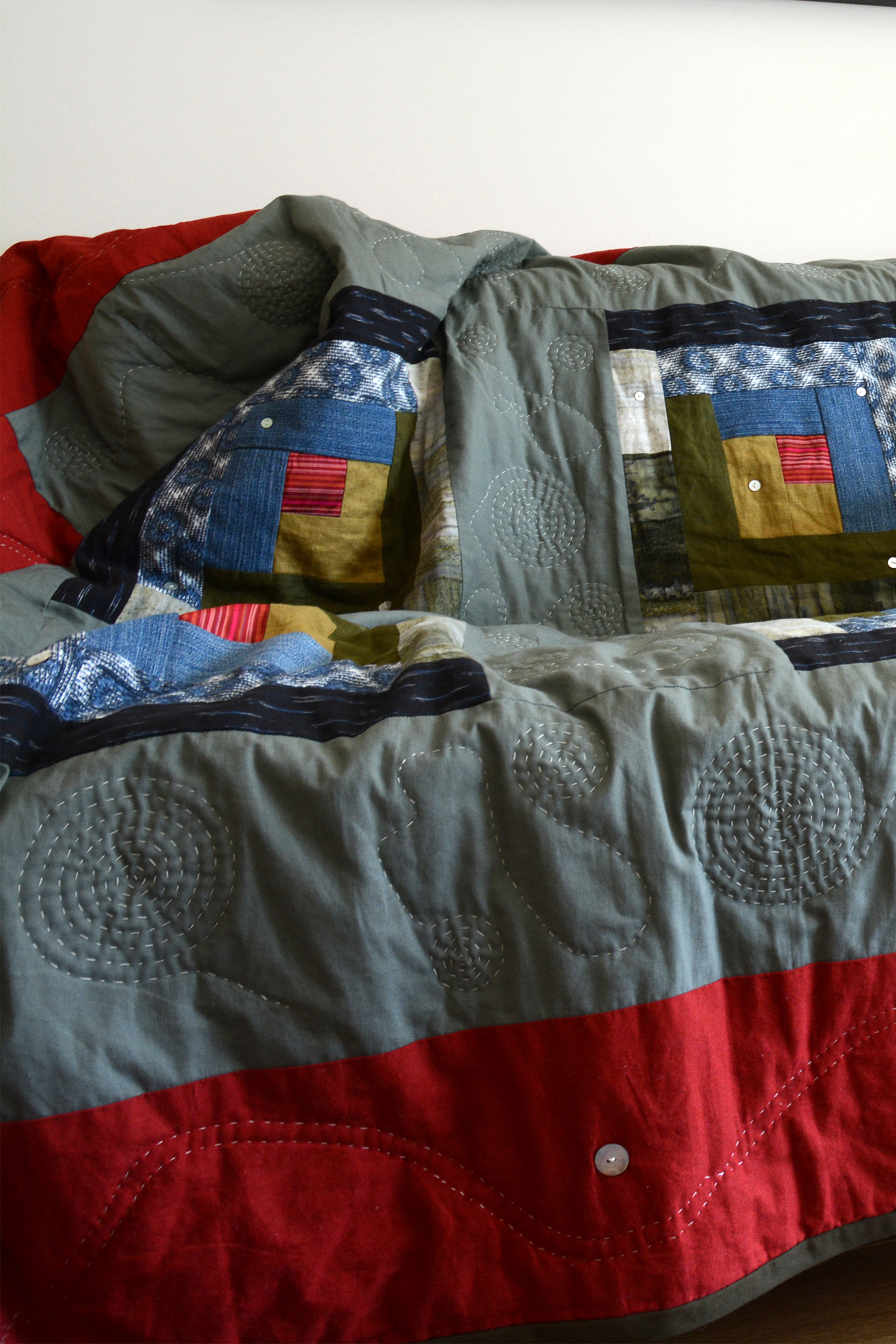
        Second note: and here the quilt is, finished, in my friend’s home in the Netherlands.