on mothers

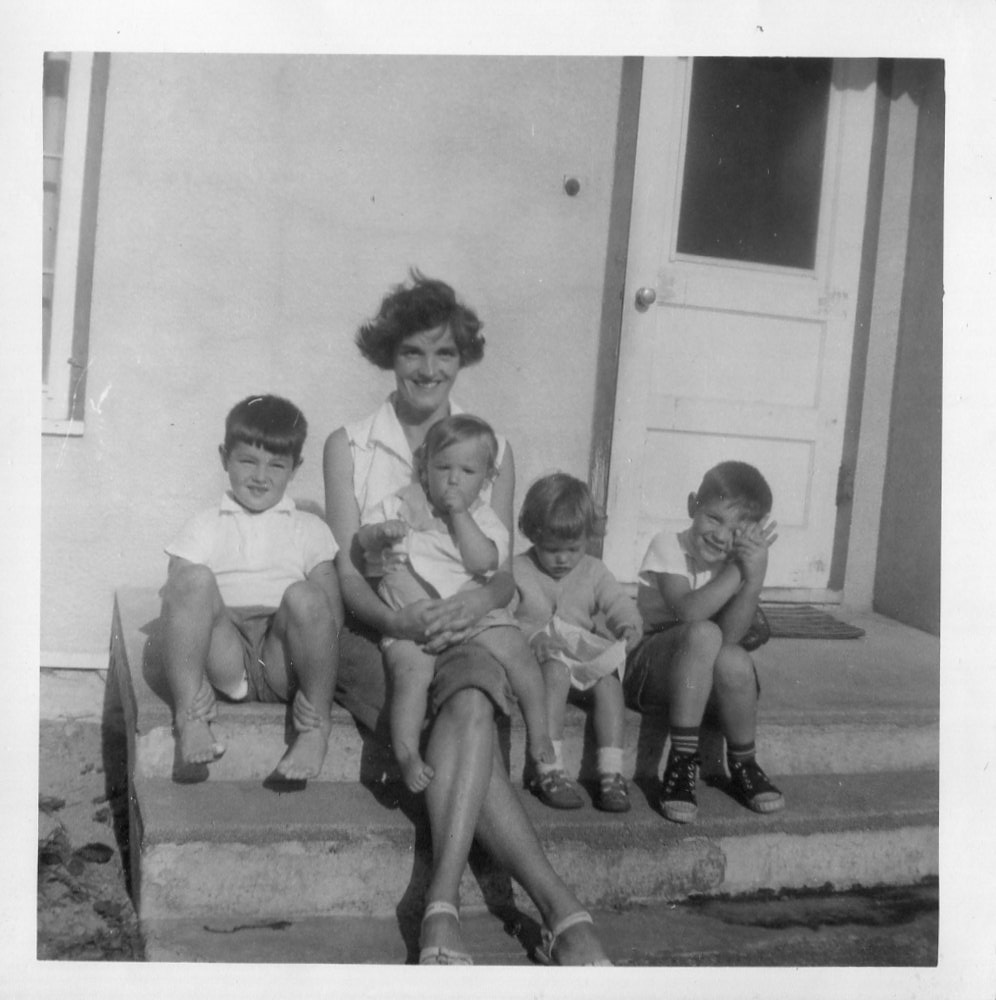
We spent three nights in a little house on the banks of the Thompson River in Kamloops. It was a gathering: two of my three brothers, their wives, and us. (We missed the brother who couldn’t join us.) And on Sunday, on Mothers Day, it was good to sit with my sisters-in-law and talk. Two of us have gone through difficulties with our children, learning late of some issues and animosities. We talked about that and the sister in our group who hasn’t experienced that said, I just don’t want to ask them about any of this. With my brothers, we talked about our parents (among everything else). Our father was difficult in many ways but also memorable. So many times over the three days I heard his expressions, the ones my children use, and maybe now their children as well. Our mother: well, she holds a different place in our memories and in our hearts. That’s her in the photograph, on a stoop in Belmont Park near Victoria, where we lived on two different occasions, in the married quarters provided to families of those serving in the armed forces. Our father was in the navy, a radar technician, and he was often away for months at a time. Our mum did her best to keep the household running smoothly. The laundry was done every Monday morning–she had a wringer washing machine–and she made our bread, kept us fed, walked us to places where we could swim (she didn’t drive), made sure birthdays and Christmases were memorable, though there wasn’t much money.

On Sunday, at my request, we all drove down to Nicola Lake along Highway 5A, taking a picnic. My older brother stopped at the places I asked him to stop along the way and my brothers and husband brought down chairs to the lakeshore. We sat in the sun. I swam. An osprey fished just beyond the beach. John and I shared stories of our many camping trips to Nicola Lake. Our children loved it. They’ve taken their children. I remember how we’d wake to the sound of the Clark’s nutcrackers in the Ponderosas and how everything would be covered in fine pollen. When the mornings heated up, the scent of sage was beautiful. I remember how our children rolled down the soft grass into the kikuli pits by the beach. How they loved the evening talks by the naturalist in the small amphitheatre. Once, the naturalist handed around a jar with a black widow in it! We’d walk up the hill behind the campsite to the remains of a volcano and bring a few stones back, riddled with tiny holes.

That night I was awake for an hour or two, thinking about families. About mothers. Was I grateful enough for mine? I wasn’t then but I am now. She did her best. Her own origin story is sad. She was given away at birth because her mother, a young-ish widow with 5 young children, became pregnant and the father wasn’t about to marry her. There’s a story there that I’ve only come to know, all because of sending off a DNA sample and being patient enough until the matches that arrived in my email box began to make sense. When I say she was given away at birth, that’s exactly right. A woman took her, accepted money for her care for the first while, and in the 1931 census, my mother is described as a “boarder” in the home. She was 5 years old.

The Thompson River flowed by the little house we stayed in for 3 nights. We sat outside with wine and beer and talked about everything under the sun. On Sunday every mother in our company received messages or phone calls from their children. We shared them. We laughed, told stories, remembered our own childhoods, in sunlight, and when the clouds moved in. I told my brothers I’d put my share of our parents’ ashes under a tree I see every day. I planted daffodils there, wildflowers. We all put a small portion of them into the sea near Tofino not long after they died. One brother still has a bag of them in his house. They are long dead now, but everywhere, my mother most of all.
redux: “My path was full of petals.”

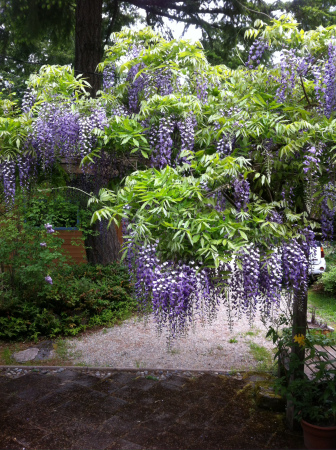
Note: this was first posted 5 years ago. And my path is still full of petals: the Kwanzan cherry blossoms falling quietly by the back door, and the first wisteria blooms cascading over the beam leading to the front door, the pergola over the western deck, and the railings of the upper deck just beyond my bedroom window.

______________

I was lying in bed, before 7 a.m., reading (The Mirror and the Light), when I heard two things. The first was skittering in the rose canes by the window, followed by more skittering in the narrow tunnels of the metal roof. For years I wasn’t sure what animal made these sounds and then about 4 years ago, I began to see the weasels regularly. In May. Mornings were best. A couple of times one would stop in its tracks as it used the rose canes to travel along the wall of house, peering at me as I lay in my bed. Another time I saw one race into one of the roof tunnels and then come out again. I wouldn’t have believed that an animal of its size could do that, slip into an opening as narrow as those forming part of the metal roof structure. But I saw one do it, in search of mice. One morning there was a terrific noise from the pair of robins nesting along the beam carrying wisteria across our patio from the woodshed to the house and then silence. When I went out, the robins were gone and so were their eggs. It was the same day that I saw this fellow on my laundry stoop:

weasel

So you’re back, I thought to myself, and continued to read. Continued to read until the song of the orange-crowned warbler in the arbutus blossoms made me go out to the deck to listen more closely. The honeyed scent of the blooms, drifts of cherry blossoms on the grass where the young deer was feeding yesterday.

Some days it’s lonely, waiting out a pandemic. I have my husband to talk to and there’s the telephone. But proximity: that’s what I miss some days. And that’s when I need to pay more attention because the place where I live is anything but empty. Look out a window and see hummingbirds darting from flower to flower. The mason bees who are everywhere right now, filling the houses we’ve made for them. Lizards in the rocks by the back door. Yesterday a snake curling around the hoses in the vegetable garden. They’re good company.

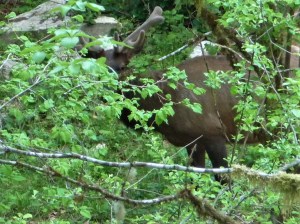
At breakfast, John was looking out the sliding doors facing west and saw an elk crossing the orchard, the one we worked at for so long but finally abandoned (you can read about that in Euclid’s Orchard…), and I went out to try to take a photograph. It was partly hidden in the trees, though I could see enough antler to realize it was a bull. And there’s a story. What bull elk is wandering alone in our woods this time of year? Probably not a harem master, not yet. But maybe we’ll hear him the fall, bugling in the woods as he faces off against another bull. This morning though? He was was happy just to drag down branches and eat. I could smell him from the deck, ripe as a horse.

bull in orchard

There’s talk of lifting some of the restrictions to shelter in place. Open the doors and see what comes in! A weasel, an elk with his mouth full of green leaves, a warbler singing his way through the morning. I think of Du Fu, anticipating visits after a time alone.

North of me, south of me, spring is in flood,
Day after day I have seen only gulls….
My path is full of petals — I have swept it for no others.
My thatch gate has been closed — but opens now for you.
It’s a long way to the market, I can offer you little —
Yet here in my cottage there is old wine for our cups.
Shall we summon my elderly neighbour to join us,
Call him through the fence, and pour the jar dry?

“There are arias I too would sing if I knew them.”

1.

Yesterday, enroute to the opera, we paused on the walkway leading off the ferry to watch 3 seals sunning themselves on rocks. It was a low tide. The ferry was right on time. On the muddy shore, a pair of geese with their goslings dozed at the edge of the water.

***

2.

At the opera, we sat on the mezzanine before the performance. I was drinking a glass of wine. Have you noticed how many people wear sneakers now, I asked. The woman in an off-the-shoulder red satin dress, her sneakers bright with sequins. A man in a formal black suit, wearing soft lilac pumas.

***

3.

The return ferry was late. As we drove home, the first star appeared over Davis Bay. Then another. Half-way, by Lilies Lake, almost no light left, apart from the stars, a coyote pup bounded up the bank by the road. By the time we drove up to our house, the dark sky was glittering, a half-moon caught in the arms of the Douglas fir right by our stairs.

***

4.

Lying awake in the night, I thought of her beautiful aria, “Un Bel Di, Vedromo”, how she sang as though she truly believed he would come.

And as he arrives
What will he say? What will he say?
He will call Butterfly from the distance
I without answering
Stay hidden
A little to tease him,
A little as to not die.
At the first meeting,

***

5.

Returning from Carmen exactly one year ago, I wasn’t expecting the message that awaited me. There are arias I too would sing if I knew them.

You? You? You? You? You? You? You?
Little God! Love, my love,
flower of lily and rose.

***

6.

The first roses have buds, Mme Alfred Carriere, the wild climbing dog. Yellow day-lilies will bloom next week. Or the week after. It doesn’t matter.

***

7.

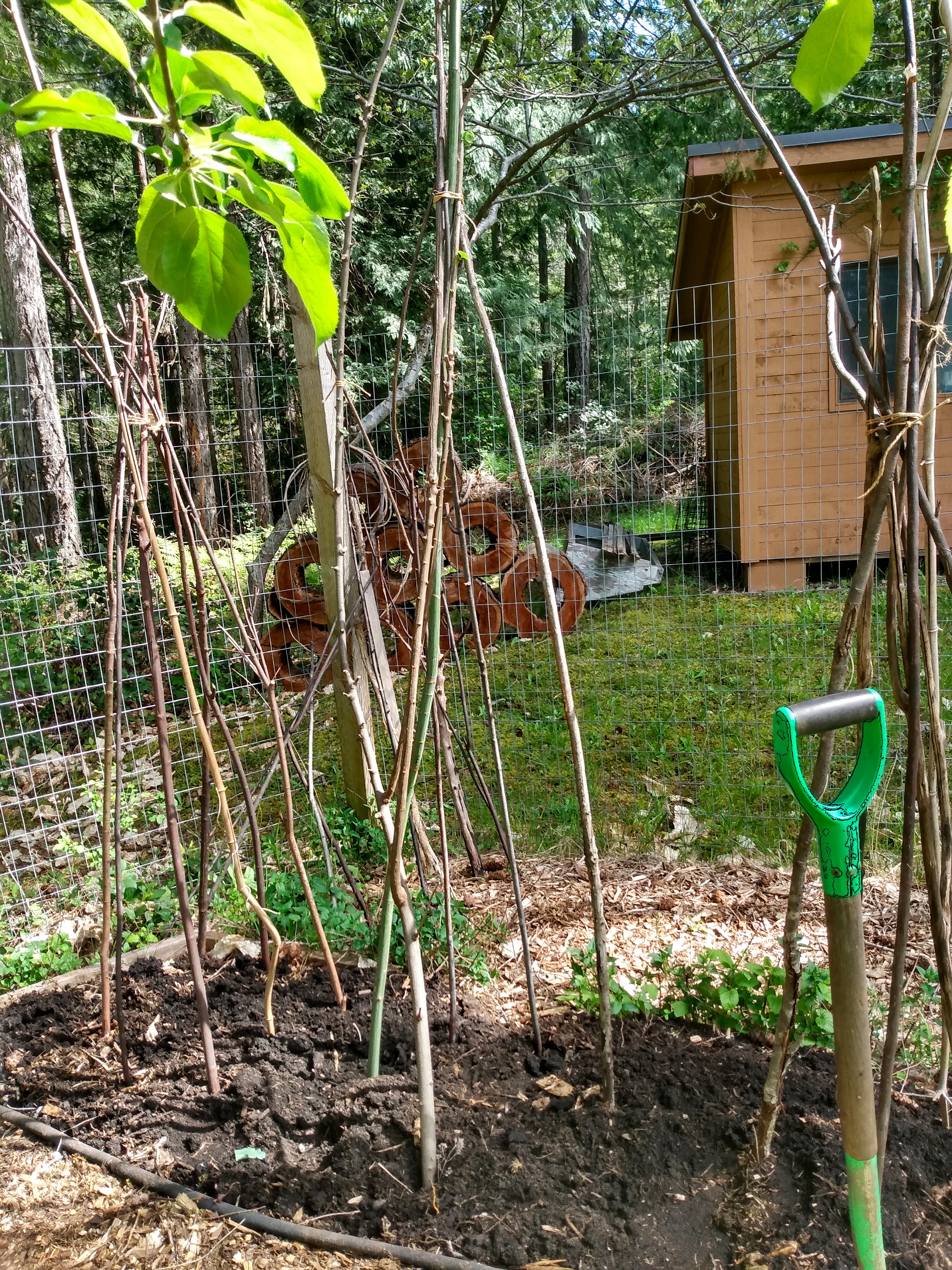
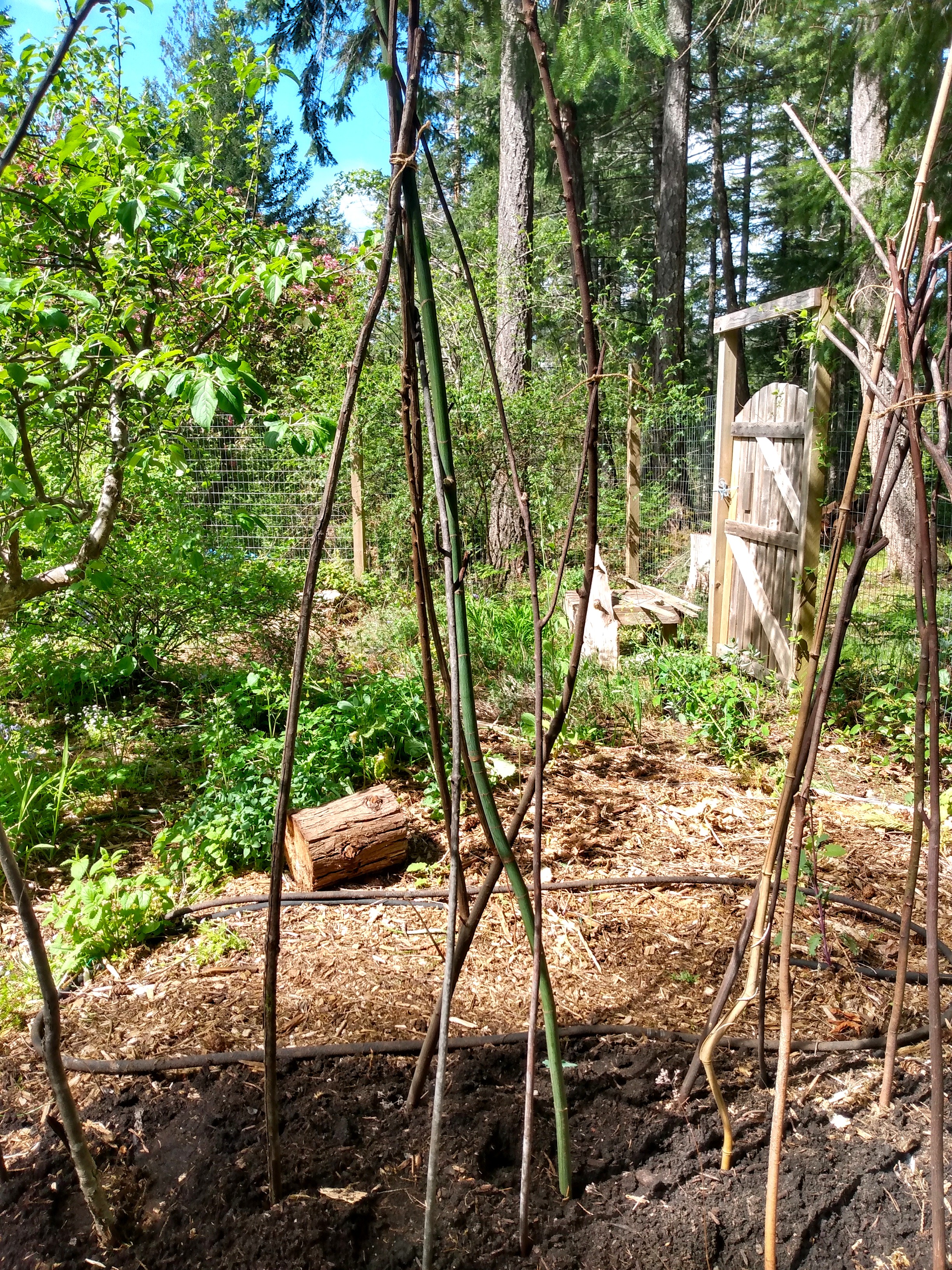
A tray of strong bean seedlings, Hilda Romanos and Blue Lakes, waits to be planted. Today I made the supports, trying to arrange the poles into something elegant and wild. Last year butterflies paused on the tallest canes.

redux: “I go to meet it.”

Note: this was written 5 years ago. Some things change, and they don’t.

deer, looking out

Some mornings I wake and forget that we are living through a pandemic. I lie in my bed, listening to birds that never sounded as sweet as they do this spring. Some mornings I wonder when we might feel that we are safe again. Will we? Will the world return to its old paradigm? Next month? The fall? Never, I suppose. I don’t think it should. We are not the same, are we? The news we’ve followed, the numbers, the charts, the models — those have guided us, like cryptic maps, to a place of no return. We need to abandon some of our old habits and expectations and we’ll need new ways to do things.

My daughter Angelica sent this photograph today, an image from her walk along Dallas Road in Victoria. When I was a child, you never saw deer in the city of Victoria. Out on Saanich peninsula, yes. I’d ride my horse on Island View Beach and there’d be deer nosing the tide line, nibbling the wind-shaped trees beyond. In the old orchards near the house where I spent my teen years, there were deer feeding on ancient wrinkled apples in fall. This photograph struck me as emblematic somehow. The new world, where deer claim the cemetery where I rode my bike, where peahens strut along the city streets, and where coyotes boldly walk the main thoroughfares in many major urban centres (though not yet on Vancouver Island).  For those of you who don’t know Victoria, Dallas Road follows the shoreline along the city’s southern boundary. On a clear day you can see the Olympic Peninsula on the other side of the Strait of Juan de Fuca, Hurricane Ridge, and the lights of Port Angeles at night.

In early January I bought a small datebook for 2020 and until the second week in March, its pages are filled with scribbled notes of appointments, meals with friends, planned trips to Vancouver. The last actual thing is swimming on March 14, 1.3 kilometers, and I remember the lifeguard assuring us that the pool would remain open for the foreseeable future. It was (at that point) deemed “safe”. What is safe anymore? The glove-box of our car holds sanitizer, masks, single-use gloves.

Yet the days are not without beauty or utility. There are lovely things that happen. My grandchildren call on WhatsApp. I lie on my bed (because it’s close to the modem; otherwise the video connection is erratic) and read them stories. They tell me about frogs in the ravine near where they live, and a porcupine they watched waddle along the path, and they chant We want buttercrunch, we want buttercrunch. This morning I made a double batch to send to three cities where those I love more than anything live their own modified lives. Life goes on, some of it the same (a gin and tonic on a deck in Ottawa, in sunlight; the visit to the frogs in Mill Creek Ravine; walks along Dallas Road), and some of it still working itself out. One grandson in Ottawa told me about the ambulance video he’d seen (suddenly ambulances are everywhere!) and the truck that vacuumed out the storm drains.

We’re adapting. We didn’t want to. I’d rather be swimming those 1.3 kilometers three times a week and I’d rather be setting my table for a group of friends for a dinner stretching into the darkness of these spring evenings when owls would call as we walked our guests out to their cars at midnight. John was anticipating (with some anxiety but also with relief) hip surgery about now. When that will happen is anyone’s guess. But this is what is. What we have. And we are privileged to have the safety we do have, the good food, the bottles of wine from Wild Goose in Okanagan Falls delivered to our door. (Or not quite to our door but close enough.)

The last few nights I’ve up for a couple of hours, not because of insomnia but because I’ve begun a piece of writing that calls me, through the darkness, the anxiety, the little knot of fear that is hard to shake, calls me to pay attention to details about two shacks on the Red Deer River during the Spanish flu epidemic of 1918. The shacks held members of my family, one of them unknown to even my father before he died in 2009, and the others known but never talked about. They died in such sad circumstances and what happened afterwards was unimaginable at first to those left behind. Here I am, though, able to sit at my desk with my desk lamp glowing in the dark. I began the research for this before the virus changed our daily lives and now I have to acknowledge that I feel as though I’ve given a sacred task. Maybe that’s why the photograph of the deer feels so potent to me.

When I tidied my desk a week or two ago, getting ready to really plunge into writing after a couple of months of gathering, accumulating, thinking about the materials at hand, I found a copy of Gary Snyder’s No Nature: New and Selected Poems tucked under something else. I’ve long considered him a guide, having discovered his work when I was 18. I held the book in my hands and it fell open to this:

How Poetry Comes To Me

It comes blundering over the
Boulders at night, it stays
Frightened outside the
Range of my campfire
I go to meet it at the
Edge of the light

“The question of course is how the tree got there.”

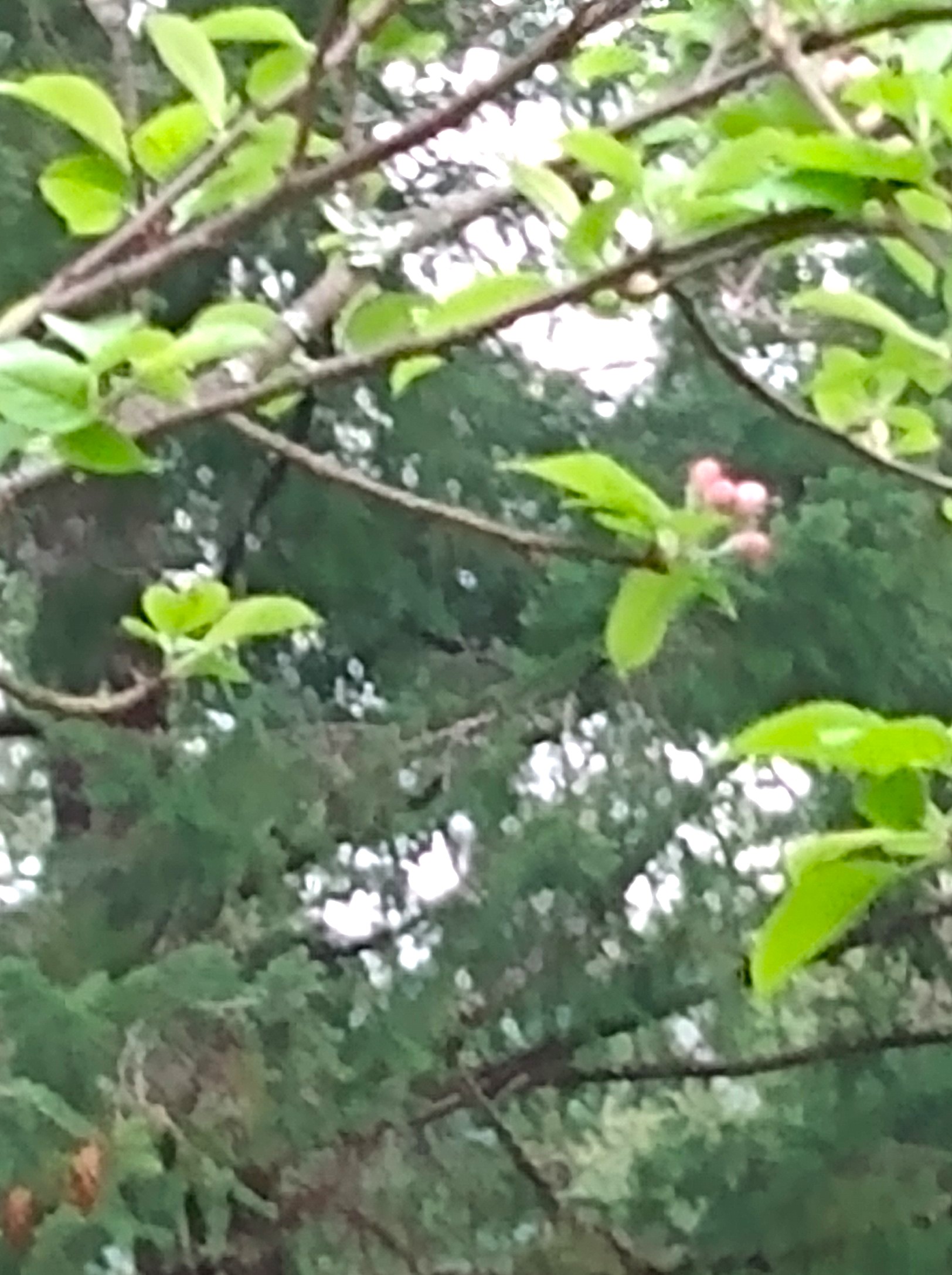
There’s a saskatoon bush growing by the printshop porch and I’ve been watching for bloom. Hummingbirds perch on a long strand of it, what I thought was a long strand of it — until this morning. Yesterday I’d noticed, in passing, that there were pink clusters, just a few of them, and I kind of tucked the noticing away. Until this morning. That’s apple, I said. Just in front of the the saskatoon, an apple tree has grown. I went out in my flipflops to try to scramble under it to take a picture of the blooms.

Not a native crab apple but, well, I don’t know what yet. Some years ago, a scrappy little tree growing in rock in front of our west-facing deck suddenly bloomed. And it was an apple tree. I wrote about it in Euclid’s Orchard:

The question of course is how the tree got there. I know that apples don’t come true from seed. Blossom from a Merton Beauty, say, is pollinated by an insect bearing reciprocal pollen from another apple–here, it would be a crabapple–and although the resulting apples would be true to their tree, their seeds would be the children of the Merton Beauty and the crabapple. One in ten thousand of those seeds might produce something worth eating. Who are the parents of this stray apple tree? It started growing before the Merton Beauty began its small production of fruit. Did this tree sprout from a seed spit over the side of the deck or excreted by birds or even seeds from the compost into which I regularly deposited cores and peelings from apples given us by friends in autumn. Belle of Boskoops from Joe and Solveigh, for instance, which make delectable fall desserts and cook up into beautiful chutney. Or else a seed from the few rotten apples from the bottom of a box bought from the Hilltop Farm in Spences Bridge, their flavour so intense you could taste dry air, the Thompson River, the minerals drawn up from the soil, faintly redolent of Artemisa frigida. This stray is all the more wonderful for its mysterious provenance, its unknown parents, and its uncertain future, for it grows out of a rock cleft on a dry western slope.

I love these mysteries, almost miracles. The tree I wrote about in Euclid’s Orchard produced apples that were beautiful to look at, heart-shaped, with rosy shoulders, but too mealy to eat, not the one in ten thousand worth cultivating. Late last summer a bear dragged the little tree down the slope, though its roots still clung to the rock. I righted it, pruned back the broken wood, and tucked manure in its root hole, anchoring it with rocks. (And that was the day I saw cyclamen blooming a little lower on the bank, also kind of miraculous, because they’re not a native plant and must have been seeded there by birds from the one or two plants Edith Iglauer gave me decades ago. I lifted a few of them and planted them closer to the greenhouse so I can see them.)

So now this, now another stray, also growing in rock. I think there are 4 blossom clusters so who knows, there might be apples on it if it gets pollinated by bees or hummingbirds. It’s a favourite perch of the hummingbirds, partly why I noticed it in the first place, because I see them settled there between the skirmishes by the feeder, Anna’s and Rufous battling it out for sugar water.

“…the morning so young it still held the light of a half moon, a star.”

P1150248

This isn’t a very good picture, it was taken using my phone from the deck of a boat at the the head of Bute Inlet this time last year. The grizzly was grazing on grasses at the estuary of the Homathko River. Even blurry, even from that distance, it was magnificent. We watched it move along the shore, lifting its head once or twice.

I’d already had a swim in Bute Inlet that day. The water was so cold! When the boat approached the little bay where it paused long enough for a woman to eagerly enter the water, to paddle in circles for a few minutes, unable to feel her fingers and toes, anyway, when it approached, there was a black bear on the rocks who quickly high-tailed it into the woods. On the stony beach, large scats threaded with grass. The waters of Bute Inlet are glacier-fed, icy cold, and to swim in them is to feel utterly alive. Wildly alive.

I’ve been revisiting my novel, Easthope, trying to make it good enough that a publisher won’t be able to resist it. For months I couldn’t see the gaps and now I can; I’ve been filling them in, darning the thin areas, weaving unruly strands into the fabric of the narrative. And last evening, reluctant to stop for the day, I found myself reading this passage about a swim in a coastal inlet. Not Bute but Narrows, where the Tzoonie River enters the chuck. (This section of the novel takes place in autumn, so the bears are feeding on salmon,)


In her bunk that night, Tessa felt the boat still turning under the bowl of sky, a circle within a circle, within. There ought to be words for this, she thought. So many gravities, so many currents, and we are circles in a universe that contains wars, genocides, wildfires burning across continents, and a grizzly bear at the mouth of a river, feeding on salmon. When she woke very early the next morning, she stepped out of her nightgown at the stern of the boat and climbed down the ladder into the water. It was icy! The moon had crossed the sky to the west. A star, she thought it must be Sirius, was visible too, the dog star. A few quick strokes out into the inlet, circling the boat once, then twice, and back, scrambling up the ladder to wrap herself in a towel. She made coffee in the blue graniteware pot, pouring a big mug to take back on the deck. Ah, there was the bear again, or at least it looked like the same bear, but this time a smaller one tailed it, stopping to sniff the air. Were they aware of her, did they know she had dropped into the water and come back with a strand of kelp on her leg? She took their photograph, mother and child, the morning so young it still held the light of a half moon, a star.

“a seam containing the hidden histories”

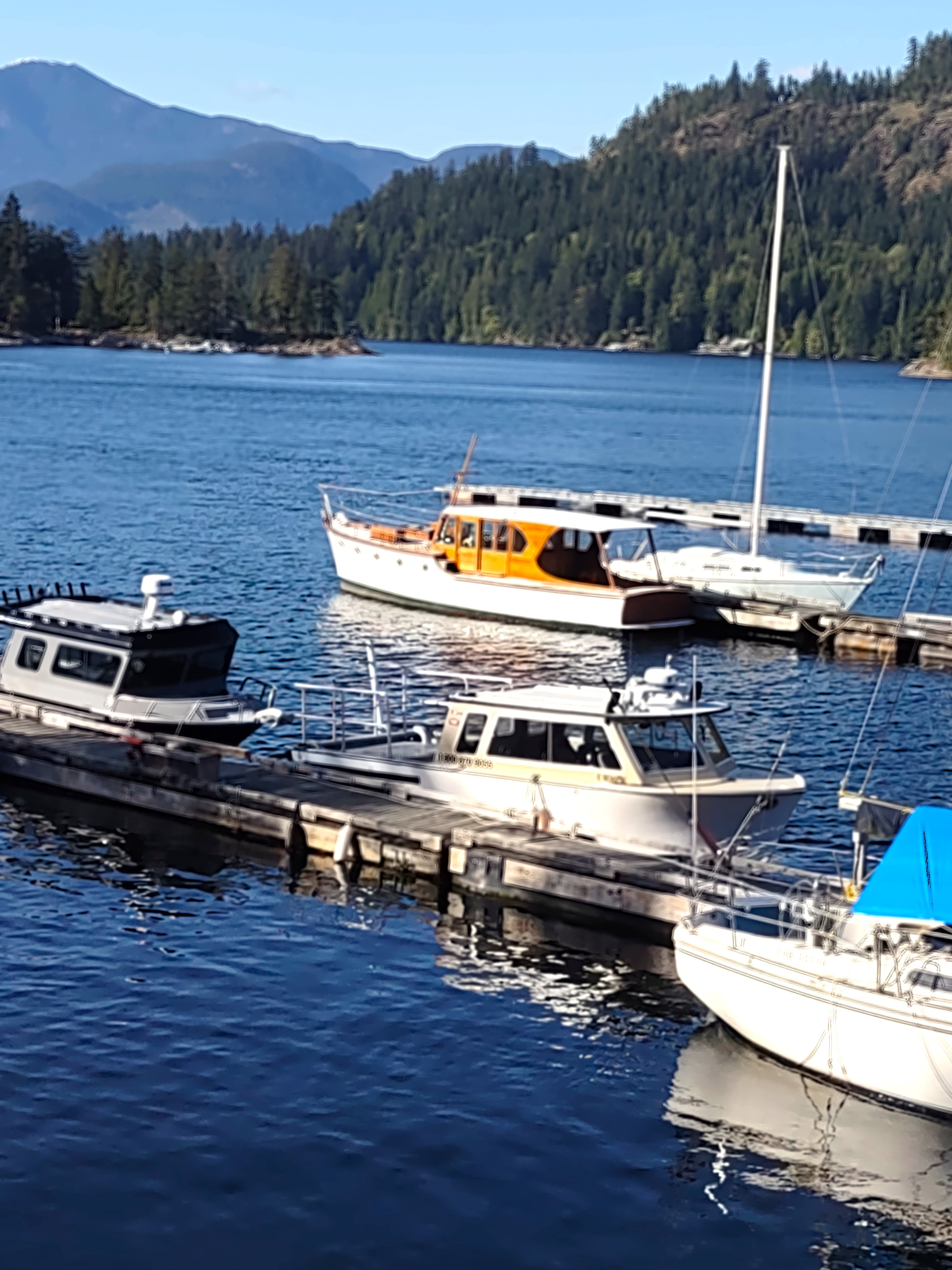
This evening, after a long day doing garden work — repotting herbs, making cuttings of the scented geraniums (rose, lemon, orange, a resiny one whose name I’ve forgotten but it smells of rose and deep woods, peppermint)–planting lilies in pots, topping up the overwintered pots with fish compost and alfalfa pellets, anyway, after that, we drove out to Egmont to have supper at the Backeddy Pub. Joe Stanton was playing guitar and singing the old sweet songs. I went out on the deck to take a quick photograph of the boat I’ve loved for so long now, the one with the beautiful wooden cabin, maybe in its last stage of restoration. Ruby, who works in the Backeddy and has the loveliest smile, came out to talk for a few minutes. She told me she’d been out in a boat with her boyfriend and an octopus had come up in their prawn trap. Its eyes, she said, were almost human. Have you seen “My Octopus Teacher”, I asked, and no, she hasn’t, but she said she’s going to look for it now. We talked about The Curve of Time, which she hasn’t yet read but is going to search out. I told her I’ve bought copies at the Egmont Museum so she won’t have to look far. Think of that boat when you read it, I suggested. And as we talked, an otter loped along the dock, disappearing behind the boat I always think of as mine.

Today, after I’d come in from the garden, I sat at my desk and read through my novel, Easthope, set in a community very like Egmont, which is now making the rounds. Some days I think it’s too quiet to find a readership. Other days, like today, I am glad I wrote it, glad I gathered the strands of history and memory together to make something.


As they approached the rapids at the entrance to the inlet, Tessa was looking back. Looking back, she saw the wake closing behind them as they slowed, one wave overlapping the other like a seam. And she felt the excitement again: a seam containing the hidden histories of the inlet, Capi Blanchett with her children on the Caprice, one child trailing a hand in the water; Mac Macdonald’s first sighting of the inlet aboard his uncle’s schooner; even the beautiful young couple sitting on their wooden boat, a naked child at their feet.

Tonight I had steelhead tacos and John had chowder. We shared a salad and although I thought we’d share the white chocolate cheesecake with caramel and pistachios for dessert, it turned out I ate most of it. A glass (or two) of Grey Monk Pinot Gris, the boat just below us, seals at play in the shallows. The boat that I always think of as mine, looking towards the open water, ready.

redux: The Weight of the Heart

My novella, The Weight of the Heart, is now at the printer. It’s available for pre-order here. On the one hand, publishing a book in the midst of a lockdown due to a global pandemic is perhaps unfortunate; on the other hand, people are reading and why not this book? It will take you deep into the interior of Canada’s western province as well as to Sombrio where you will roast potatoes in the coals of a cedar fire and collect salt from exposed rock for the potatoes, you’ll eat oysters fresh from their shells, you will be in good company (a thoughtful young narrator, Isabel, and her muses Ethel Wilson and Sheila Watson. The painter Margaret Peterson has a cameo), and you’ll hear coyotes, watch bighorn sheep mate, and you’ll stop for ice-cream at the old Pavilion store before it burned. There’s a newborn Appaloosa filly to stroke and rattlesnakes to avoid. Isabel finds an old pair of cowboy boots at a thrift store in Kamloops and if you’re lucky, you might find a pair too.

Kishkan COVER 72dpi_RGB

I thought, our maps are so cursory. We know that the big cities matter because they have stars to prove it. And the big rivers? Thick blue lines across the landscape. Mountain ranges, the borders between provinces delineated in a kind of cartographic Morse code: dash, dot, long dash for countries. Huge expanses of blue sea. Great lakes. The colours of empire. But what do they tell us about what happened, or happens, in grassy kettle depressions where the flakes of old tools litter the earth and salmon leap in the river against the current? Where on the map’s contours is the place where a woman paused to consider the beauty of the morning? Where a tree noted for its long cones was cherished by a family dependent on seeds? A map carries nothing of the smell of autumn, what it feels like now to walk over and into the remnants of pithouses, right into the body of the memory. Where on the map is the site where two boys found a body and might have been changed forever by it?

The river lay still in the sunlight, its thousand pools and eddies alive under its silver skin.

the magpies of Strathcona

This morning, on a last errand through the streets of Strathcona, I hoped to take a photograph of magpies. They’re everywhere in this neighbourhood, gliding down from trees, squabbling, strutting along the sidewalks with their beautiful plumage shining. My granddaughter is scornful of my admiration for them. They’re so annoying, she says. But I love their bold manners, the peacock blue feathers on their wings and tail. I love hearing them in the nest across from my family’s house.

One for sorrow, two for joy. I saw so many on this trip that I’ve lost count. Some people salute them, or wink at them. I was taught the magpie courtesies years ago by a friend who is no longer with us. If you see a single magpie, you call, Hello, Mr. Magpie, how is Mrs. Magpie and all the children? They are fortune-tellers. What was mine this morning, a woman walking through the quiet streets to deliver something forgotten?

In Strathcona, the old elms are busy with magpies, even if none of them would pause long enough for me to take their photograph.

placeholder

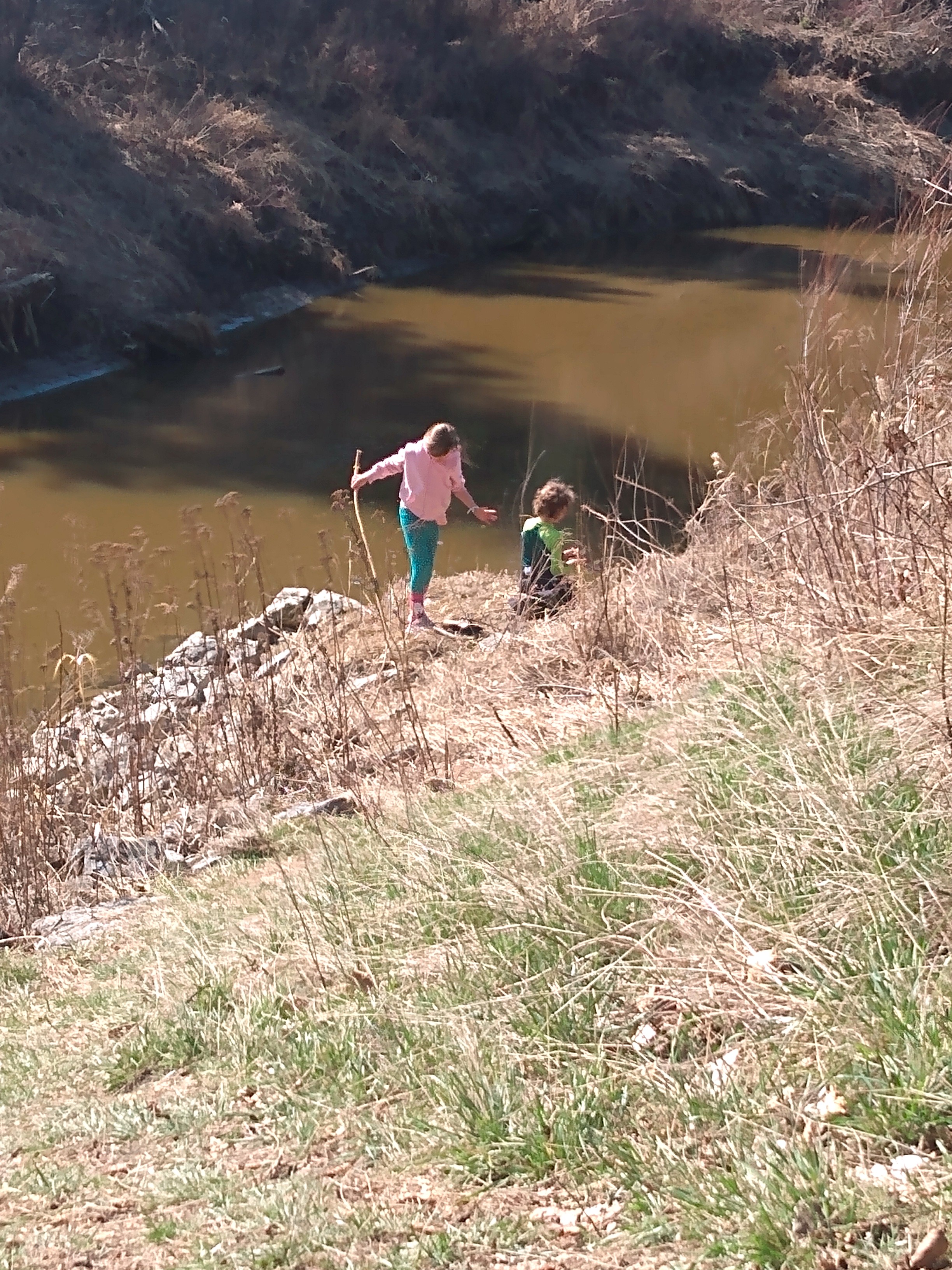
Time passes. It does. Some days are dark and it’s hard to find the light. And then a flight takes you over the mountains to spend a few days with some of your family. There was a walk to see a nest of owls in a tree’s hollow, followed by a rest by the Whitemud River where the children floated sticks in sunlight.

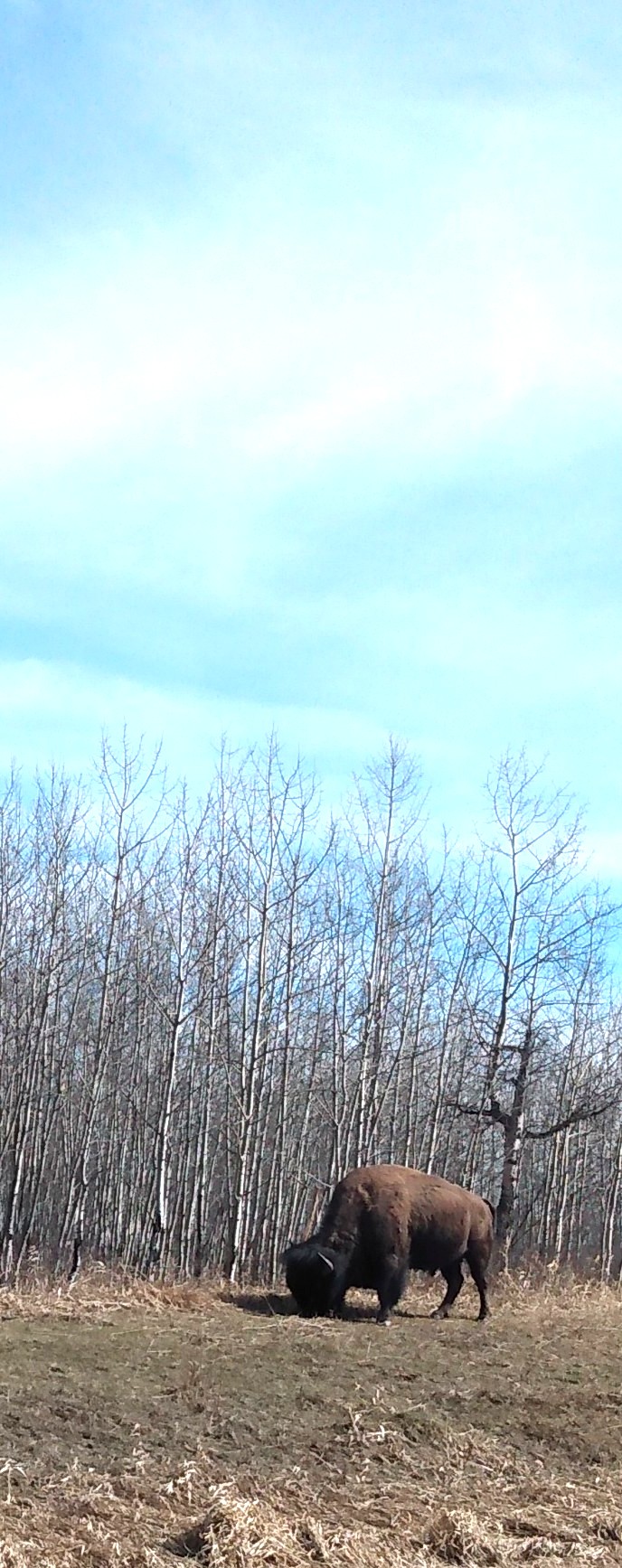
The day before that, you went to see bison. Under a blue sky, they grazed on new grass, and you remembered the frieze of them in Font-de-Gaume in early November, the same slim hips, massive shoulders.

This is a placeholder. You were here.