

The other night I dreamed I was revising a novella. It was printed as a booklet, on peacock blue paper, and as I turned the pages to figure out what needed work, the narrative came to life (somehow), the action and characters coming off the page to let me see the gaps, the clunky parts, and the overwritten passages. What I loved best was the colour, the most vivid blue.
If it ever stops raining, I’m going to begin planning my outdoor dye workshop. We have a deck off our utility room with PVC panels over part of it. Our hot tub was there for years (bought with some of the money from John’s Governor General’s award in 2006). It was one of the soft tubs, one we could move around if we needed to (when it was emptied of water), and it was wonderful. Then then it stopped working. We had it repaired. And then it stopped again and couldn’t be repaired. So it’s gone. But the deck remains. When I’ve done indigo dye work in the past, I’ve used a long cedar bench out by my vegetable garden:
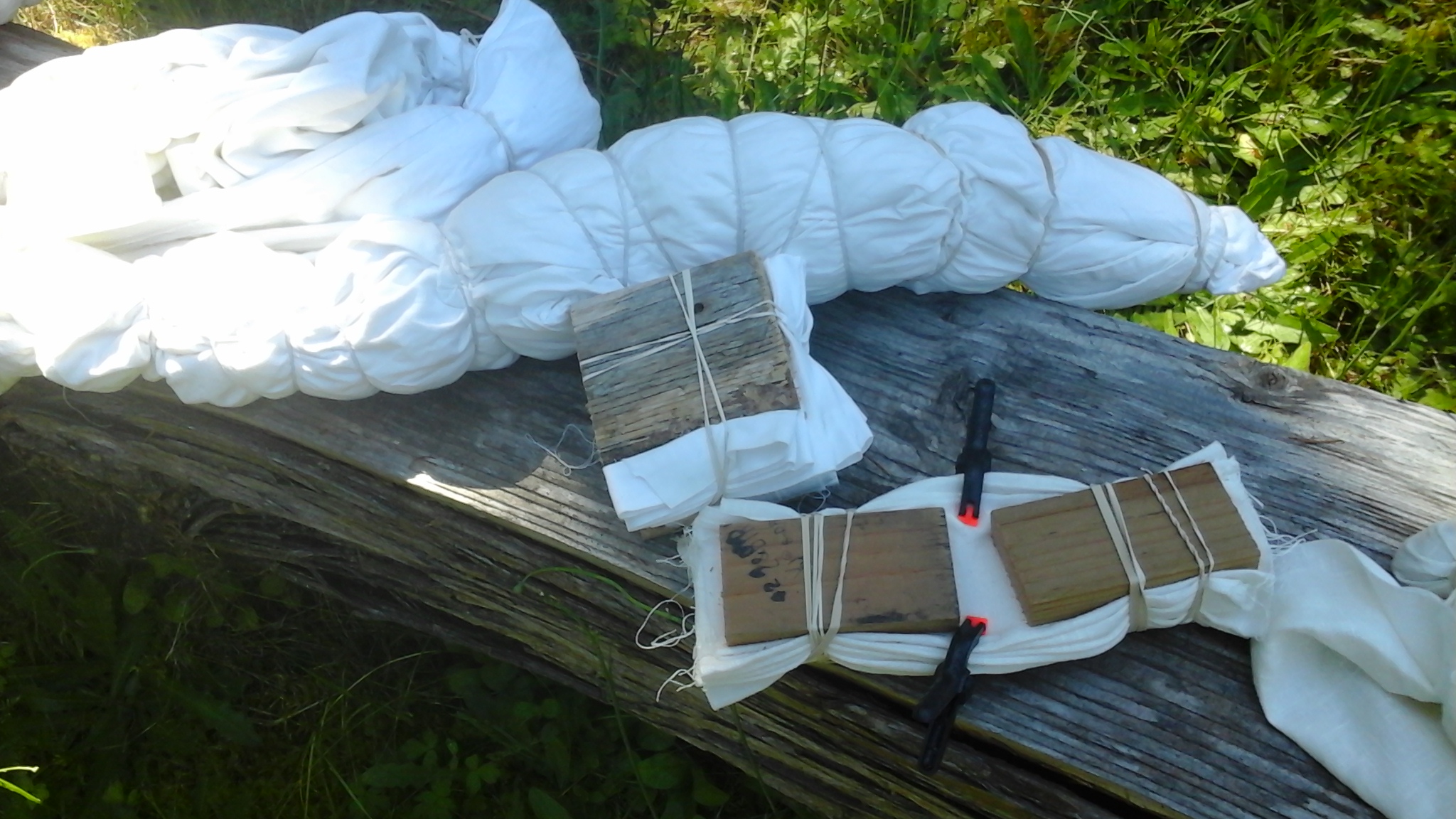
It’s fine if I’m just using one vat and there’s the added bonus of being able to spread cloth out on the grass. But when we were in Oaxaca, we went to Teotitlán del Valle to spend an afternoon in the studio of Oscar Perez. He showed us every step of the process, from carding raw wool to spinning it to dyeing it and then weaving it. His work is superb. We bought this carpet:
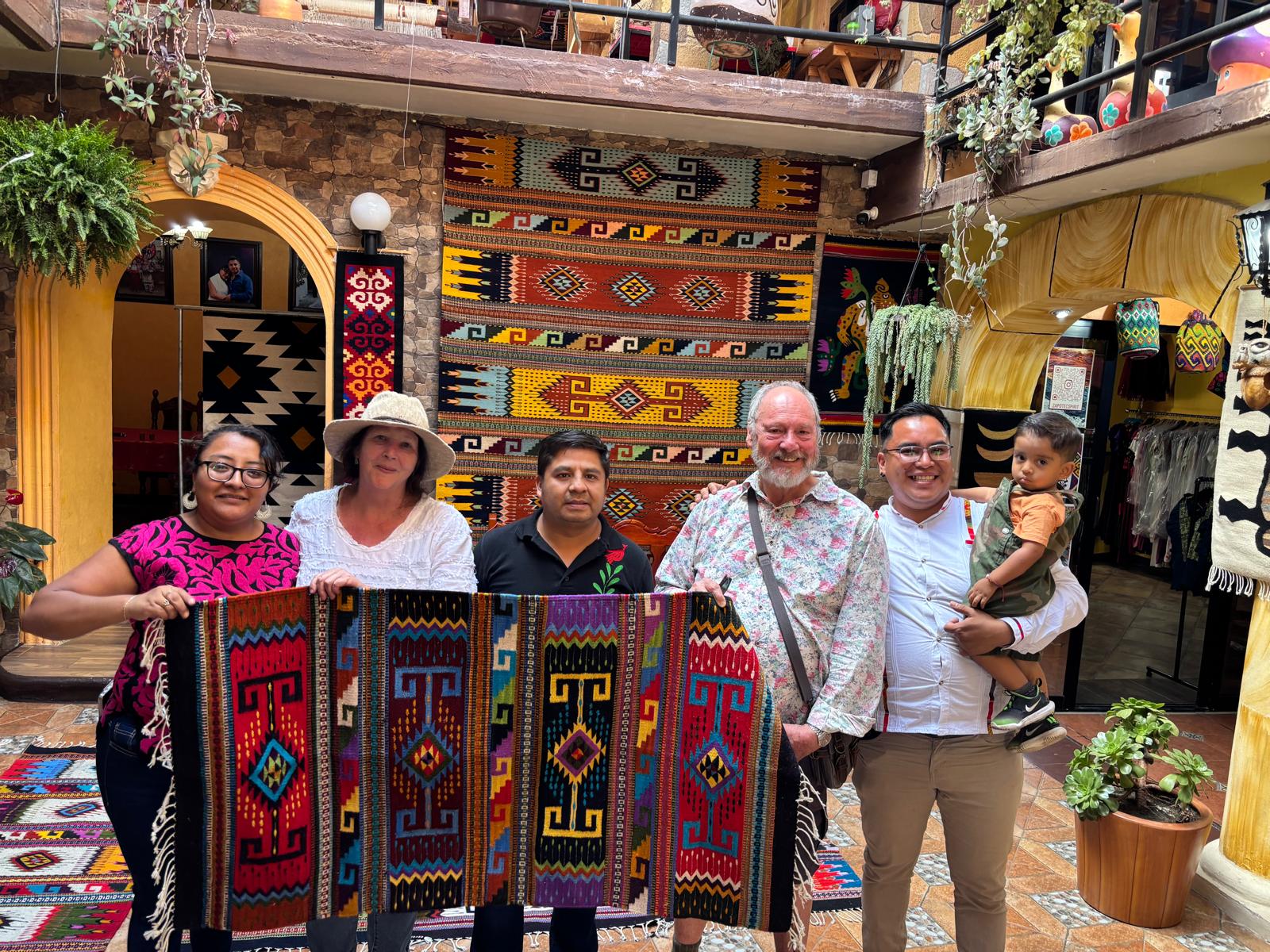
I was particularly taken by the dyes he was using. Indigo, yes, and some others I was familiar with, though I’ve never used them. Maybe I always felt a little intimidated by the science of dye work, trying to understand the chemistry. But honestly? Watching Oscar sprinkle some cochineal bugs on my palm, crushing them to a carmine paste, adding a little lemon juice, which turned the paste orangey-red, then adding some soda, which turned the paste royal purple, I thought, I can do this. Not well, perhaps, and maybe I’ll make a mess. But I am drawn to the work and will spend the nicer weather making my workshop and then seeing what happens.
I ordered a bunch of natural dyes — I already have indigo and woad — and they arrived a week or two ago. Pomegranate, rose madder, marigold, and a little tub of cochineal:

(The bugs live on nopal cactus. Oscar brushed the insects off a nopal paddle onto my palm.)
After a winter storm, some long branches of a tall mahonia in our garden broke, and I’m saving the leaves and bark for a dye vat. I’ll collect some rock lichens too. John’s said he’ll make me some long benches and I’ll work out racks. I’m keeping my eye open for a big pot at the thrift store and I’m saving the 2 litre jars olives come in. One I’ll partly fill with old nuts and bolts and other worn-out hardware, for iron mordant. Maybe I’ll save pee for another. On our dining table, there’s a block printed Indian cloth, deep blue, though probably dyed with an aniline dye. And down the centre of the table, over the cloth, is a runner a friend gave me. She bought it in Japan. It’s indigo-dyed, outer lengths of linen with a shibori-dyed panel within. It’s beautiful enough to stop me in my tracks when I come into the kitchen. Linen takes dye so well and I have some lengths in my fabric trunk. I’m trying to source some more, and some silk. Rose madder scarves, with indigo borders? A marigold duvet cover? And something special, silk or linen, for cochineal. Just thinking about this sends my heart-rate up. I can’t wait.
The novella I was revising in my dream came to life, each section enacting the story on the peacock-blue pages, so I could see what was there and what was missing. Maybe it’s a correlative for dye work. What’s there, what’s missing.


 ...Theresa Kishkan