

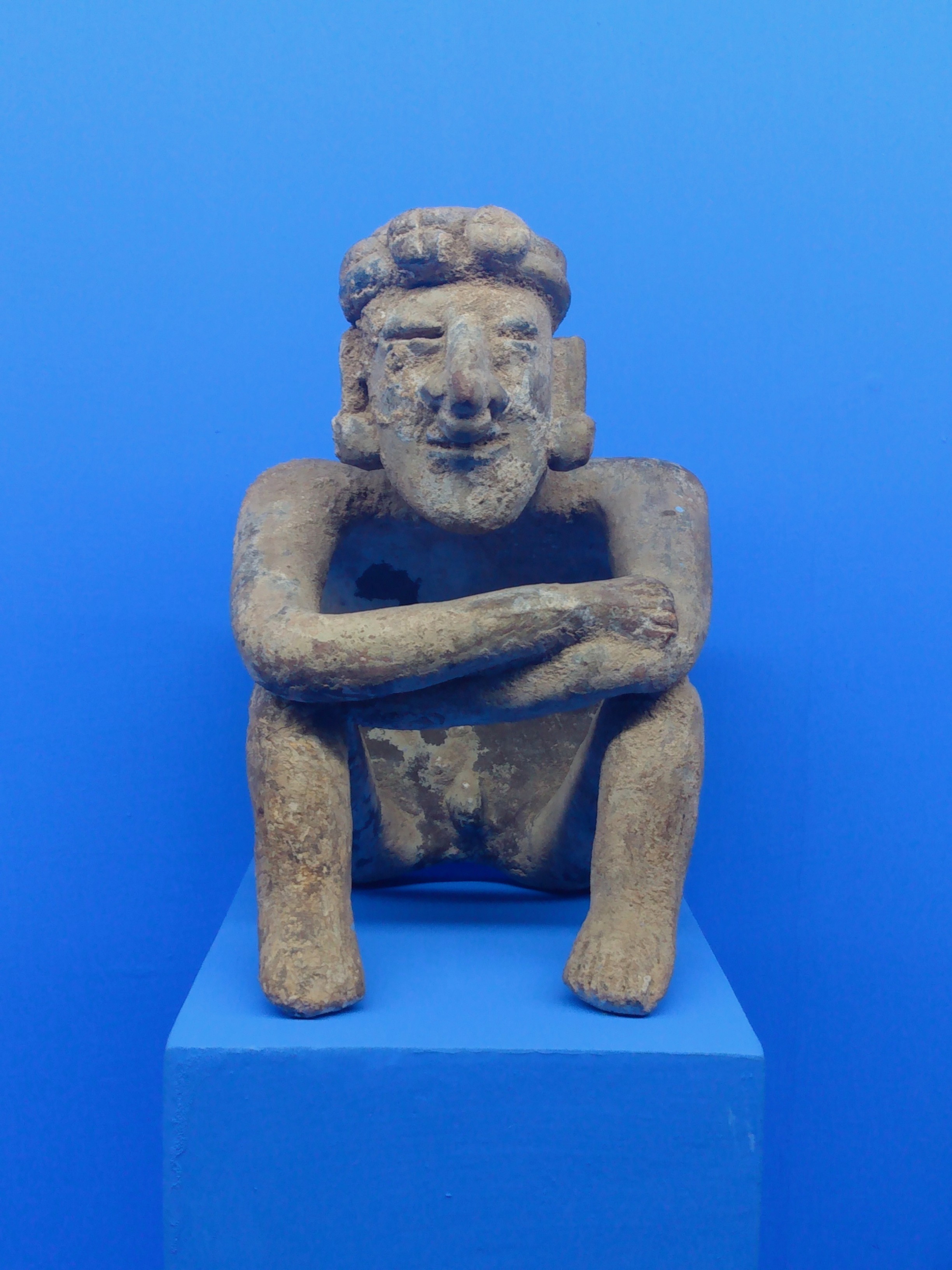
In Oaxaca a few weeks ago, we spent a morning at the museum holding the Pre-Columbian (or Pre-Hispanic; I’m not sure which term is more accurate) collection of Rubino Tamayo, a Zapotec painter from Oaxaca. Each gallery was wondrous. I spent a few minutes looking at this deity of death from Veracruz, the hands held as though advising an alert and measured response. I’ve read a little about Mesoamerican attitudes to death, concentrating on the belief that life and death exist as a duality, reflecting cycles of drought and rain, dormancy and growth, darkness and light. In the time we are living, it’s worth remembering that things pass, regeneration is possible, and that some nights when you are unable to sleep, you look out at a full moon holding the earth’s shadow.
In the museum that morning, I remembered a book I’d read more than 30 years ago, Evan Connell’s The Connoisseur, recommended to me by the late Charles Lillard. We’d been talking about objects, how sometimes one will capture your heart and imagination, and when I read The Connoisseur, I understood why he’d thought I’d enjoy it. An insurance executive finds a small Jaina figure–he calls it the Magistrate–in a shop in Taos. He doesn’t know why he’s attracted to it but he buys it for $30, assured by the shop owner that it’s authentic. This object leads to an obsession with Pre-Columbian figures and the reader follows him as he tries to learn more, to justify his obsession, and, well, I won’t give away the ending. I won’t give away the ending because John and I are reading the book now, out loud to each other, by our fire, and some days when we are just having a cup of coffee, one of us will ask, Want to read just a few more pages? And those few turn to more. It’s not a novel of action or even really of plot, unless you call the development of an unexpected obsession to be a plot. I have to say I do. Each encounter between the protagonist and someone he’s consulting about authenticity enthralls me. While I’m reading, or listening to John read, I’m thinking about the figures in Museo Rufino Tamayo, the ones shaped in clay, baked, painted, and how they have their own immortality in cases painted blue or pink or violet.
The other day I was outside and I walked up to the copper beech tree we planted in memory of my parents. Around its base the daffodils I planted with my granddaughter 7 years ago are coming up; some are even in bud. Two layers of family and memory and the anticipation of a third because I want some of my ashes to be strewn around the tree’s base where I sprinkled a little of my parents’ remains.
We were the torch that split the lightning bolt
and the dream our grandparents told.
What remembers us? The tree remembers something of my parents, nourished by ash and bone. The daffodils? Maybe the day K. dug little holes with a trowel and inserted the bulbs root-side down, scraping soil over them with a garden fork. We patted them in place. It was raining. I don’t imagine she remembers that day but I do. I remember my parents sitting outside, talking quietly, as I did chores around them. I remember seeing them long after they’d died, even catching their scent as I climbed the stairs to the upper deck where the chairs they left us were waiting for John and me to stop our work for coffee.
When I looked again out the dark window the other night, the moon had left the earth’s shadow behind. It was deep red in a black sky, something to be remembered by a woman sitting at her desk in the small hours, thinking about dualities, a room of figures behind glass, gazing out, pensive or startled or balancing in place.
Now we are ashes
beneath the kettle of the world.
Note: the lines of poetry are Natalia Toledo’s. I was lucky enough to see her show at the Museo Textil di Oaxaca in February.

 ...Theresa Kishkan
It must have been quite an experience to spend time with that art. Interesting and inspiring.
It was so compelling. The museum itself is beautiful and each gallery held such wonders!