
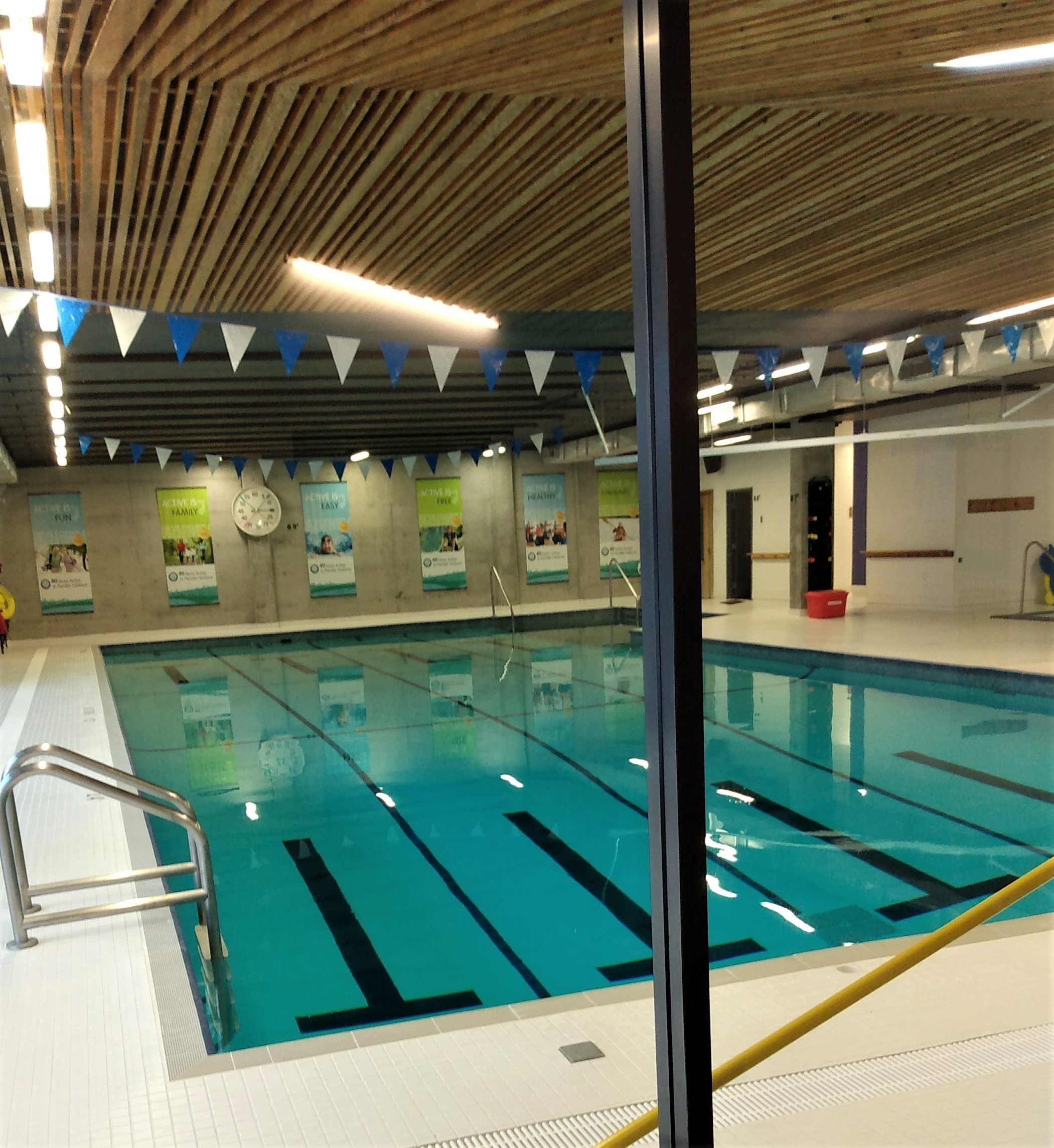
I knew from John Berger’s essays that there are swimming pools in Paris but I have to say on a recent trip, I wondered where they are. There were mornings in Paris when I would have loved to swim my slow kilometer, to engage in the kind of immersive thinking that swimming allows, and to explore another aspect of French culture.
When I saw Swimming in Paris: A Life in Three Stories, by Colombe Schneck, translated by Lauren Elkin and Natasha Lehrer, on the library’s shelf of new books this past week, I grabbed it. I took it home and read it in one night. What is it? Three stories? Three novellas, as the author suggests in her preface? Three movements? It reads as memoir, though that’s a problematic term for Schneck. In an interview about the book, she says this:
In the U.S., you have a category called memoir. I don’t understand it. People change things. They make it better, more suspenseful. It’s not the truth, though “truth” is very important in the U.S. I made the character of Gabriel such a kind and wonderful man, though he was cruel when he dumped me. I just wasn’t able to write that. Gabriel became a fictional character.
When I write, I try to recount everything as closely as what happened. But as soon as I start, I’m lying, inventing. I could say: “Colombe was doing this” or “was like that,” and it would be more accurate. My material is autobiographical: I use the story of my family and I make something of it, like a painter.
So a book, then, using autobiographical material to explore memory, shame, love, and in the final movement, the importance of swimming to claim her body’s own strength and resilience. (“But there, in the pool’s liquid embrace, I need only an imperceptible flicker of my thighs, an arm reading effortlessly into the air, toward the other shore, and I am borne on its infinite waters.”)
The opening novella (or movement or story) describes an abortion the author had at age 17 and how it was the event that took her, perhaps reluctantly, into adulthood, how it gave her insight into her liberal upbringing and education, and how she comes to realize, in her fifties, that the event has resulted in an absence in her life, though she went on to have children. The second novella, narrated in the third person, is a stunning portrait of a friendship, its difficulties and riches and secrets, all of them intensified as Schneck’s life-long friend dies of a terminal cancer.
Swimming in Paris is so beautifully located in Paris, in the Left Bank neighbourhood surrounding the Jardin du Luxembourg. When I was in Paris, I met my friend and publishing partner by the garden gates for a quick visit–she was enroute to the south of France from her home in the Netherlands–and walking around the area before and after, I looked at the beautiful old apartment buildings and wondered at the lives within them. I even (I swear this is true!) wondered where one might swim if one lived here. (I have become that person, always wondering where I could swim.)
Does it matter what we call a book? Do the terms matter? Auto-fiction, meta-fiction, memoir? I wonder. The French are perhaps less didactic about these distinctions than we are in North America. (Annie Ernaux appears in the Bibliography for Swimming in Paris.)From my own perspective, I don’t much care about hard and fast definitions of genre. A book is a book is a book. Memory is always selective and most of us understand that we don’t need to know everything, that leaving things out or embellishing others is simply what writers and artists do.
I put this book aside the other night and I’ve been returning to it ever since, picking it up, finding phrases I remembered and wanted to note down. “I could write an encyclopedia of swimming pools.” “I was twenty-three, my father died, and I became invisible to all men who were not him.”
When I’m swimming, I think about the past, the present, and what I hope for the future. I work out writing problems. I try to remember the lyrics to favourite songs. The act of moving one arm ahead of my body and following its trajectory is an act of memory, of muscle memory. In the interview linked to above, Schneck says this:
When you read Proust, you understand that the distance of the past doesn’t exist. Something that happened thirty years ago can be in your mind like it happened this morning.
Note: the image above is not a swimming pool in Paris but the one 10 minutes up the highway from my home on the Sechelt Peninsula. My lane is the one on the left, closest to the windows you can’t see just beyond.

 ...Theresa Kishkan