
This morning, early, I found myself reading about Lenore Tawney, the American textile artist. I knew a little about her before this morning but now I am longing to spend time with her work. In some ways she hovered in the area between art and craft, though I wonder if the distinction between the two bothered her enough to even think about it too deeply. She did what she did. She figured things out. She moved from weaving to knotting and back again. She made assemblages of stones, bones, feathers, wood. (I think of my windowsills.)
There’s one piece I am drawn to: Dark River (1962) — click to see an image of the piece at MOMA:
Dark River is insistently vertical—an elongated form, composed of some forty sections woven in black linen, that descends almost fourteen feet from the ceiling and calls to mind lancet arches in
Gothic cathedrals. When the work is viewed up close, the particulars of Tawney’s hand take precedence: the deft way she created a selvage edge, or repeated the same knot, perfectly, over a span of hundreds of threads, or how she used a single type of yarn to elevate the work’s formal elements, erasing distracting variations in color, texture, and weight. The overwhelming impression is that of a singular devotion.
— from Christina Bryan Rosenberger, Art in America, May 2020
What I love about it is the structural elegance and the relationship between the materials and the form. Those long vertical lines, the shadows in the linen! It embodies, somehow, a spiritual apprehension. I can’t imagine the patience and dedication required to attend to the materials in this way. Or wait. Maybe I can imagine. During the pandemic, my daughter Angelica taught herself to weave. She used thrift store yarn on a basic loom she made from a picture frame, weaving small tapestries she hung on driftwood, and when she realized how much she loved the work, she and her dad made a larger frame loom. The tapestries grew. I love the lyrical tree!

Many years ago, nearly 50, on French Beach west of Sooke, I found two Japanese fishing floats. Two, in one afternoon. I wasn’t looking for them but they appeared before me, cradled in driftwood and strands of seaweed, while beyond, big waves crashed to the shore. (It was late autumn.) I kept one for myself and gave one, the cracked one, to a friend. What did I do with my float? Nothing. I always meant to. In the Egmont Museum in early summer, I saw a group of floats and I spent some time looking at the nets holding the floats, examining the knots. One of the little display cards actually provided a web address for instructions to make the nets. I realized I had some rope that would work and I also had a bag of raggedy rope gathered on a beach in Bute Inlet in April, hoping to do something with it.
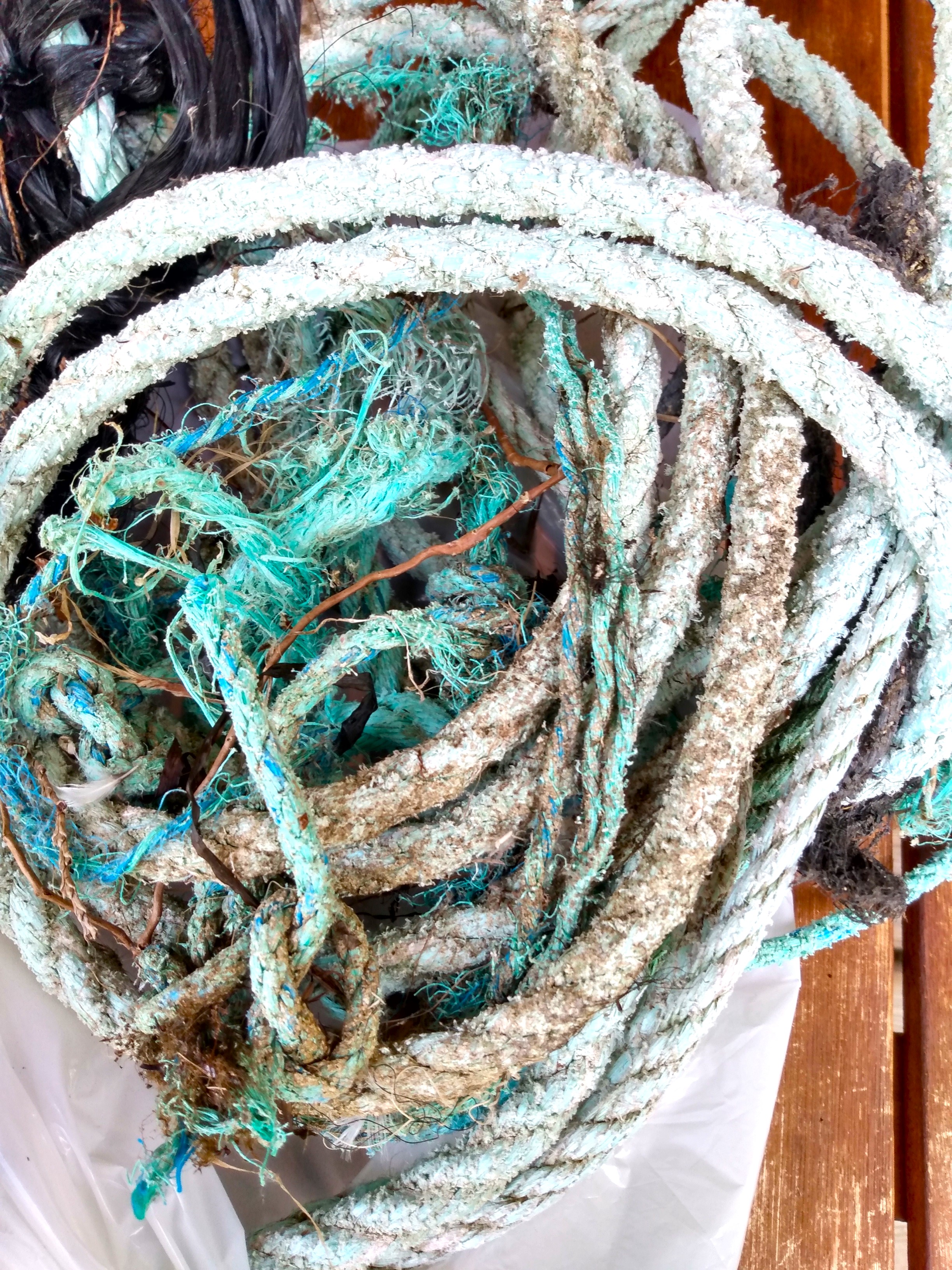
I’m going to commit myself to making a net for my fishing float this fall. I’d actually intended to do it when Forrest and his family were here in early August and he was enthusiastic about helping me to decode the instructions but somehow the days filled with swimming, adventures, chores, making large meals and then cleaning up after them. So the packages of nautical rope are on my desk, unopened. When I opened the bag of Bute Inlet rope to take the photograph, I could smell seaweed and salt. How to knot that into a net for the float and for the memory of gathering both of them on wild beaches?
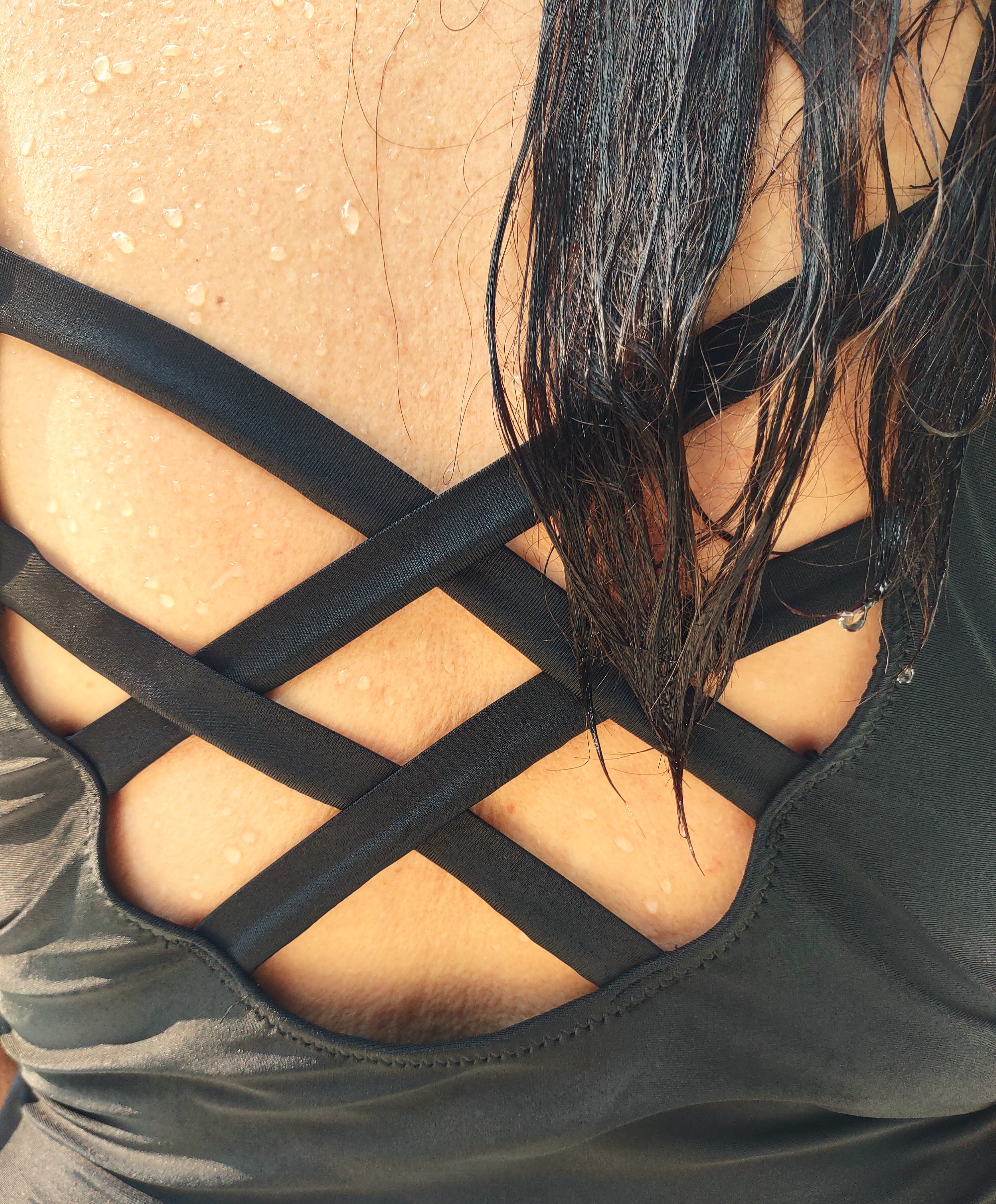
There are mornings I hang in the lake like a knotted piece of string. After my laps and before I come to shore, I hang vertical, not quite in place — the water carries me a little shoreward. Not the green water lit by the sun but the dark depths. It’s a moment between states: a woman swimming and a woman in place. Could I knot that moment into the net too? Knotted and woven and hung from a branch? The smell of the lake, two kingfishers gliding over John’s head to the cedars, a trout jumping, two mornings ago an otter swimming 50 feet away, and crows arriving to check out our towels.

 ...Theresa Kishkan