
Something is over.
I walked down to the old orchard. For three days messages have gone back and forth between my family members in response to something I did. I withdrew from a social media group composed of my children, their partners, my husband, and myself. I did it because a few relationships were fraught and I felt in the middle and I wanted quiet. I wanted a quiet place, quiet words, and I didn’t want to get caught up in complicated strands, a net woven of hurt and resentment. So I told them I was taking myself out of the conversation.
4 weeks later I wrote to them to try to explain what I’d done and things got worse. Old hurts, accusations; issues that I assumed were long over: well, they weren’t over. The messages got heated, new language entered our discussions, a particular therapeutic matrix, which became the foundation of the sentences in the messages to me, and we weren’t talking about my withdrawal from the family chat group any longer.
What were we talking about? More than 4 decades of mistakes on my part. I walked down to the old orchard and sat among the trees we’d planted with such hope 40 years ago, which had briefly thrived, produced fruit, under which a carpet of moss studded with wild purple violets and sweet-scented twin-flower had spread its dense green beauty, and which we’d abandoned because we couldn’t give the trees the care they required. It became increasingly difficult to water them, we tried several kinds of fence to keep out deer, bears, and elk, who found their way in and mangled the branches, ate the fruit, until, now decades older, we simply didn’t have the energy to continue.
Something is over. An old intimacy, without these current insistent expressions of love, but rather an intimacy with warmth, interest, and affection entwined, as the wild honeysuckle is woven into the branches of a Douglas fir near the deck, both thriving, but also independent. When I walked down to the old orchard, I sat on the bench we’d made using a raw plank of rough-milled cedar balanced on rocks. It was covered with dry lichen, and not simply covered with it but held together by a mass of fungal tissues, several organisms entwined, without vascular roots; when I pushed my finger against the edge of the bench, it crumbled like bread. The constant expression of love feels like an emptiness. Said over and over again, a refrain, without meaning. I love you, but. But. Meaning is care – with actions, over time, with language, sentences without the sad cliches of showing the true self, finding a path through healing.
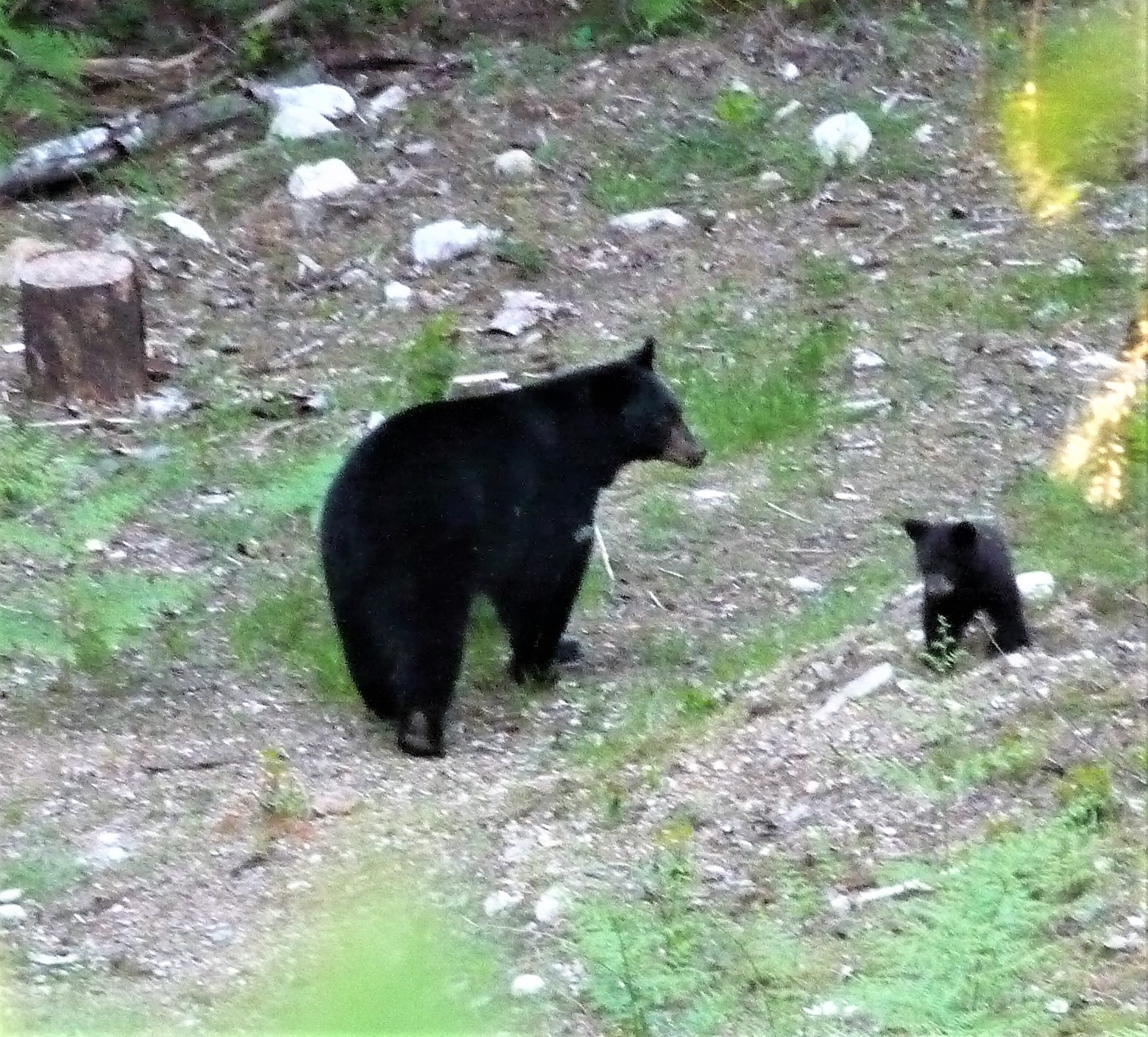
The path that led down to the orchard from the house is overgrown, the boulders we set in place as steps covered in moss. I am older than the woman who walked up and down those stairs to care for the trees. I walk instead down the driveway and enter where we’d built a wide gate so we could drive our truck in with loads of seaweed or manure or a basket to carry the fruit back to the house. The gate is long-gone. Sometimes, looking down from the desk outside the kitchen, I see coyotes ambling through the orchard and sometimes a bear wanders down with her new cubs, passing information to them not so much about the present possibilities of apples but stories of the past: the honeyed golden plums, the pears, four kinds of apples, cherries sweet and dark. The old days of abundance, and beauty.
Sitting on the lichen crusted bench, I pull my toque down over my face because of flies, and I cry. I can’t stop. I am crying for the loss of affection, for the unspoken love replaced now by the repetition of it used to soften the criticisms and rebukes. I am crying for the dead trees. The Golden Nugget, sweet, with russeted shoulders, tawny skin splashed with orange. The pear I think I remember was a Conference. The golden plum overgrown with salal but still managing to put leaf on one stray branch. We had picnics here, we sat on the bench while children rolled down the slope of moss, startling sleeping snakes. In later years, bear scat held the remnants of pears.
Something is over. I lie back on the bench, the hard lichen prickling my back, and I cry for every tree that we planted with such hope, each child we raised with something I would have called love but now am afraid to name. (I love you but. But.) Violets are hidden in the moss, a small bird plucks at dry grass, abandoned wire that once described the shape of our hope. And the names of the trees: Melba, Transparent, Stella, hazelnuts too far gone to even think about restoring

 ...Theresa Kishkan
Theresa, my heart breaks reading this. Sending you love and courage to weather this difficult passage in your family. And I’ll include my own mantra for such passages: I trust that good will come of this.
It is so complicated and so unexpected and the other day I understood what people mean when they say they felt their soul leave their body. Thanks for your kind words, Leslie.
What Leslie said. Oh family – what would we have to write about if not the torments of family? Someone once said, Stress and pain come because other people do not love the way we want them to. We are none of us perfect, we have all made mistakes, we have all been misunderstood. May this pass, Theresa, and calm be restored in your loving heart.
Thanks, Beth. A very sad time but maybe good will come of it?
Being in the middle is hard. Being on the edges is hard. Redefining the edges is hard. It’s all hard. Except, as with the bench, it’s all crumbling too. Have you read Jon Kalman Stefansson’s Your Absence is Darkness? It took me to Louise Gluck’s poems (someone who inspires him, someone I’d not read for decades). They seem to fit your being in this moment too. Take care.
I have Louise Gluck’s Averno on my bedside table…
I hope the words, your own for writing it all out and others’ as well, bring some comfort. Where would we be without writing/art. /hugs
It turns out to be a very prescient collection this time around, Marcie.
Everything Leslie said, Theresa. I also hope that in all that’s gone, something is found, for you and those you love, a new light, a beautiful road you could never have imagined… and of course imagining it now is impossible. As ever, thank you for the words.
Thanks, Carin. Yes, imagining better days is difficult right now but we’ll see.
You demonstrate courage and vulnerability in this piece. I hear you, I see you and I thank you for the images and the honesty. It doesn’t help you to know that I too am peeling away familial layers of late, but you helped me.
I send you every good wish. And courage!
[…] the trees, we realized we couldn’t keep up with that particular dream any longer. In May I wrote about how the orchard and what it represented to me echoes other failed dreams or memories that […]